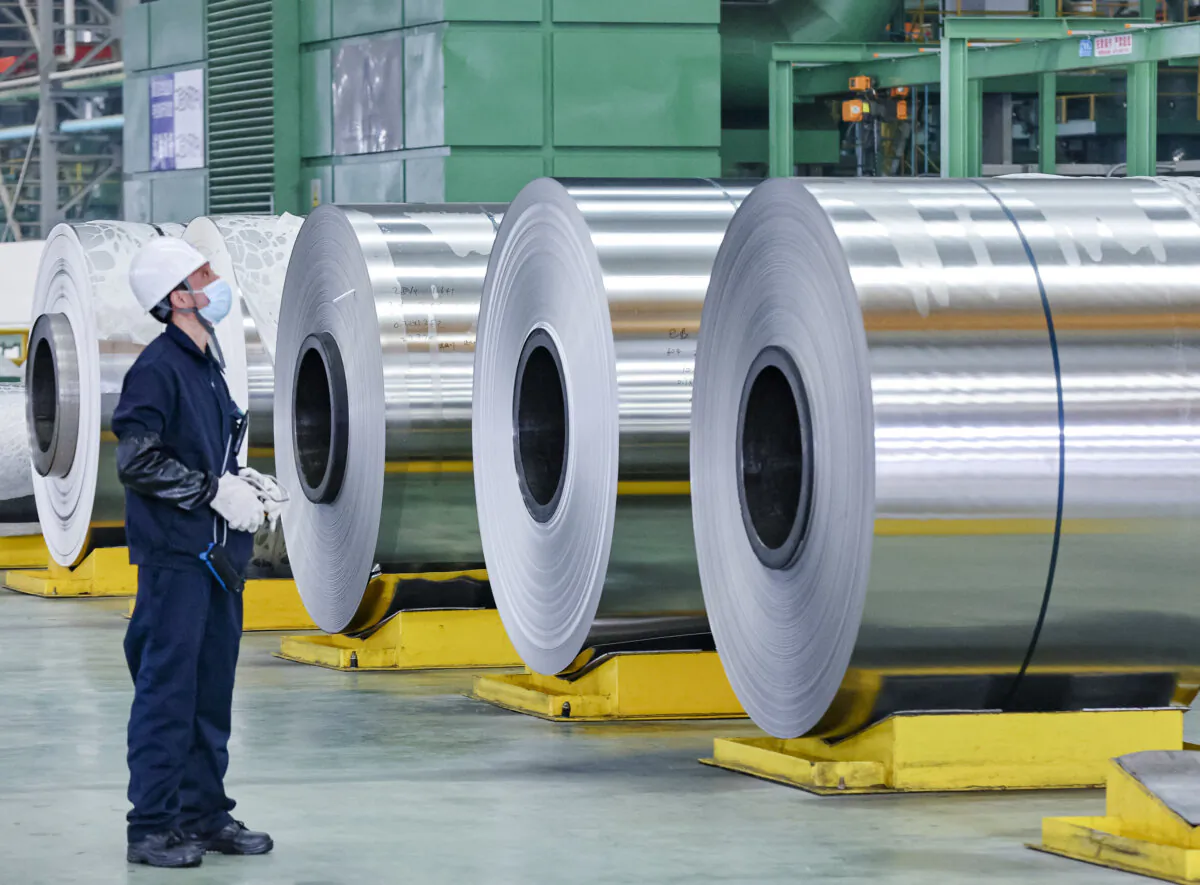

Vietnam has imposed anti-dumping duties on certain hot-rolled coil steel products from China, dealing a blow to Beijing’s ongoing efforts to use neighboring countries as transshipment points to disguise the origin of its exports and circumvent punitive tariffs.
The new tariff, ranging from 23.1 percent to 27.83 percent, took effect on July 6 and will remain in place for five years, Vietnam’s Ministry of Industry and Trade announced on July 7.
Vietnamese officials said they had launched an anti-dumping investigation into hot-rolled steel imports from both China and India. The investigation concluded that China-made steel was being dumped on the Vietnamese market and causing “significant damage” to the domestic steel industry.
“There is a correlation between the dumped imports from China and damage to the domestic sector,” the ministry said.
Meanwhile, imports from India were deemed “negligible” in volume and impact.
Based on those findings, Vietnam imposed the anti-dumping duties on China-made steel products.
Among the China-based companies hit with the highest duty rate of 27.83 percent are some of the world’s largest steel producers, including Angang Steel, Baoshan Iron & Steel, and Baotou Steel Union—all of which are state-owned enterprises. China, which produces more steel than the rest of the world combined each year, has long been criticized for flooding global markets with cheap steel and thereby weakening rival steel industries.
The announcement followed a newly finalized trade agreement between Vietnam and the United States. Under the deal, U.S. goods entering Vietnam will be exempt from tariffs, while Vietnamese goods entering the United States will face a 20 percent tariff—lower than the initial 46 percent reciprocal tariff announced in April but double the 10 percent baseline duty. Products from other countries transshipped through Vietnam to the United States will be subjected to a 40 percent tariff.
Analysts say the 40 percent rate is designed to crack down on transshipment schemes, particularly by China-based manufacturers attempting to reroute goods through Vietnam to evade higher U.S. tariffs.
On Monday, President Donald Trump announced additional tariffs on several other Asian countries, including Southeast Asian rerouting hubs of Cambodia (36 percent), Malaysia (25 percent), Indonesia (32 percent), and Thailand (36 percent).
While Trump did not directly name China in his tariff announcement, he has sent a clear message that any country caught acting as a middleman for China-made goods to avoid tariffs could face stiff penalties.
“Goods transshipped to evade a higher tariff will be subject to that higher tariff,” Trump said in letters to the countries that he posted on his Truth Social platform.
In the letters, the U.S. president told the Asian countries that the new, higher tariffs will take effect on Aug. 1. The Trump administration had previously delayed most of its April tariffs to give more time for negotiation.
China, meanwhile, is currently on a 90-day trade truce set to end on Aug. 12. It has until then to reach a formal agreement with the White House to avoid the reinstatement of tariffs that had spiraled to as high as 145 percent at one point.
 Friends Read Free
Copy
Facebook
Tweet
Friends Read Free
Copy
Facebook
Tweet