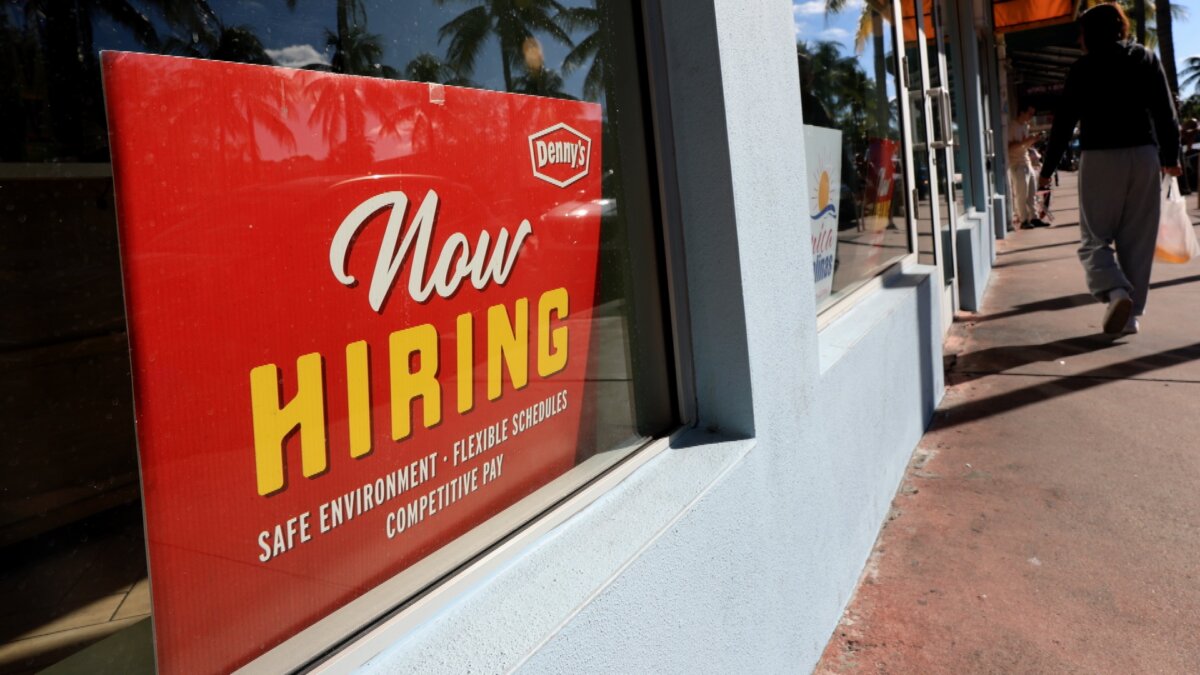

The number of Americans filing for first-time unemployment benefits declined for the week ending Dec. 13, signaling employment conditions are broadly stable.
Initial jobless claims declined by 13,000 to 224,000, according to new Department of Labor data. The previous week’s claims were revised up from 236,000 to 237,000.
Economists had projected a reading of 225,000.
The four-week average, which strips out week-to-week volatility, was little changed at 217,500.
An initial claims program for federal workers surged by 448, to 1,091. Market watchers have been paying closer attention to this metric to determine whether the current administration’s policies are affecting government payrolls.
Continuing jobless claims—a metric that measures the number of out-of-work individuals currently receiving unemployment benefits—increased to 1.897 million, from a downwardly adjusted 1.83 million.
Economists also track this measure to gauge how hard it is for unemployed workers to find jobs.
As more government economic data trickle in, the numbers have painted a mixed picture of the national labor market.
The U.S. economy added 64,000 new jobs in November, following a decline of 105,000 in October. The unemployment rate also rose to 4.6 percent from 4.4 percent.
Demand for labor has stalled, with job openings little changed in October at 7.67 million. Job quits, a key metric for workers’ confidence in the labor market, declined to a more than five-year low of 2.941 million.
Private-sector payrolls could be rebounding as companies added an average of 16,250 jobs per week in the four weeks ending Nov. 29, according to ADP Research.
“The jobs data certainly may be muddied since there was never a clear picture for when the government was shut down and we were not getting this data, and that this data will be mixed in for those prior months,” Mahoney Asset Management CEO Ken Mahoney told The Epoch Times in an emailed note.
The employment data for November may need to have an “asterisk attached to it,” Laura Ullrich, director of Economic Research in North America at the Indeed Hiring Lab, said in a Dec. 16 note.
A concerning trend, Ullrich notes, is that employment gains have been highly concentrated this year, led by health services and the private education sector.
“Put another way, without this sector, the overall labor market would have actually lost 131,000 jobs so far in 2025,” Ullrich said. “Needless to say, this limited job growth is very problematic, especially for workers in other sectors who don’t want or are not qualified for these jobs.”
Swaying the Fed
New inflation data and recent labor market developments could sway the Federal Reserve to focus on the maximum employment side of its dual mandate.
November’s annual inflation rate cooled sharply to 2.7 percent, from 3 percent in September. Core inflation, which omits noisy food and energy prices, slowed to 2.6 percent.
Both inflation readings came in below economists’ expectations.
The numbers should be enough for the Fed to pull the trigger on another quarter-point rate cut next month, Jamie Cox, managing partner for the Harris Financial Group, said in a note emailed to The Epoch Times.
“The inflation bump from tariffs is behind us, so the path is now clear for the Fed to lower rates again in January,” Cox said. “There is no longer a case for restrictive monetary policy.”
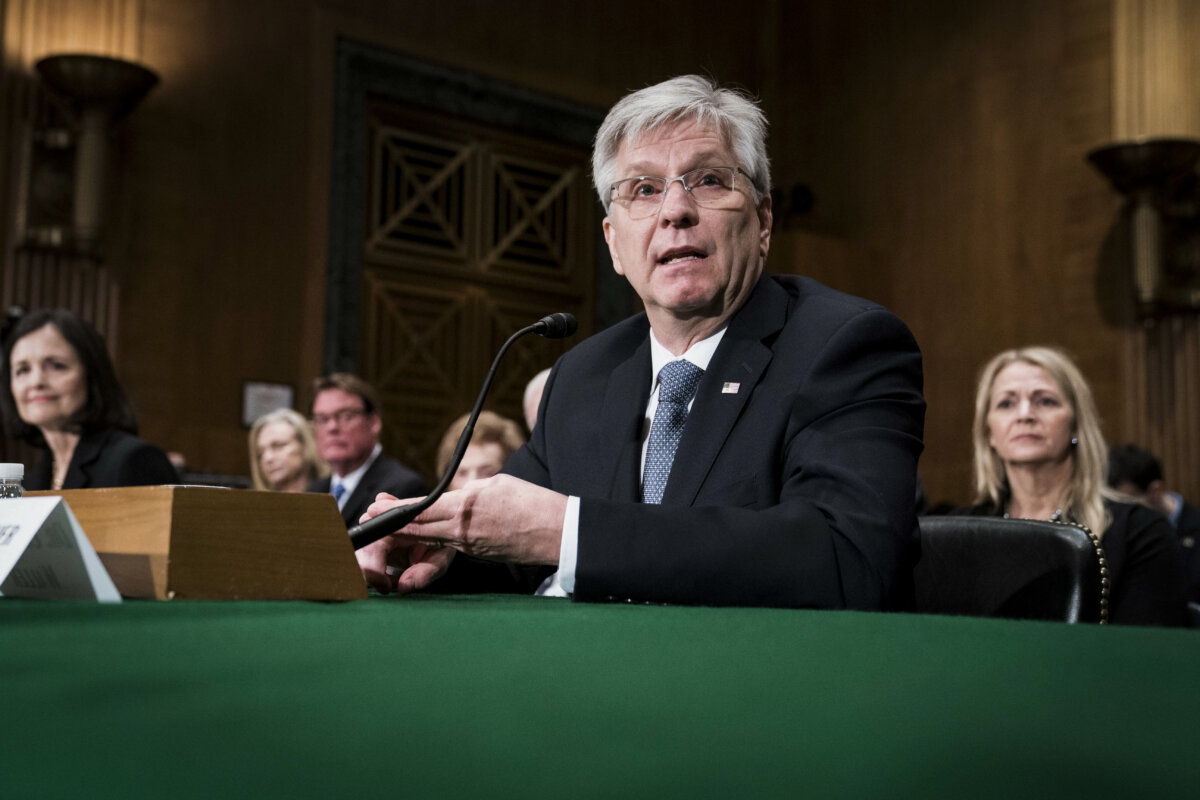
A growing chorus of monetary policymakers, particularly Fed Gov. Christopher Waller, has expressed concern about deteriorating labor market conditions.
Appearing at the Yale CEO Summit on Dec. 17, Waller advocated for a few more rate cuts to support a reversal in anemic payroll growth.
“I still think we’re probably, you know, maybe we’re 50 to 100 basis points off of neutral,” Waller said. “We’re close to zero job growth. That’s not a healthy labor market.”
The neutral policy rate is the rate at which monetary policy is neither stimulative nor restrictive for economic growth.
The rate-setting Federal Open Market Committee will hold its next two-day policy meeting on Jan. 27 and 28.
Investors anticipate the Fed will leave interest rates unchanged in a target range of 3.5 percent to 3.75 percent, according to the CME FedWatch Tool.
 Friends Read Free
Copy
Facebook
Tweet
Friends Read Free
Copy
Facebook
Tweet