
The Chinese regime is exploiting the economic demands of Taiwanese business groups to ramp up pressure on Taipei, a tactic that experts warn is deepening infiltration of the island and could sway year-end local elections.
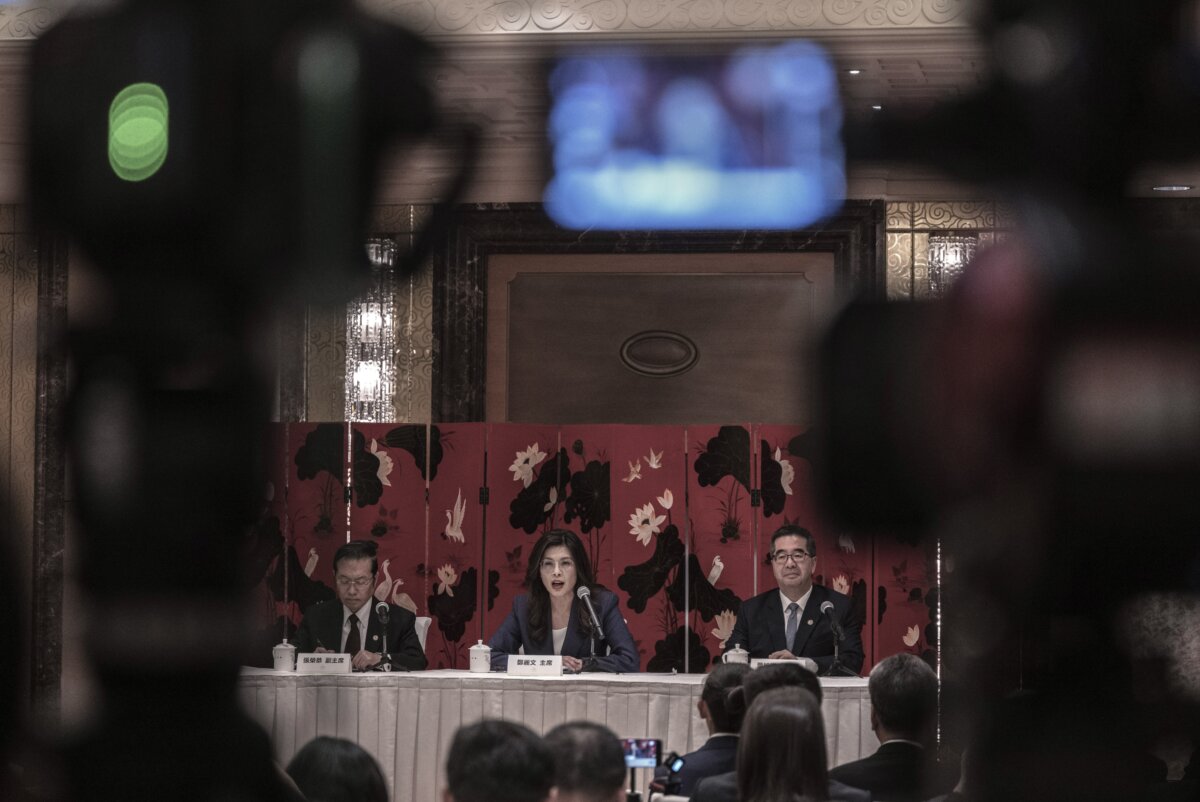
The General Chamber of Commerce of the Republic of China—Taiwan’s top business association—rallied industry groups from the travel, hospitality, and food sectors at a news conference on April 20 to back Beijing’s recent policy measures.
Hsu Shu-po, chairman of the chamber, called on the government to prioritize industrial growth and take stances that serve public interests, rather than “positioning itself against businesses and ordinary people.”
Hsu also urged the Chinese Communist Party (CCP) not to suspend these plans for “political reasons.”
Hsu said the associations “faced no pressure from Beijing” to express their support and that businesses have the freedom to voice their opinions.
Beijing announced on April 12 its 10-point plan targeting Taiwan, covering expanded Chinese market access for Taiwanese businesses, film and television content, and agricultural products, along with more cross-strait passenger flights and political party exchanges.
The move came just as Cheng Li-wun, chairwoman of the Kuomintang—a Beijing-friendly party that holds a legislative majority in Taiwan—wrapped up her six-day visit to China, a trip highlighted by her meeting with Chinese leader Xi Jinping.
The China Affairs Department of Taiwan’s ruling Democratic Progressive Party warned that the Chinese regime’s new policies could be suspended at any time or even used to sanction specific local industries.
It said the party supports only healthy cross-strait exchanges without political preconditions.
Taiwan is a self-governed democracy that the CCP has never ruled but has threatened to take by force if necessary.
Exploiting Economic Concerns
Hung Pu-chao, associate executive director of the Center for Mainland China and Regional Development Research at Taiwan’s Tunghai University, said the Chinese regime is exploiting the legitimate economic concerns of business leaders to pressure Taipei.
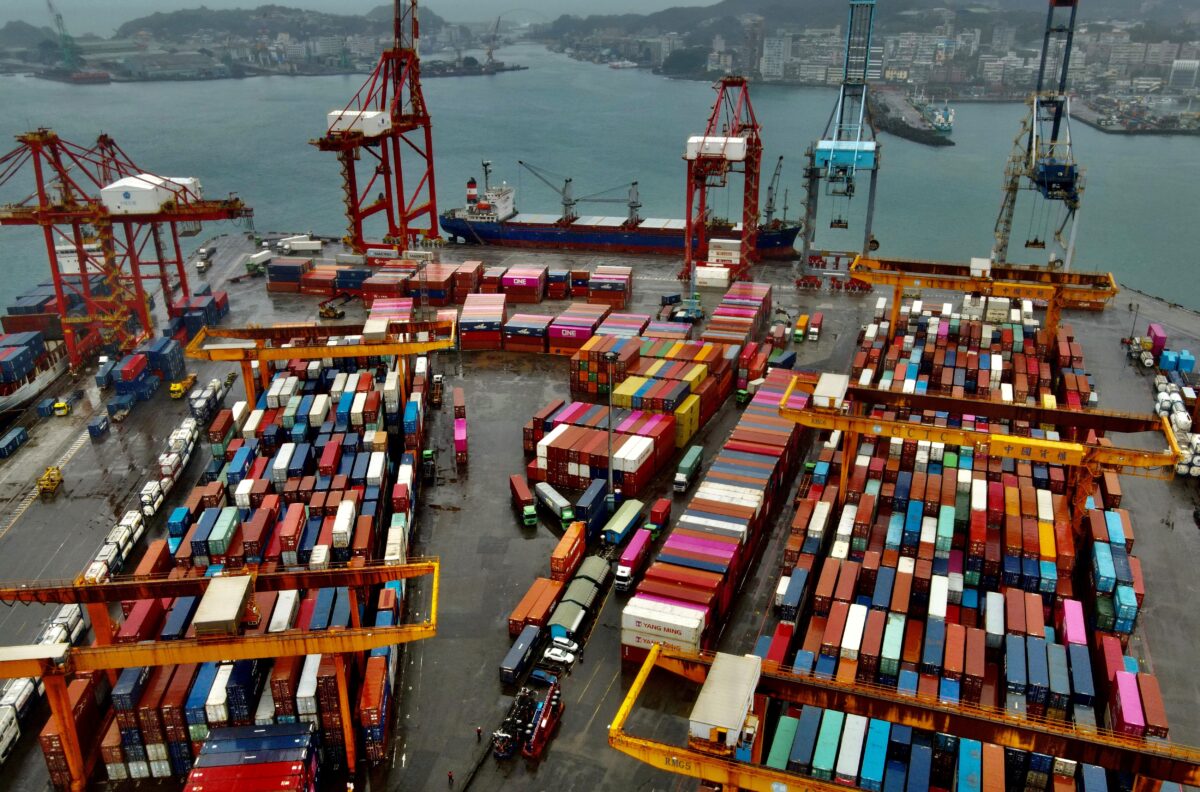
“While these trade groups have valid reasons to protect their market interests, the overall effect is that their voices are converted into political signals advantageous to Beijing,” Hung told The Epoch Times.
Hung said the crucial shift was the fact that the CCP no longer needed to promote its agenda unilaterally, because there were now “people inside Taiwan echoing China” instead.
Hung said issues tied to daily livelihoods trap the Taiwanese government in a dilemma.
“If Taipei accepts the groups’ suggestions, it plays right into the CCP’s hands, but rejecting them draws criticism for harming businesses,” Hung said.
“This shows Beijing is now leveraging the voices of Taiwan’s own institutions to expand its reach.”
Liu Wen-ping, former director of the Cross-Strait Status Research and Analysis Division at Taiwan’s Ministry of Justice Investigation Bureau, said that no evidence pointed to Chinese pressure on the chamber but that the group may still be functioning as an unwitting agent for Beijing.
“An organization need not have any direct link to the CCP to end up furthering Beijing’s agenda, as voluntarily amplifying pro-China positions can produce the same result,” Liu told The Epoch Times.
‘Pre-Set Narrative’
Hung said the Chinese regime’s ultimate objective is not necessarily to see the 10-point plan passed, but to ensure that the Taiwanese government is trapped in a “pre-set narrative” during its response.
“From the 10 measures following the Xi–Cheng meeting to industry groups speaking out, this is actually a series of orchestrations,” Hung said.
“Internally, it accumulates pressure within Taiwan; externally, it shapes an impression ahead of the U.S.–China leaders’ meeting that Taiwan is ‘the source of instability’ in cross-strait relations.”
The long-awaited summit between U.S. President Donald Trump and Xi is now set for Beijing from May 14 to May 15.
Liu said the most alarming among the incentives was the one designed to pull Taiwan’s film and television sector deeper into China’s orbit, with severe consequences if accepted.
“Entertainers going to China for their careers are now forced to declare political slogans like ‘Taiwan is an inalienable part of China’s territory,’ and their fans are indirectly manipulated into supporting Beijing’s ideology,” Liu said.
“This drastically diminishes Taiwan’s defense awareness, and if Taiwan completely stops treating China as an adversary, it will be incredibly easy for Beijing to invade the island.”
Liu said this targeted pressure is part of the Chinese regime’s broader infiltration of Taiwanese society, which is “deeply concerning,” as Beijing aggressively reaches out to all sectors to enable communist spy networks to expand locally.
“For instance, some Taiwanese media outlets have long been infiltrated to whitewash Beijing and feed crucial information back to it, a tactic designed to bring the island’s public discourse in line with the CCP’s political agenda,” Liu said.
“We must not forget that China’s ultimate goal toward Taiwan is annexation.”
Taiwan’s Qiaotou District Prosecutors Office in January accused a journalist of illegally paying military personnel for classified information that was later passed to Chinese nationals.
Broader United Front Tactics
The 10-point package has already intensified Taiwan’s partisan divide, creating an opening that Beijing will use to advance its united front strategy—a CCP campaign to penetrate and influence foreign societies from within—according to Liu.
“China will continue throwing out contentious policies to keep Taiwan too fractured to speak with one voice,” Liu said.
In a similar vein, Hung said Beijing would keep rotating its targets—moving from industries to local exchanges to specific demographics—to leave Taipei constantly scrambling.
“These seemingly scattered issues actually create the same pressure of forcing the Taiwanese government to take a stance on whether to accept them,” Hung said.
Hung said the greater concern is that local groups backing Beijing’s agenda might fuel public skepticism toward the ruling administration’s competence.
“This dissatisfaction could ultimately show up at the ballot box in local elections at the end of this year, giving Beijing’s influence operations a concrete political gain,” Hung said.
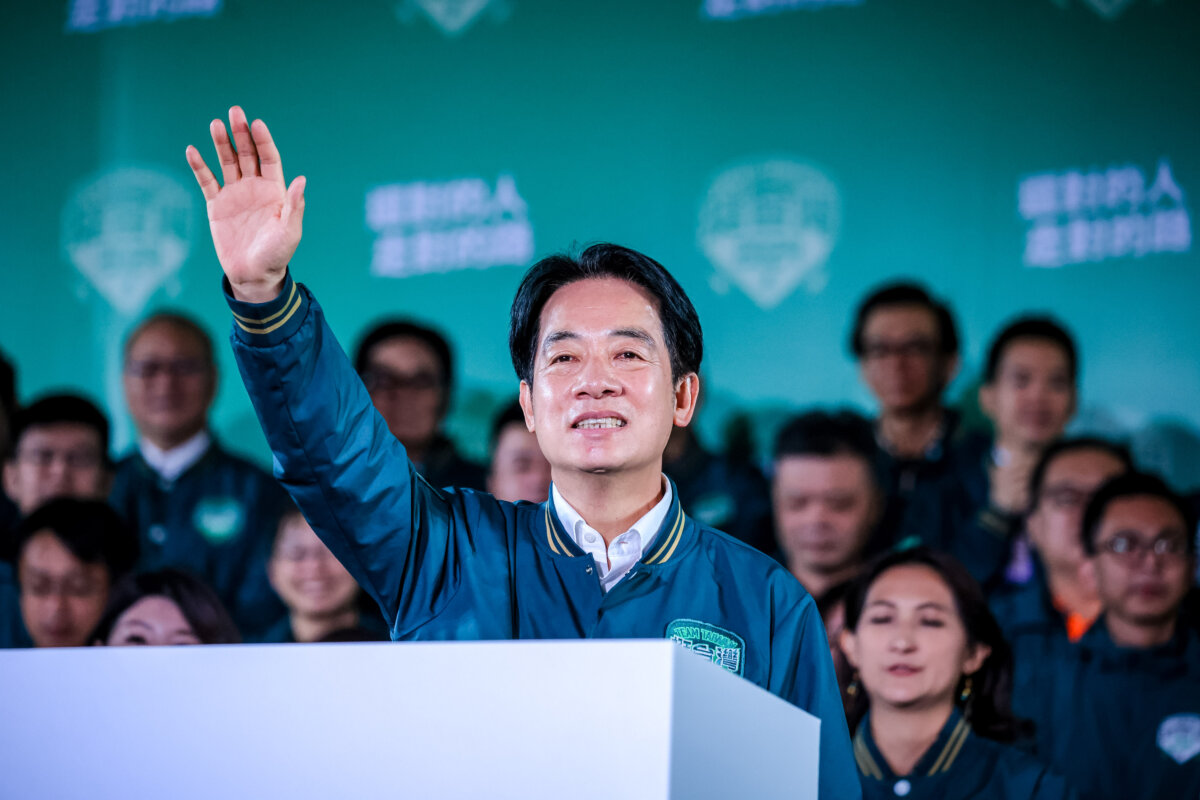
Taiwan is set to hold its nine-in-one local elections on Nov. 28, with voters choosing mayors, councilors, and other local representatives in what analysts view as a referendum on President Lai Ching-te’s leadership since he took office in 2024.
Hung said Beijing would keep setting the agenda, and without government-to-government dialogue on equal footing, Taiwan would have no way to push back.
“From global diplomacy to local elections, the Chinese regime has turned every issue into a pressure point, chipping away at Taiwan’s ability to govern on its own terms,” Hung said.
 Friends Read Free
Copy
Facebook
Tweet
Friends Read Free
Copy
Facebook
Tweet