
News Analysis
Washington’s latest threat assessment report indicates Beijing prioritizes taking control of Taiwan without military force, a strategy experts warn will drive the regime to intensify gray-zone tactics, political infiltration, and cognitive warfare against the island.
The U.S. Intelligence Community (IC) released its 2026 Annual Threat Assessment on March 18, outlining global security risks to U.S. interests, including China’s looming threat to Taiwan.
Taiwan is a self-ruled democracy that has never been governed by the Chinese Communist Party (CCP), although Beijing continually claims the island as its own territory and has not ruled out the use of force to annex it.
The document said Beijing prefers to “achieve unification without the use of force, if possible,” even as the CCP maintains its threat of an armed attack against Taiwan.
The report assesses that Chinese authorities do not currently plan to execute an invasion of Taiwan in 2027, nor do they have a fixed timeline for achieving annexation.
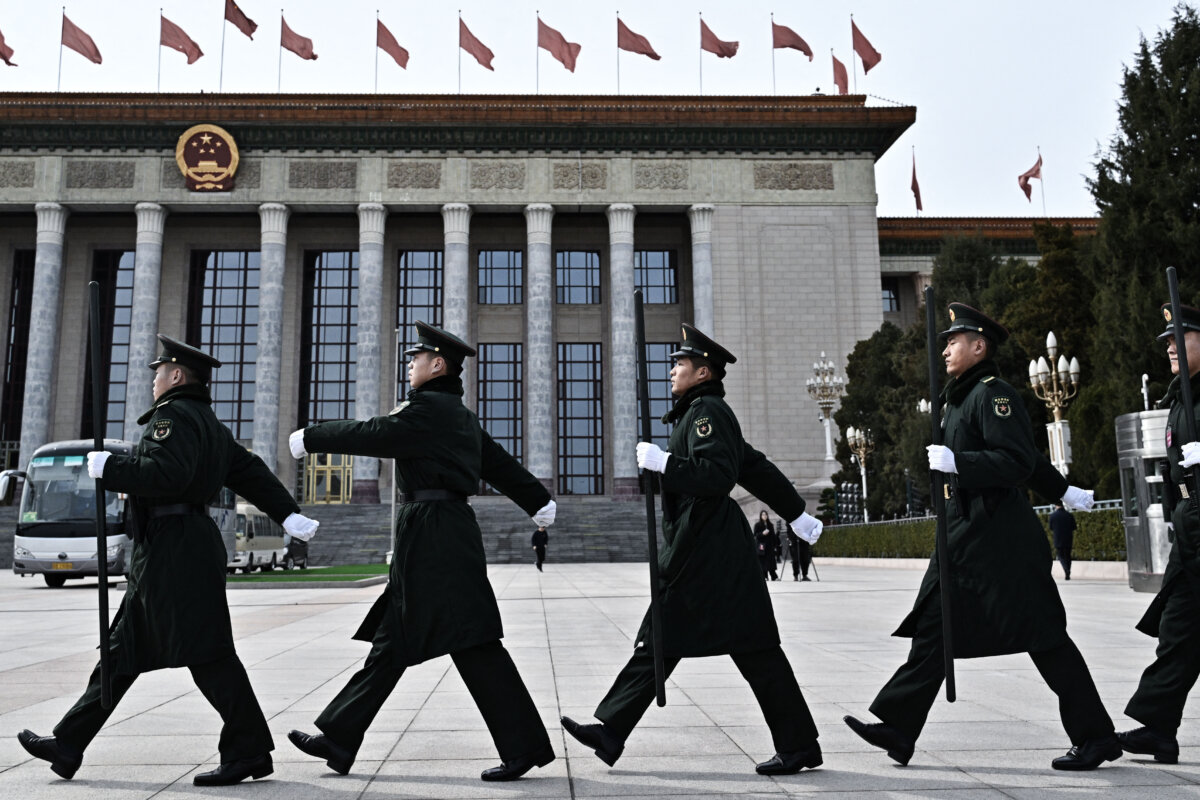
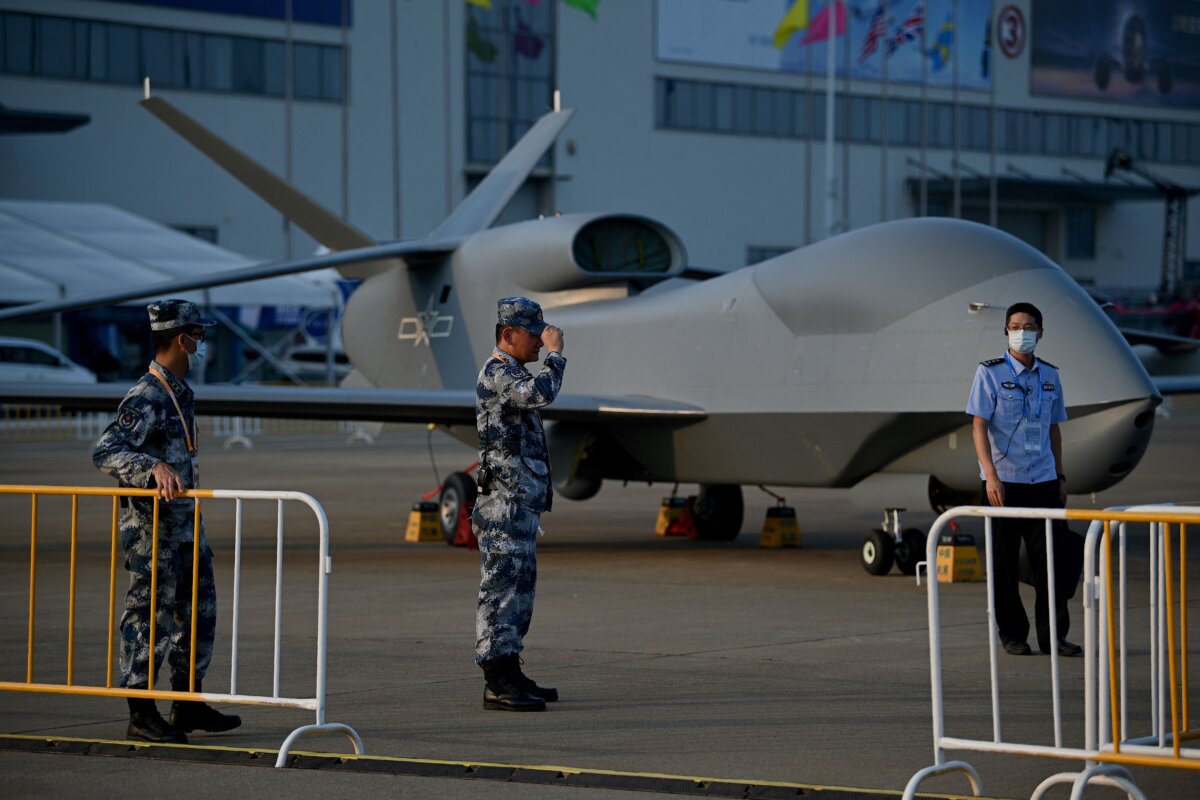
However, it suggests that the People’s Liberation Army (PLA) continues to develop military plans and capabilities to seize Taiwan by force if ordered by Beijing.
The report said China publicly insists that taking control of Taiwan is required to accomplish its goal of “national rejuvenation” by 2049—the 100th anniversary of the founding of the People’s Republic of China by the CCP.
When deciding whether to deploy military force, Beijing will evaluate several critical variables, including the PLA’s readiness, Taiwan’s political climate, and the likelihood of U.S. military intervention, the report notes.
Incapable by 2027
The finding offers a different assessment from the Pentagon’s 2025 annual review, which states the Chinese military aims to have the capability to fight and win a war over Taiwan by 2027.
Dennis Weng Lu-chung, an associate professor of political science at Sam Houston State University, said the IC report does not suggest that Washington believes Taiwan faces zero risk over the next one to two years, but rather clarifies that 2027 is likely not a predetermined year for war.
“The reasons include Beijing’s clear recognition that an amphibious assault is highly difficult and carries immense risk, and the prohibitive costs of war,” Weng recently told The Epoch Times.
Weng added that the report also shows the United States believes the PLA still lacks sufficient joint operations and amphibious power projection capabilities.
“Overall, the necessary conditions and incentives to launch an offensive against Taiwan in the near term simply do not exist,” Weng said.
Yeh Yao-yuan, a professor of international studies at the University of St. Thomas in Houston, said China’s shrinking global market share since the 2018 U.S.–China trade war and the PLA’s internal political instability are key factors shaping Washington’s shifted evaluation.
“The purge of generals is a massive blow to the command structure, driving the U.S. to assess that the PLA cannot effectively execute major tactical deployments right now,” Yeh said.
“Furthermore, with China’s economy in a slump, it remains a major question how much capital the CCP can actually dedicate to military expansion, suggesting previous estimates of a 2027 invasion were overstated.”
Gray-Zone Escalation
Despite the lack of an immediate invasion plan, the CCP has intensified gray-zone tactics—coercive actions below the threshold of war—around Taiwan since then-U.S. House Speaker Nancy Pelosi’s 2022 visit to the island.
For example, the PLA staged a military encirclement of Taiwan from Dec. 29 to Dec. 31—the CCP’s seventh such operation targeting the territory since August 2022.
Yeh said Beijing uses these exercises to gradually normalize the waters surrounding Taiwan as its territory rather than launching an all-out assault.
“If the international community accepts these encirclement drills without objection, the CCP could eventually claim that global silence equates to recognizing its sovereignty over Taiwan, which poses a major risk,” he said.
Yeh said the constant military maneuvers aim to desensitize the Taiwanese public, potentially causing citizens to misjudge future large-scale threats and question their government’s national defense decisions.
“Once Taiwanese citizens become indifferent to the regime’s maneuvers, they will be caught off guard when conflict erupts, ultimately achieving China’s objective,” Yeh said.
Weng said the PLA’s escalating activities around the island in recent years serve as constant pressure and testing rather than mere shows of force.
“Gray-zone operations are low-cost, cumulative, and highly controllable, allowing the military to gradually blur boundaries and test responses using aircraft, coast guard vessels, and exercises,” Weng said.
“In the long term, this not only reshapes the status quo [between Taiwan and China] but also elevates the risk of miscalculation and conflict.”
Political Infiltration
Weng said the assessment of Beijing’s preference for non-military unification likely encompasses political infiltration within Taiwan.
“Recent espionage cases show the CCP targets individuals and groups across the political spectrum who are ‘profit-driven and easily manipulated,’ allowing Beijing to disrupt Taiwan’s governing system and policy operations,” Weng said.
Taiwan’s Qiaotou District Prosecutors’ Office in January accused a journalist from Chung T’ien Television (CTiTV)—a Taiwanese media outlet known for its pro-Beijing stance—of paying active-duty military personnel cash to obtain military intelligence, which was then passed to Chinese nationals.
Yeh said the CCP also attempts to infiltrate Taiwan’s political landscape by financing and covertly influencing China-leaning political parties to block legislation favorable to Taipei.
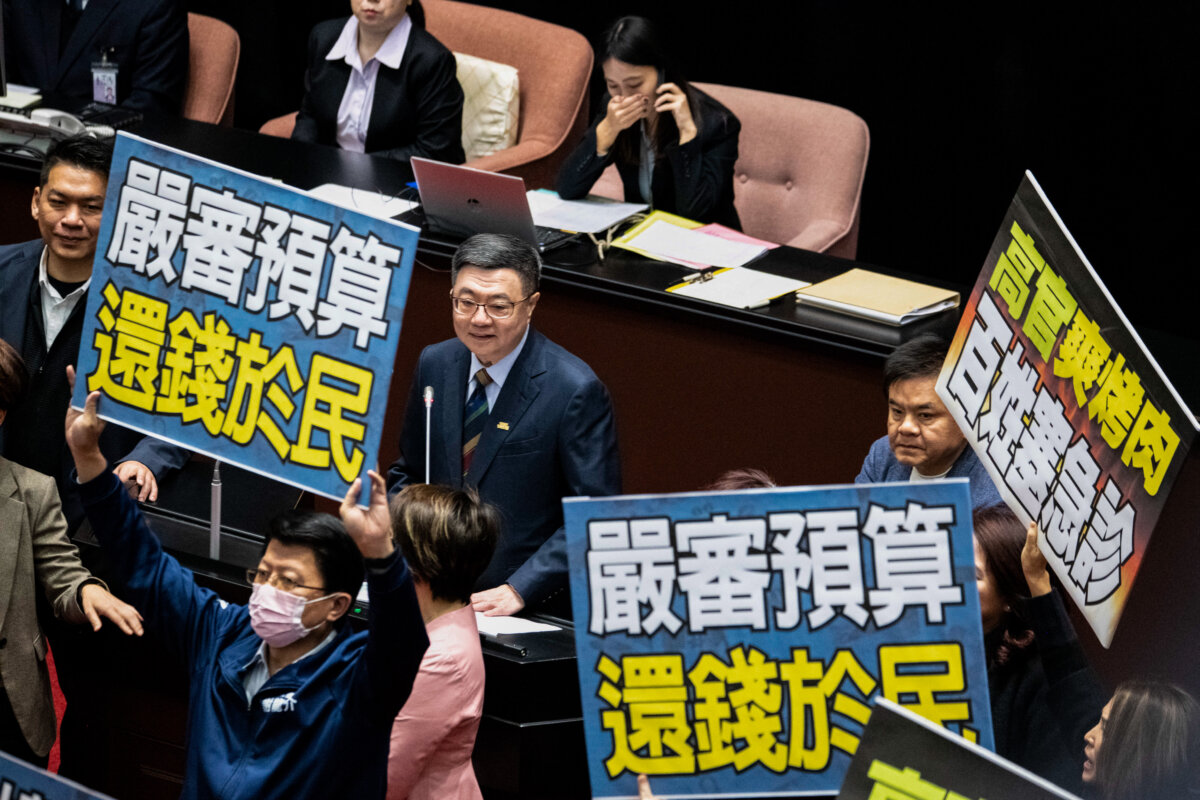
“For instance, some Taiwanese political parties are openly stalling the national budget to paralyze government operations,” Yeh said.
“But they dare not act too openly in Beijing’s favor, as the majority of Taiwanese reject unification and voters would punish them at the ballot box.”
Taiwanese Vice Premier Cheng Li-chun said on March 22 that the legislative gridlock over the general budget and a special defense bill—obstructed by the Kuomintang (KMT) and smaller Taiwan People’s Party (TPP)—threatens to delay military drone research and the nation’s defense supply chain.
Cognitive Warfare
Beyond political infiltration, Yeh said the CCP’s cognitive warfare is also one of the non-military coercive tactics against Taiwanese citizens and is far more aggressive.
“The Chinese government has been co-opting local temples, hiring so-called ‘internet navy,’ and manipulating specific Taiwanese media outlets to brainwash the public and dilute their aversion to the CCP,” Yeh said.
“Internet navy” refers to paid online trolls tasked with flooding social media with propaganda and disinformation, including China’s “50-cent army,” known for spreading pro-Beijing narratives online.

Taiwan’s National Security Bureau reported in January that the CCP launched campaigns to spread narratives designed to erode public trust in the United States and Taiwan’s military, and that the agency documented more than 2.3 million pieces of disinformation and 45,000 suspicious accounts in 2025.
Yeh said these fabricated narratives have successfully achieved one of Beijing’s key goals: making some Taiwanese citizens question Washington’s reliability and commitment to the island’s defense.
However, he said these psychological operations have shown limited results.
“The CCP has been waging cognitive warfare against Taiwan for nearly two decades, yet Taiwanese affinity for Beijing continues to fall year over year, suggesting these campaigns have failed to shift broader public sentiment,” Yeh said.
“Even younger Taiwanese heavily exposed to Beijing’s propaganda, including teenagers on TikTok, still overwhelmingly reject unification and prefer democracy.”
In a similar vein, Weng said Beijing’s influence campaigns are designed to exploit existing domestic polarization rather than fundamentally change Taiwanese citizens’ desire for unification.
“Beijing’s primary focus is not to persuade everyone, but to widen societal divides and erode institutional trust,” Weng said.
“This will make it difficult for Taiwan to form a unified stance, so the public must remain highly vigilant.”
 Friends Read Free
Copy
Facebook
Tweet
Friends Read Free
Copy
Facebook
Tweet