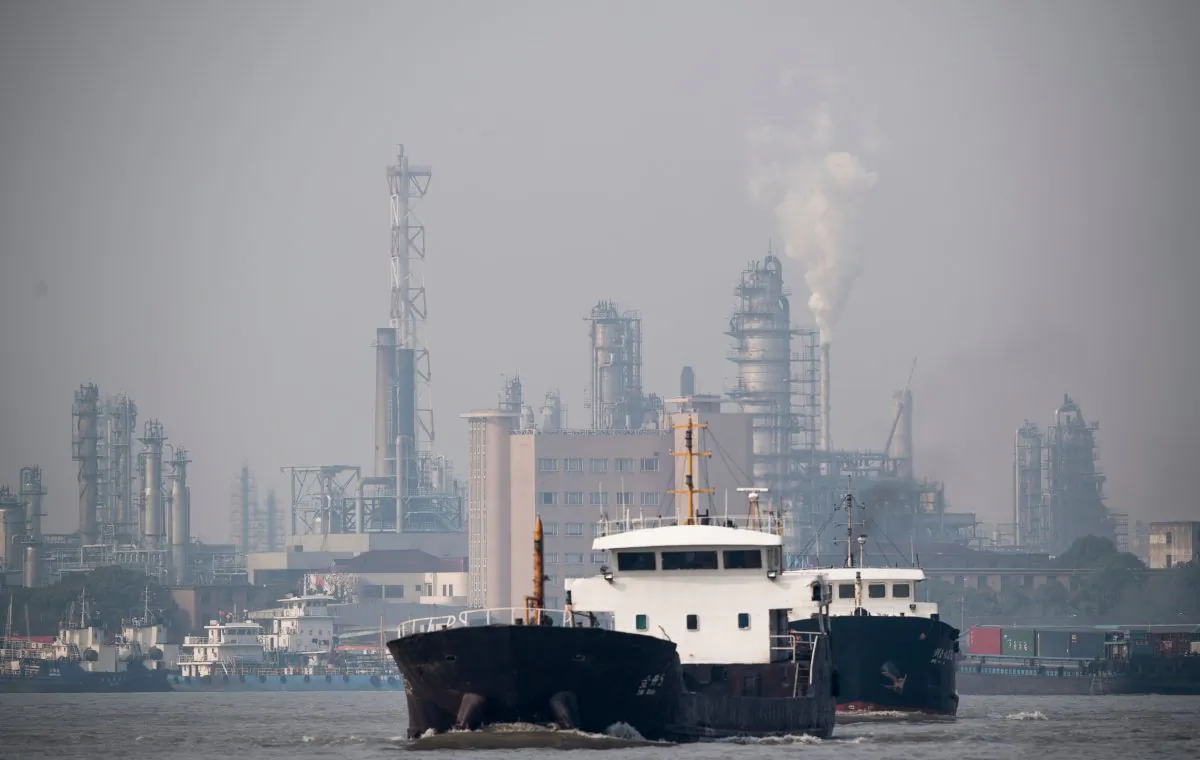
Following the U.S. sanctions against China’s “teapot” oil refineries for buying sanctioned Iranian oil, the Chinese communist regime’s Ministry of Commerce issued a blocking statute against the sanctions.
Analysts who spoke to The Epoch Times indicated that although it’s the first time that Beijing has used the law to counter U.S. sanctions, its effects will be limited, and the Chinese regime has few options to counter the sanctions.
As part of the U.S. government’s ramped-up efforts to cut off the Iranian regime’s oil revenue, the Treasury Department announced on April 24 sanctions against Chinese teapot refiner Hengli Petrochemical (Dalian) Refining Co., as well as approximately 40 shipping companies and vessels belonging to Iran’s “shadow fleet.”
Teapot refineries are small and privately owned. Hengli Petrochemical, China’s second-largest teapot refinery, has been identified as one of the key buyers of Iranian oil.
The U.S. Treasury Department previously added four other Chinese teapot refineries to its sanctions list.
In response to the U.S. sanctions, China’s Ministry of Commerce activated the “Measures for Blocking the Improper Extraterritorial Application of Foreign Laws and Measures” (Blocking Measures) on May 2, designating the U.S. sanctions against five Chinese refineries as “improper extraterritorial application” and ordering companies to ignore them.
The core issue underlying the Chinese regime’s response is not merely a legal matter, but rather a competition for international discourse power and dominance over global norms, Chen Wen-chia, a professor of international business and vice president of Kainan University in Taiwan, told The Epoch Times.
“What the Chinese regime fears is that the scope of its dominance and its room for development will be further constricted,” Chen said.
The United States is “acting by the book,” and the core issue remains the United States’ broader Middle East strategy and its policy toward Iran, Su Tzu-yun, a research fellow at Taiwan’s Institute for National Defense and Security Research, said of the U.S. sanctions.
“Beijing, while unwilling to appear weak, faces limited practical scope for retaliation in the international market,” Su told The Epoch Times.
The strategic consideration behind the U.S. sanctions is a shift in focus—from regulating behavioral norms to achieving a physical “zeroing out,” Davy J. Wong, a U.S.-based independent political economist, told The Epoch Times.
“Furthermore, these U.S. sanctions are not merely directed at isolated transactions; rather, they target the entire production system of the supply chain for pinpoint elimination—a comprehensive purge spanning the entire industrial chain,” Wong said.
“By striking at ports, operators, and foreign exchange institutions, they have effectively cleared out the ‘shadow space’ of illicit activity, thereby blocking the Iranian oil trade and sealing off those informal physical nodes and loopholes in financial flows.”
While the premise behind China’s blocking measures is that “they constitute an act of defense regarding legal sovereignty—rather than being merely a power struggle, they are fundamentally defensive in nature,” Wong said.
The blocking measures represent the specific implementation of China’s Anti-Foreign Sanctions Law, Wong said.
“This constitutes an institutionalized countermeasure: For the first time, China has elevated the non-recognition of foreign sanctions from the realm of diplomatic directives to that of legally enforceable mandates,” he said. “This signifies that any enterprise complying with U.S. sanctions will face legal accountability within China.”
Impact on Companies
The U.S. Treasury Department pointed out that China’s teapot refineries have long engaged in large-scale purchases of Iranian crude oil, serving as a vital channel supporting Iran’s oil economy and providing a critical source of revenue for the Iranian regime and military.
Treasury Secretary Scott Bessent said in late April that, at President Donald Trump’s direction, the Treasury will “continue to constrict the network of vessels, intermediaries, and buyers Iran relies on to move its oil to global markets.”
“Any person or vessel facilitating these flows—through covert trade and finance—risks exposure to U.S. sanctions,” he said.
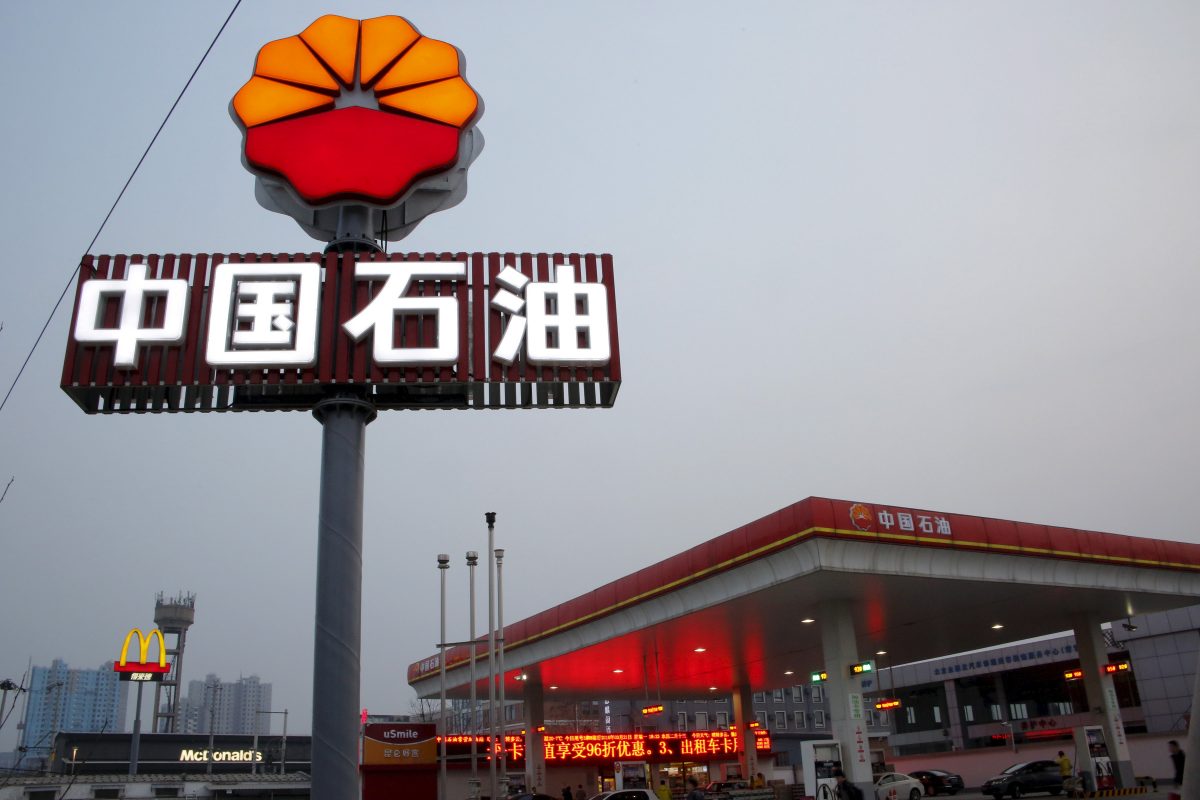
For enterprises with multinational operations—such as banks, logistics firms, and oil companies—this has evolved into a compliance dilemma, Wong said.
“They are forced to strike a balance between the risk of being cut off from the global system by the United States and the threat of being penalized under Chinese law,” he said.
Chen said that from a practical standpoint, “as long as Chinese enterprises seek to access international markets, they are compelled to reckon with the tangible consequences of U.S. sanctions.”
He said that the United States’ true advantage lies in its command over the global financial system—“specifically, the U.S. dollar settlement mechanism and the international banking network.”
The Chinese regime’s blocking measures do not have a significant direct impact on the United States, Chen said.
Amid the restructuring of energy and payment systems, globalization is entering a phase of heightened fragmentation, Wong said.
“Two major blocs—led by the United States and China—are currently taking shape, characterized by increasingly severe incompatibility,” he said.
Referring to the SWIFT international payment system and China’s Cross-border Interbank Payment System (CIPS), he said the two networks “are set to undergo further decoupling, particularly within the realm of energy trading, as CIPS uses the [renminbi] for settlement.”
China’s blocking measures carry a strong symbolic significance, Wong said.
“It is designed to signal to the international community that Beijing is establishing a parallel legal framework—one independent of U.S. compliance laws—and signifies Beijing’s intent to break the United States’ control of discourse surrounding global economic policy,” he said.
Leveraging for Trump–Xi Summit
Trump’s visit to Beijing is slated for May 14–15. The meeting was postponed from an original date in March because of developments in the Iran war.
The United States has intensified sanctions against Chinese refineries ahead of the Trump–Xi Jinping summit, while the Chinese Communist Party (CCP) has issued countermeasures.
“Both sides are thereby accumulating bargaining chips for the meeting, yet the underlying structure of their strategic confrontation remains unchanged,” Su said.
The United States’ focus remains on “curbing the CCP’s expansion,” he said.
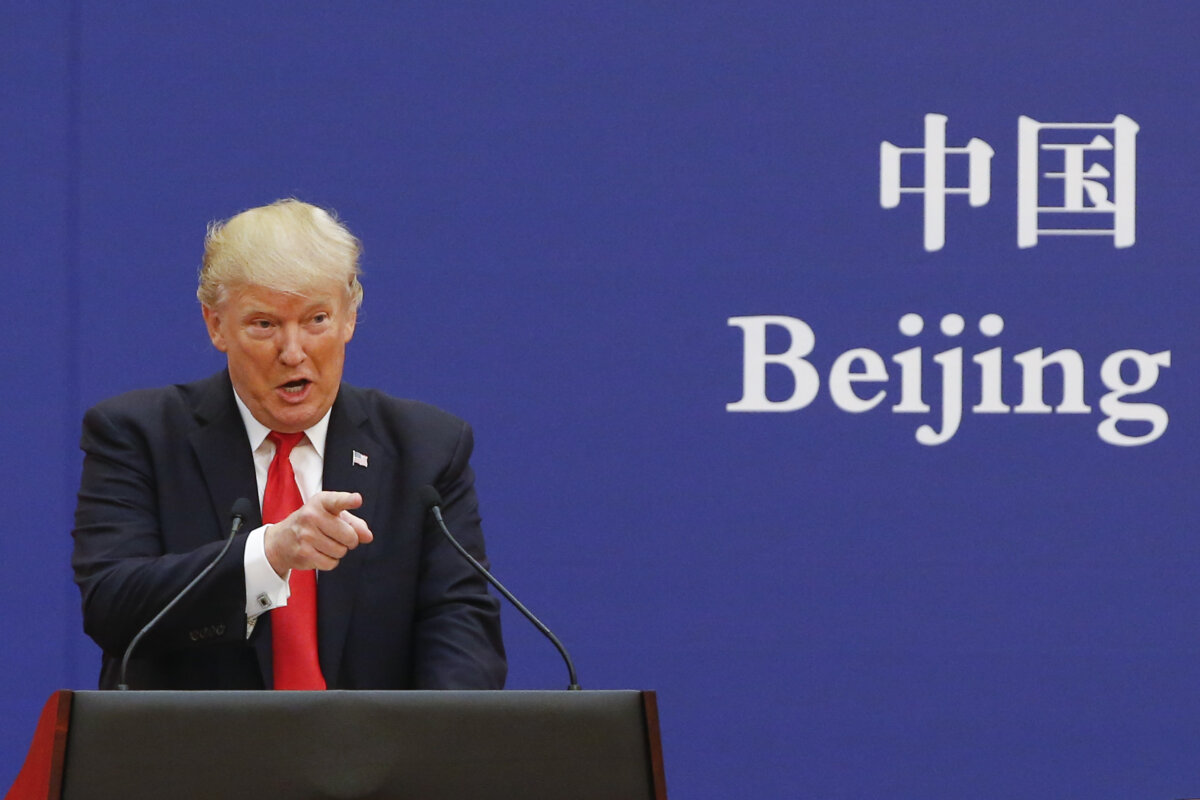
U.S.–China relations are trending toward tension in the short term, but they will not necessarily spiral out of control, Chen said.
“On the contrary, they may enter a state of simultaneously confronting each other while preparing for negotiations,” he said.
Even if Trump’s visit to China results in a short-term agreement, “Beijing’s blocking statutes and the U.S.’s supply-chain sanctions—deployed as legal instruments—will remain in a state of long-term confrontation, becoming the new normal in this ongoing geopolitical contest,” Wong said, as the conflict between the United States and China will become increasingly overt and institutionalized.
As supply chains undergo restructuring, enterprises will be compelled to adopt a “two separate nations” operational strategy, he said.
“This entails physically isolating and completely segregating their China-based operations from their global business activities, effectively transforming them into two entirely distinct and independent operating systems,” he said.
Luo Ya, Li Jing, and Yi Ru contributed to this report.
 Friends Read Free
Copy
Facebook
Tweet
Friends Read Free
Copy
Facebook
Tweet