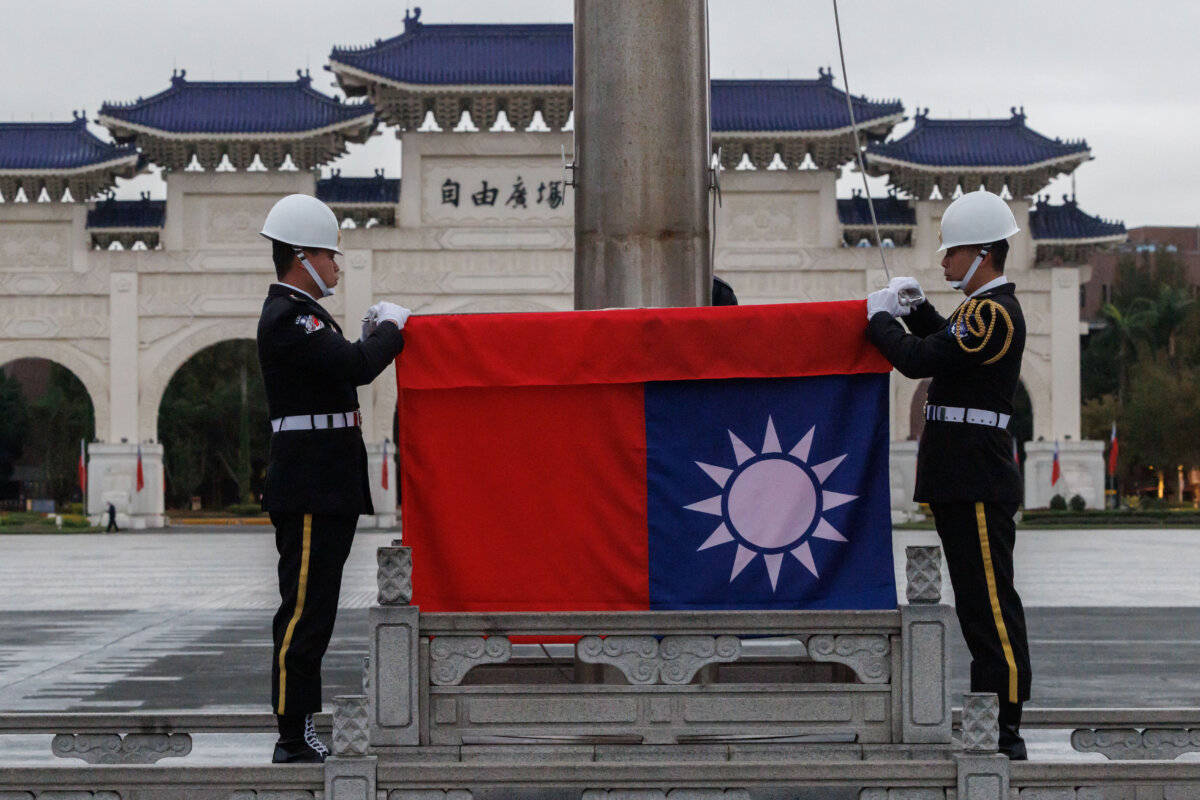

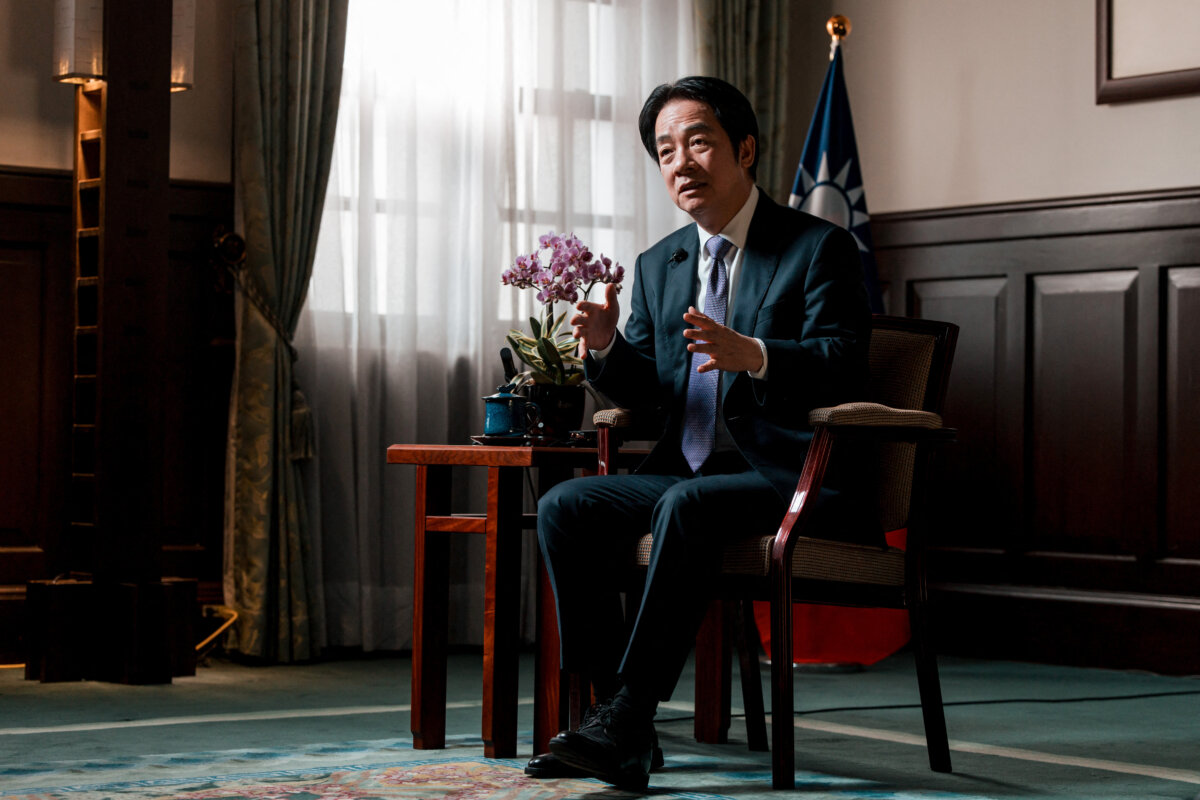
Taiwanese President Lai Ching-te’s thwarted trip to Eswatini exposes Beijing’s campaign to squeeze Taipei’s dwindling diplomatic space, experts say, yet the move will likely draw greater global support for the democratic island.
Taiwanese Foreign Minister Lin Chia-lung, who was dispatched by Lai as his special envoy, arrived in Eswatini on April 25 to attend the 40th anniversary of the accession and 58th birthday celebration of King Mswati III—Africa’s last absolute monarch.
The Presidential Office of Taiwan said the visit was to convey congratulations to the king, noting that the two nations have enjoyed 58 years of diplomatic relations marked by close cooperation in health care, agriculture, infrastructure, and trade.
Lai was originally scheduled to depart for the small southern African nation on April 22 but canceled his travel plans after Seychelles, Mauritius, and Madagascar abruptly revoked flight permits for the president’s charter plane, according to the office.
It said the real reason behind their decisions was “intense pressure from the authorities in China, including economic coercion.”
The cancellation is unprecedented, as no Taiwanese leader has ever scrapped an official visit because of overflight denials.
China’s Taiwan Affairs Office on April 22 dismissed Taipei’s statement and praised the three African nations for their actions.
Taiwan, whose formal name is the Republic of China (ROC), is a self-governed democracy that Beijing has never controlled but claims as its territory and has vowed to take by force.
Since the People’s Republic of China (PRC)—the Chinese communist regime’s official name—took the “China” seat at the United Nations from the ROC in 1971, most countries have shifted their formal recognition to Beijing and kept only unofficial ties with Taipei.
The island has just 12 diplomatic allies in the world, including Eswatini, its sole partner in Africa, along with a handful of nations in the Pacific and Latin America.
Despite lacking formal relations, Taiwan has long maintained extensive economic and technological cooperation with key international players, including the United States, the European Union, and Japan.
Choking Off Taiwan
Frank Tian Xie, professor in business and marketing at the University of South Carolina–Aiken, said Beijing’s orchestration of the overflight cancellations was aimed at choking off Taiwan’s already severely restricted diplomatic space.
“When the Chinese Communist Party (CCP) brings a new country into its orbit, it requires that country to actively suppress Taipei’s international presence as a condition of the relationship,” Xie told The Epoch Times.
“The endgame is to erase Taiwan from the global stage altogether.”
Xie said the incident also reflects Beijing’s attempt to convince Taiwan that maintaining an anti-China political agenda “guarantees international isolation.”
“The CCP views Lai as a ‘stubborn Taiwan independence separatist,’ making it inevitable that it will continue using diplomatic and political pressure to completely marginalize the island,” Xie said.
Shen Ming-shih, research fellow at Taiwan’s Institute for National Defense and Security Research, said Beijing preemptively derailed the trip because Lai’s political stance would have obligated the regime to take further punitive action after any successful visit on his part, reinforcing its image as the cross-strait aggressor.
“China would inevitably have to respond with military drills if Lai had made the trip, and that would shatter the goodwill generated by the Kuomintang (KMT) chairwoman’s visit to China,” Shen told The Epoch Times. “Yet, by blocking it behind the scenes, Beijing has already made its true intentions clear.”
Cheng Li-wun, party chair of the KMT—a Beijing-friendly party that holds a legislative majority in Taiwan—wrapped up a six-day trip to China on April 12, during which she met with Chinese leader Xi Jinping.
Shen said the episode also exposes the price that African nations may ultimately pay for aligning with Beijing.
“China wants to use the tactic to demonstrate its control over the African continent,” Shen said. “But it also shows that China’s aid and infrastructure projects actually prevent these African countries from having independent diplomatic policies, making them more subservient to the regime.”
China has been Africa’s top trading partner for 17 consecutive years, with bilateral trade hitting $348 billion in 2025, according to Beijing-controlled newspaper China Daily.
Allies and Partners
Shen warned that the action was merely a prelude, with the Chinese regime likely to ramp up pressure through both punitive measures and soft power tools.
“Coercive options could include sanctions or shutting Eswatini out of African forums, while a ‘gentler’ approach would lean on cultural and economic ties,” Shen said.
Shen said Beijing will also likely dangle economic incentives, but relations between Mbabane and Taipei are unlikely to be affected, as King Mswati III is a long-time supporter of Taiwan.
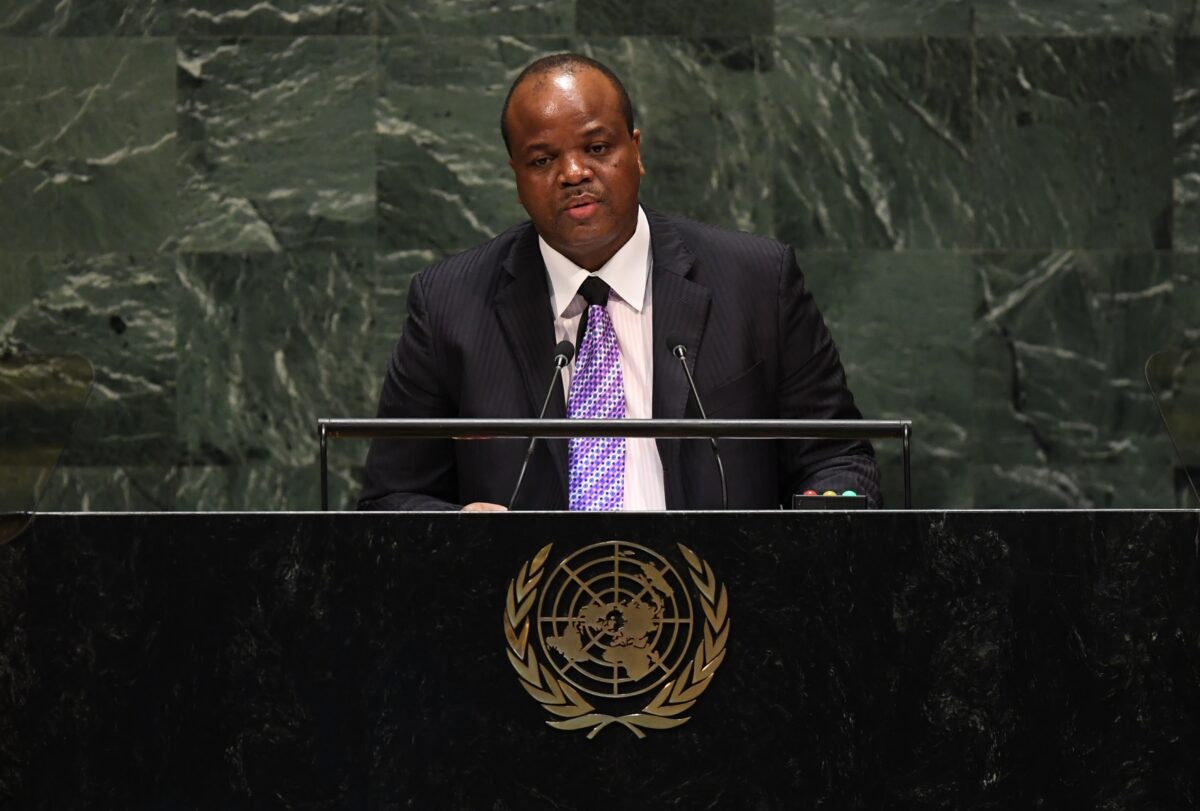
“Eswatini is the only African country without tariff-free trade with China, but if the Taiwan ally seeks better economic terms, that could prompt Beijing to make overtures,” Shen said.
“However, if Taiwan continues providing technological or agricultural assistance, Eswatini won’t necessarily lean closer to the CCP.”
Yen Chen-shen, professor at National Chengchi University in Taiwan, concurred, saying Taiwan and Eswatini’s partnership remains intact and will withstand Beijing’s interference.
“In the future, any Taiwanese official visiting Eswatini can still take commercial flights, which eliminates the issue of overflight clearances,” Yen told The Epoch Times.
“The alliance looks solid for now—Eswatini’s king and senior officials are frequent visitors to Taiwan, and the two governments maintain close contact.”
Still, the incident highlights the considerable effort that Taiwan pours into maintaining formal ties with smaller allies and may prompt the island to redirect that energy toward more substantive partnerships, according to Xie.
“For instance, although Taiwan has no formal ties with the U.S., the trade relationship delivers far greater tangible benefits than those with any official ally, not to mention significantly more political weight,” Xie said.
“This kind of meaningful diplomatic cooperation is what truly benefits Taiwan, and it is something the CCP cannot suppress.”
Global Support
Shen said Beijing is increasingly moving to obstruct overseas trips by Taiwanese officials that challenge the CCP’s political interests, a tactic that ultimately generates blowback.
“If China boycotts or sanctions official travel by Taiwan’s foreign minister or political appointees, it will certainly trigger a massive international backlash, as the world will view this attempt as extreme bullying,” Shen said.
The U.S. House Select Committee on Strategic Competition between the United States and the Chinese Communist Party condemned Beijing’s efforts in an X post on April 21, adding that the United States “stands with Taiwan and supports its right to engage freely with the international community.”
Shen said Beijing’s heavy-handed tactics could actually draw greater international attention to Taiwan.
“This suppression is highly likely to put Taiwan on the world’s radar and help it win broader global support and greater diplomatic latitude, which is precisely what the CCP hopes to avoid,” Shen said.
 Friends Read Free
Copy
Facebook
Tweet
Friends Read Free
Copy
Facebook
Tweet