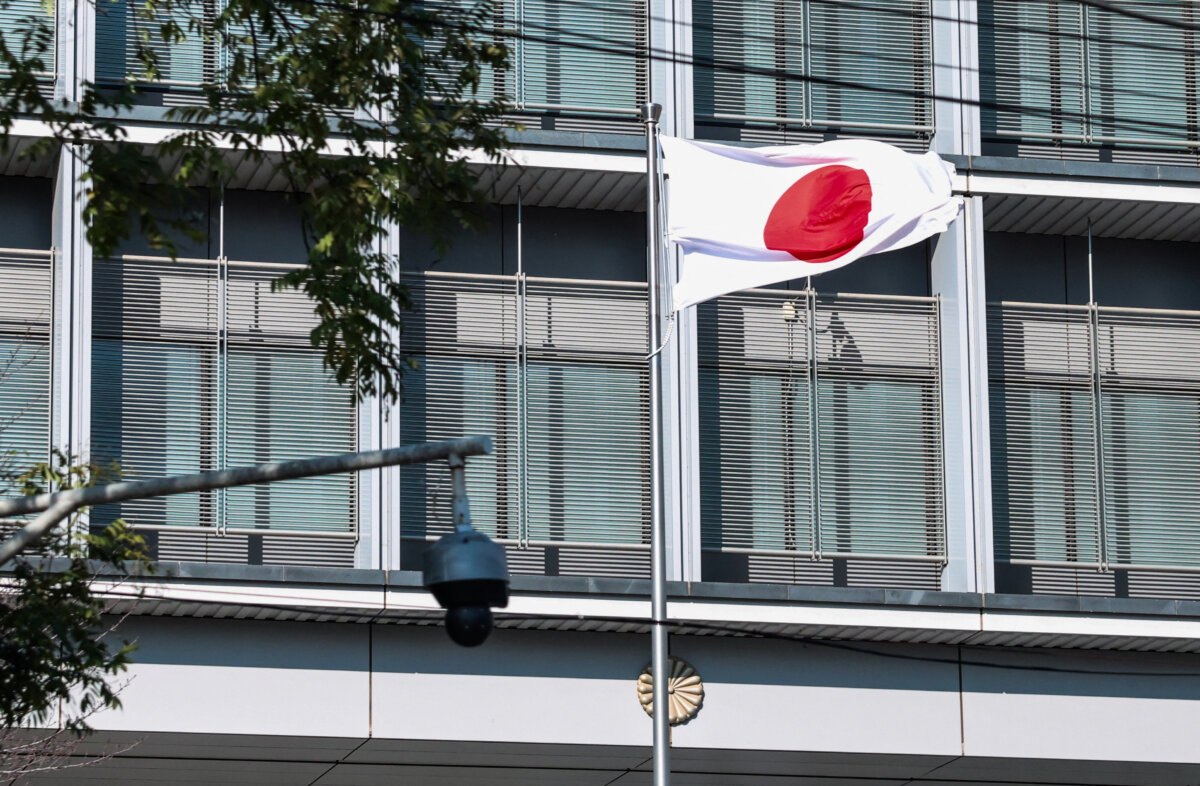

Tokyo’s diplomatic downgrade of China exposes the Chinese regime’s compound strategy against Japan, a pressure campaign that experts say will drive the U.S.–Japan alliance toward closer military and economic cooperation.
Japan released its Diplomatic Bluebook—an annual review of the country’s foreign relations over the previous year—on April 10, and it referred to China as “an important neighbor.”
The phrasing was a departure from the 2025 edition, which described ties with China as “one of Japan’s most important bilateral relations.”
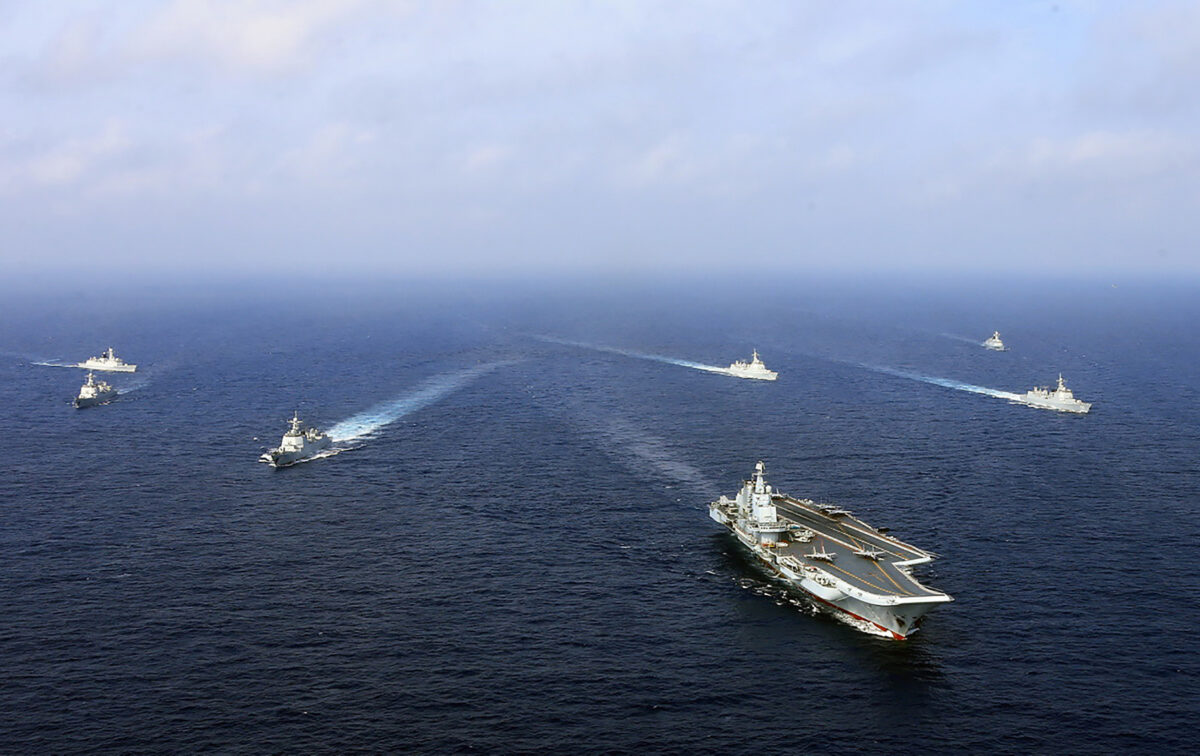
The report said China remained militarily active in waters surrounding Japan throughout 2025, including carrier operations east of the second island chain—which lies farther east and includes the Bonin Islands and Guam—and exercises in the waters and airspace around Taiwan.
The document notes that in the South China Sea, China has further militarized disputed features and carried out dangerous operations against coastal states, including the use of water cannons and vessel collisions.
It said the Chinese Communist Party (CCP) conducts “dangerous and coercive actions that heighten regional tensions.”
The Bluebook states that China presents “the greatest strategic challenge” to Japan and the international community that they have ever faced in ensuring peace, stability, and security.
However, the report said Tokyo remains committed to dialogue with China and to building a stable bilateral relationship.
Beijing’s posture toward Japan shifted sharply after Japanese Prime Minister Sanae Takaichi said in November 2025 that Japan would be justified in activating its Self-Defense Forces if Taiwan were to come under attack, prompting a series of economic coercion measures and military provocations from China.
Taiwan is a self-governed democracy that Beijing has never ruled but has vowed to annex by force.
Strategic Repositioning
Bonnie Yushih Liao, a senior research fellow at the Japan Forum for Strategic Studies in Tokyo, described the latest move from Japan as not a rhetorical accident but a deliberate diplomatic downgrade “meant to reflect a harsher strategic reality.”
“It reflects a judgment that the political and security environment has changed faster than diplomatic language can usually keep up, “ Liao told The Epoch Times.
“Chinese military activity around Japan, persistent pressure in the East China Sea, and growing concern over the Taiwan Strait have made the previous formula sound increasingly detached from reality.”
However, Liao said the Bluebook’s call for a stable bilateral relationship suggests that Tokyo is recalibrating its tone while stopping short of “completely closing the door to dialogue.”
Wang Hung-jen, chairman of the Taiwan Society of Japan Studies, said the wording shift points to a strategic repositioning rather than a push for outright confrontation with China.
“Japan’s approach [to China] is moving away from a framework centered on economics and stability, toward one that places greater emphasis on security risk management, defense of sovereignty, and strategic vigilance,” Wang told The Epoch Times.
“Tokyo no longer feels that China justifies the kind of high-profile, positive political characterization it once used.”
Sustained Intimidation
Beijing met Japan’s reassessment with familiar hostile rhetoric, demanding on April 10 that Tokyo “correct its wrongdoings and take concrete actions” to uphold bilateral relations.
Before its diplomatic response, the Chinese regime had imposed an airspace restriction zone over areas of the East China Sea and Yellow Sea from March 27 to May 6, an action observers viewed as directed at Tokyo.
That span of 40 days far exceeded the few days such alerts typically last, and no public explanation was given.
Wang said these actions suggest a multipronged approach by China toward Japan—one that combines political coercion, military signaling, and economic deterrence, without pushing Japan–China relations to a breaking point.
“The CCP is not looking for a confrontation with the Takaichi administration, or at least not yet,” Wang said. “The goal is sustained, measured intimidation calculated to erode Tokyo’s resolve.”
Wang said the air alert is a signal to Washington that Beijing can stoke instability along the first island chain—a strategic buffer encompassing Japan and Taiwan that limits the People’s Liberation Army’s ability to project naval and air power into the Pacific.
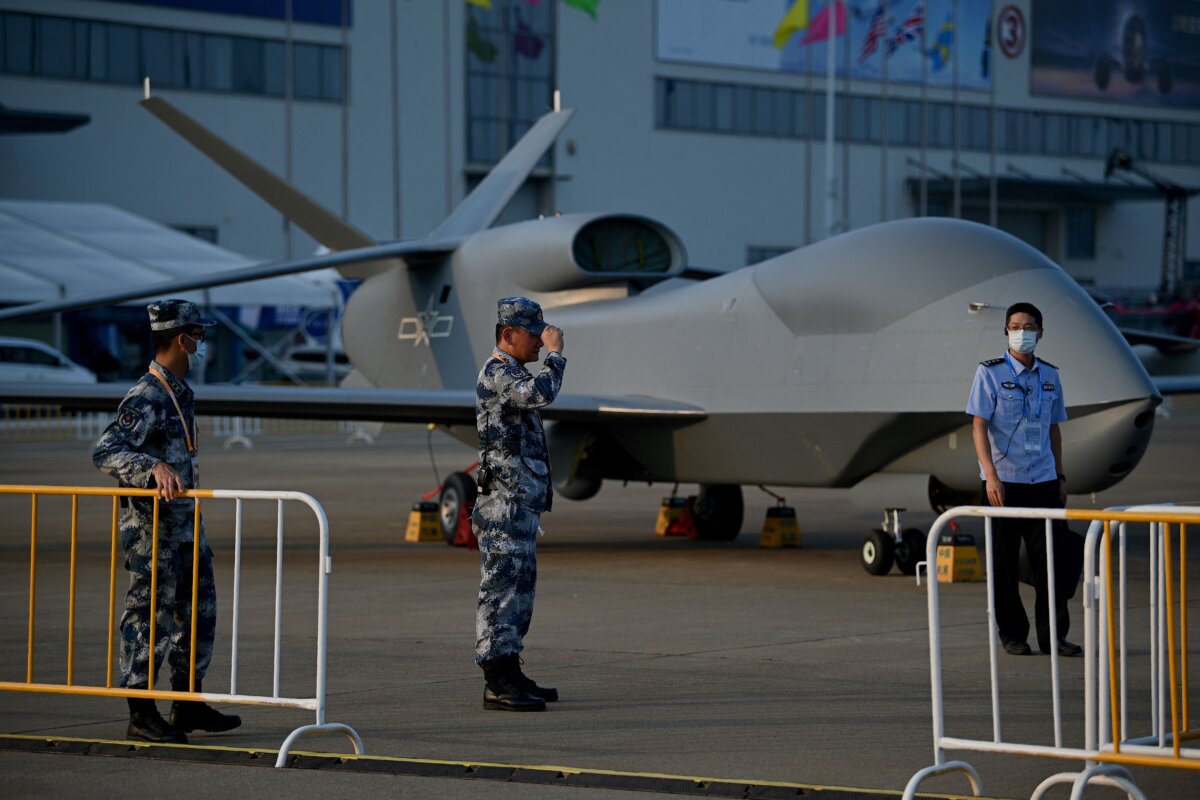
“A full-scale war between Japan and China may not be imminent, but the risk of accidental conflict and crisis escalation is rising,” Wang said.
Liao said the CCP has created conditions in which one unsafe move or misread signal can tip the situation into an outright clash.
“Beijing could escalate further—but probably not in the form of a clean, declared military crisis,” Liao said. “The more plausible path is a steady expansion of gray-zone pressure.”
Gray-zone pressure refers to aggressive and coercive actions designed to intimidate an opponent yet remain below the threshold of warfare.
Liao said that could mean an increased Chinese military and coast guard presence near the Senkaku Islands in the East China Sea, as well as more frequent operations near Japanese forces.
“When such tactics become normalized, restraint can weaken, and miscalculation becomes more likely,” she said.
Fortifying US–Japan Alliance
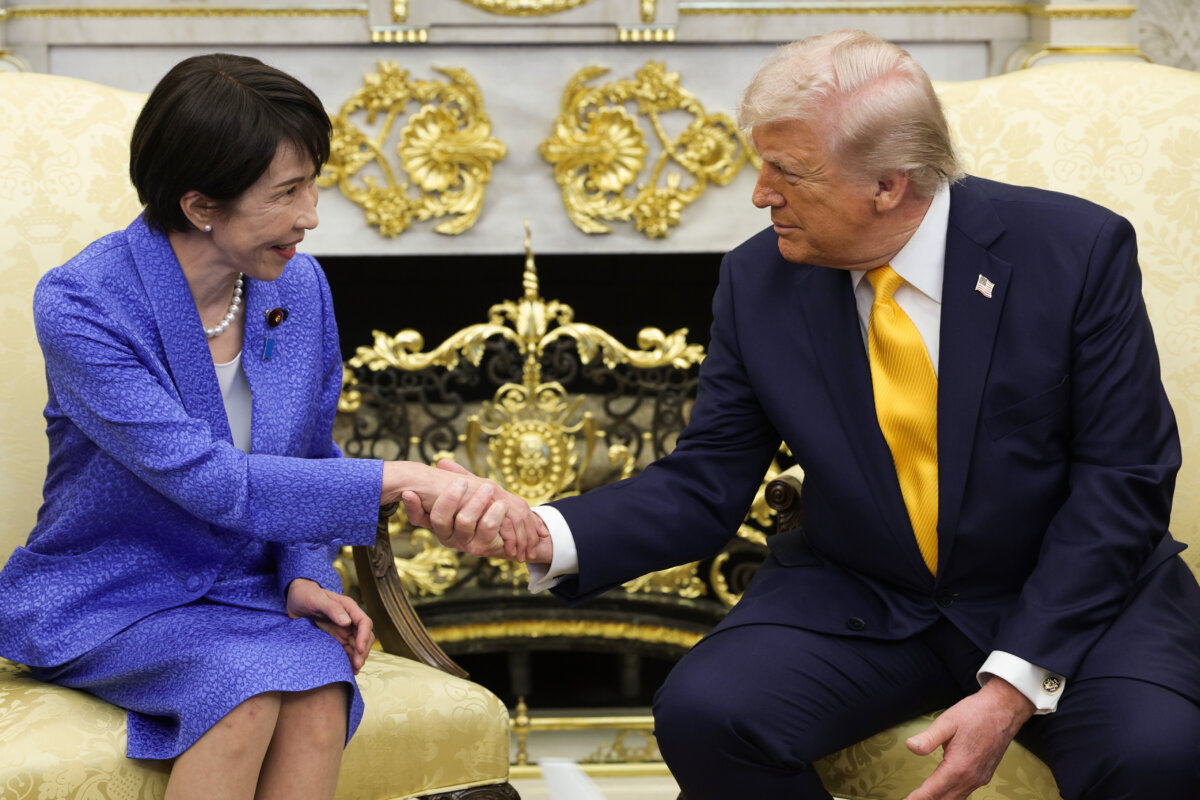
The strains between Tokyo and Beijing have drawn Washington’s attention. U.S. President Donald Trump asked Takaichi how relations between Japan and China were faring during their White House meeting in March, and said he would sing “Japan’s praises” at his upcoming meeting with Chinese leader Xi Jinping.
The Trump–Xi summit is now scheduled for May 14 and 15 in Beijing, having been delayed by Washington’s focus on military operations in Iran.
Hiroaki Kato, an associate professor at Asahi University in Japan, said the U.S. focus on the Iran war makes a significant public response to China’s conduct toward Japan unlikely in the near term, but Tokyo continues to anchor its security strategy on the U.S.–Japan alliance.
“For the United States, the current priorities are the war with Iran and trade relations,” Kato told The Epoch Times.
“On the other hand, the Takaichi administration places even greater importance on U.S.–Japan relations than the Abe administration did.”
Wang said Washington’s measured response aims to avoid reacting to every provocation, relying instead on the solidified U.S.–Japan alliance to counter Chinese coercion.
“Recent joint statements from U.S. and Japanese leaders indicate that both sides strongly oppose any attempts by Beijing to unilaterally change the status quo in the Indo-Pacific, including by force or coercion,” Wang said.
“At the same time, the two nations are strengthening missile deployment, production capacity, and forward deterrence.”
However, Wang said that Washington’s restraint has limits, and any continued Chinese targeting of Japan will likely trigger a broader U.S. response.
“Beyond military cooperation, Washington would help Tokyo reduce its dependence on Chinese supply chains for critical sectors,” he said.
“The U.S. may also leverage multilateral mechanisms, such as the U.S.–Japan–South Korea and U.S.–Japan–Australia trilaterals, to elevate the issue into a wider regional agenda.”
Wang said Beijing may be miscalculating if it expects the pressure to soften Tokyo’s stance.
“China’s moves are pushing the U.S.–Japan alliance toward greater militarization, stronger institutions, and tighter economic security coordination,” he said.
 Friends Read Free
Copy
Facebook
Tweet
Friends Read Free
Copy
Facebook
Tweet