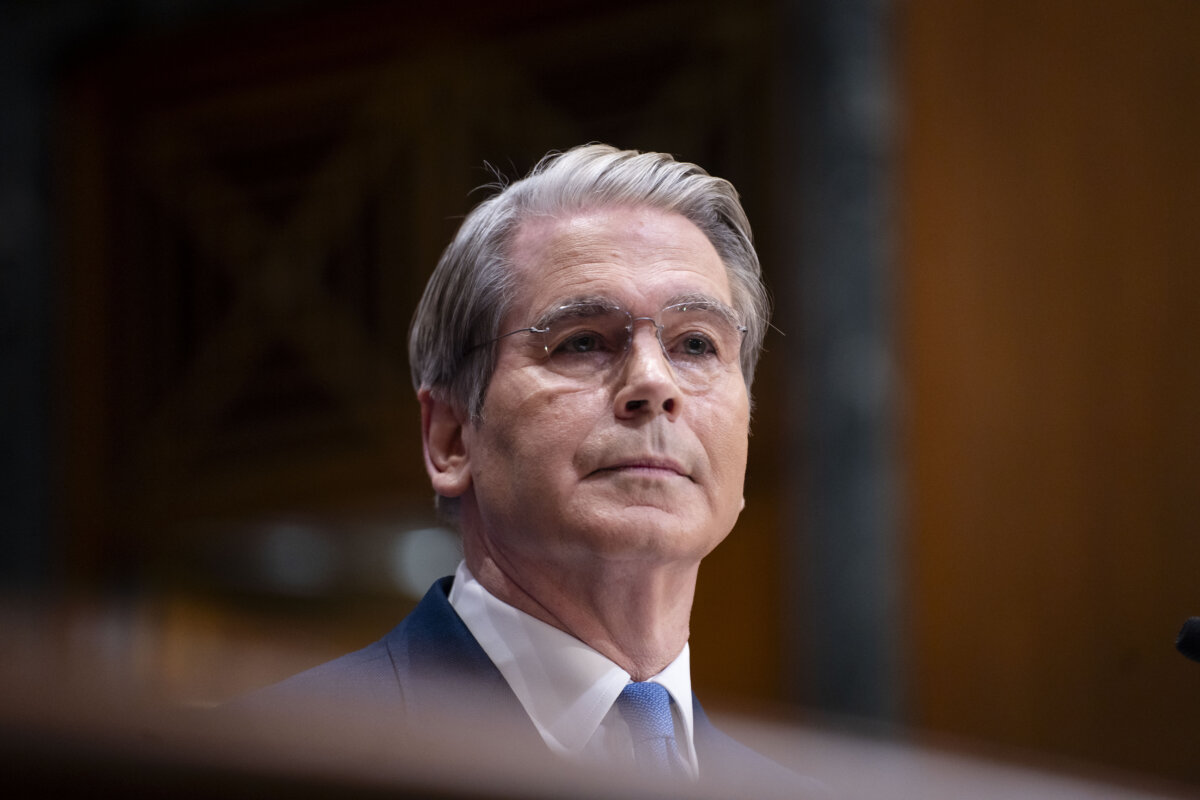

U.S. Treasury Secretary Scott Bessent said he discussed Beijing’s commitments on rare earth and American farm product purchases in a call with Chinese Vice Premier He Lifeng on July 30.
Bessent and U.S. Trade Representative Jamieson Greer joined the call ahead of the upcoming summit between U.S. President Donald Trump and Chinese Communist Party leader Xi Jinping.
The Treasury chief emphasized that Washington expects Beijing to “fully meet its commitments on rare earths and U.S. agricultural products,” Bessent said in a post on X.
He said that they also discussed the implementation of the boards for trade and investment, calling them a mechanism to “secure concrete progress toward a more balanced, fair, and constructive U.S.-China economic relationship.”
The Chinese regime’s Ministry of Commerce characterized the meeting between He and American officials as “candid, in-depth, and constructive.” In the video call, He also voiced Beijing’s “serious concern” over recent U.S. trade measures, according to the Chinese readout.
The United States and China, the world’s two largest economies, are currently in a one-year trade truce, reflecting a deal reached last October after Trump and Xi met in South Korea.
In addition to committing to resuming purchases of U.S. agricultural products, China agreed to curb the flow of fentanyl precursors and roll back a stringent export control on rare earth elements and several critical minerals that would impact all of Beijing’s trading partners.
However, Greer recently disclosed that the United States hasn’t received enough critical minerals from China.
“We are getting a flow of critical minerals from China,” Greer told the Senate Finance Committee hearing on July 22. “It’s not as much as we would want. It’s not at the pace we would want, but we are getting them. We’re getting the majority of what we need.”
Greer said that the Trump administration maintains “substantial leverage” to ensure Beijing’s compliance. “But most importantly, we are accelerating domestic production to try to get away from that dependency,” he added.
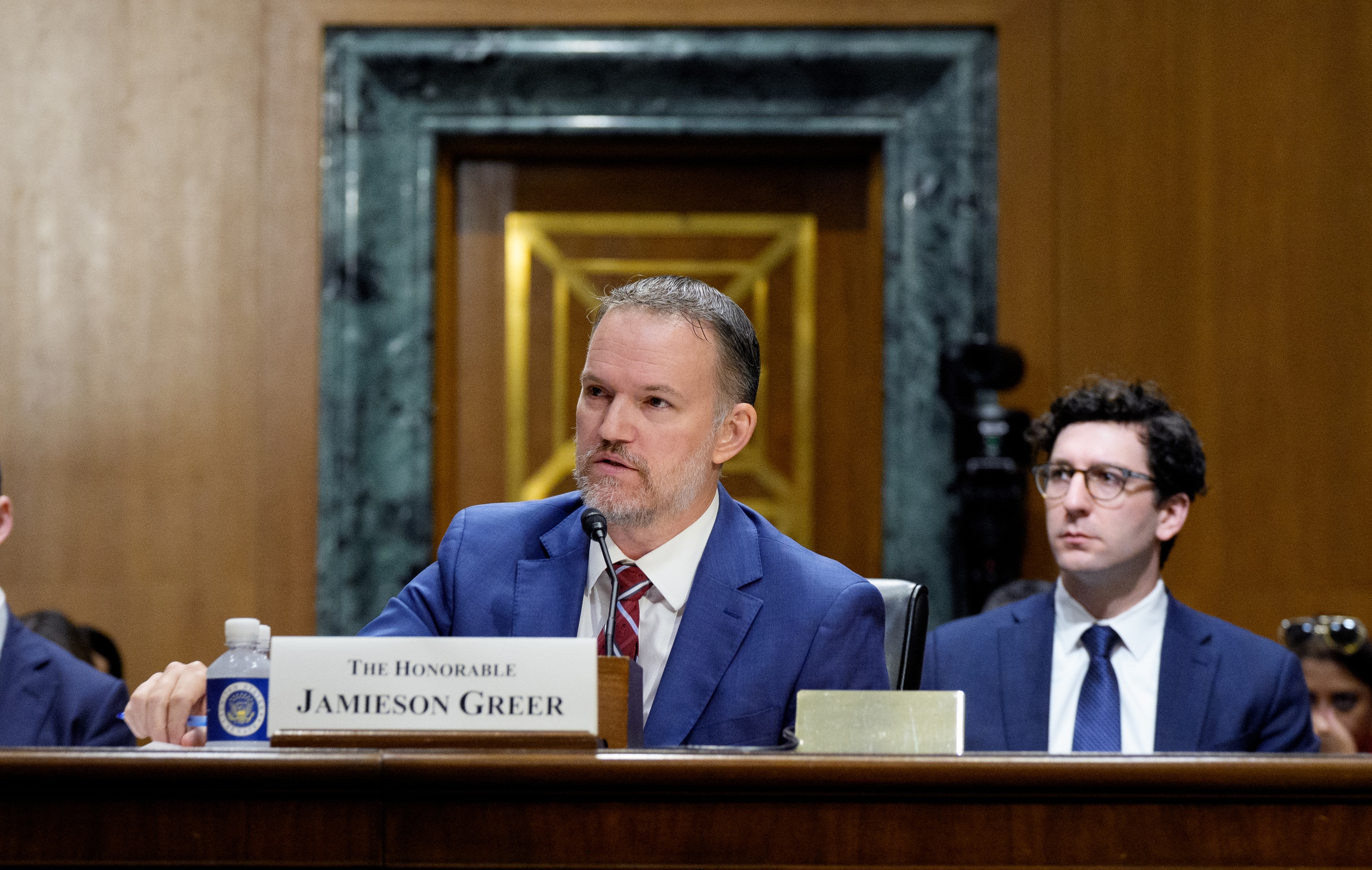 U.S. Trade Representative Jamieson Greer speaks during a Senate Finance Committee hearing in Washington on July 22, 2026. (Andrew Harnik/Getty Images)
Before Xi’s planned visit, Washington and Beijing are moving toward establishing trade and investment boards, according to U.S. Secretary of State Marco Rubio.
“We’re moving towards implementation of that,” Rubio told reporters on July 22 after a meeting with his Chinese counterpart in Manila, the Philippines. “I think that’s one of the potential concrete deliverables that we can have before September when that visit happens.”
Trump has said he planned to discuss artificial intelligence (AI) at the upcoming summit with Xi.
Bessent recently said that the U.S. government is looking into whether Chinese open-source AI models have stolen intellectual property from their American competitors, signaling potential sanctions.
“We are finding watermarks of our U.S. large-language models on many of the Chinese models, and that’s unacceptable,” Bessent told Fox Business on July 21. “We’re going to be looking at that in the coming days or weeks.”
Bessent said while the administration supports open-source models, it will not accept companies that built their models through IP theft.
“If we see, especially, that overseas models are stealing from our great companies, we have the ability to sanction them because of this theft.”
Earlier this week, the Trump administration announced a new ban on all foreign-produced advanced robotics and power inverters, citing national security as the primary concern. The action taken by the U.S. Federal Communications Commission effectively shut Chinese producers out of the emerging high-tech market in the United States.
 Friends Read Free
Copy
Facebook
Tweet
Friends Read Free
Copy
Facebook
Tweet