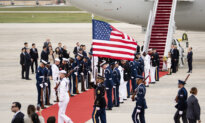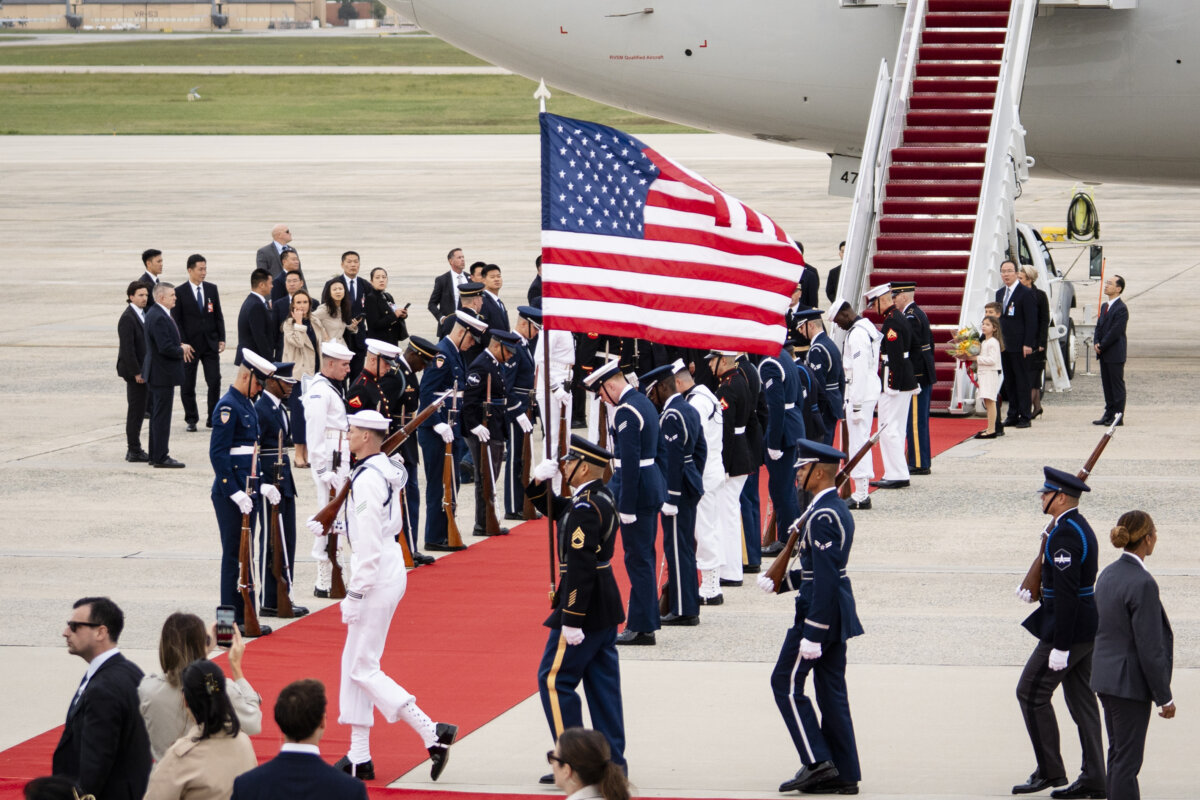

When U.S. President Donald Trump welcomed Chinese leader Xi Jinping to Washington last month, the ceremony offered an abundance of striking images: Trump and First Lady Melania Trump greeting Xi and his wife, Peng Liyuan, at the airport; a red carpet flanked by honor guards; a 21-gun salute; and military aircraft flying overhead in tribute. The following day, Trump presided over a formal White House welcome ceremony and hosted a state dinner.
China’s state media moved quickly to give these gestures a broader political meaning. Outlets including Xinhua, People’s Daily, China Central Television (CCTV) and the Global Times presented the pageantry as evidence of Xi’s personal stature, China’s status as a major power, and Beijing’s growing role in shaping global affairs.
While U.S. media generally highlighted the summit’s pageantry alongside unresolved geopolitical tensions, anti-Xi demonstrations, and criticism of human rights, Chinese media coverage of Xi’s arrival focused on the ceremonial honors he received. They also amplified his message that China’s “national rejuvenation” and Trump’s “Make America Great Again” agenda could advance together. Although the reports described welcoming crowds, they did not mention the anti-Xi protests or human rights criticism.
The phrase “the highest standard of ceremonial honors” became a central theme in Beijing’s account of the visit.
In a report published after Xi’s return, People’s Daily quoted Chinese Foreign Minister Wang Yi describing the reception as the highest level of courtesy offered by the United States. Wang cited the airport welcome ceremony as evidence of Washington’s respect for Xi and its recognition of the importance of U.S.–China relations. The following day’s White House ceremony, featuring a military flyover, further reinforced that message, Wang said.
Shen Zhou, a military expert and contributor to The Epoch Times, offered a different interpretation of the military flyover in a commentary for the Chinese-language edition.
He described the display as a classic show of force intended to intimidate, arguing that Chinese state media’s portrayal of it as a high-level reception amounted to little more than an attempt to save face.
CCTV’s coverage of Xi’s arrival at Joint Base Andrews similarly emphasized the exceptional nature of the welcome, describing the event as one attracting worldwide attention.
Yet this rosy portrayal contrasted sharply with reality on the ground in Washington. Between Xi’s arrival on Sept. 23 and his departure on Sept. 25, hundreds-strong rallies staged by Hongkongers, Tibetans, Uyghurs, democracy activists, and Falun Gong practitioners turned out to protest Beijing’s human rights abuses, projecting the faces of political prisoners onto downtown D.C. buildings.
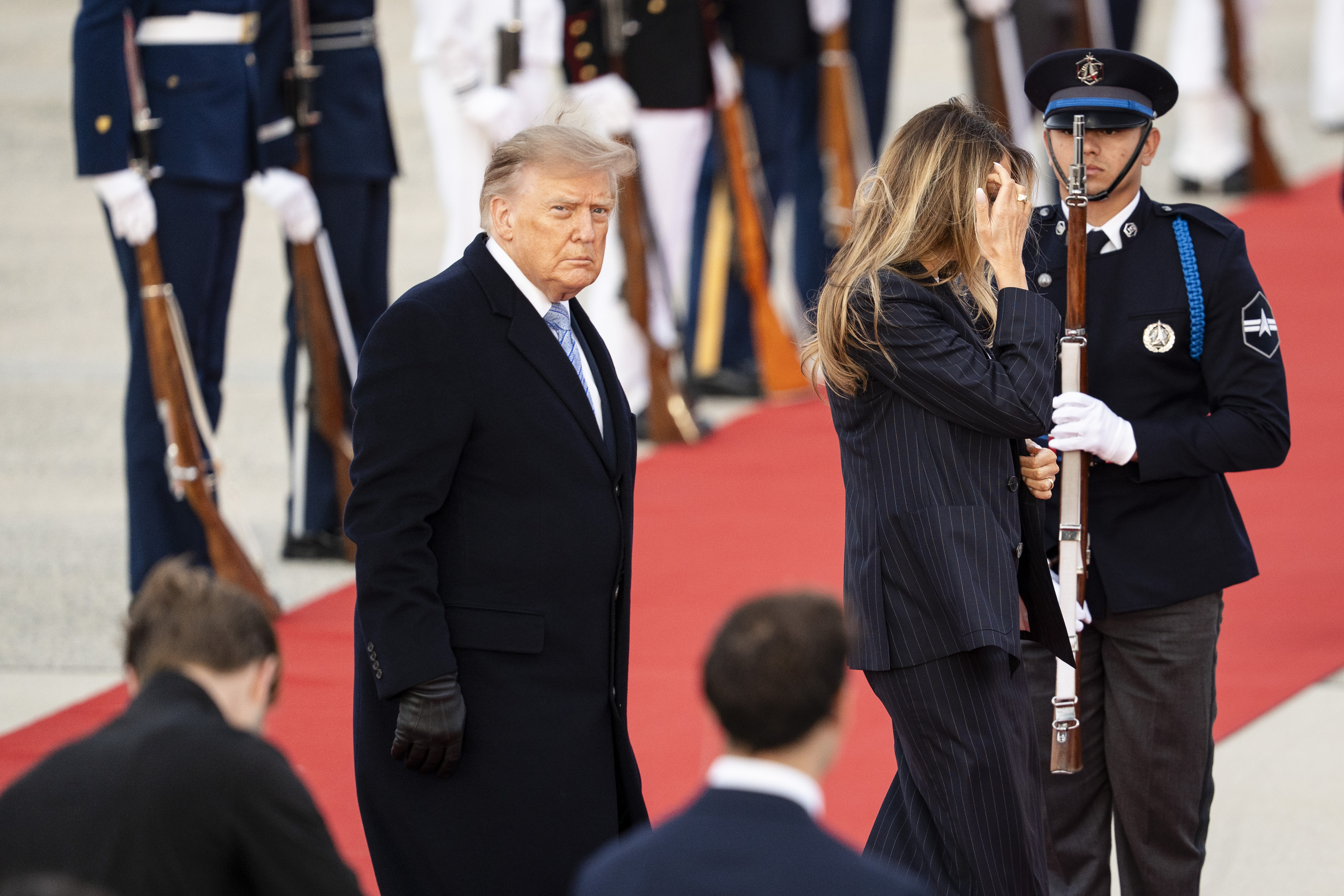 U.S. President Donald Trump and First Lady Melania Trump welcome Chinese leader Xi Jinping and his wife Peng Liyuan at Joint Base Andrews, Md., on Sept. 23, 2026. (Madalina Kilroy/The Epoch Times)
Former House Speaker Nancy Pelosi addressed demonstrators after they marched to the U.S. Capitol, stressing that American elected officials and Xi needed to hear their concerns. She said listening to those voices is important for a country that professes to uphold human rights and respect every person’s dignity and worth.
Courtesies Cast as Endorsements
At the airport, Trump remarked that Xi was a “great leader” and called the occasion “a great moment.” These remarks received heavy prominence in Chinese coverage, which framed them as an unconditional endorsement of Xi’s leadership rather than standard diplomatic protocol.
People’s Daily, quoting Wang, asserted that Xi’s leadership had left a deep impression on U.S. society, strengthened the appeal of China’s ideas, and enhanced its international influence.
However, this narrative of alignment glossed over Washington’s firm strategic posture.
Trump employed explicit anti-communist rhetoric around the summit window, declaring in a Sept. 22 address at the United Nations that “Communism will never be coming to America.” He also issued statements through the White House stressing that the United States would “NEVER be a Communist Country.”
Immediately following the summit, House Ways and Means Chairman Jason Smith (R-Mo.) reinforced the administration’s baseline approach, defining China not merely as a trading partner, but explicitly as “a strategic adversary.”
Federal actions surrounding the visit—such as the Oct. 4 arrest of an alleged Chinese agent tracking Taiwan President Lai Ching-te’s family—further underscored ongoing structural enforcement against Beijing’s covert operations.
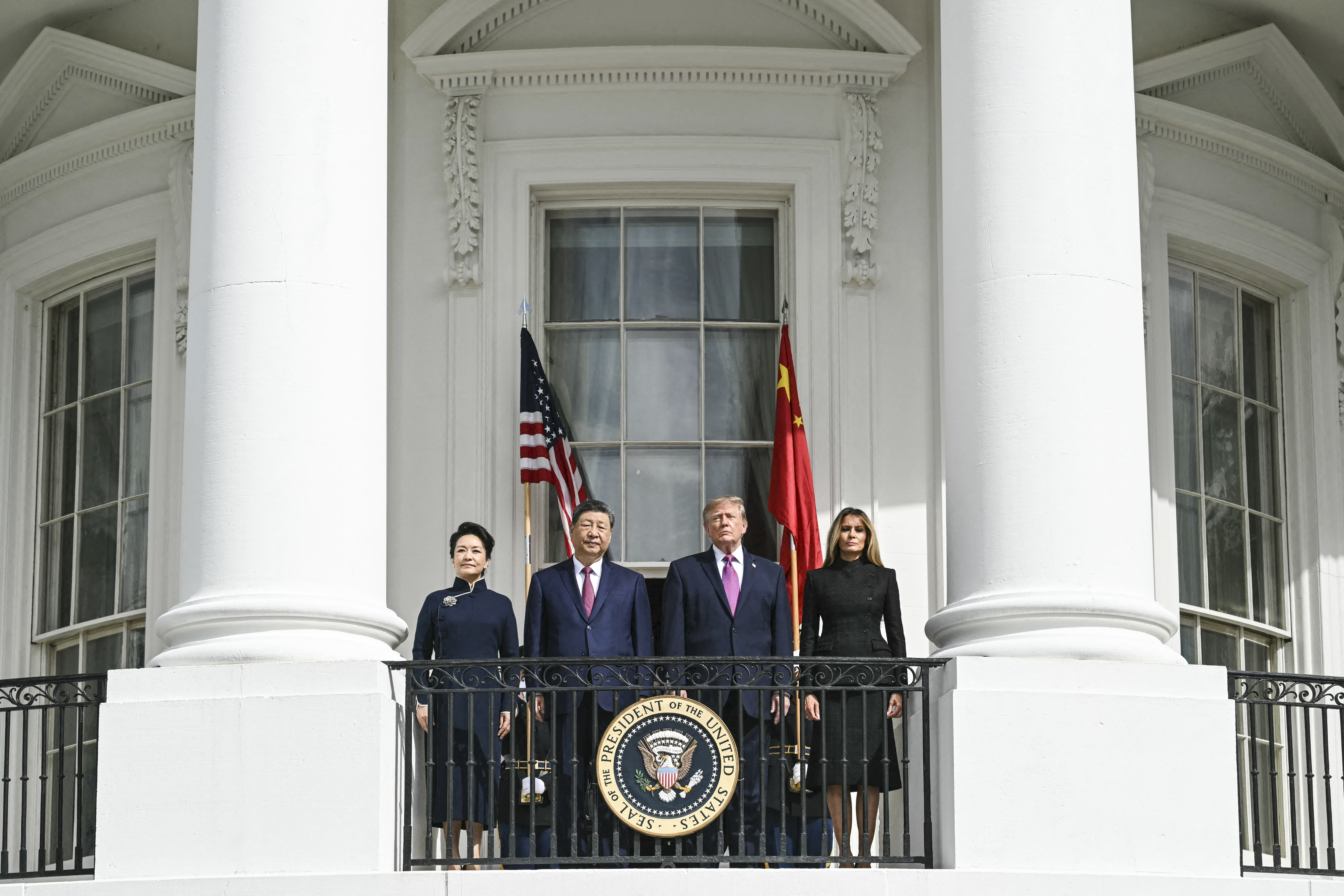 (L–R) China’s First Lady Peng Liyuan, Chinese leader Xi Jinping, President Donald Trump, and First Lady Melania Trump stand on the Blue Room balcony of the White House, on Sept. 24, 2026. (Saul Loeb/AFP via Getty Images)
Xi’s Role
Another recurring theme in state media was Xi’s central role in managing bilateral ties. People’s Daily quoted Wang describing “head-of-state diplomacy” as the stabilizing anchor of bilateral ties, placing Xi’s personal engagement at the heart of the relationship.
At the White House welcoming ceremony, Xi stated his readiness to work with Trump to “steer the giant ship of China–U.S. relationship on a steady course toward the future.”
The imagery cast the two leaders as responsible for the direction, with Xi portrayed as an essential partner in keeping it on course.
Chinese state media portrayed this as meaning it was reliant on Xi’s personal leadership and his ability to work with Trump.
These portrayals reflect a well-established strategy in Chinese state media: turning routine diplomatic protocol into visual evidence of national prestige and leadership legitimacy to its domestic audience.
 Friends Read Free
Copy
Facebook
Tweet
Friends Read Free
Copy
Facebook
Tweet