
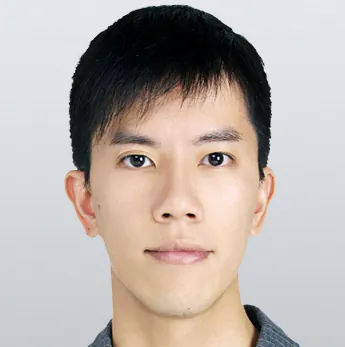
The head of China’s military anti-corruption campaign has become the second-highest-ranking officer in the armed forces, stepping into a role left vacant after the dismissal of a top general widely regarded as a close ally of Chinese leader Xi Jinping.
Gen. Zhang Shengmin, a veteran political commissar, was officially promoted on Oct. 23 to the post of second-ranked vice chairman of the Central Military Commission (CMC), the Chinese Communist Party (CCP) agency that controls the armed forces.
The appointment was announced at the end of the Central Committee’s four-day closed-door meeting, known as the Fourth Plenum, which gathered more than 300 top Party officials to map out the direction of China’s new economic and social development plan. Key personnel changes are also approved at such a gathering.
Just days ahead of the meeting, Chinese leadership expelled Zhang’s predecessor, He Weidong, along with eight other high-ranking generals, all accused of corruption and abuse of power. Eight of the nine purged were members of the CCP’s governing Central Committee.
At the conclave, the Central Committee affirmed senior leadership’s earlier decisions to revoke the Party membership of all eight generals, according to the official summary of the meeting, released by Chinese state media outlet Xinhua.
The readout disclosed that Zhang Fengzhong, who oversees the political work at the People’s Liberation Army’s (PLA’s) secretive Rocket Force unit, which commands the country’s nuclear missiles, was also ensnared in the anti-graft drive.
Zhang was accused of committing severe violations of Party discipline and the law, and the Central Committee confirmed an earlier decision to strip his Party membership, according to the readout.
Since taking power in 2012, Xi has initiated an extensive campaign against perceived corruption and disloyalty, taking down some of his most powerful political rivals. However, the recent crackdown has increasingly targeted Xi’s protégés and longtime allies. The shift has set off speculation about power struggles within the Party’s upper echelons.
Political Infighting
The newly appointed vice chair of the CMC appears not to belong to a political faction loyal to Xi, Chinese current affairs commentator Li Linyi told The Epoch Times. This contrasts with his direct predecessor, He, who was described by some China observers as Xi’s No. 1 confidant in the military.
He hadn’t been seen in public for about seven months before he was officially expelled from the Party and the military last week. The reason cited by the Chinese Defense Ministry’s spokesperson for his dismissal at the time was severe violations of Party discipline and serious duty-related crimes “involving an extremely large amount of money.”
With He’s departure, a seat on the Politburo, the Party’s second-highest decision-making body, and a position within the CMC became vacant. Although Zhang Shengmin was appointed to become vice chair of the CMC, he did not fill the vacant Politburo seat, which has raised eyebrows among analysts.
Shen Ming-shih, an expert on Chinese military at the Institute for National Defense and Security Research, a think tank funded by the Taiwanese government, linked the decision to the recent numerous purges in the military establishment, which have raised questions about the stability of Xi’s hold over the military.
It appeared as if Xi didn’t want personnel changes within the Party to be “too hectic,” Shen told The Epoch Times, which may have led to Zhang not being promoted to the Politburo.
Zhang advanced through the ranks primarily as a political officer in the PLA, noncombat posts charged with overseeing political discipline and ideological training to ensure loyalty to the Party.
Since late 2017, Zhang has served as a regular member of the CMC and has led its Discipline Inspection Commission, which helps the Party in enforcing the anti-corruption campaign to purge the PLA of officers deemed corrupt.
Zhang’s elevation within the state apparatus requires approval from the National People’s Congress, China’s rubber-stamp legislature, whose governing standing committee is set to convene on Oct. 24.
Top Military Body Reduced to One Regular Member
The key Party meeting’s readout left more questions than it answered, according to Shen, who studies China’s military and politics.
One lingering question is whether Defense Minister Adm. Dong Jun would eventually become a member of the CMC, according to Shen.
Dong’s absence from the CMC—despite the convention that defense ministers hold seats—has prompted questions among outside observers. Dong, a former navy chief, was appointed to the current ministerial position in December 2023, following the unexplained disappearance and removal of his predecessor, Li Shangfu, who was later accused of corruption.
Within China’s ruling system, the defense minister typically plays a ceremonial role, focusing on managing diplomatic relations with foreign armed forces. The real command power rests with the CMC. At the start of the current five-year term in late 2022, this elite body consisted of four regular members and two vice chairmen under Xi.
Now that the current defense minister has not secured a position on that commission and Zhang has been promoted to its vice chairman, this elite military body has only one regular member.
The decision by Chinese leadership to leave three CMC seats unfilled suggests that military power is becoming “highly concentrated,” said Wang He, a China observer and contributor to The Epoch Times.
Considering the two commanders recently purged from the commission—He and Miao Hua—were considered members of Xi’s faction, Wang believes that the 72-year-old Xi has very limited influence over appointments.
The real power, Wang said, appears to be held by Gen. Zhang Youxia, who, at 75, remains the commission’s first-ranked vice chairman.
The political infighting has made it difficult for the veteran general to identify whom he can trust, which may explain why no new appointments were announced at this week’s conclave, according to the analyst.
“If one more person joins the Central Military Commission, that power will be divided further,” said Wang, also a China affairs political commentator.
At this “critical moment,” without “an absolutely reliable candidate,” Zhang Youxia is unlikely to bring anyone onto that commission, allowing him to maintain tight control over military power, Wang noted.
“The current personnel arrangement will have a profound impact on the political situation within the CCP,” he said.
60 Senior CCP Officials Absent
At the plenum, 11 alternate Central Committee members were elevated to full membership, according to the readout. That includes Vice Minister of Ecology and Environment Yu Huiwen, Tianjin Communist Party chief Wang Tingkai, Liaoning Governor Wang Xinwei, and Vice Minister of Education Wang Jiayi.
The new appointments skipped Lt. Gen. Ding Xingnong, deputy political commissar of the Rocket Force, despite being second in line to join the Central Committee. According to the Party convention, any vacancies on the committee are supposed to be filled by the 171 alternate members in the order of votes they received.
Three other alternative members from the military expected to join the CCP’s governing body were also skipped. Among them is Xi’s chief of staff, Lt. Gen. Fang Yongxiang, who heads the General Office of the Central Military Commission.
It remains unclear why Fang or other commanders were omitted. It has led to speculations among some observers that these officers might be ensnared in the ongoing disciplinary crackdown. The PLA has become increasingly tight-lipped in recent months, with some purges only disclosed after the targeted commanders were expelled from the military and the Party.
According to the readout, only 168 full Central Committee members and 147 alternate members were present at this week’s plenum. When their five-year term started in late 2022, the Central Committee had 205 full members and 171 alternate members. One member suddenly passed away due to illness last December.
That means 60 officials who held either alternate or full membership to the CCP’s governing body when they were chosen three years ago were absent from this week’s pivotal political gathering, a sign that indicates deepening political infighting within the ranks of the Party’s top leadership, according to Li Linyi.
Luo Ya contributed to this report.
 Friends Read Free
Copy
Facebook
Tweet
Friends Read Free
Copy
Facebook
Tweet