
A new U.S.–China Economic and Security Review Commission report published on Nov. 14 identified Beijing as the leader of a network of authoritarian states that are building out capabilities to evade U.S. sanctions and export controls at an “industrial scale.”
Sanctions and export controls or restrictions are important economic tools the United States uses to discourage destabilizing behavior and encourage adherence to international norms, according to the U.S. Treasury Department.
According to the report, these tools have grown more important in this age of “forever wars,” and the Chinese regime is actively finding workarounds that have the additional effect of helping it grow its influence with countries that would otherwise be isolated from the international economy.
“China is the decisive enabler of sanctions evasion by the so-called ‘axis of autocracy’ countries,” the report states.
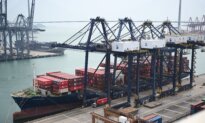
The Chinese regime is aided in this by its ability to use Hong Kong, which became a hub of global trade and finance during the years before Beijing effectively ended its “two systems” agreement and began applying authoritarian control over the territory.
In doing so, it is creating an alternative to the dollar economy.
The report warns that “the sum of China’s sanctions evasion activities is greater than the parts,” with its ripple effects including the adoption of similar tactics by other authoritarian states.
How China Benefits
China, Russia, North Korea, and Iran are subject to multiple sanctions, trade embargoes, and other export controls in response to destructive and destabilizing actions such as the war in Ukraine.
These include sanctions on Iranian and Russian oil to cut off financial support for terrorism and war activity. Beijing’s enabling of sanctioned oil trade benefits the Chinese regime more than it benefits the countries from which it buys or with which it facilitates trade, according to the report.
China is the biggest and nearly the only buyer of Iranian oil, making up more than 90 percent of purchases in 2024, according to the report, and making its purchases with yuan. The United Against Nuclear Iran nonprofit estimates that China imported 1.6 million barrels per day in July 2025, which would make up 13.5 percent of China’s total oil imports and 45 percent of the Iranian regime’s budget.
In addition to securing cheap energy, Beijing is able to enhance Russia’s war efforts or Iran’s destabilizing actions, drawing U.S. attention away from the Indo-Pacific, the report states.
China also accounts for 98 percent of North Korea’s total trade, making it a “critical lifeline” to the North Korean regime and nuclear buildup efforts, according to the report.
As these other countries buy into the system Beijing is building, the Chinese regime is also “galvanizing support for alternate payments networks.” This builds a way to “circumvent the U.S. financial system,” the report states.
Criminal Activity
This sanctions evasion happens by way of various other crimes. These include transshipment and money laundering, with China falsely labeling the country of origin of its imports, sometimes in order to pass them through to another sanctioned nation.
Hong Kong is key to this “shadow banking” system, as many relevant shell companies, which form complex chains used to pass money along to authoritarian regimes, are based in Hong Kong.
This allows the sanctioned nations to gain access to dollars, euros, and other international currencies that are then used to fund, in Iran’s case, groups that the United States has designated as terrorist organizations.
In the past eight years, more than 100 Chinese and Hong Kong companies have been added to the U.S. entity list for helping Iran evade sanctions.
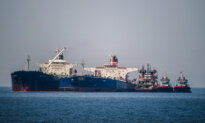
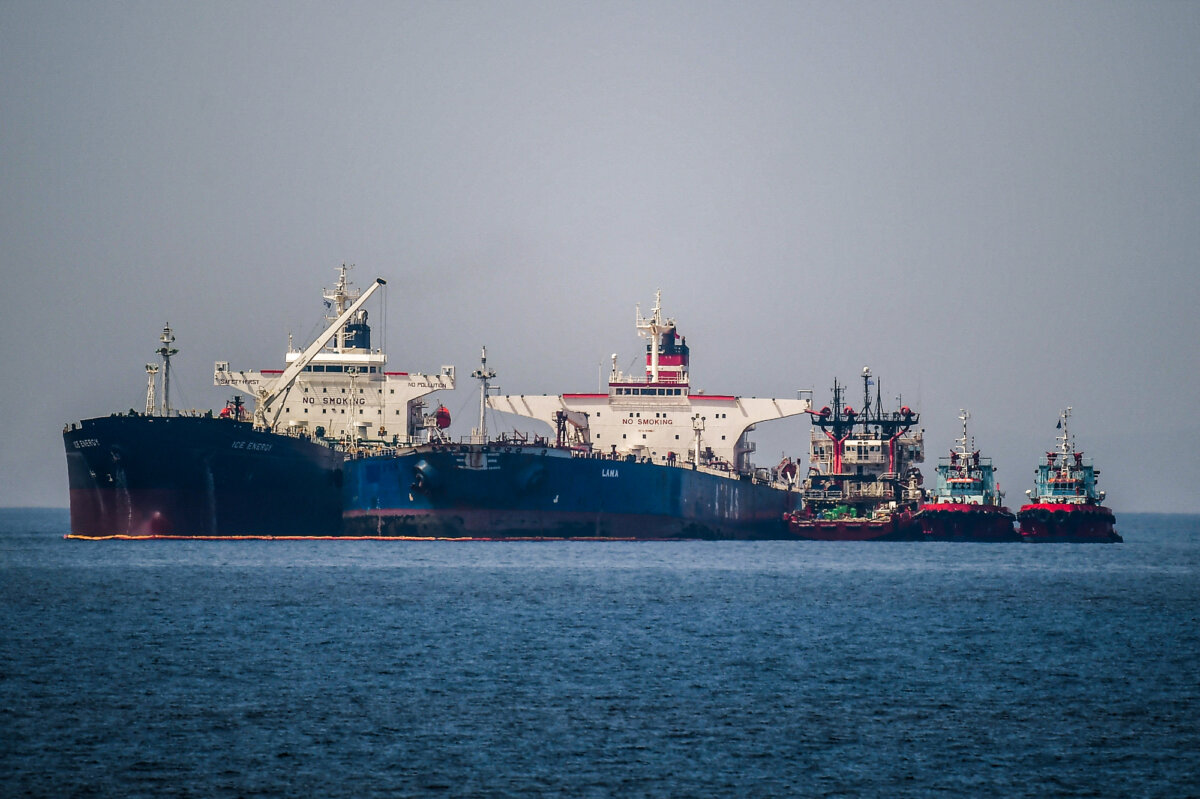
Sometimes the methods of illegal trade are riskier, such as making ship-to-ship transfers and turning off transponders. These tactics have resulted in incidents such as vessel collisions.
North Korea also engages in massive cybercrime efforts, stealing an estimated $5 billion in digital currency since 2017, according to the report. By 2024, it accounted for 60 percent of all digital currency theft.
Tech Transfers
China not only funnels foreign currency to autocratic nations cut off from global trade, but also puts restricted technologies into the hands of their militaries.
These include memory chips, radio and communications equipment, metal cutting tools, and optical equipment.
The report notes that direct sales can be hard to trace but that agencies such as the U.S. Treasury and the United Nations have identified and sanctioned several China-based or Hong Kong-based companies that have bought technologies to sell to North Korea and Russia.
Since the start of the Russia–Ukraine war, several nations have sanctioned Russia and imposed export controls on technologies that could have military applications.
Meanwhile, Beijing maintains a “no limits” partnership with Russia. Since 2022, 125 Chinese or Hong Kong companies have been added to the U.S. entity list for providing support to Russia’s military base.
According to the commission, Chinese firms manufactured 49 percent of the restricted items that Russia imported from China. Chinese companies were also responsible for routing 16 percent of the restricted items imported by Russia, which originated from Western companies. Another 18 percent of these restricted items imported by Russia were transshipped through China and Hong Kong.
 Friends Read Free
Copy
Facebook
Tweet
Friends Read Free
Copy
Facebook
Tweet