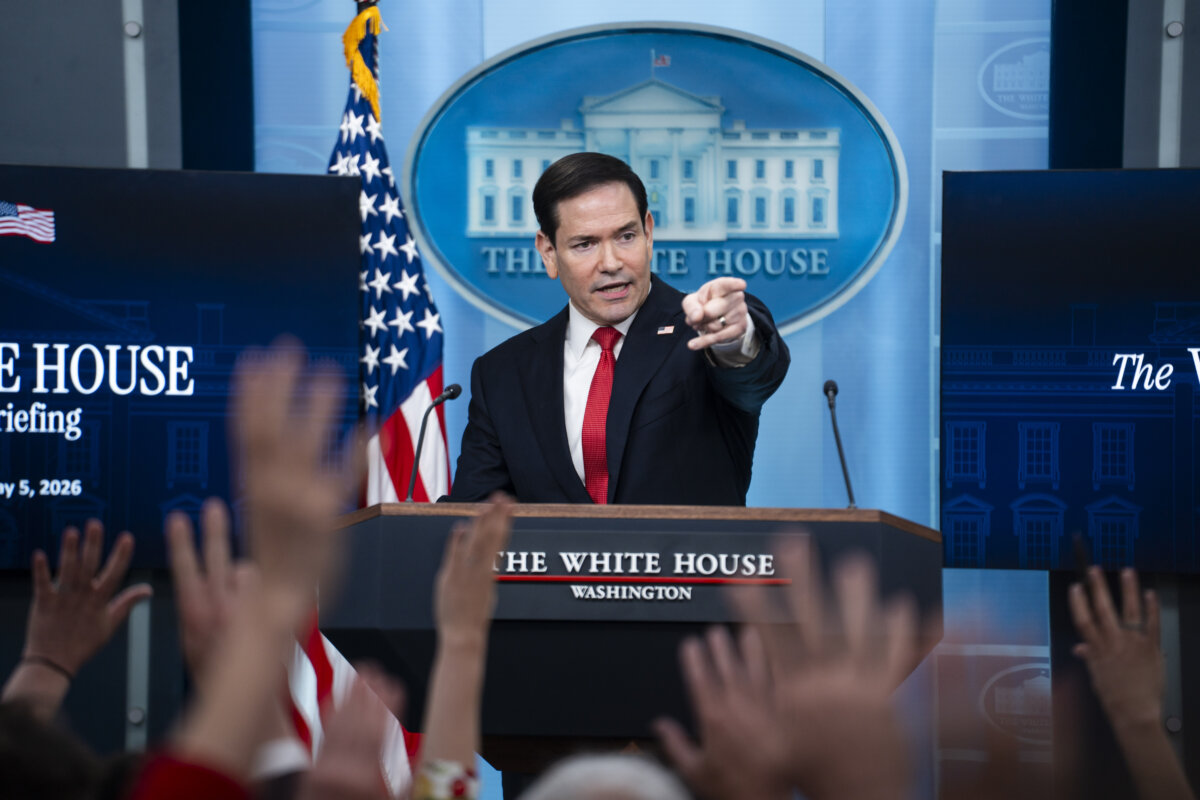
Secretary of State Marco Rubio traveled to Beijing with President Donald Trump this week despite Chinese sanctions imposed on him in 2020.
Rubio is accompanying the president on his trip to China for a summit with Chinese leader Xi Jinping. It is Rubio’s first trip to China and comes after Chinese authorities altered the official transliteration of part of his name.
The Chinese government and state media began using a new Chinese character for Rubio’s surname shortly before he took office as secretary of state in January 2025. The change gives the impression that sanctions targeted a different “Rubio.”
Foreign names are often rendered in different Chinese characters, although the process is not strictly standardized. Trump is known by two different spellings in Chinese media.
At a press conference held by China’s Ministry of Foreign Affairs on March 16, a reporter from Spanish news agency EFE asked the ministry’s spokesperson, Lin Jian, whether the Chinese regime’s sanctions on Rubio since 2020 would block his visit.
“The sanctions target Mr. Rubio’s words and deeds concerning China when he served as a U.S. senator,” Lin said.
China imposed sanctions on Rubio in August 2020 in response to his criticism of Beijing’s policies in Hong Kong and the Xinjiang region and his support for related U.S. legislation.
When he was a Republican senator from Florida, Rubio, who is Cuban American, was a prominent advocate for human rights in China and opposed communism. He helped push measures on forced labor involving Uyghur Muslims.
The Rubio case is the latest example of diplomatic adjustments as the United States and China seek to manage tensions through high-level talks.
The two-day state visit to Beijing by the United States, which will continue to May 15, is expected to address trade, Taiwan, artificial intelligence, and other issues.
The summit continues efforts to guide bilateral relations amid ongoing differences between the two nations.
 Friends Read Free
Copy
Facebook
Tweet
Friends Read Free
Copy
Facebook
Tweet