
The Chinese Communist regime announced two investigations into U.S. trade measures on March 27, alleging that U.S. practices have disrupted trade in renewable energy products and global supply chains.
The two probes, unveiled by the regime’s Ministry of Commerce, are scheduled to be completed in six months but can be extended by another three months.
A spokesperson for the regime’s ministry said in a statement that Beijing will take corresponding measures based on the results of the investigations and pledged to defend its rights and interests.
U.S. Trade Representative Jamieson Greer dismissed the Chinese regime’s move.
“We know that these are merely symbolic investigations initiated by China, which is in fact the world’s most profligate disrupter of supply chains and trade in green products,” Greer said on X.
“No one is fooled,” he said. “For the past year, China has disrupted global supply chains with unprecedented restrictions on basic commodity goods such as rare earth elements, fertilizers, and refined fuels.”
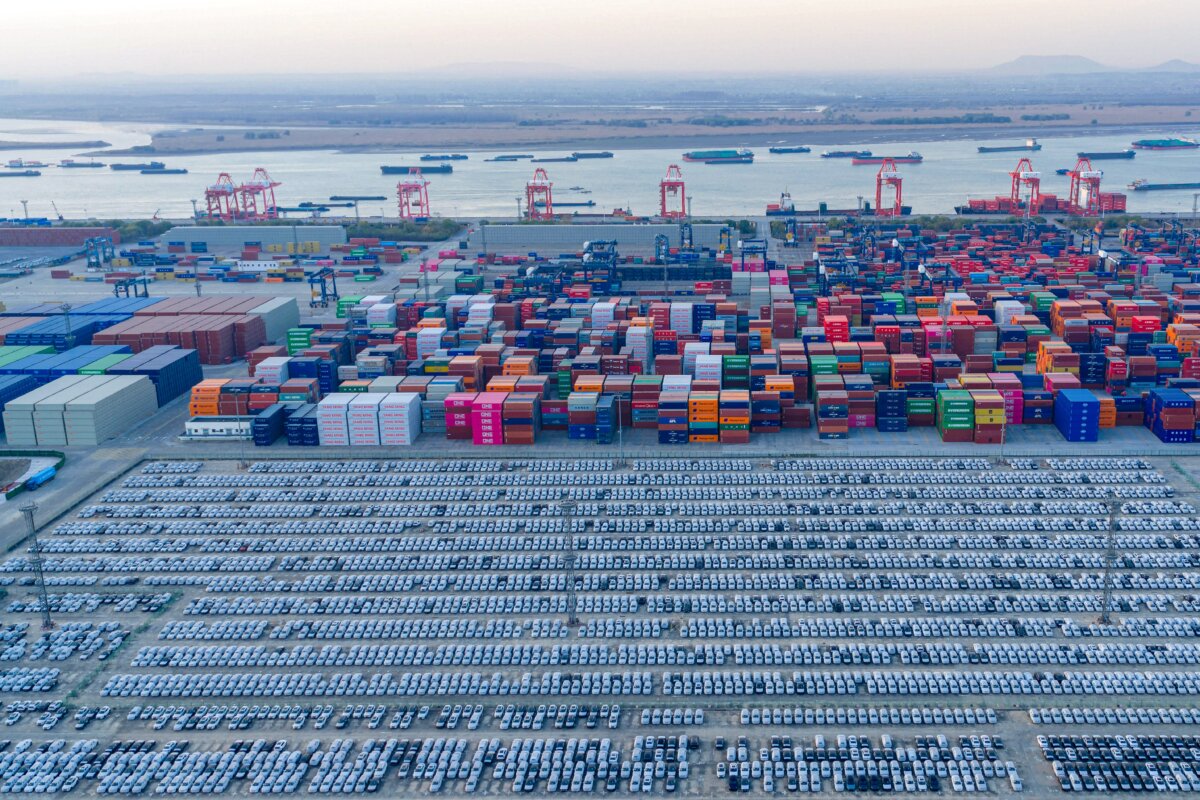
In terms of green products, he said China’s non-market economy had built up excess capacity that “has flooded economies with electric vehicles and solar panels to the detriment of workers and manufacturing across the industrialized world.”
Greer added that “despite this posturing,” Washington would continue to seek “economic stability and balanced trade” with Beijing.
China and the United States are currently in a tentative trade truce secured at the leaders’ summit last October in South Korea. U.S. President Donald Trump said earlier this week that he will travel to Beijing in mid-May for a summit with Chinese leader Xi Jinping.
The regime’s first investigation targeted the U.S. trade measures and practices related to “green products.” The ministry alleged that the United States restricted China’s exports of renewable energy products, slowed down the deployment of new energy projects, and limited cooperation in related technologies.
In a separate statement, the Chinese commerce ministry announced another investigation into U.S. trade practices that Beijing deems disruptive to the global supply chain. The ministry said the probe would cover the U.S. restrictions or ban on Chinese products in American markets, U.S. export controls on advanced technology, and U.S. restrictions on two-way investment in key areas.
The spokesperson described the pair of Chinese probes as a direct response to the U.S. Section 301 investigations into China’s unfair trade practices.
On March 11, the Office of the U.S. Trade Representative (USTR) launched an investigation to identify countries that export excess industrial capacity to the United States. Trading partners named in this probe include the European Union, Mexico, and China.
Two days later, USTR initiated another investigation into 60 economies, including China’s, to assess whether they have taken “sufficient actions” to curb the use of forced labor in the products they export.
Both probes are carried out under Section 301 of the Trade Act of 1974, which targets unfair trade practices affecting U.S. businesses and permits the government to impose penalties, including tariffs, on those found to be in violation.
The move came after the U.S. Supreme Court invalidated tariffs imposed by Trump on global trading partners using the International Emergency Economic Powers Act. The Trump administration subsequently imposed a 10 percent import duty under Section 122 of the Trade Act of 1974, which can remain in place for 150 days.
As Washington keeps up its fence against China’s dumping of industrial overcapacity—a longstanding issue in the Chinese economy that has stoked tensions with its major trading partners, including the EU—the Chinese regime has voiced its displeasure.
During a meeting with U.S. Trade Representative Jamieson Greer on the sidelines of a World Trade Organization meeting on March 26, Chinese Commerce Minister Wang Wentao reiterated the regime’s “serious concerns” over the U.S. trade probes, according to the Chinese readout.
 Friends Read Free
Copy
Facebook
Tweet
Friends Read Free
Copy
Facebook
Tweet