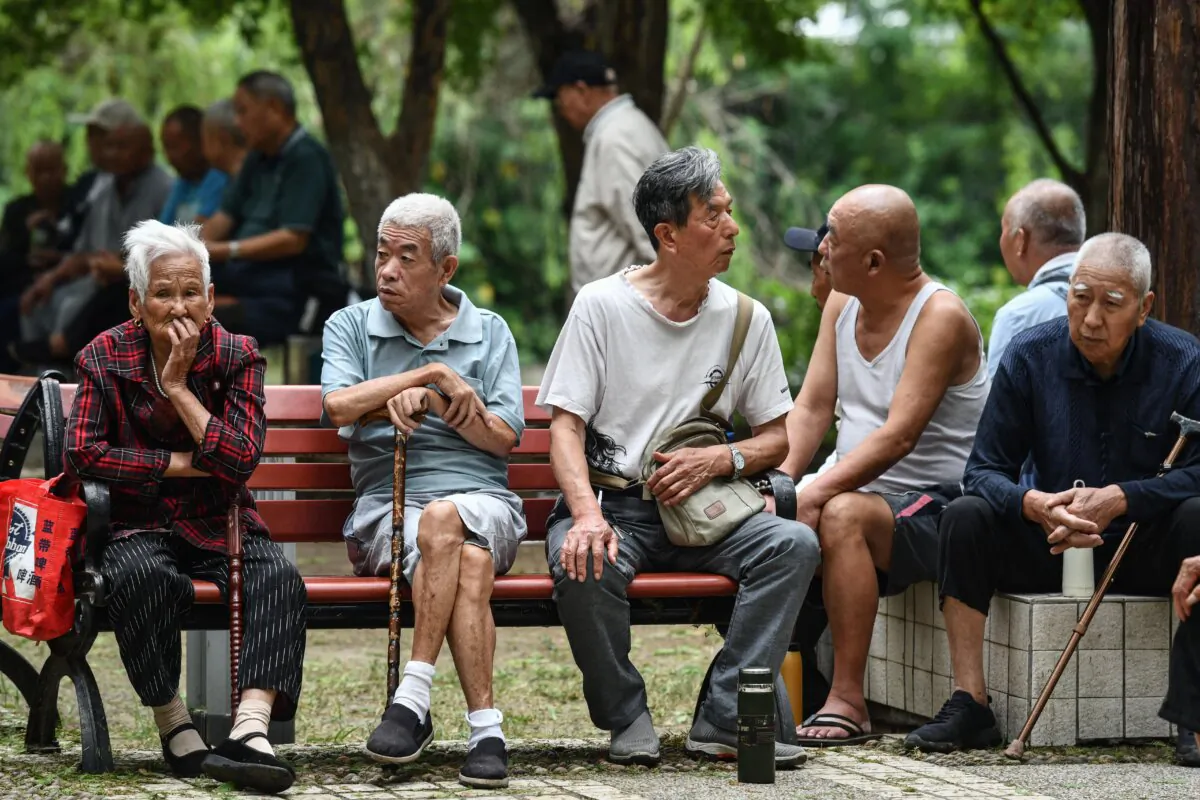
The Chinese communist regime has moved to tighten oversight of retired officials across the country, introducing new rules that extend political supervision beyond active service and into retirement.
Recent directives from several provincial governments place new emphasis not only on restricting overseas travel and relocation but also on closely tracking retirees’ political views, according to official notices and state-affiliated media reports.
The measures suggest a broadening of Beijing’s longstanding cadre management system, expanding it to include former officials who, while no longer in office, may still wield influence within the Chinese Communist Party’s (CCP’s) internal networks.
On April 17, the Hunan Bureau for Retired Personnel announced that multiple provincial party bodies had jointly issued guidance in recent days requiring strict governance of retired party cadres to be fully implemented.
Similar policies have emerged in several provinces, including Hubei, Fujian, Shandong, Anhui, Guangxi, and the municipality of Chongqing. In Hubei Province, provincial authorities described a “full-cycle, full-coverage” management system for retirees that includes rules governing political benefits, overseas travel, and ongoing supervision. The framework calls for pre-retirement interviews, post-retirement tracking systems, and individualized monitoring of those living outside their home regions or traveling abroad.
In Anhui Province, officials described a system of monthly check-ins and quarterly home visits aimed at “accurately grasping ideological trends.” In some cases, retirees living overseas are required to maintain regular online contact with regime authorities, who monitor both their daily lives and their political views.
In Guangxi Province, officials have expanded so-called reminder talks before international travel and require written reports upon return.
Across the various directives, a consistent theme is the need to monitor retirees’ ideological views.
The focus echoes earlier central regime guidance. In 2022, the CCP issued rules stating that retired officials must not “improperly discuss” regime policies or spread politically negative views.
While the CCP has not publicly detailed the reasons for the latest push, an analyst said it reflects the regime’s fear of the retired cadres’ disapproval of Chinese leader Xi Jinping.
“From the top to the bottom [of the Party], the retired cadres are dissatisfied with Xi Jinping,” Chen Pokong, a U.S.-based Chinese political commentator, told The Epoch Times. “They’re dissatisfied with Xi Jinping not pushing for reforms but pushing a [new] Cultural Revolution.”
Heightened Scrutiny of Overseas Travel
Restrictions on international travel appear to be a central component of the new measures.
Last month, a series of disappearances of retired CCP officials who traveled overseas prompted the regime to impose sweeping new restrictions on foreign travel by both current and former regime personnel, according to insiders who spoke to The Epoch Times.
Chen said the CCP may view overseas travel as posing multiple risks, including the potential exposure of sensitive information, the spread of dissenting views, or contact with foreign organizations.
He explained that, from the CCP’s perspective, these retired cadres have experience, networks, and knowledge of internal operations, which can be seen as a security concern once they leave the country.
Ning Haizhong and Luo Ya contributed to this report.
 Friends Read Free
Copy
Facebook
Tweet
Friends Read Free
Copy
Facebook
Tweet