
The Chinese communist regime, on April 27, warned the European Union that it would take “countermeasures” over its proposed “Made in Europe” industrial strategy, stating that it constitutes “institutional discrimination” against foreign firms.
The Chinese Ministry of Commerce stated that Beijing had complained to the European Commission about the bloc’s proposed Industrial Acceleration Act (IAA) to express its official position and concerns.
“China believes that the Act imposes numerous restrictive requirements on foreign investment in four major emerging strategic industries: batteries, electric vehicles, photovoltaics, and critical raw materials,” the ministry said.
It added that provisions such as “EU origin” clauses in public procurement and support policies amount to “serious investment barriers and institutional discrimination.”
The ministry said the measures may breach World Trade Organization (WTO) rules and warned that “if the EU disregards China’s recommendations,” China “will have no choice but to take countermeasures and will firmly safeguard the lawful rights and interests of Chinese companies.”
In response, European Commission spokesperson Olof Gill told Euronews on April 27 that the bloc’s “proposals are carefully calibrated to achieve certain economic wider goals for our citizens.”
“We engage with our global partners to the extent possible,” he said. “We are happy to engage and hear their views.”
In March, the European Commission released its “Made in Europe” competitiveness strategy dubbed the “Industrial Acceleration Act,” which it said was intended to raise the EU manufacturing share of gross domestic product to 20 percent by 2035, from about 14 percent in 2024.
The commission’s proposal does not mention China; instead, it sets conditions when a “single third country” controls more than 40 percent of global manufacturing capacity.
The act proposes requirements for projects above 100 million euros ($117 million) in sectors in which that country holds such dominance.
“Such investments must create high-quality jobs, drive innovation and growth, and generate real value in the EU through technology and knowledge transfer, as well as compliance with local content requirements,” the EU Commission said in a March 4 statement. “They must also guarantee a 50 percent minimum level of European employment, ensuring businesses and citizens benefit alongside investors from access to the Single Market.”
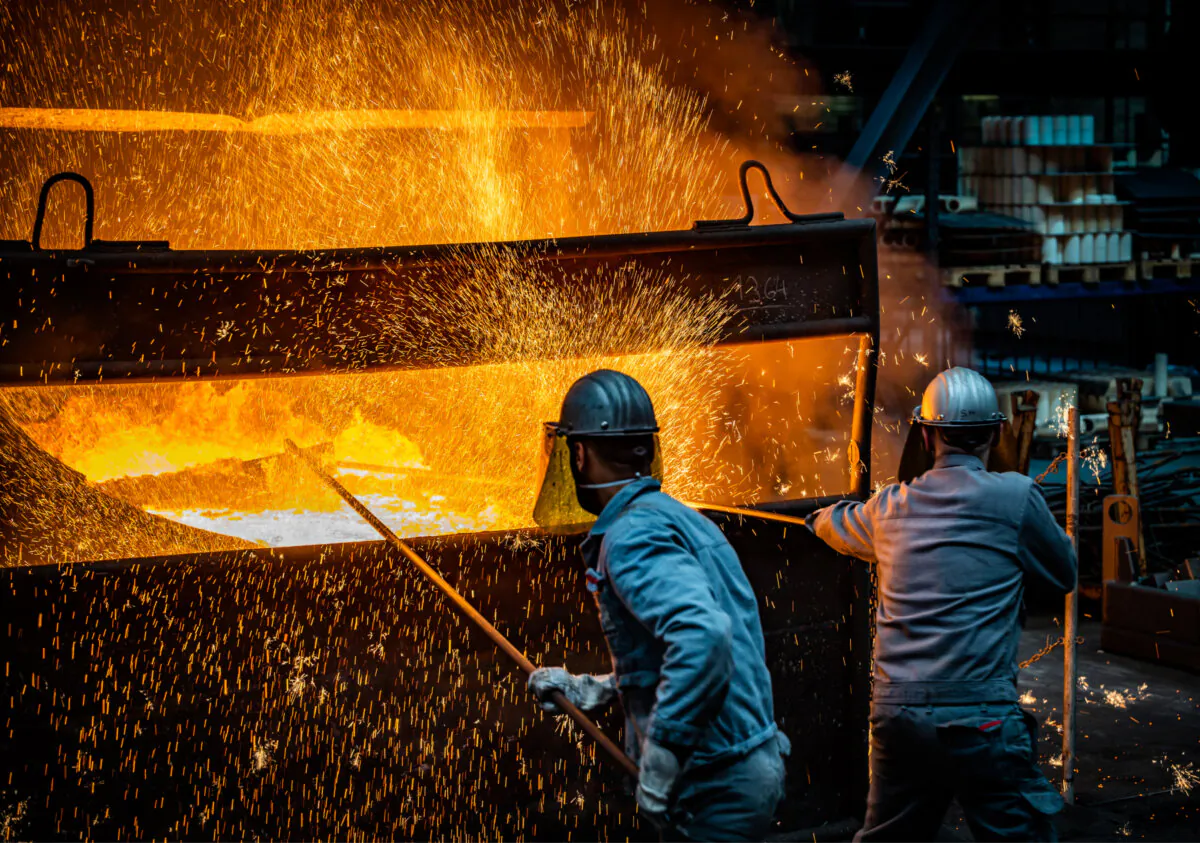
Europe remains one of the world’s largest manufacturing regions, but its relative share has declined over the past two decades as production has shifted to Asia, particularly China.
From about 2001, when China joined the WTO, many EU firms shifted labor-intensive and mid-value manufacturing there to cut costs.
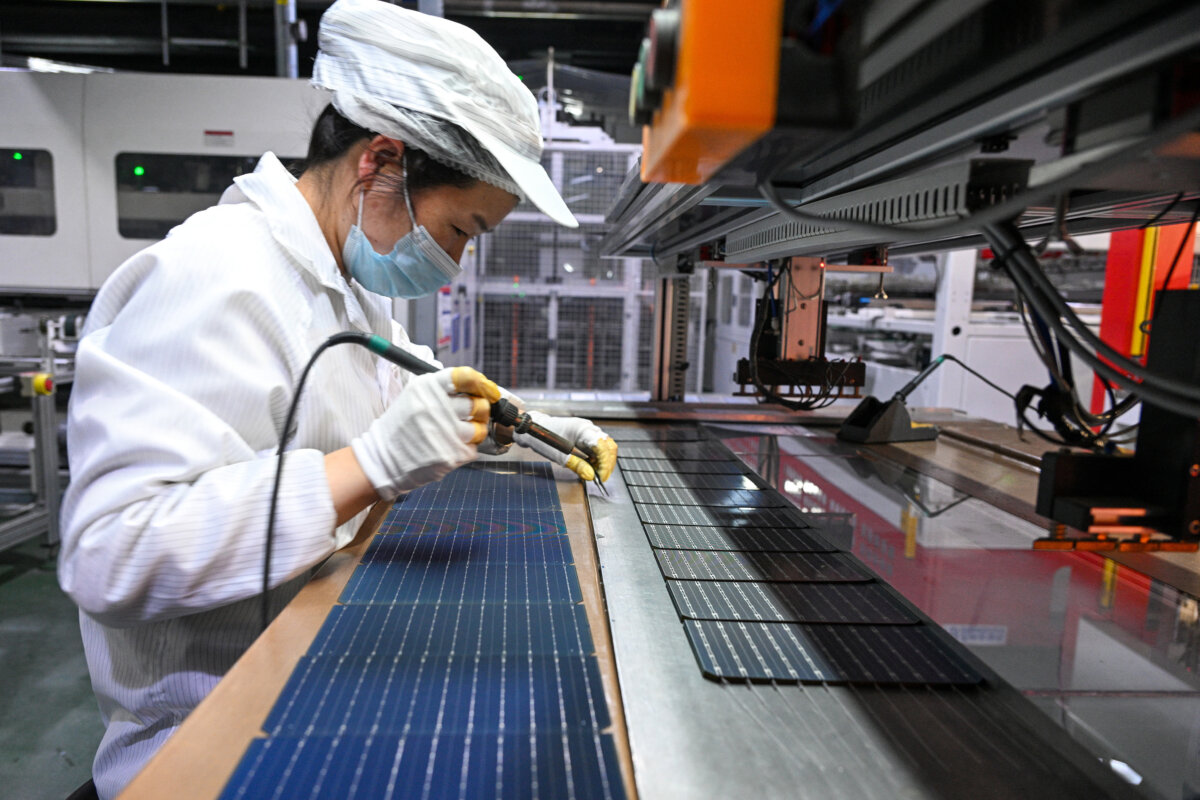
According to Eurostat historical data, the share of manufacturing value added in the EU economy has declined over time.
In 1995, manufacturing accounted for about 19.6 percent of EU gross domestic product; by 2015, it had fallen to about 15.9 percent, reflecting a long-term downward trend as services expanded faster than industry.
By the mid-2020s, that share had continued to edge lower; data from the World Bank show that manufacturing represented about 14 percent of EU gross domestic product in 2024.
In 2024, China was the EU’s third-largest export partner (8.3 percent) and its largest import partner (21.3 percent), according to EU statistics.
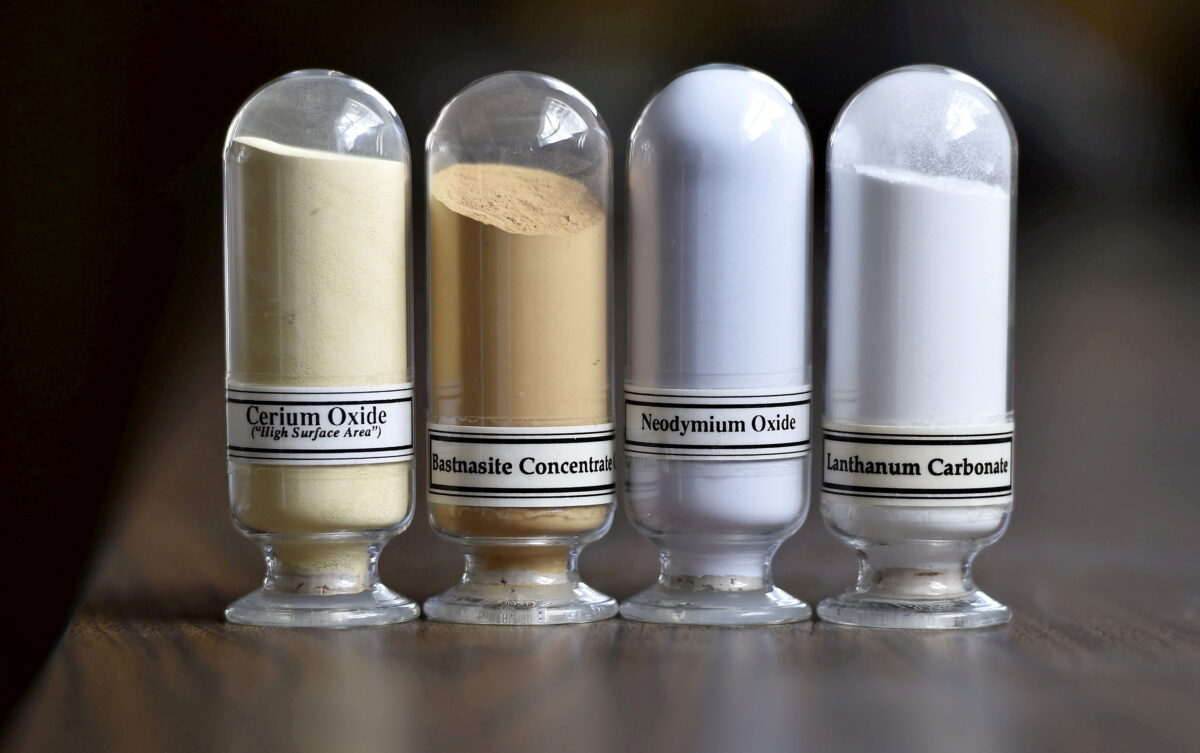
The United States and the EU signed a memorandum of understanding on April 24 for a partnership on critical minerals.
While the plan also does not specifically mention China, it comes as part of a broader push by the Trump administration to work with Western allies to loosen the Chinese regime’s grip on critical materials.
China controls roughly 90 percent of global capacity for the processing, smelting, and separation of all such materials, as well as for the manufacturing of magnetic materials.
U.S. Secretary of State Marco Rubio said at the time that the agreement reflected growing concern among Western economies about supply chain concentration.
“Obviously this shows a growing awareness and commitment throughout the world, particularly with our allies in the West and in Europe, [of] the importance of supply chains and critical minerals to the success of our economies and to our national security,” Rubio said.
He warned that the overconcentration of supply in a small number of countries posed “an unacceptable risk.”
 Friends Read Free
Copy
Facebook
Tweet
Friends Read Free
Copy
Facebook
Tweet