
The United States needs to take action to break up China’s “near-total monopoly” on gallium, as failure to do so would send the wrong signals that Beijing could inflict “asymmetric pain” on the United States and allied economies, according to a new report published by the Center for Strategic and International Studies (CSIS) on July 17.
“Firms and governments are understandably focused on rare earths, but they’re ignoring and misunderstanding China’s chokehold on gallium, a critical mineral that is crucial to military tech,” Brian Hart, deputy director and fellow of the China Power Project at the CSIS and one of the authors of the report, wrote on X to accompany the release of the report.
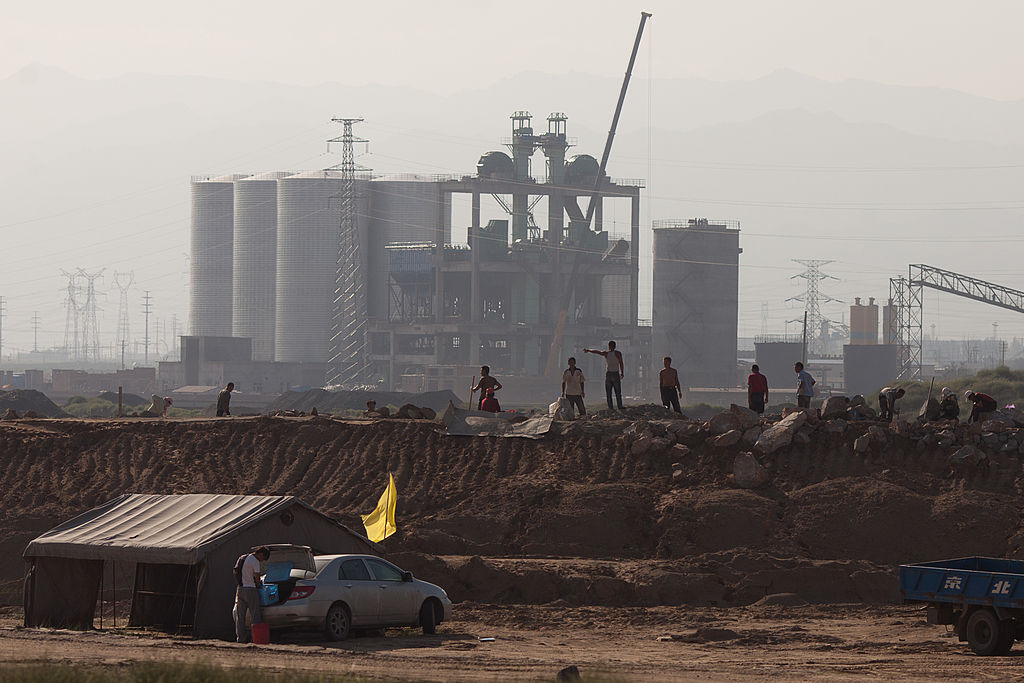
Researchers noted that China accounts for 98 percent of the world’s primary supply of gallium, which is not found in its elemental form in nature. Gallium is mainly obtained as a byproduct during the industrial process known as the Bayer process, which turns bauxite into alumina.
China is one of the world’s leading producers of aluminum, which contributes to its monopoly in gallium, according to the report. In 2024, China produced 43 million metric tons of aluminum, 60 percent of global output, up from just 4 million metric tons in 2004.
The researchers noted that China also has an “unmatched ability” to extract gallium at scale and lower cost, further contributing to its monopoly of the metal.
“Chinese state-backed companies have outpaced global competitors by investing in the energy-intensive, chemically complex, and environmentally taxing process of extracting gallium from the Bayer liquor created during the processing of bauxite ore,” the researchers wrote.
Chinese firms have innovated to produce resins, which are complex organic substances, to aid gallium recovery, the researchers noted, pointing to a resin made by the Chinese firm Sunresin that allows “producers to extract more gallium per cycle with less material degradation.”
In July 2023, Beijing retaliated against U.S. and European restrictions on semiconductor exports to China by implementing licensing requirements for the export of gallium and germanium. In December 2024, Beijing escalated its retaliatory measures by banning the export of the two elements, as well as antimony, to the United States.
Beijing added the resin to its export controls in January, according to the report.
The researchers noted that producers outside of China are unlikely to produce the resin economically.
“Until incentives are put in place to support the production of high-performance resin at adequate scale, non-Chinese producers will struggle to compete,” the researchers wrote.
Citing a 2024 study by the U.S. Geological Survey, the report warned that a full-scale Chinese embargo of gallium could cost the U.S. economy up to $8 billion in gross domestic product.
The report details that gallium is important to a wide range of technologies, including advanced radar and electronic warfare systems. Semiconductors based on gallium nitride have made possible “smaller radar modules to track targets with higher resolution at farther distances,” the report added.
“Open-source assessments reveal that over 11,000 individual parts used across the U.S. Department of Defense require gallium, and nearly 85 percent of defense supply chains containing gallium are known to include at least one Chinese supplier,” the researchers wrote.
Researchers offered several recommendations to U.S. policymakers, including having the Pentagon expand its Strategic and Critical Materials Stockpiling program to include a minimum of 50 metric tons of gallium sourced from non-Chinese suppliers over the next five years.
The Department of Energy and the Department of Commerce should expand matching funds to support gallium recovery at existing alumina refineries, and the United States should team up with Japan, the European Union, and Canada to establish a joint mechanism to procure gallium, according to the report.
The U.S.-led Minerals Security Partnership should also be a platform where member countries strengthen their coordination on gallium production, including cross-border investment and data sharing, researchers said.
 Friends Read Free
Copy
Facebook
Tweet
Friends Read Free
Copy
Facebook
Tweet