

China’s economy slowed sharply in July, according to official data, adding to pressure on Beijing to introduce stimulus measures to boost domestic demand amid its ongoing trade war with the United States.
Industrial production rose by 5.7 percent in July from a year earlier, slower than the 6.8 percent increase in June and below analysts’ expectations of 5.9 percent growth, according to data released by the National Bureau of Statistics on Aug. 15. It was the slowest expansion since November 2024.
Retail sales, a measure of consumer spending, increased by 3.7 percent in July from the same period a year earlier, down from the 4.8 percent year-over-year gain in June, and represented the lowest reading this year.
Investment in equipment, buildings, and other fixed assets outside China’s rural households climbed by 1.6 percent year-over-year in the January-to-July period, missing expectations for a 2.7 percent growth rate.
“The slump in July’s data was more pronounced than expected,” Lynn Song of ING Economics said in an Aug. 15 note.
“While extreme weather may have played a role, the broad-based slowdown in July comes on the heels of several months of generally slowing momentum. It suggests stimulus support is still needed.”
Fu Linghui, chief economist at China’s National Bureau of Statistics, attributed July’s underwhelming performance to the negative impact of a “complex and volatile” international environment along with extreme weather, such as record-breaking heat and floods.
While Fu highlighted the economy’s resilience in overcoming these challenges, he cautioned that obstacles remain.
“We should also be aware that the external environment remains complex and severe, and the risks and challenges to the economic performance persist,” Fu, also a spokesperson for the statistics bureau, told reporters at a briefing on Aug. 15.
A temporary trade truce, first reached between China and the United States in mid-May, was extended by another 90 days this week, preventing the U.S. tariff rate from rising back to triple-digit levels.
However, the uncertainty on exports to the United States amid the trade war, along with industrial overproduction, has intensified price wars in the domestic market, further squeezing manufacturers’ profits. In recent weeks, the Chinese regime has hardened its rhetoric and prepared new regulations to rein in excessive competition among companies across various sectors, although analysts remain skeptical about their effect amid sluggish demand at home.
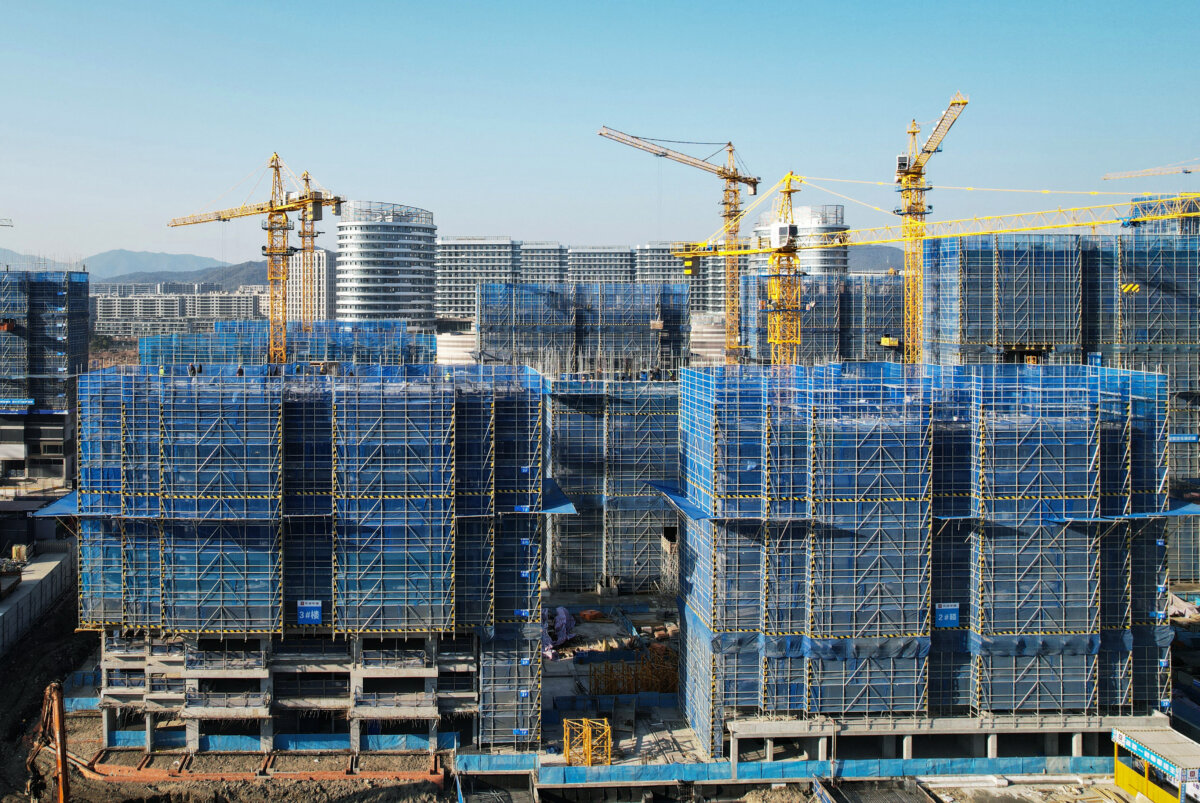
Separate data released on Aug. 15 indicated that a downturn in the real estate sector, a key store of household wealth, showed few signs of abating. In the first seven months of the year, property investment fell by 12 percent from the same period a year earlier, according to official data.
Bank lending data released on Aug. 13 show that China’s yuan loans contracted in July for the first time in 20 years, a trend analysts said underscored weak private sector demand.
Economists say weak domestic demand and global trade uncertainty are likely to weigh on growth in the coming quarters.
“We see little reason to expect much of an economic recovery during the rest of this year,” said Zichun Huang, China economist at Capital Economics.
“The lack of committing to any additional fiscal support in the latest Politburo meeting points to a fading fiscal tailwind.”
Skepticism remains over the reliability of China’s economic statistics, largely because of the Chinese Communist Party’s record of withholding information deemed harmful to its image.
Amid the economic downturn, the gap between official numbers and the reality on the ground is widening. In the second quarter, while many residents reported unpaid wages and job losses—stemming from various issues ranging from declining corporate profit margins and business closures due to U.S. tariffs—China posted better-than-expected year-over-year growth of 5.2 percent, putting it on track to meet its official target of 5 percent for the year.
Reuters contributed to this report.
 Friends Read Free
Copy
Facebook
Tweet
Friends Read Free
Copy
Facebook
Tweet