
A conflict between Taiwan and China over a strategically located atoll at the top of the South China Sea risks escalating into a fatal confrontation and delivering a devastating blow to the first island chain, an expert warns.
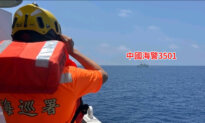
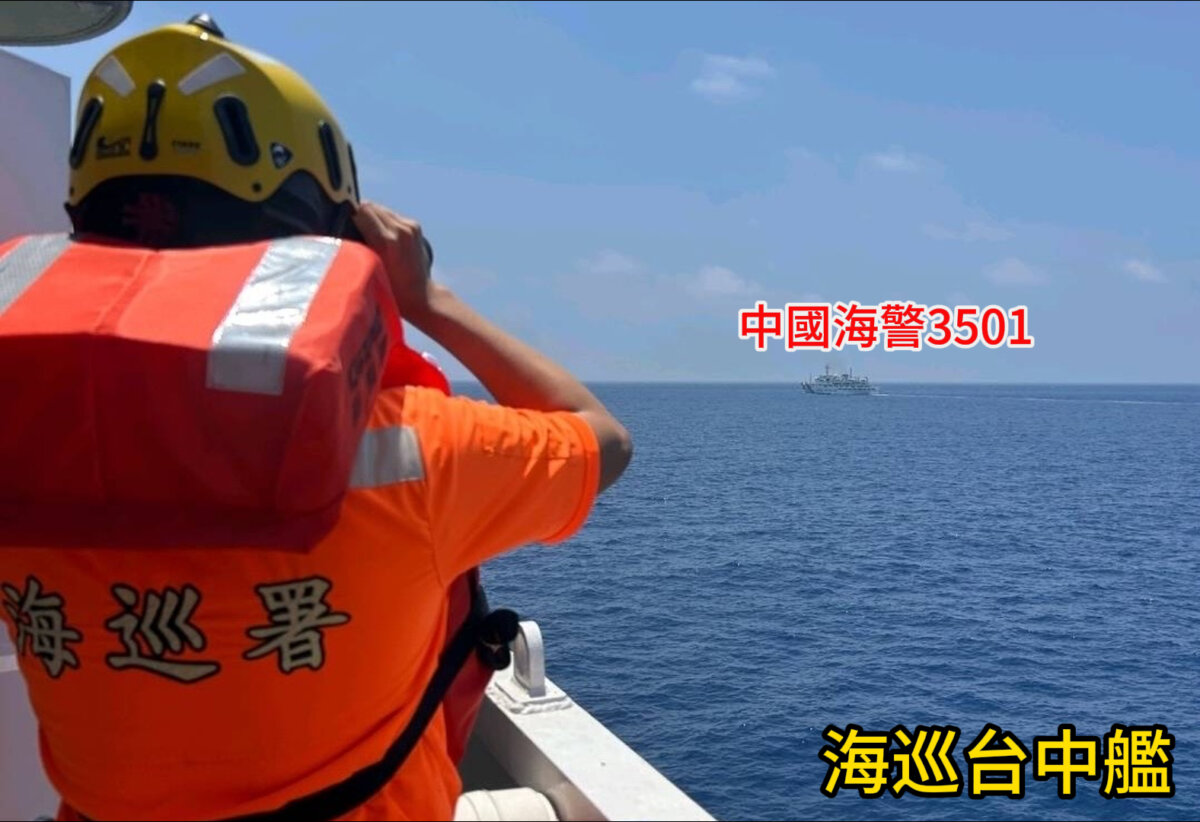
A Chinese coast guard vessel entered waters near the Pratas Islands on May 23, triggering a standoff and an exchange of radio warnings with a Taiwanese patrol ship, Taiwan’s Coast Guard Administration (CGA) said on May 24.
The Chinese vessel claimed to be on a “routine mission” and asserted jurisdiction over the area, but Taipei countered sharply.
“Please do not destroy peace. You should return and strive for democracy. That is the correct way to serve your country,” the Taiwanese crew radioed back, according to a translation of a CGA press release.
The Chinese vessel sailed out of the restricted waters around the Pratas at around 5 p.m. on May 24, ending a 33-hour showdown, according to Taiwanese newspaper Liberty Times.
The CGA’s Dongsha-Nansha Branch said it has expelled Chinese coast guard vessels from the area on six occasions involving four craft as of late May.
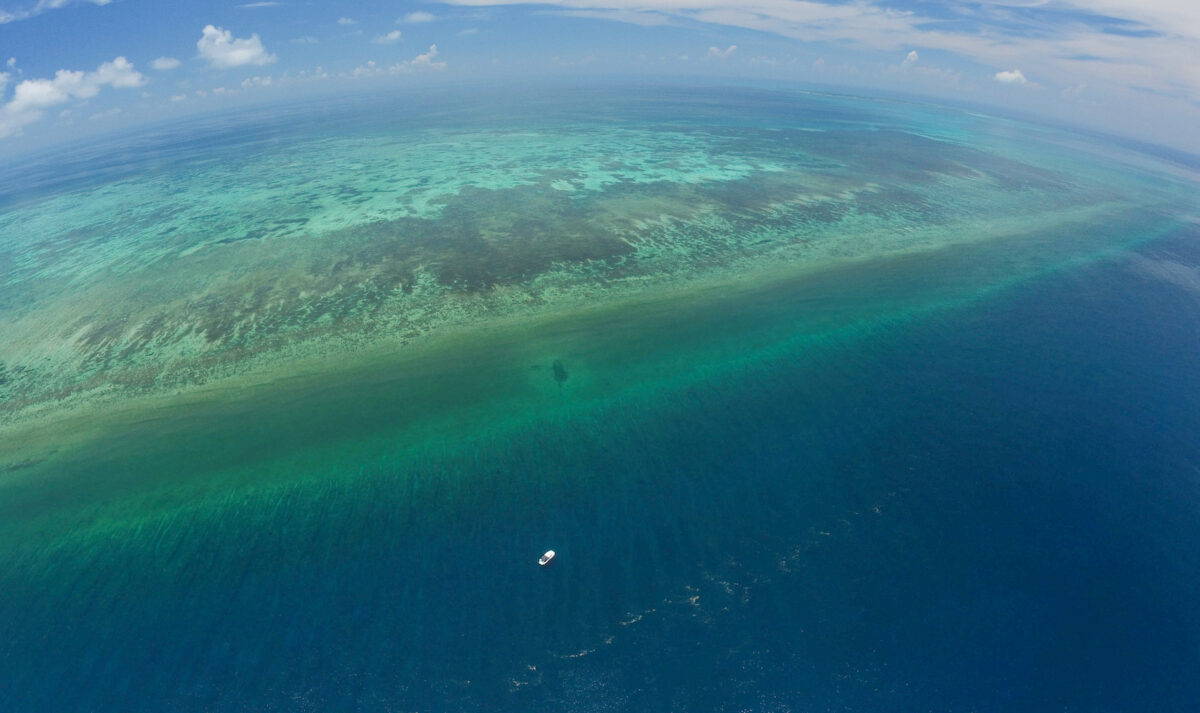
The Pratas Islands, also known as Dongsha, are located between southern Taiwan and Hong Kong, sitting more than 250 miles from Taiwan proper.
Both Taiwan and China claim sovereignty over the Pratas, but the islands remain under Taipei’s de facto control.
Nearly 300 Taiwanese troops are permanently garrisoned on the Pratas, trained in marine infantry tactics and the use of mortars and rocket launchers to maintain paramilitary combat capabilities.
In response to Beijing’s growing threat to Taiwan, Taipei has been deploying additional troops for rotational deployment on the strategic South China Sea outpost since 2020.
Taiwan is a self-governed democracy that the Chinese Communist Party (CCP) has never controlled but has vowed to annex by force.
‘Strategic Chokepoint’
Lin Ting-hui, former deputy secretary-general at the Taiwan Society of International Law, said the Pratas Islands’ location and their disputed status give them immense geopolitical value in Beijing’s eyes.
“Aside from China and Taiwan, no other countries claim sovereignty over the Pratas, so the CCP views this as its ‘internal affair.’”
Lin said the Pratas’ absence of international backing, combined with their exclusion from U.S. security coverage, gives the Chinese regime a perceived opening to exploit.
“The Taiwan Relations Act does not extend to the Pratas, as the islands fall outside its defined scope,” Lin said.
“China is using this to test how seriously Taipei and Washington regard the islands and their resolve to defend them.”
The Taiwan Relations Act, a U.S. law enacted in 1979, underpins the unofficial partnership between Washington and Taipei, guaranteeing the self-governing democracy defensive arms and support despite the absence of formal diplomatic ties.
Richard Yu-ping Chou, a member of the Evaluation Center Committee of the National Defense Industrial Development Foundation in Taiwan, said the CCP’s current goal for the Pratas is to assert greater control over the South China Sea through gray-zone operations.
The gray-zone operations are aggressive and coercive actions designed to intimidate an opponent while remaining below the threshold of warfare.
“China is stress-testing Taiwan through sustained gray-zone tactics, and if one succeeds, it could deploy forces to seize the islands,” Chou told The Epoch Times.
“In recent years, the CCP has reclaimed reefs in the South China Sea, stationing military forces on the resulting islands to menace neighboring countries.”
Lethal Standoff
Chou said that despite Taipei’s repeated pledges to defend the Pratas Islands, their flat terrain and lack of strategic depth make them a flashpoint highly susceptible to armed conflict and potential casualties.
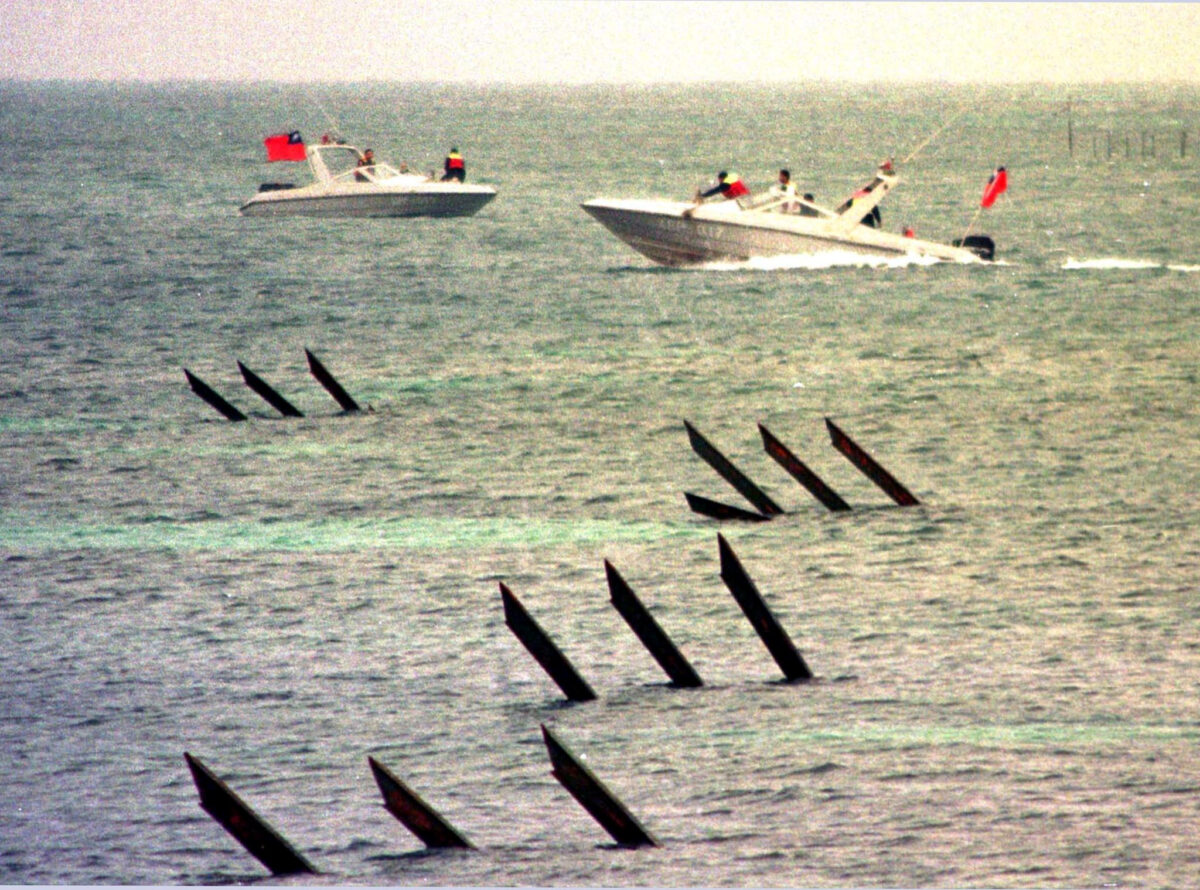
“Vessel-ramming clashes and water cannon face-offs could occur when Taiwanese coast guard ships attempt to forcefully expel or detain Chinese boats trespassing or conducting illegal surveys,” Chou said.
“Intense confrontations could escalate into fatal incidents, including crew members falling overboard or accidental weapon discharges.”
Chou pointed out that the Chinese regime’s routine deployment of drones to circle the Pratas and briefly intrude into their airspace serves as yet another trigger for bloodshed.
“If Taiwan’s military takes a hard-line stance and shoots down a Chinese military or large coast guard drone, Beijing could label the move as a provocative ‘first shot,'” he said.
“This could spark immediate retaliation from the People’s Liberation Army [PLA], resulting in heavy casualties among the garrison, as Taiwan’s military cannot quickly send reinforcements.”
Chou said China could also impose a localized blockade on the Pratas without direct combat, an approach that would prove no less deadly.
“Taiwan would be forced to dispatch warships and fighter jets to escort supply vessels through the blockade,” he said.
“Amid such an intense standoff, a single radar lock or mid-air collision could erupt into open hostilities.”
Consequences
Chou said a Chinese takeover of the Pratas Islands would create a critical breach in Taiwan’s defenses.
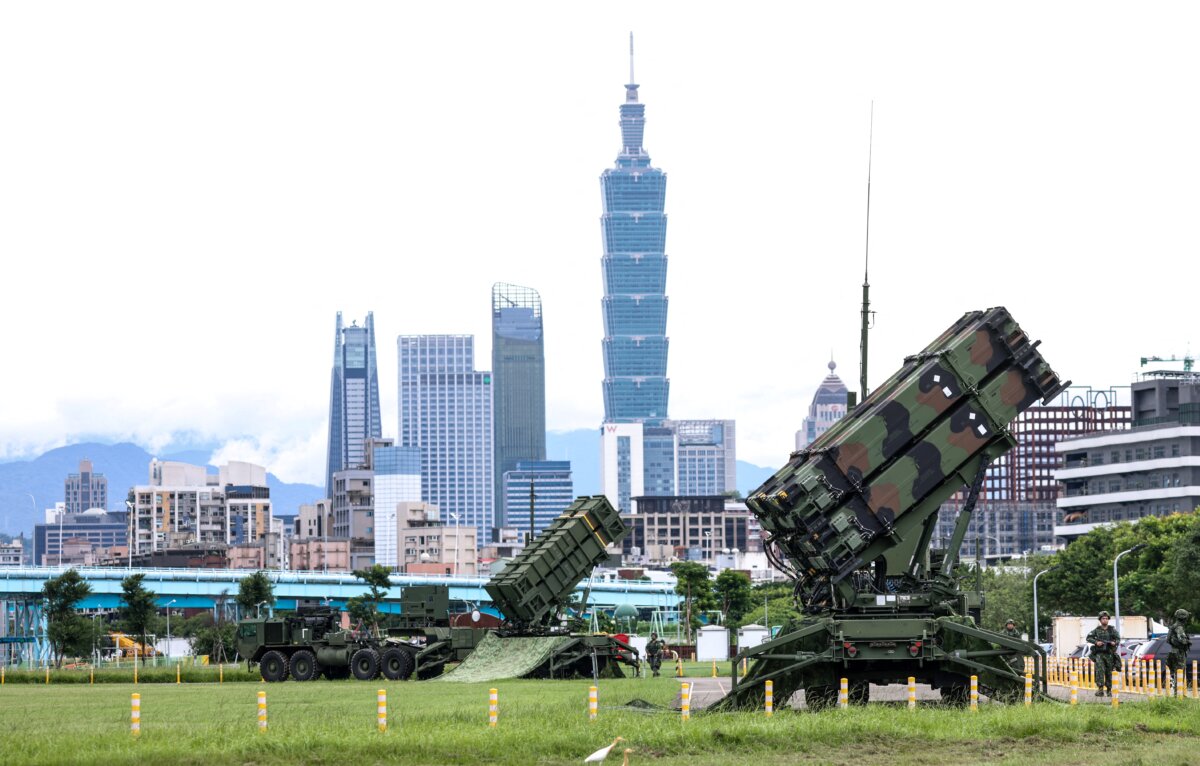
“Once the Pratas fall, the CCP could deploy advanced forward radars, electronic warfare jammers, anti-aircraft missiles, and shore-based anti-ship missiles on the islands,” Chou said.
“This would enable the PLA to monitor Taiwanese military movements at the southern entrance of the Taiwan Strait and off the coast of Kaohsiung around the clock.”
Chou warned that this would likewise severely impact Taiwan’s maritime energy and economic lifelines, as well as those of Northeast Asia.
“The Port of Kaohsiung and Taiwan’s southwestern shipping lanes, heavily relied upon domestically as well as by Japan and South Korea, would fall entirely within the strike range and direct line of sight of PLA land-based weapons,” he said.
“Vessels transiting the area would be forced to reroute.”
Moreover, Chou added, a CCP capture of the Pratas would be a devastating blow to the first island chain—which includes Taiwan, mainland Japan, and the Philippines—and is widely seen by analysts as a critical buffer limiting China’s ability to project military power into the Pacific.
“The U.S. military has actively positioned defense systems in the northern Philippines in recent years to safeguard the Bashi Channel,” Chou said.
“Seizing the Pratas would literally punch a hole right through the U.S.–Philippine defense line, enabling Beijing to execute its ‘anti-access’ strategy.”
China’s anti-access/area-denial strategy is a combination of missiles, submarines, sensors, and air defenses, designed specifically to block and disrupt the United States and its allies across air, sea, space, and cyber domains.
Diplomatic Deterrence
Lin said while Washington has no legal mandate to defend the Pratas, it could expand its security umbrella to mirror its protection of the Philippines in the event of a large-scale Chinese offensive.
“To deter Beijing’s militias from attacking Philippines-occupied Thitu Island, Washington reinterpreted its mutual defense treaty with Manila in 2019 to cover the territory,” Lin said.
“Therefore, a similar political calculus could apply to a Pratas clash between Taipei and Beijing.”
Lin said U.S. policymakers could extend the Taiwan Relations Act to encompass the Pratas as a long-term option, though any definitive legislative shift hinges on future policy updates.
“However, Washington has been closely monitoring the situation, as any diplomatic signaling could effectively prevent armed PLA strikes,” he said.
 Friends Read Free
Copy
Facebook
Tweet
Friends Read Free
Copy
Facebook
Tweet