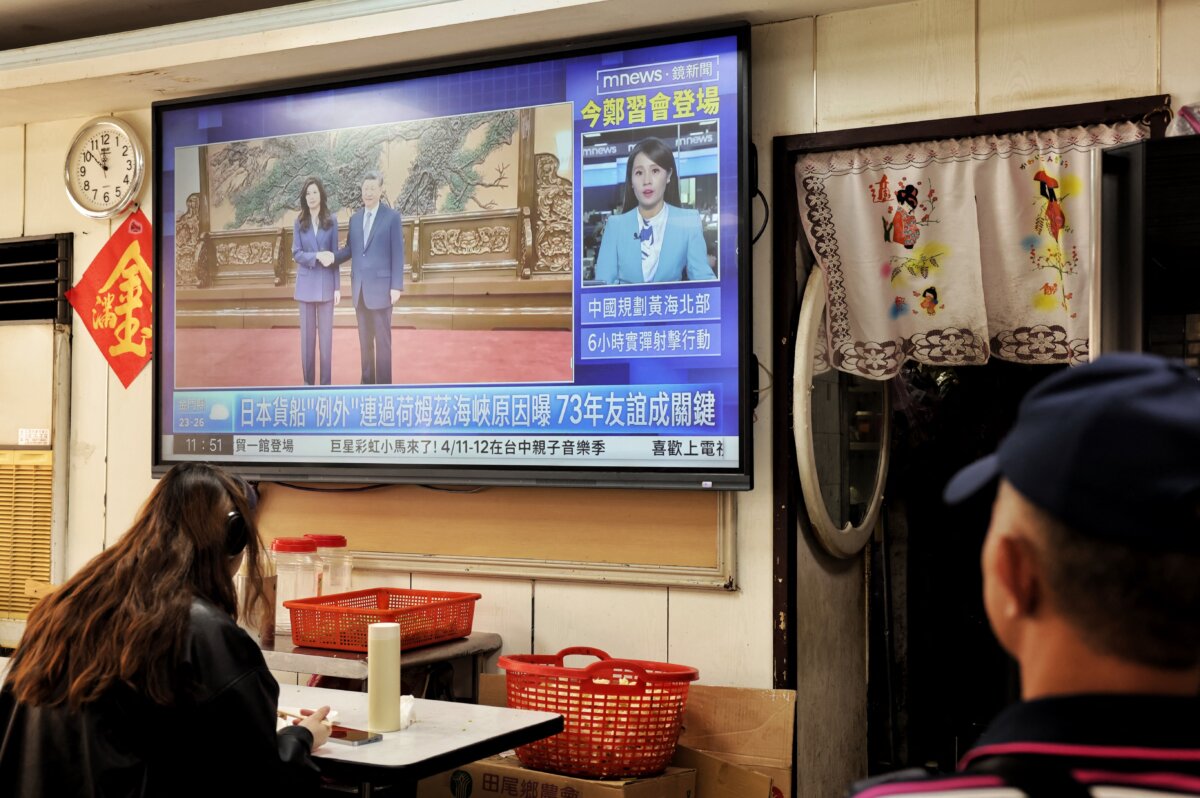

TAIPEI, Taiwan—Chinese leader Xi Jinping met with Taiwan’s main opposition leader in Beijing on April 10, amid China’s escalating military pressure on the island and a dispute in Taiwan’s parliament stalling a major defence spending plan.
Xi held talks with Cheng Li-wun, chairwoman of Taiwan’s largest opposition party, the Kuomintang (KMT), who arrived in China on April 7 at the invitation of the Chinese leader. It marks the first meeting between Xi and a KMT leader since 2016.
At the opening of their talks, Xi told Cheng that the “rejuvenation of the Chinese nation will not change,” a phrase echoed in Beijing’s 2022 white paper on Taiwan, which framed the island’s annexation as a cornerstone of that vision.
Xi added that the future of cross-strait relations must be “in the hands of the Chinese people themselves.”
Speaking to Xi, Cheng said she hoped that through the efforts of the KMT and the Chinese Communist Party (CCP), the Taiwan Strait would no longer be a focal point of conflict, and would certainly not become a “chessboard for outside forces to intervene in.”
The Chinese regime views Taiwan as a part of its territory and is rapidly modernizing its military amid threats to take the island by force or compel it to submit to its rule.
Tensions across the Taiwan Strait have escalated since 2016, when the Democratic Progressive Party (DPP) won the presidency. Since then, the CCP, which views the DPP as separatists, has refused to deal with the administrations of Tsai Ing-wen and, now, President Lai Ching-te.
The CCP has traditionally favored KMT politicians because of their friendly view of the communist neighbor.
Since Lai’s election victory in 2024, the Chinese regime has also stepped up military pressure, including holding two large-scale exercises encircling Taiwan last year, to intimidate the Taiwanese public and influence opinion in Beijing’s favor.
Following their opening remarks, Xi and Cheng held a closed-door meeting.
According to China’s state-run news agency Xinhua, Xi emphasized the importance of the CCP and the KMT “consolidating political mutual trust” and advancing cross-strait ties, while rejecting “Taiwan independence.”
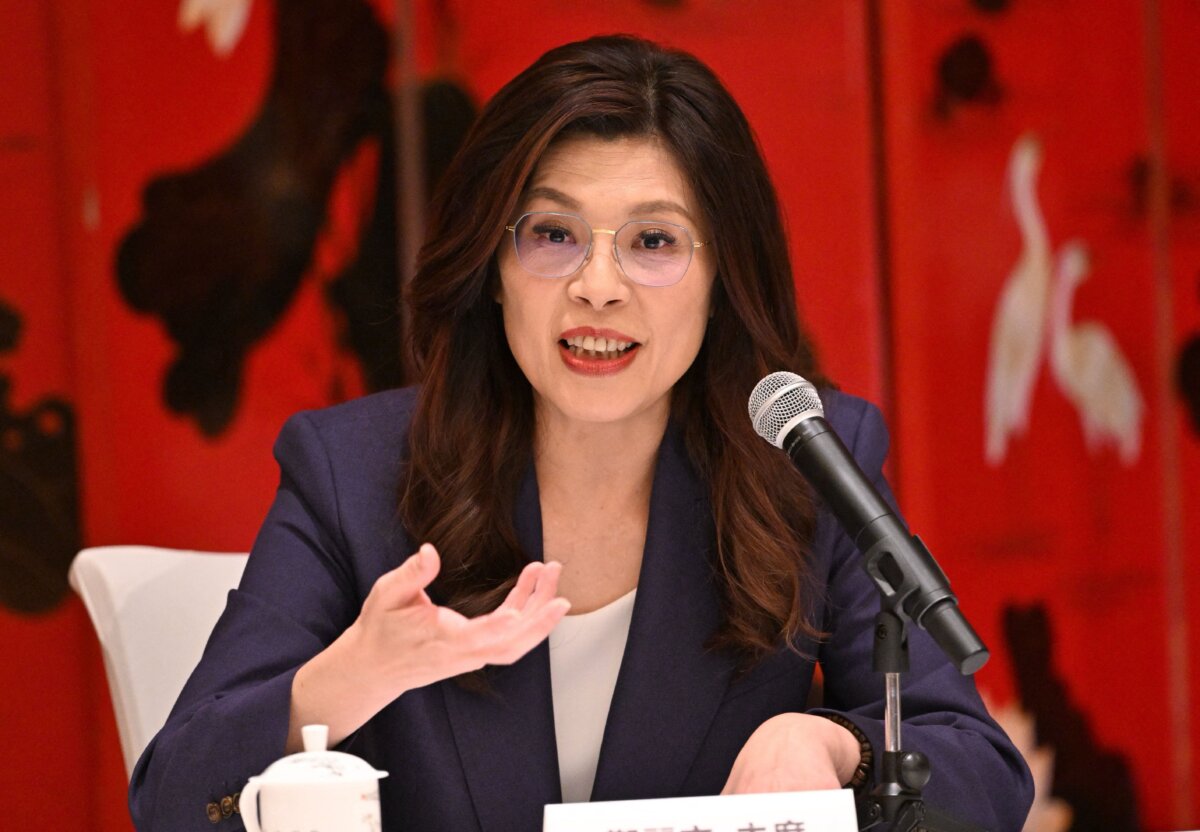
At a press conference in Beijing, Cheng called her talks with Xi “genuine, candid, and sincere.” She said she had raised several proposals on advancing peaceful cross-strait ties, including reviving consultations on both sides and allowing Taiwan’s greater participation in the international community under what she called “political mutual trust.”
Cheng also voiced her desire to act as a “host” and invite Xi to visit Taiwan, if the KMT were to win the presidency in the 2028 general elections.
Taiwan
For more than a year, the Lai administration has been mired in a dispute with the opposition-controlled parliament over defense spending. Lai’s proposed $40 billion special defense budget, which has the support of U.S. lawmakers, has stalled in parliament, as the KMT and its smaller ally, the Taiwan People’s Party, push for less spending.
On Friday, before the Xi–Cheng meeting, Lai posted on Facebook to mark the 47th anniversary of the enactment of the Taiwan Relations Act, which authorizes U.S. arms sales to Taiwan for self-defense.
Citing China’s continued gray-zone incursions and military threats, Lai said that “appeasing authoritarian regimes only comes at the cost of sovereignty and democracy.”
Lai called on all political parties to set aside their difference to demonstrate to the world Taiwan’s determination to safeguard its democracy.
In a statement, Lee Kun-cheng, a DPP spokesman, criticized the CCP for using the Xi–Cheng meeting to interfere in Taiwan’s elections and divide the Taiwanese people.
Lee added that democratic dialogue should take place between official or publicly authorized authorities, not through political parties that are not accountable to the public.
Puma Shen, a DPP lawmaker, warned that the core of the Xi–Cheng meeting was not about engaging in talks but rather “establishing a framework,” according to his Facebook post.
“The [Chinese] Communist Party’s framework is very clear: ‘Taiwan is a part of China, and Taiwanese people are Chinese.’ Cross-strait relations are considered an ‘internal domestic matter,’ and foreign countries have no right to intervene,” Shen wrote, according to a translation.
“Once Taiwan accepts such a framework—even if only by temporarily setting aside sovereignty disputes—its space under international law would begin to shrink. The [Chinese] Communist Party aims to pressure Taiwan into signing a ‘peace agreement,’” Shen said, citing Tibet as an example
The CCP invaded Tibet in 1949 and forced upon the Tibetans a 17-point agreement to legitimize the CCP’s rule. Despite rosy promises of Tibetan autonomy on paper, China’s communist regime turned the region into a surveillance state and installed labor camps.
“This meeting will not make Beijing stop its military harassment. It will not end transnational repression. And it will not give Taiwan even an inch more space in international arenas under its own name,” Shen added.
Dorothy Li contributed to this report.
 Friends Read Free
Copy
Facebook
Tweet
Friends Read Free
Copy
Facebook
Tweet