
Chinese boats dropped bottles containing cyanide in the disputed South China Sea, the Philippines said on April 13, calling it an act of “sabotage” that threatened the lives of military personnel and fishermen.
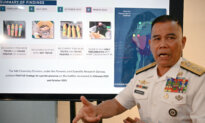
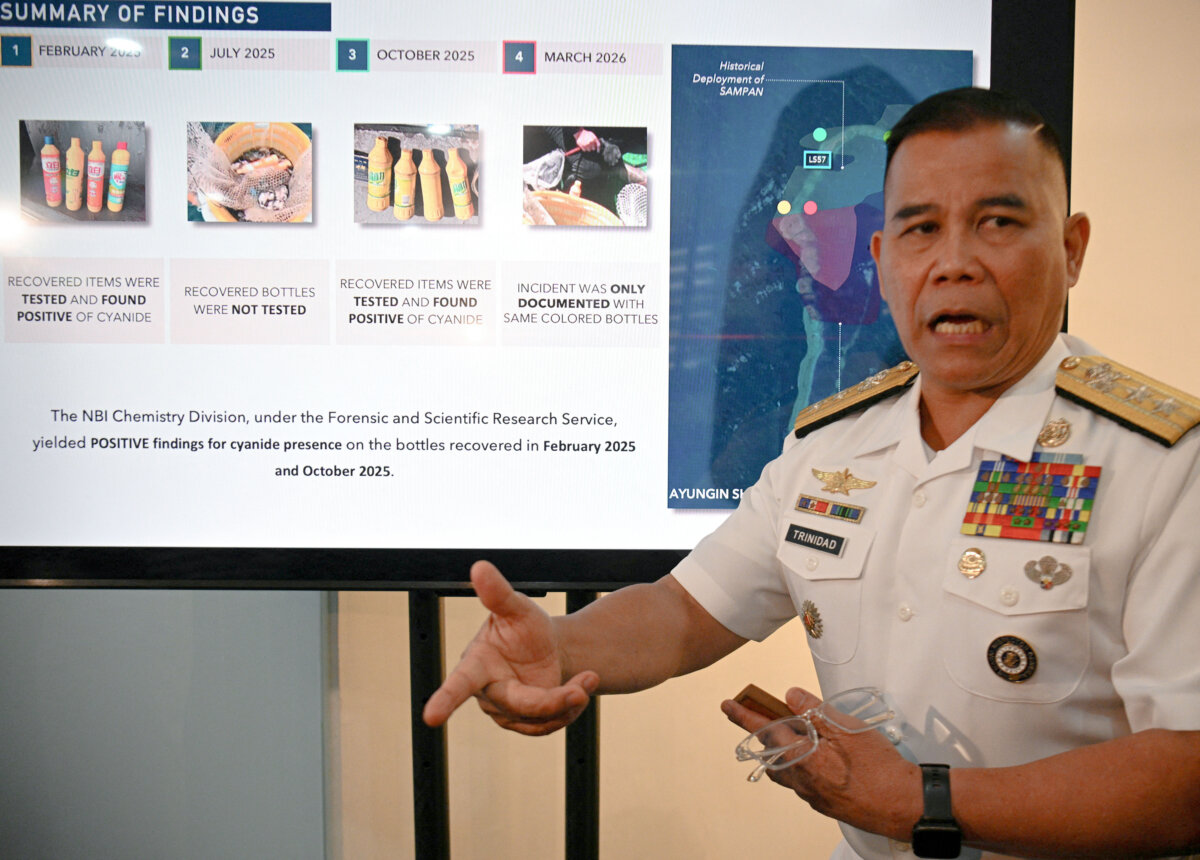
The Philippines National Security Council said in a statement that two bottles were seized by the Philippine Navy near Second Thomas Shoal in February 2025 and October 2025.
Laboratory analysis determined that the bottles dropped by Chinese boats contain cyanide, a highly toxic substance capable of causing “severe and irreversible damage” to humans and marine ecosystems, the council stated on Facebook.
“These laboratory findings remove any doubt as to the dangerous and unlawful nature of these activities,” said the council’s spokesperson, Cornelio Valencia Jr.
“We wish to underscore that the use of cyanide in Ayungin Shoal is a form of sabotage that seeks to kill local fish populations, depriving Navy personnel of a vital food source,” Valencia said, using the Philippine name of Second Thomas Shoal.
Valencia noted that cyanide can damage the reef, which can “ultimately compromise” the structure of BRP Sierra Madre, a Philippine naval vessel that has been grounded on a reef near Second Thomas Shoal since 1999. If the reef is severely damaged, he warned, Beijing could blame Manila for polluting the shoal and causing the environmental crisis.
The Second Thomas Shoal lies within the Philippines’ 200-nautical-mile exclusive economic zone, he noted, condemning the Chinese vessels’ activities as “irresponsible and unacceptable.”
Valencia said such actions constitute violations of Philippine environmental laws, international maritime norms, and the obligations of states under the U.N. Convention on the Law of the Sea (UNCLOS) if intentional.
Beijing, which claims sovereignty over Second Thomas Shoal, didn’t immediately comment on the incident.
The Chinese regime asserts claims over almost the entire South China Sea, a strategic and resource-rich waterway, despite a 2016 arbitration ruling that invalidated its assertion under UNCLOS.
While other nations, including Vietnam and Malaysia, also lay claims to the waterway, which is a key global trade route, confrontations have primarily occurred between China and the Philippines.
In a June 2024 encounter, for instance, a Filipino sailor lost a finger after China’s coast guard personnel rammed and punctured Philippine vessels undertaking a resupply mission to BRP Sierra Madre, according to Manila. Beijing denied the allegations and accused the Philippines of intruding into its waters.
US, Allies Hold Drills as China Patrols
The Chinese Navy stated on April 13 that it conducted a “routine patrol” in the South China Sea from April 9 to April 12, as the United States and three other allies carried out a joint drill in the water.
Zhai Shichen, spokesperson for the People’s Liberation Army Southern Theater Command, responsible for the South China Sea, accused the Philippines of stirring trouble and “disrupting peace and stability” at the disputed waters by holding drills with countries outside the region.
Beijing’s announcement came on the same day that the United States and the Philippines stated that they had completed a four-day maritime cooperative activity with Australia in the South China Sea.
“This activity demonstrated a collective commitment to strengthening regional and international cooperation in support of a free and open Indo-Pacific,” the U.S. Indo-Pacific Command said on X on April 12.
The Philippine military said in a post on X on the same day that the joint drill underscored “the deepening defense cooperation among the three nations” and the “shared commitment to regional security.”
 Friends Read Free
Copy
Facebook
Tweet
Friends Read Free
Copy
Facebook
Tweet