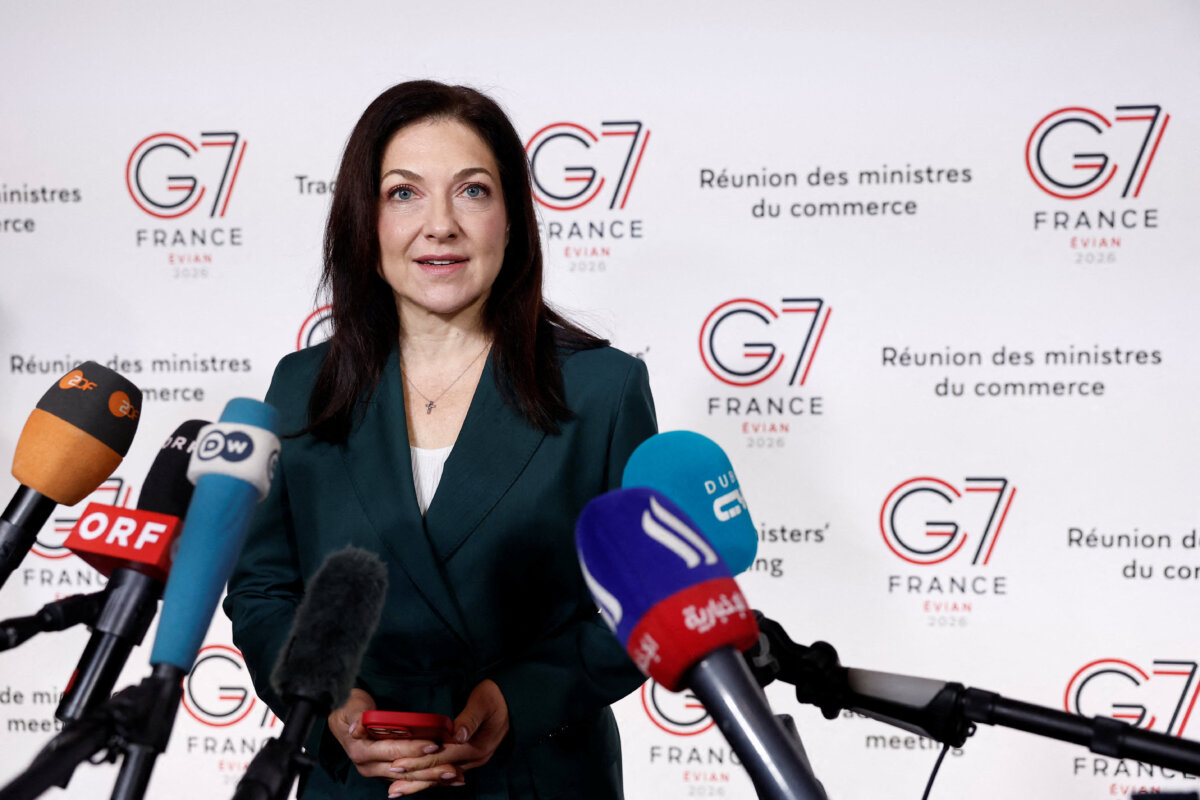

German Economic Affairs and Energy Minister Katherina Reiche’s visit to China exposes Berlin’s deep economic dependence on the Chinese market, a vulnerability experts warn invites infiltration and technology theft.
Reiche concluded her four-day trip to China on May 29, calling for a balance of competition and cooperation in Berlin’s economic ties with Beijing.
“Competition makes us stronger, cooperation creates stability, and innovation drives shared progress,” Reiche said after talks with Chinese Commerce Minister Wang Wentao.
Wang said that China stood ready to strengthen dialogue and consultation with Germany to “expand the list of cooperation and shorten the list of issues.”
However, Reiche said her talks had also covered concerns among German investors in China, from supply chain issues to transparency and localization rules.
The minister’s delegation included 40 senior executives from major German companies, including BASF, Siemens Energy, and Thyssenkrupp.
Before departing for China, Reiche said in a statement that ties between Germany and China—the world’s third- and second-largest economies—represent “one of the most significant economic relationships in the world.”
China remains Germany’s top trading partner, with the German federal statistical office reporting a total bilateral trade volume of 251.8 billion euros ($285.2 billion) in 2025.
But Germany has run a massive trade deficit with China, importing 171.1 billion euros ($193.5 billion) in goods while exporting only about 81 billion euros ($91.7 billion).
The visit marks Reiche’s first official trip to China and follows German Chancellor Friedrich Merz’s visit in February.
Her tour occurred as friction between the European Union and China has been escalating; the the European Commission called the bilateral trade and investment relationship “not sustainable” on May 29.
The Chinese Ministry of Commerce said on May 31 that if the EU imposes “discriminatory restrictions,” China will take effective measures to “safeguard its own interests.”
Managing Ties
Lin Tzuli, director of the Center for China and Regional Development at Taiwan’s Tunghai University, said Reiche’s visit reflects Germany’s “enduring economic dependence on China” while stopping short of abandoning its de-risking strategy.
“This reflects Berlin and German companies working together on a gradual decoupling strategy,” Lin told The Epoch Times.
“Major sectors like the automotive, chemical, and machinery industries still view China as a market too critical to ignore.”
Lin said China’s significantly lower energy costs continue to draw German firms there, while warning that “technology leakage” from those companies remains the greatest risk.
Tony Tai-ting Liu, an assistant professor at the Graduate Institute of International Politics at Taiwan’s National Chung Hsing University, said the German minister’s trip signals Berlin’s likely shift toward a pragmatic approach with Beijing.
“Germany is expected to proceed cautiously on whether to open its market in critical sectors like drones and electric vehicles, especially since such moves could impact the broader European market,” Liu told The Epoch Times.
“However, it will look to deepen cooperation with China in non-critical areas.”
Shen Ming-shih, a research fellow at Taiwan’s Institute for National Defense and Security Research, took a dimmer view of what China could offer Germany.
“With a massive exodus of foreign capital recently, China’s economic outlook is grim,” Shen told The Epoch Times.
“Additionally, whether Chinese factories and raw-material standards truly meet German corporate requirements will likely take more time to verify.”
‘Feed, Trap, and Kill’
Just days before Reiche’s trip to China, German police arrested a married couple in Munich on charges of spying for China and collecting sophisticated technology for military purposes.
Shen said the espionage case shows expanding economic cooperation with Beijing risks drawing German corporations into a “feed, trap, and kill” strategy—in which the regime uses market access and preferential policies to lure foreign firms, trapping them in forced technology transfers, and then forcing their exit.
“The Chinese regime aims to use stolen technology to build up its own industries, eventually undercutting the very German firms” it was partnered with, Shen said.
“So whether Beijing draws German corporations to invest and operate in China or sends personnel to study in relevant German sectors, the impact on Berlin will be substantial.”
Lin said the sheer scale of these economic ties inevitably exposes Berlin’s critical sectors to systemic Chinese espionage.
“German intelligence agencies have repeatedly warned of escalating Chinese espionage,” Lin said.
“This signals Berlin’s security apparatus now treats the Chinese Communist Party (CCP) as a direct intelligence threat rather than just an economic partner.”
Limited Leverage
While the German economy minister visited China, a cross-party delegation from the German-Taiwan Parliamentary Friendship Group met with Taiwan President Lai Ching-te during a seven-day trip to Taiwan.
Till Steffen, chairman of the German-Taiwan Parliamentary Friendship Group, said exchanges between Berlin and Taipei must remain free from Chinese interference, vowing to champion deeper bilateral cooperation within the German parliament, according to a news release issued by Taiwan’s Ministry of Foreign Affairs on May 25.
Taiwan is a self-governed democracy that the CCP has has repeatedly threatened to annex by force.
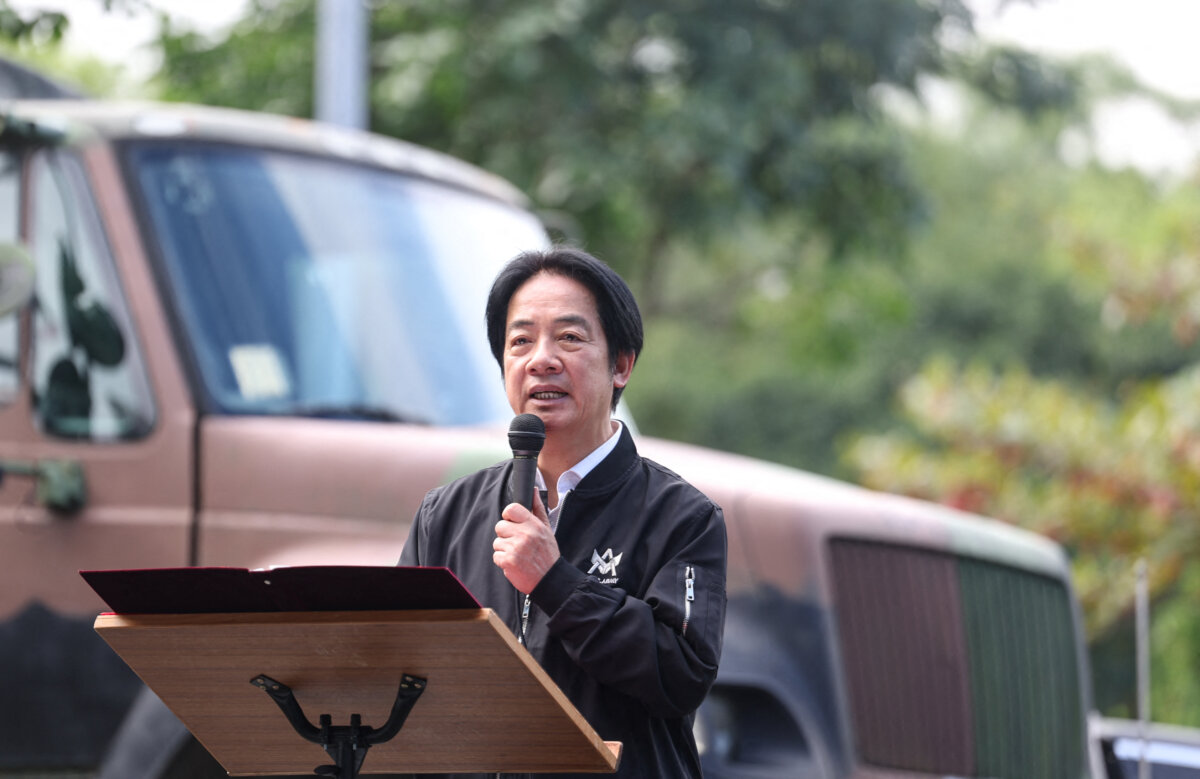
The trip marks the third by German lawmakers to Taiwan in 2026, following two separate delegations in April.
Liu said maintaining ties with Taiwan, despite opposition from the Chinese regime, remains crucial for Germany given the island’s advanced chip-research capabilities.
“If Taiwan can help Germany widen its lead over China in critical sectors, the overall benefits—from reducing dependence on Beijing to driving industrial upgrades—will outweigh the drawbacks for Berlin,” Liu said.
Lin cautioned that the risk of facing political or economic retaliation from Beijing “certainly exists.”
“Germany’s engagement with Taiwan is already testing the limits of Beijing’s tolerance,” Lin said.
“But with Germany being China’s largest European trading partner, any full-scale retaliation against Berlin would come at a steep cost for the regime itself.”
Shen said that regardless of any punitive actions, Beijing cannot force a shift in Berlin’s policy toward Taipei.
“Taiwan’s democratic values and technological advantages are what drive Germany’s desire to keep the relationship going,” Shen said.
“China may impose diplomatic sanctions, but with these lawmakers unlikely to travel there, such measures will carry little practical effect.”
 Friends Read Free
Copy
Facebook
Tweet
Friends Read Free
Copy
Facebook
Tweet