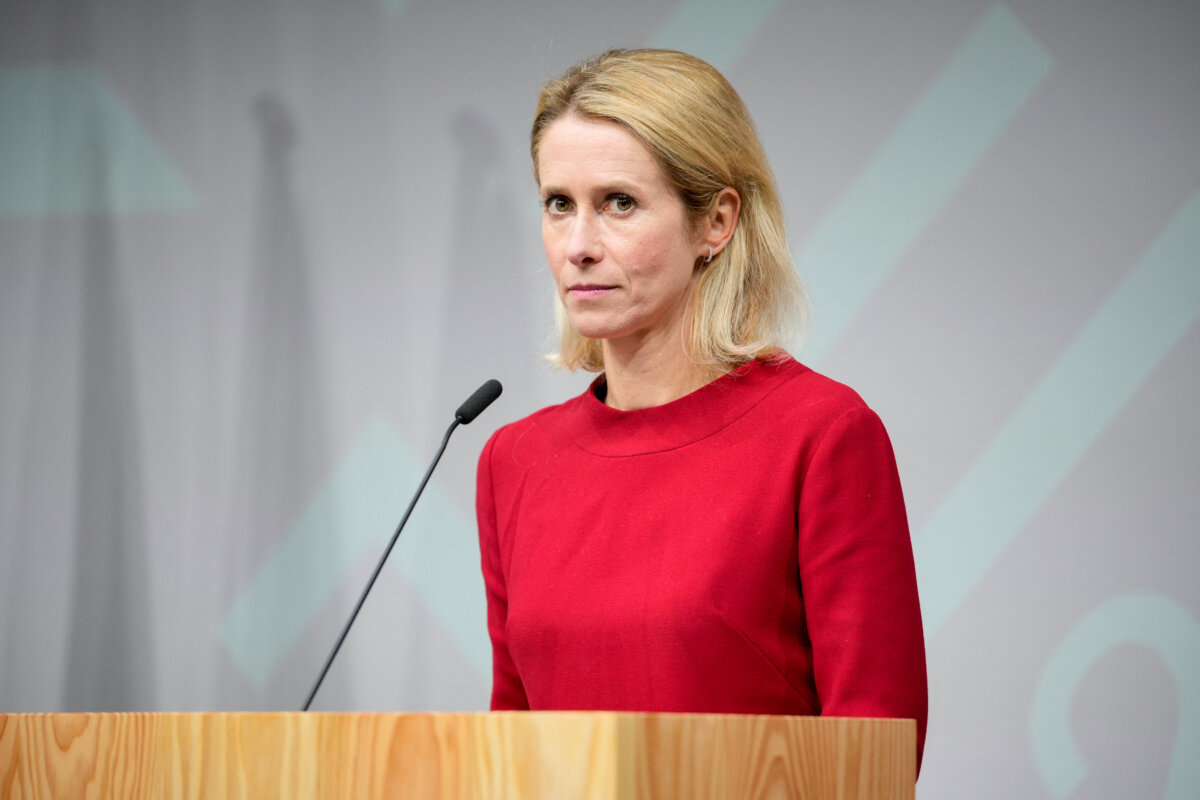

The European Union’s high representative for foreign affairs and security policy has said that the Chinese communist regime is actively helping Russia prolong its war against Ukraine in order to divert U.S. attention and resources from Beijing.
Analysts said that the explicit statement from the EU foreign policy chief shows a clear shift in its strategy toward China and an adjustment in its relationship with the United States.
EU high representative Kaja Kallas said in an interview with The Economist on Oct. 28 that Russian President Vladimir Putin has shown no signs of taking cease-fire negotiations seriously after launching the war in February 2022. She called the Chinese regime “the key enablers of this war,” pointing out that China has become Putin’s most important supporter in the conflict.
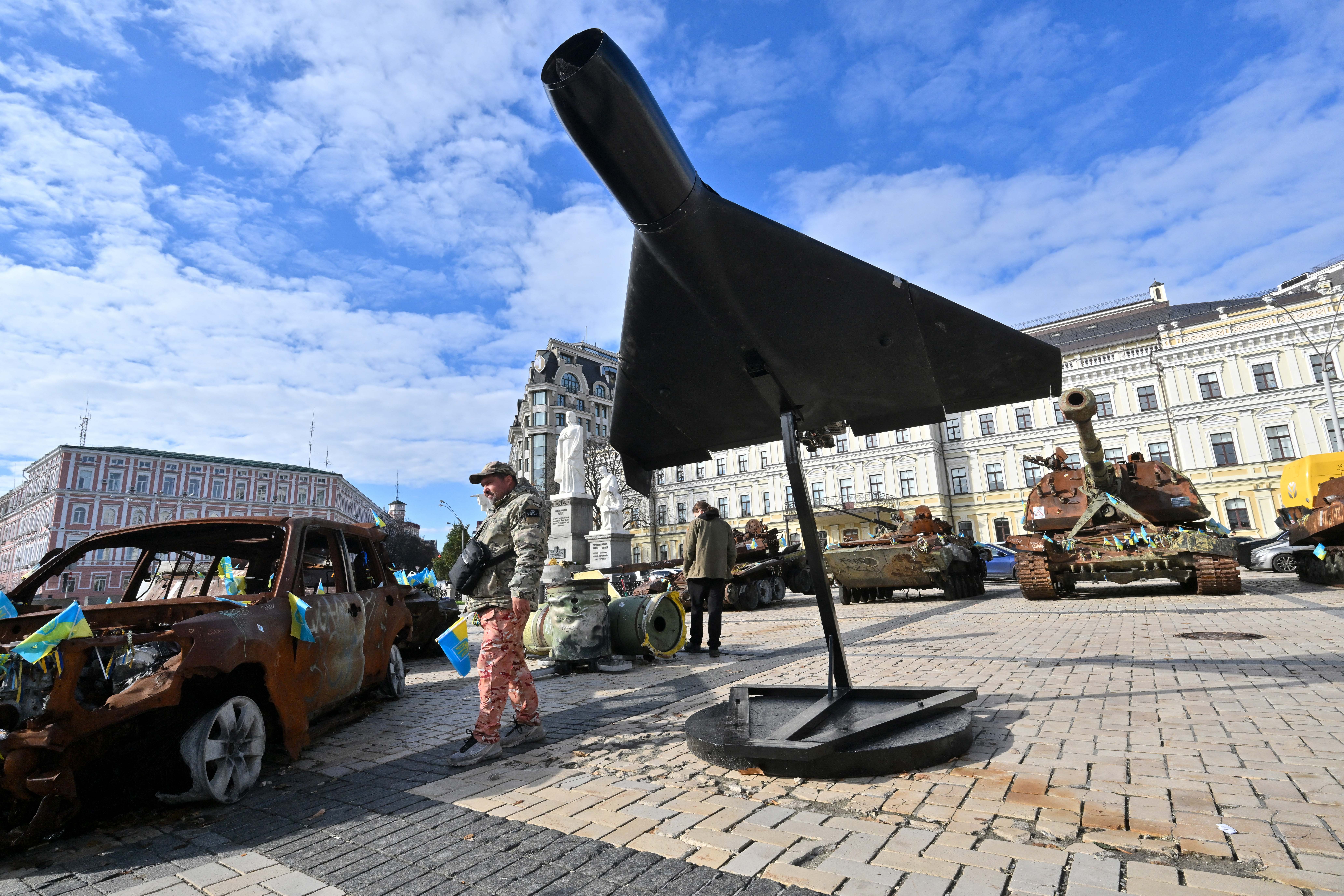
China has been buying Russian oil and gas while exporting consumer goods, technology, and equipment that have military applications for Russia, such as drones.
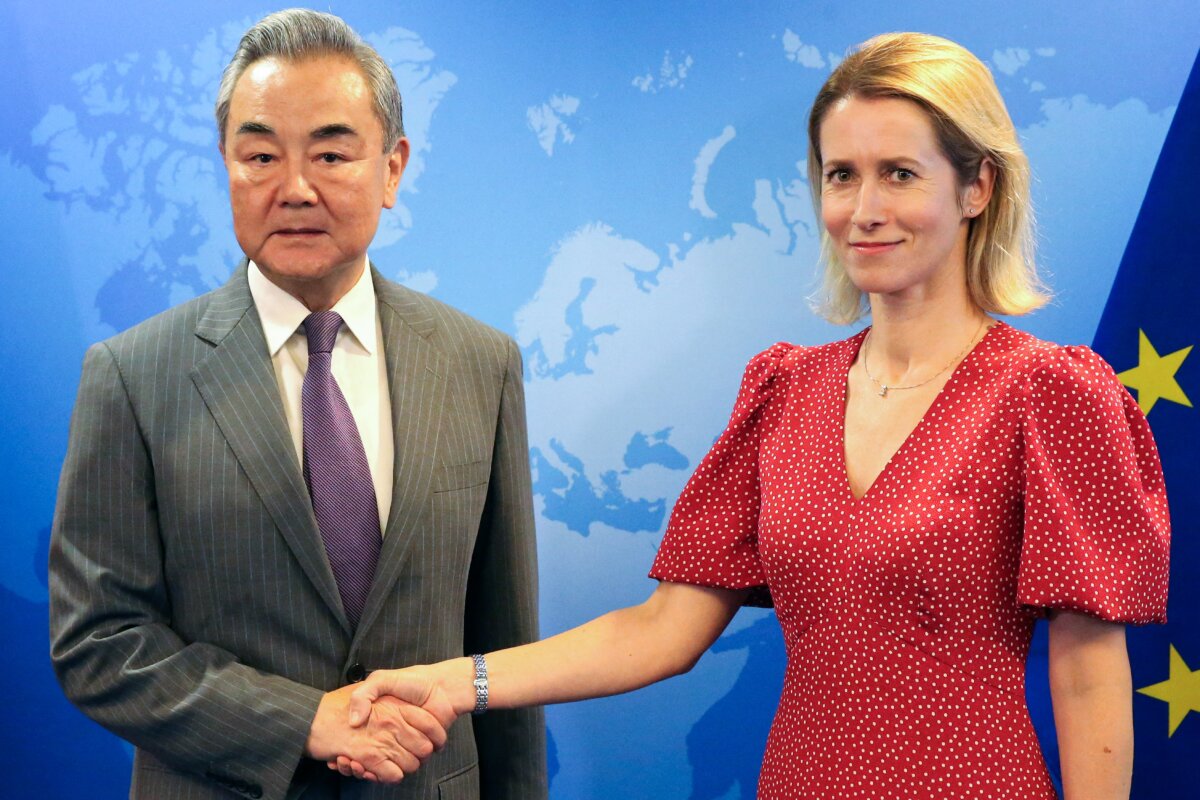
Kallas also recalled what the Chinese regime’s top diplomat, Wang Yi, told her in a July meeting.
“His message was that it’s not in their interest that this war [in Ukraine] stops, because then America’s attention will turn to China,” Kallas said.
It is in Beijing’s interest to keep the United States’ attention on Europe, she said.
Kallas said that Russia and China have been “very open” about their intentions. She referred to a 2023 meeting between Chinese Communist Party leader Xi Jinping and Putin in Moscow, in which Xi told Putin, “Right now, there are changes, the likes of which we haven’t seen for 100 years—and we are the ones driving these changes together,” referring to the decline of the U.S.-led liberal democratic world order.
“The question is whether we believe them,” Kallas said, pointing out that too often, Western policymakers have been blindsided by viewing the world through their own “democratic lens.”
Russia and China
Kallas’s statements show that the EU is now combining the issues of Russia and China, Shen Ming-shih, research fellow at the Division of National Security Research at Taiwan’s Institute for National Defense and Security Research, told The Epoch Times on Oct. 31.
Russia is occupying two areas in the Donbas, and Putin may use this as a bargaining chip, Shen said.
“Under such a critical circumstance in the war, Putin will certainly not give up or negotiate, and similarly, China’s support for Russia will not stop,” Shen said.
As long as the United States and the EU stand together and continue to pressure China for its support of Russia’s war effort, “when they negotiate with China, they can force Xi Jinping to change policies, making China less likely to openly or extensively provide aid to Russia.”
“At the very least, it will reduce China’s aid to Russia,” Shen said. “I think the use of this strategy is very obvious.”
Kallas’s interview shows that the EU has now realized that if the bloc wants to see an end to the Russia–Ukrainian conflict, it will have to put more pressure on China, according to Yeh Yao-Yuan, professor of Political Science and International Studies at the University of St. Thomas.
“The EU countries’ attitude towards China has never been unified. However, what Kallas said this time shows that there’s a certain degree of consensus among EU member states regarding undermining European peace, which will put greater pressure on China,” he told The Epoch Times.
Can’t Solely Rely on US
Kallas said that “the predictability that [Europe] used to have” in relying on the United States for its defense is “not there anymore,” under the Trump administration, which has pushed Europe to take a larger role in supporting Ukraine and in its own defense.
Yeh said the Trump administration’s foreign policy changes have been unpredictable.
“One moment, Trump might raise tariffs very high, and the next he might be open to negotiation on everything,” he said. “It’s a transactional diplomatic tactic that makes it difficult for the EU to make long-term plans.”
Kallas’s remarks show that the EU is concerned that if the United States changes its sanctions against Russia and its commitments to European security, or weakens its commitments to Europe because of competition with China, then Europe will have to assume more security responsibility and even fill any gaps that the United States may leave behind, according to Sun Kuo-hsiang, professor of international affairs and business at Nanhua University in Taiwan.
“Therefore, Kallas’s call serves as a warning that Europe can no longer rely solely on the United States,” Sun told The Epoch Times. “Europe must be prepared to maintain its own security and strategic autonomy in the face of changes in U.S. policy.”
Still Believing in Free Trade
Kallas also said that “Europe is still the one to believe in free trade,” when she mentioned a recent push to sign deals such as one with Mercosur, a South American trading bloc. The problem that the EU faces is that many of Europe’s adversaries and allies are not playing by the rules.
Regarding China’s weaponizing of “rare earth and critical raw material exports/supply chains” against the West, Sun said that the EU is strengthening norms for “fair competition” and “equal market access,” demanding the lifting of export restrictions on rare earths.
The EU is also strengthening investigations and countermeasures against Chinese subsidies and excess capacity, such as electric vehicles.
These are in line with the EU’s concept of “economic defense”—incorporating economic means into security considerations, Sun said.
The EU may also consider stronger tools in the future, Sun said, such as initiating trade retaliation against violating countries, anti-subsidy investigations, export controls, investment reviews, or even an “entity list” similar to the one the United States is using to put specific license requirements on foreign individuals, businesses, and organizations for certain sensitive classes of exports.
“There have already been some sanctions against electric vehicles, but the percentage of Chinese goods being sanctioned is not high,” Yeh said. “Because it takes them some time to find other alternative manufacturing countries. So the effect of sanctions on China is not significant.”
A Policy Shift
The significance of Kallas’s remarks lies in reflecting a relatively clear shift in the EU’s foreign policy, its strategy toward China, and the adjustment of its relationship with the United States, in the face of the Russia–Ukraine war, Sun said.
This indicates that the EU is shifting toward more offensive and autonomous foreign and security policy, he said. This means a shift from its trade-centric approach, which maintained a certain distance from both the United States and China, to a diplomatic logic that “places greater emphasis on geopolitical security, values, and systemic compatibility,” the professor said.
Luo Ya and Gao Shan contributed to this report.
 Friends Read Free
Copy
Facebook
Tweet
Friends Read Free
Copy
Facebook
Tweet