The former mayor of Wuhan, who was previously accused of hiding information about the initial COVID-19 outbreak, has been sentenced to 14 years in prison in Chinese leader Xi Jinping’s anti-corruption purge.
Zhou Xianwang, who served as Wuhan mayor from September 2018 to January 2021, was convicted of accepting more than 60.5 million yuan ($9 million) in bribes over more than 22 years, according to an official release by China’s Supreme People’s Court. The sentence was handed down by an intermediate court in central China on Oct. 10 and included a fine of 5 million yuan ($747,000).
In late 2019, doctors raised alarm about patients with SARS-like symptoms in the city of Wuhan, but local Wuhan police moved swiftly to silence them.
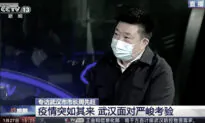
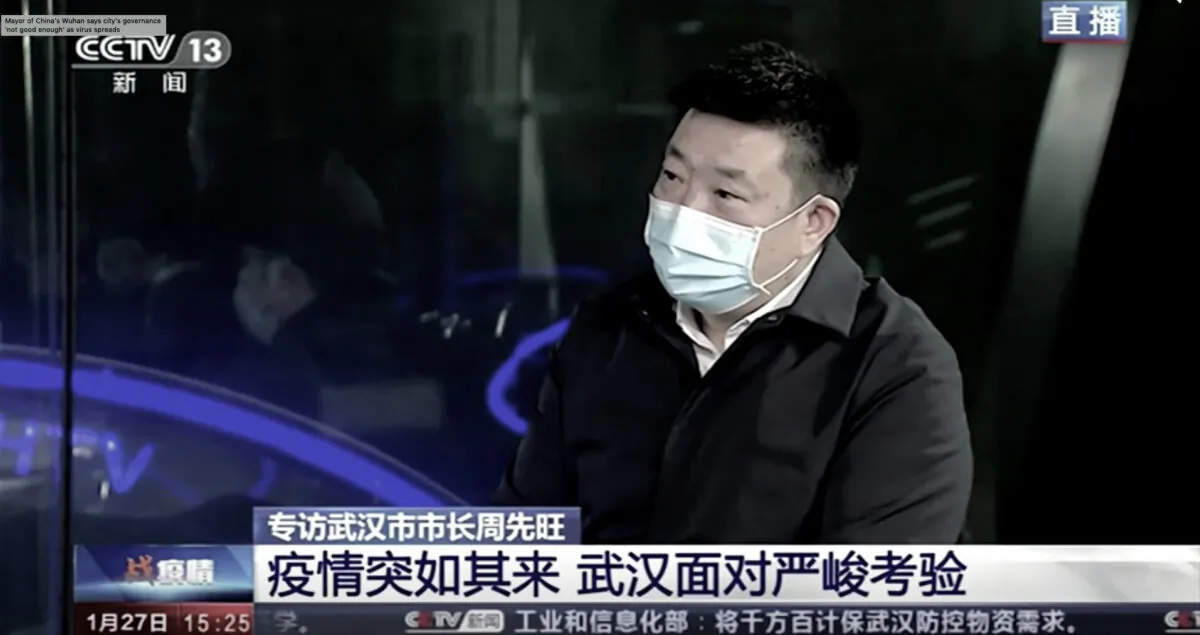
During a live television interview, Zhou later revealed that local officials could not disclose information about infectious diseases without authorization from higher authorities in Beijing, shifting scrutiny toward the central leadership.
Caught in Xi’s ‘Anti-Corruption’ Campaign
Since Xi became China’s top leader in 2012, his anti-corruption campaign has evolved into a powerful tool to remove political rivals, dismantle rival factions, and sideline officials who have fallen out of favor. The campaign’s dual function of rooting out corruption and consolidating Xi’s personal authority has made it a defining feature of his rule. To date, millions of officials have been investigated or disciplined.
Zhou was tried by the Intermediate People’s Court of Shangqiu, in Henan province. The court release said he used his positions in local and provincial government between the first half of 2003 and May 2025 to help companies and individuals secure construction contracts, conduct business, and obtain administrative approvals in exchange for money and other valuables.
His government posts during those years included head of Hubei province’s commerce department, Communist Party secretary of Huangshi city, vice governor of Hubei, and deputy mayor, acting mayor, and mayor of Wuhan.
The court described the amount involved as “especially large,” according to the official account. It said Zhou had received more than 60.5 million yuan ($9 million) in bribes, although some of the bribery transactions had not been completed.
Prior to the court ruling, authorities announced in January that Zhou had been expelled from the Chinese Communist Party (CCP) and removed from public office.
Born in November 1962, Zhou became a vice governor of Hubei and mayor of Wuhan in 2017, according to state-controlled Sina News. He left the provincial political advisory body in January 2023 and was placed under investigation in July 2025.
Wuhan’s Early COVID Outbreak
In December 2019, a female doctor in Wuhan shared a medical test report in a work-related WeChat group indicating a strong positive result for a coronavirus related to SARS. One of the recipients, Li Wenliang, later forwarded the message to former medical school classmates.
As news of the outbreak spread, the Wuhan Municipal Health Commission confirmed 27 cases of an unknown pneumonia disease but concluded that its investigations had found “no obvious human-to-human transmission.”
In early January 2020, Wuhan police summoned eight doctors over online posts about the emerging disease. In the days that followed, officials continued to censor information about the outbreak and describe it as “preventable and controllable.”
The World Health Organization declared the outbreak a global health emergency in late January 2020.
On Feb. 3, 2020, Chinese Foreign Ministry spokesperson Hua Chunying announced that China had maintained communication with the World Health Organization and the United States throughout the outbreak. She added that China had briefed the United States 30 times on the outbreak and measures for prevention and control since Jan. 3.
Her remarks sparked public outrage. Many Chinese people condemned authorities for sharing information with international organizations and foreign governments while keeping the Chinese public in the dark.
As questions mounted over whether local officials had delayed reporting the outbreak, Zhou publicly acknowledged that information had not been disclosed promptly. In a live interview with state-owned China Central Television (CCTV) on Jan. 27, 2020, said that, because COVID-19 was an infectious disease, information had to be released “according to law” under China’s Law on the Prevention and Treatment of Infectious Diseases.
“As a local government, after I receive the information, I can only disclose it after I have been authorized,” he said, adding that “many people did not understand this at the time.”
Political Fallout and Centralized CCP Control
The controversy led to a major reshuffle of Hubei’s leadership. In February 2020, the CCP removed Jiang Chaoliang, then the province’s party chief, and Ma Guoqiang, then Wuhan’s party chief, from their posts.
Zhou, however, remained mayor during the early stages of the outbreak. He was not transferred to the provincial political advisory body until 2021, later serving as its vice chairman before leaving the position in 2023.
U.S.-based independent political commentator Cai Shenkun said in a recent online program that Jiang had revealed in a private conversation that Xi exercised absolute control over all pandemic-related matters.
According to Cai’s account, Jiang discussed the outbreak with a vice minister-level official in May 2024. Jiang said that decisions concerning the initial outbreak, the suppression of information, and the handling of Li Wenliang had been made by the CCP’s General Office under instructions from Xi. Jiang also said that every step taken by Hubei’s provincial leadership had been approved by the central authorities and Xi.
During a meeting with World Health Organization Director-General Tedros Adhanom Ghebreyesus on Jan. 28, 2020, Xi also said, “I have been personally directing and coordinating the efforts to contain this outbreak.”
 Friends Read Free
Copy
Facebook
Tweet
Friends Read Free
Copy
Facebook
Tweet