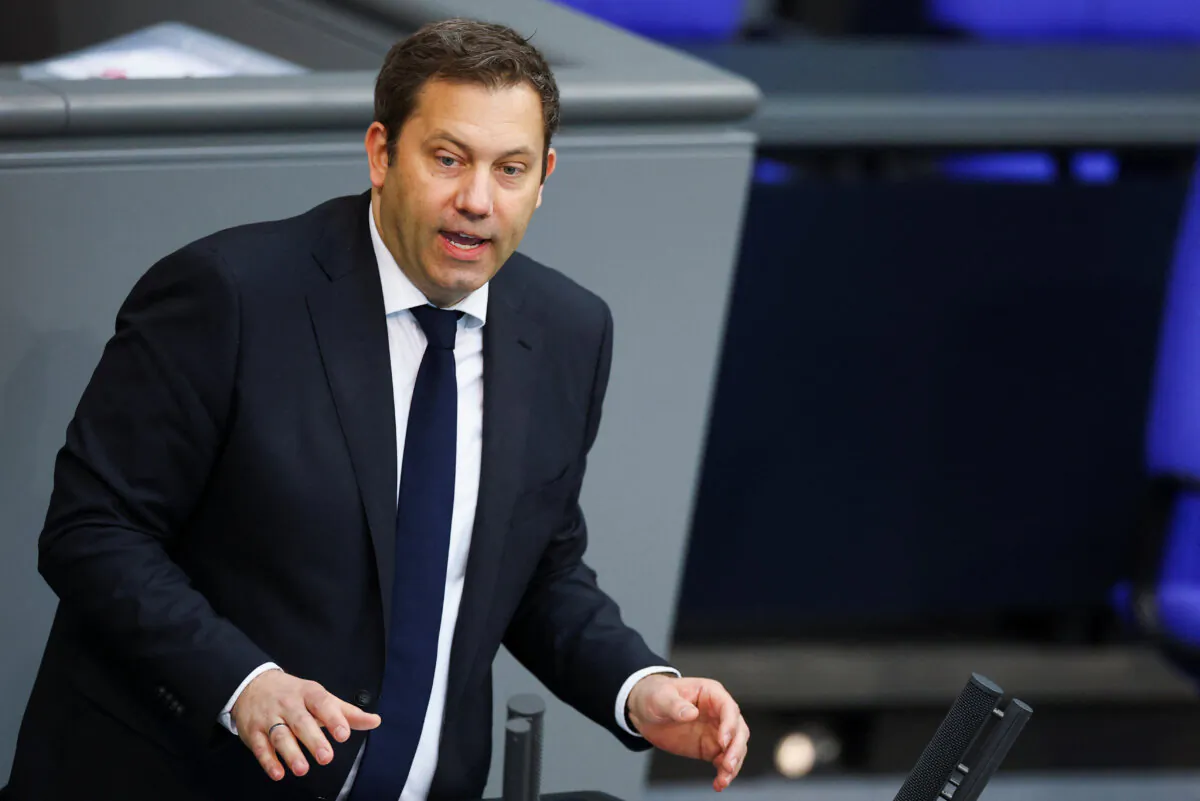

G7 countries must act quickly to reduce their dependence on rare earths, German Finance Minister Lars Klingbeil has said.
Klingbeil made the comments on Monday while attending a meeting of G7 finance ministers in Paris.
The G7 group of leading economies is coordinating efforts to lessen reliance on China, which dominates global supply chains for these minerals. Rare earths and other critical minerals are key materials used in electric vehicles, renewable energy equipment, and defense systems.
“G7 countries have options to reduce their dependency on rare earths but have no time to lose,” Klingbeil told reporters.
He advised against a “tone of complaint” and instead urged the group to focus on its strengths.
Klingbeil proposed several practical steps. These include improving procurement, expanding production in new locations, and setting recycling quotas to recover and reuse more critical raw materials.
“So the proposals are all on the table and we have no time to lose,” he said.
The minister compared the situation to past energy crises. He noted that the war in Iran has highlighted G7 dependence on fossil fuels, just as the war in Ukraine exposed Germany’s earlier reliance on Russian gas.
“We have to be very careful here not to run into the next dependency, one which, to be honest, we are already in,” Klingbeil added.
On the same day, Klingbeil held a one-hour private meeting with French President Emmanuel Macron at the Élysée Palace.
They discussed strengthening Europe’s sovereignty. Klingbeil said both leaders agreed that the Franco-German partnership is vital for moving Europe forward in difficult times.
He stressed that key projects need to advance before the next elections.
France holds the G7 presidency in 2026. The two-day finance ministers’ meeting in Paris is part of wider efforts on economic security and supply chain resilience.
Rare earths are a group of specialized metals essential for modern technology. China processes the majority of the world’s supply, creating concerns about potential disruptions.
The G7 aims to build more secure supplies through diversification, recycling, and partnerships with allied countries.
In January, Klingbeil took part in a G7+ meeting in Washington on securing critical minerals supply chains, where discussions included partnerships and other measures to reduce vulnerabilities.
A final press conference by the finance ministers was scheduled for Tuesday. The gathering also addressed other global economic issues, including public debt and responses to geopolitical conflicts.
The Paris meetings are intended to help prepare for the G7 leaders’ summit in mid-June in Evian, France.
Reuters contributed to this report.
 Friends Read Free
Copy
Facebook
Tweet
Friends Read Free
Copy
Facebook
Tweet