
Pakistani Prime Minister Shehbaz Sharif concluded his visit to Beijing on May 26 and reached a consensus with the Chinese communist regime to accelerate the development of the China–Pakistan Economic Corridor (CPEC), especially establishing Gwadar port as a regional connectivity hub, as announced in a joint statement by the two nations.
Analysts told The Epoch Times that the CPEC is an integral part of the Chinese regime’s global strategy that can bypass the U.S.-led Western blockade and containment in the Indo-Pacific, reaching as far as Africa, while China continues to indirectly exert influence on the Iran war through Islamabad.
Sharif visited Beijing from May 23 to May 26. Following meetings with Chinese Communist Party (CCP) leader Xi Jinping and the Chinese regime’s premier, Li Qiang, the two sides issued a joint statement announcing a “new broad consensus” on deepening their strategic partnership.
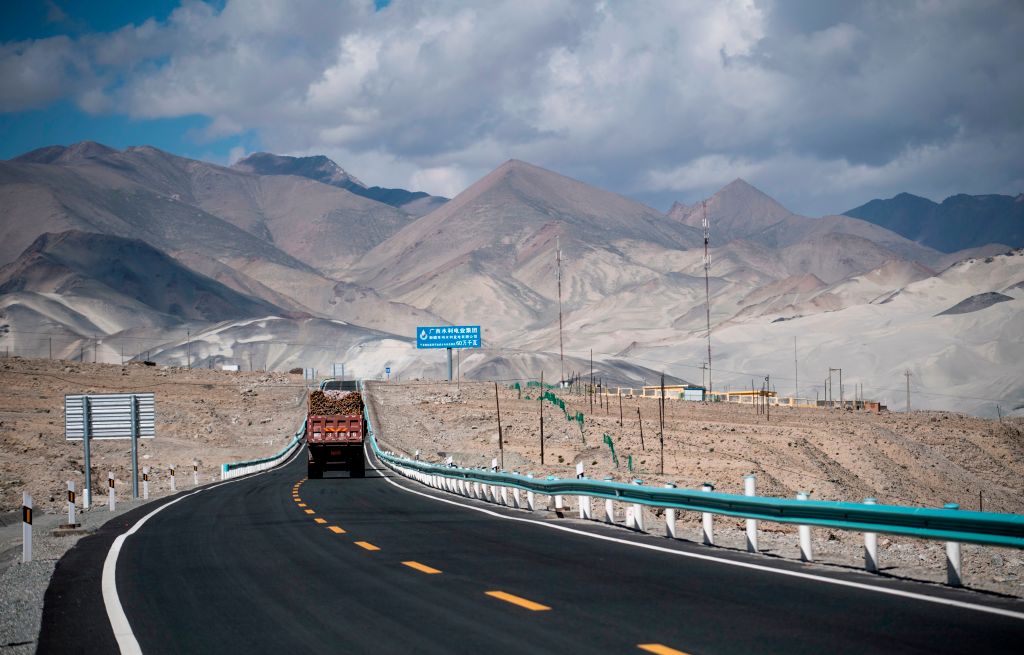
The two sides agreed to advance the development of the CPEC, the flagship project of the Chinese regime’s Belt and Road Initiative (BRI). The plan encompasses the operational optimization of the Khunjerab Pass and upgrading works for the Karakoram Highway.
The two countries committed to developing Gwadar Port into a regional transshipment hub.
The objective of the CPEC is to connect China’s western regions with Pakistan’s deep-sea Gwadar Port, creating a gateway to the Arabian Sea.
The joint statement also mentioned strengthening security safeguards for Chinese personnel in Pakistan.
The BRI is the Chinese regime’s global project to extend Beijing’s political and economic influence through investment in high-cost infrastructure projects in other countries. It’s often been criticized for setting debt traps for participating countries and has caused resentment among local people.
Meanwhile, as peace talks stall between the Iranian regime and the United States, the Iran war continues, and the Strait of Hormuz is still blocked.
China buys more than 80 percent of Iran’s shipped oil, and about 40 percent of China’s crude imports pass through the strait, according to public data.
The primary reason for strengthening the China–Pakistan partnership at this time is that China wants to obtain Iran’s oil through Gwadar Port, over inland Pakistan, and on to the Xinjiang region in northwestern China, according to Shen Ming-shih, research fellow at Taiwan’s Institute for National Defense and Security Research.
“Currently, due to the Iran war, Iran’s oil exports have faced restrictions,” he told The Epoch Times. “Even though the security risk along the CPEC remains high, this corridor has nonetheless emerged as a major shipping route.”
If Iranian oil is shipped to Pakistan’s Gwadar Port and then overland to northwestern China, the distance is much shorter than if it were transported by sea to China’s southeastern coast in the Pacific, Shen said.
“It would be immensely beneficial for China’s energy sector, particularly in alleviating energy constraints associated with the Chinese regime’s strategy to develop China’s western region,” Shen said.
The CPEC has remained largely unaffected by the Iran war, he said.
Speeding up the development of the CPEC entails deepening the global geopolitical, military, and economic strategic layout of the BRI, which is “the signature brand and centerpiece of Xi Jinping’s global strategic positioning,” Chung Chih-tung, associate research fellow at Taiwan’s Institute for National Defense and Security Research, told The Epoch Times.
The CPEC is a highly emblematic project of the BRI, and the establishment of a strategic foothold at Gwadar Port provides China with direct access to the Indian Ocean, “thereby enabling the Chinese regime to bypass any potential blockade imposed by the United States and Japan along the first island chain or in the Strait of Malacca,” Chung said.
The first island chain is a strategic line in the Asia-Pacific that includes Japan, Taiwan, and the Philippines, designed by the U.S. military to contain the Chinese regime’s maritime expansion.
Deep-Sea Port
Gwadar Port is on the Arabian Sea in Pakistan’s Balochistan Province. The port is under the operational control of the state-owned China Overseas Port Holding Co. The strategic port gives China access to the Arabian Sea and the Indian Ocean.
After China’s takeover of operations, the port will facilitate more than shipping.
“It can also expand its functions and significance in geopolitics and naval deployment,” Shen pointed out.
“If the Chinese regime were to wish to intervene in the situation in the Middle East—or in a potential conflict involving Iran—this location would be of paramount importance.”
The fact that Gwadar Port is a deep-sea port holds immense significance for China’s overall modernization and blue-water expansion of its navy, the future deployment and operational reach of its aircraft carrier battle groups, the establishment of overseas bases, and the safeguarding of its energy security, according to Chung.
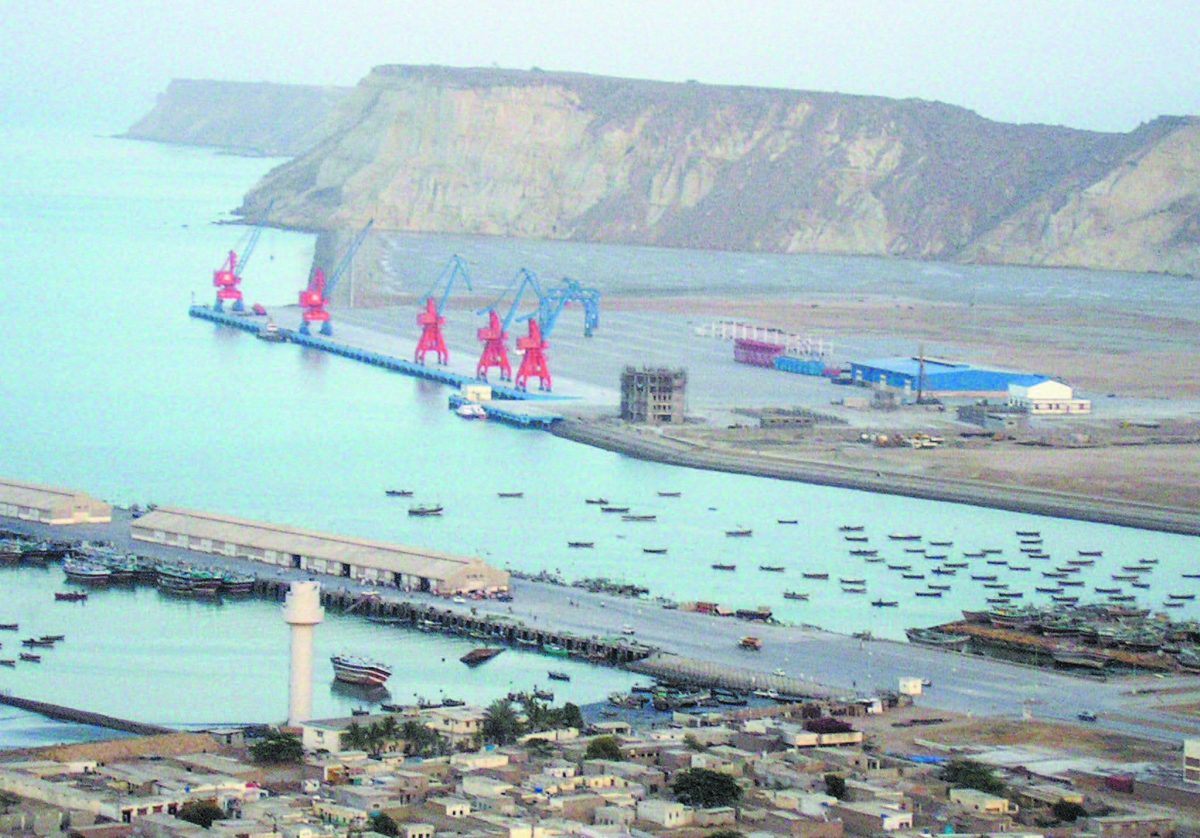
If war were to break out one day, the port would undoubtedly bolster China’s capacity to bypass a blockade imposed by the United States in the Indo-Pacific region, thereby strengthening its connectivity with the Middle East, Chung said.
“For China, this constitutes an extremely important global strategic layout,” he said.
This represents a manifestation of the “string of pearls” strategy, “as these port strongholds of China in locations such as Pakistan, Sri Lanka, Myanmar, and Djibouti can circumvent the U.S. blockade, which extends from Taiwan Strait, the South China Sea, to the Strait of Malacca,” Chung said.
In addition to actively seeking a breakthrough to the east, China is now vigorously pursuing a westward strategy, Chung said.
“By forging a coalition of land powers—connecting with nations such as Russia, Iran, and Pakistan—China aims to counter the maritime power of the United States and Japan,” he said.
The 3rd Party Could Be Iran
In addition, the China–Pakistan joint statement welcomes “third-party participation” in the development of the CPEC to expand regional cooperation.
“Third party” refers to surrounding nations, such as Afghanistan and Iran, as well as those a bit farther south on the Arabian Peninsula, according to Chung.
“The entire Middle East and Central Asian regions could potentially participate,” he said.

“CPEC could evolve into a pivotal hub for the CCP-led regional cooperation, security, and economic integration across the entire Central Asian region.”
The third party could be Iran, according to Shen.
“If Iranian oil were to be transported through Gwadar Port, and subsequently via pipeline to Xinjiang, using CPEC, it would mean that China and Pakistan are working to alleviate the pressure on Iran resulting from sanctions or blockades,” he said.
Influencing Iran Through Pakistan
Pakistan has been acting as the mediator in peace talks between the United States and the Iranian regime. Meanwhile, the outside world has noticed the close relationship between Beijing and Islamabad and the CCP’s influence over Pakistan.
A significant portion of Pakistan’s current military equipment is primarily supported by China, not to mention the close economic ties between the two countries, Chung said.
“Therefore, leveraging its exceptionally close relationship with Islamabad, China has utilized Pakistan as a channel to express its views and even project its influence on the Iran war and negotiations,” he said.
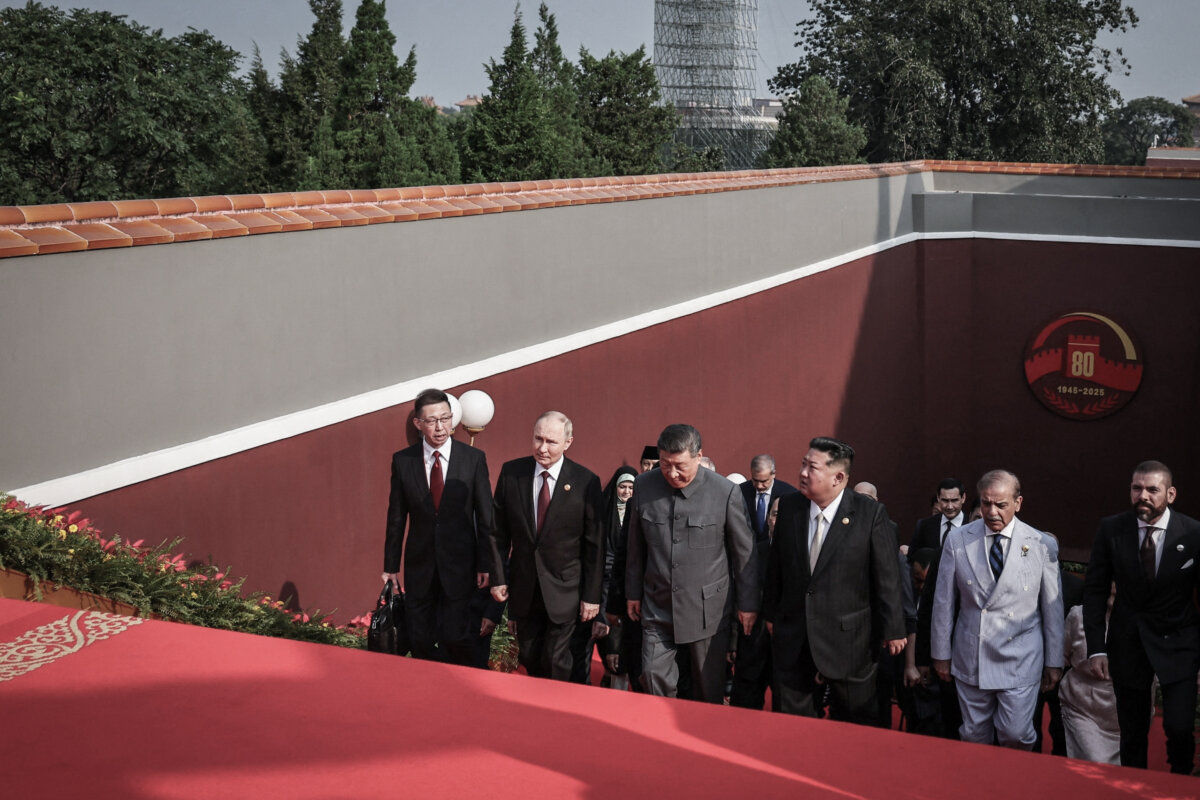
The United States is unwilling to allow China to act directly as a mediator, as doing so would significantly boost China’s influence in Central Asia, the Middle East, and even globally, Chung said.
“Consequently, working through China’s junior partner—Pakistan—emerges as a very natural choice,” he said.
Pakistan also has strong relations with the United States, so it will not fully align itself with either Iran or the CCP, and it must also take U.S. interests into account, according to Shen.
“It remains to be seen how Pakistan’s leadership will navigate this thorny dilemma,” Shen said.
The CCP is currently unlikely to openly confront the United States; instead, it will adopt a wait-and-see approach, seeking ways to derive strategic benefits from America’s entanglement in the conflict with Iran, Shen said.
Luo Ya and Reuters contributed to this report.
 Friends Read Free
Copy
Facebook
Tweet
Friends Read Free
Copy
Facebook
Tweet