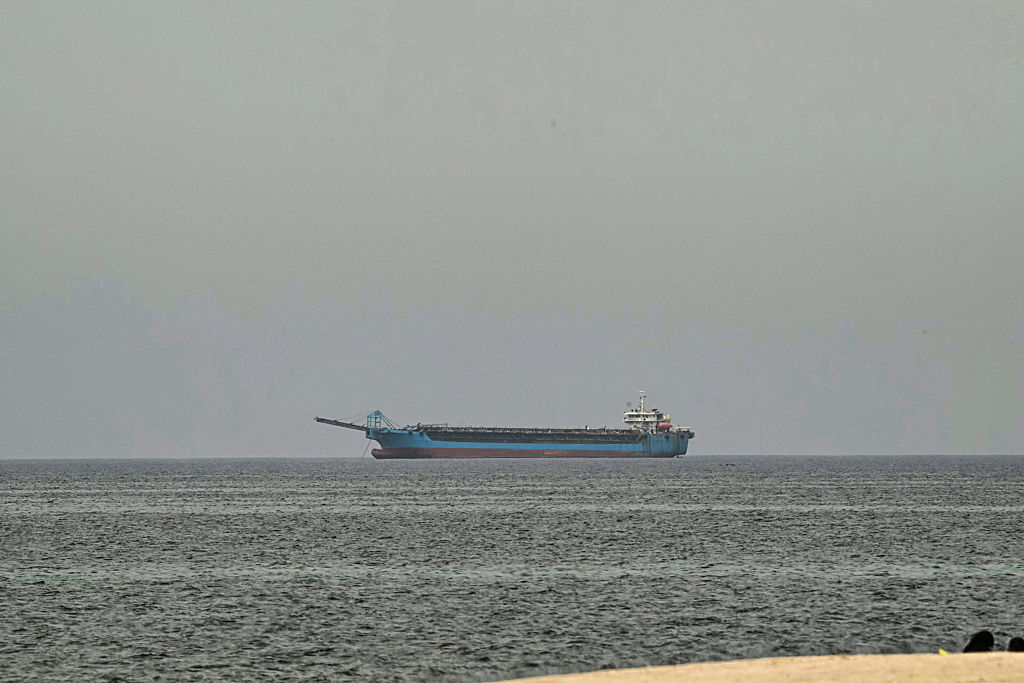

After U.S.–Iran peace talks collapsed over the weekend in Pakistan, the United States set up a naval blockade of Iranian ports and coastal areas along the Strait of Hormuz.
The latest U.S. strategy has wide-ranging significance, especially as it is dealing a serious blow to the Chinese communist regime, analysts told The Epoch Times.
When the U.S.–Iran negotiations failed to reach an agreement in Islamabad on April 12 because of the Iranian regime’s refusal to abandon its pursuit of nuclear weapons development, U.S. President Donald Trump said the U.S. Navy would start a blockade of the Strait of Hormuz.
And so, since April 13 at 10 a.m. ET, U.S. Central Command has been enforcing the blockade “impartially against vessels of all nations entering or departing Iranian ports and coastal areas, including all Iranian ports on the Arabian Gulf and Gulf of Oman,” according to a statement.
“[The U.S. blockade] will not impede freedom of navigation for vessels transiting the Strait of Hormuz to and from non-Iranian ports,” U.S. Central Command said.
Soon after the Iran war began on Feb. 28, the Iranian regime blocked the Strait of Hormuz, firing on commercial cargo ships and oil tankers while allowing some ships from “friendly countries,” including China, to pass through. In recent weeks, the Iranian regime has charged nations tolls of $2 million per transit for their vessels’ safe passage through the critical waterway.
The Chinese regime immediately criticized the U.S. blockade against Iran, saying that it goes against the international community’s interests and calling it “irresponsible and dangerous.”
1 Stone, 2 Birds
Nearly 40 percent of China’s crude imports pass through the strait, according to the U.S. Energy Information Administration.
China buys more than 80 percent of Iran’s shipped oil, according to public data for 2025. It has purchased, on average, 1.38 million barrels per day, representing about 13.4 percent of the total oil that is imported by sea. Chinese refiners have purchased sanctioned Iranian oil at discounted prices, saving about $8 to $10 per barrel.
China has paid Iran largely in yuan for its oil, bypassing the Western financial system and U.S. sanctions, saving its foreign reserves in dollars.
Fang Wei, a U.S.-based senior journalist and commentator on current affairs, told The Epoch Times that the Iranian regime’s blockade of the strait is a violation of international maritime law, as it allows its own vessels and those of its allies to pass through freely, while barring access or levying exorbitant transit fees to ships from other nations.
He said that the U.S. Navy, by blockading Iran’s ports, is effectively preventing Iran from “utilizing the Strait to hold the world hostage, while simultaneously severing the country’s economic lifeline.”
China is Iran’s largest trading partner, and China is dependent on the Strait of Hormuz to ship Iranian oil to China, Fang said.
“When Chinese vessels are blockaded, China will be forced to purchase oil from alternative sources, driving prices up for them significantly,” he said. “China’s economy is currently in a severe slump and experiencing deflation; should a blockade on oil imports trigger imported inflation, it would place the country under immense pressure.”
The U.S. blockade against Iran is indirectly targeting the ruling Chinese Communist Party (CCP), Su Tzu-yun, researcher and director of the Division of Defense Strategy and Resources at Taiwan’s Institute for National Defense and Security Research, told The Epoch Times.
The U.S. blockade also has implications for India, he said.
“However, India is not an adversary of the United States—it simply declines to cooperate,” Su told The Epoch Times. By blocking the Iranian ports, the United States has turned the tables on Iran, he said.
“This also serves as a means of uprooting the CCP,” Su said.
He said blockading Iranian ports is Trump’s strategy of “killing two birds with one stone.”
“The United States has also effectively cut off both the missile raw materials and the various military supplies that the CCP was providing to Iran,” Su said.
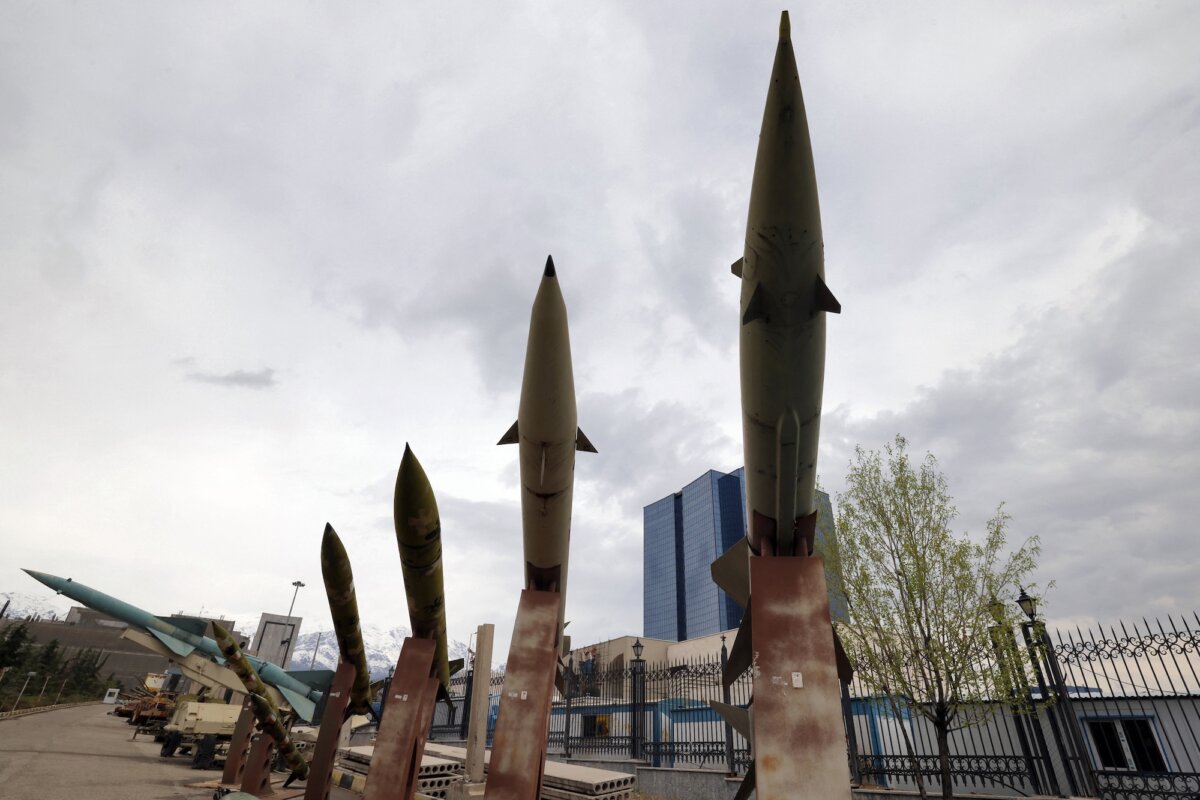
Trump’s move to blockade all vessels entering or exiting Iranian ports is intended to shift the United States from a defensive to an offensive posture—using the threat of conflict to compel a peaceful resolution—thereby bolstering U.S. leverage in negotiations with Iran while simultaneously demonstrating American military might, Chung Chih-tung, associate research fellow at Taiwan’s Institute for National Defense and Security Research, told The Epoch Times.
Iran’s blockade of the Strait of Hormuz has driven up global oil prices and the cost of logistics, which has put increasing pressure on the Trump administration both domestically and internationally.
Chung said that when freedom of navigation in the Strait of Hormuz was disrupted, other nations blamed not only Iran, but also the United States. However, the targeted U.S. blockade changes the dynamics of the war, he said.
“By currently limiting its blockade to only Iran’s ports, Trump is effectively narrowing the scope of the confrontation and mitigating its negative repercussions,” he said. “Moreover, while taking action against Iran, the United States is effectively seeking justice on behalf of those nations that have been subjected to Iranian extortion.”
Future Development
Su said he anticipated that the situation should become clearer in about two weeks.
“Trump will likely proceed to dismantle Iran’s remaining military power,” he said.
Three distinct political forces exist within Iran: the clerical establishment, the elected government, and the military faction—specifically, the Islamic Revolutionary Guard Corps, Su said.
“It’s now reverting to the original script, which entails neutralizing the military forces,” he said. “The second objective of the United States is to assist the United Arab Emirates in reclaiming the small islands currently occupied by Iran; this would yield diplomatic dividends and encourage greater support for the United States among the Gulf nations.
“The third objective is to indirectly support Iran’s elected government and facilitate the establishment of a new regime, thereby ensuring a lasting and stable resolution to the issues facing Iran.”
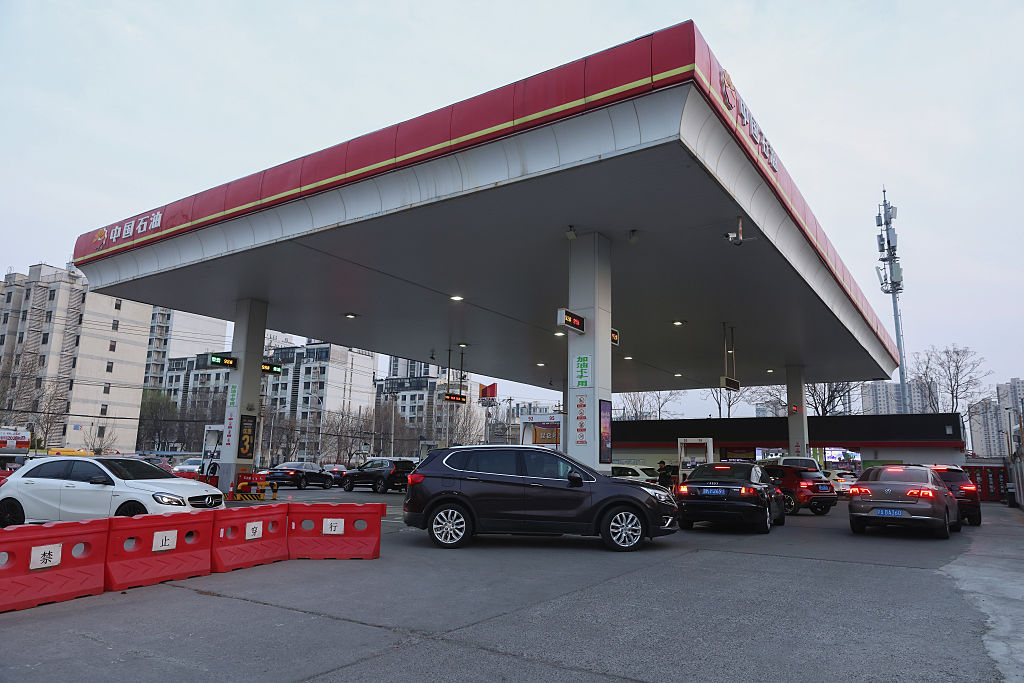
The CCP will face immense pressure—whether due to rising oil prices or an inability to secure supplies—giving it ample incentive to push for negotiations between Iran and the United States, according to Fang.
“The United States, conversely, finds itself in a very comfortable position, thanks to its own massive domestic oil production as well as the output from Venezuela,” he said.
“Furthermore, smaller oil fields around the world have now become highly sought-after; since these smaller nations require payment in U.S. dollars rather than Chinese yuan, the CCP’s efforts to purchase oil will inevitably result in a significant depletion of its dollar reserves,” Fang said.
The situation is highly unfavorable to the CCP in every respect, while being quite advantageous for the United States, he said.
“Trump can afford to outlast and outwait them; ultimately, this could strike at the very sinews of the Chinese economy,” Fang said. “In short, both Iran and the CCP will suffer severe wounds in this conflict, whereas the United States will not.”
Luo Ya, Ning Haizhong, and Reuters contributed to this report.
 Friends Read Free
Copy
Facebook
Tweet
Friends Read Free
Copy
Facebook
Tweet