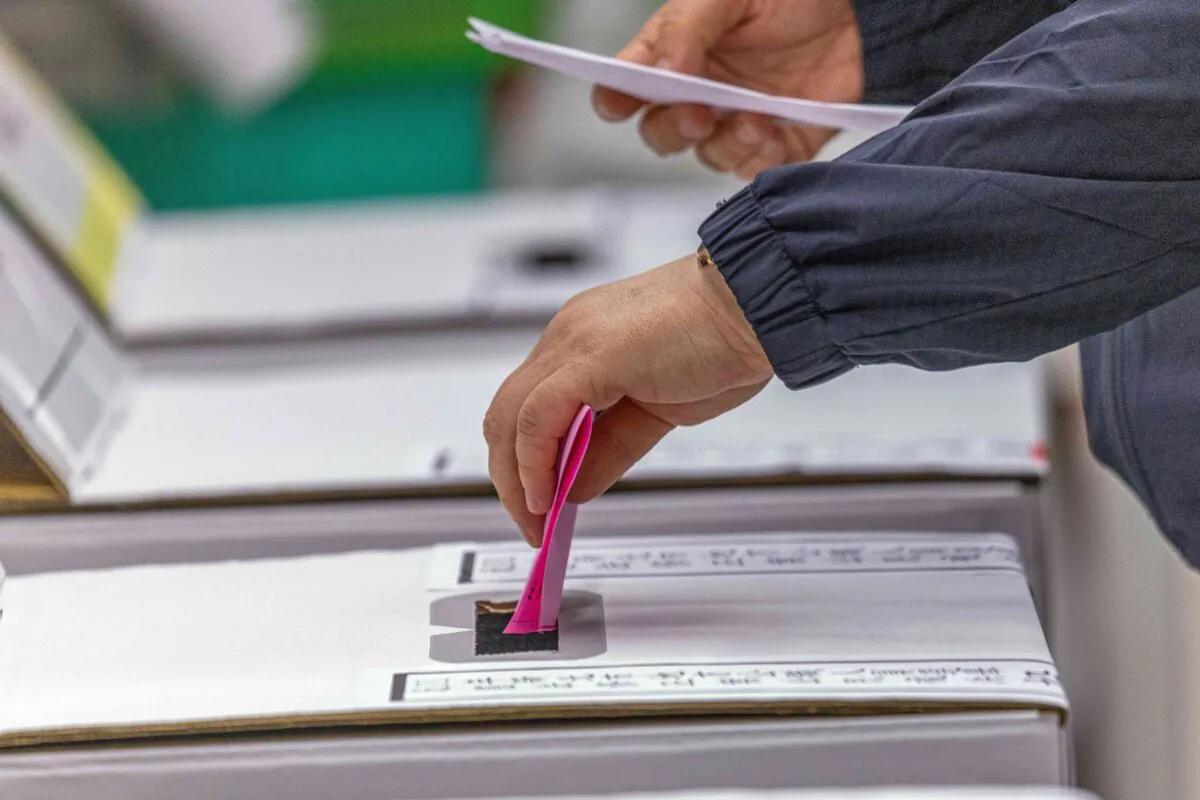
The latest poll for Taipei’s November mayoral race has the Democratic Progressive Party’s (DPP) challenger closing the gap with the Kuomintang (KMT) incumbent after an earlier poll a month ago had Mayor Chiang Wan-an ahead by a significant margin.
The race for mayor in Taiwan’s capital is one of the most closely watched local elections, as it is widely seen as an early indicator of DPP President Lai Ching-te’s political strength ahead of Taiwan’s 2028 presidential election.
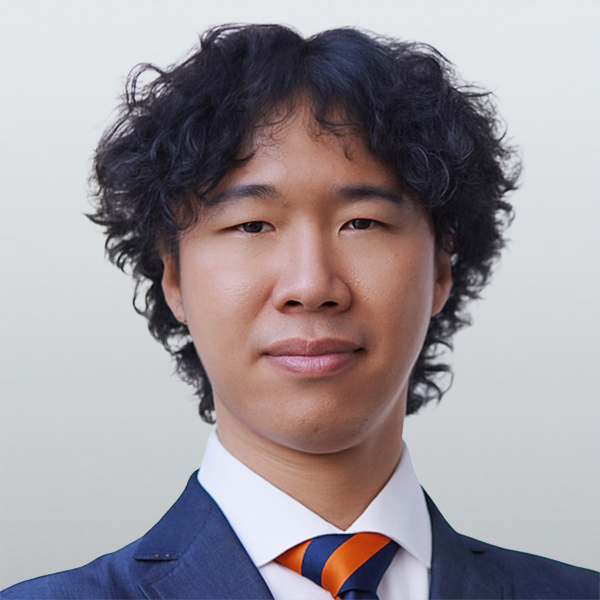
The poll of 1,076 potential voters, released Sept. 22 by the Taipei Trust in Democracy Association, reported DPP candidate Puma Shen with 40.5 percent support, just 1.2 percentage points behind Chiang, at 41.7 percent support.
The previous poll in early August, by the Taiwan Public Opinion Research Center of 1,099 potential voters, had Chiang leading at 48.4 percent to Shen’s 33 percent—a 15.4 percent margin.
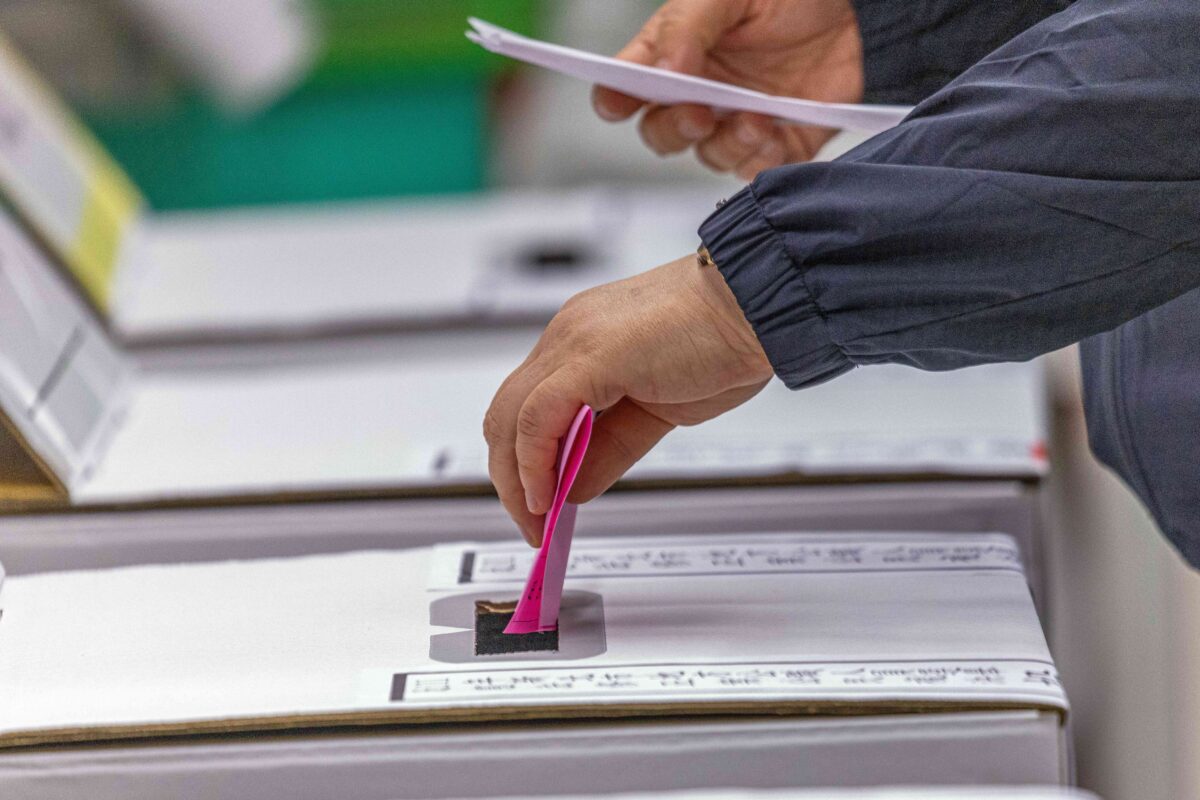
The Nov. 28 local elections will see voters elect officials across Taiwan’s 22 cities and counties.
In the two most recent election cycles, KMT candidates have been favored at the local level. The KMT leads 14 local governments to the DPP’s five. The Taiwan People’s Party leads one, while the remaining two are governed by independents.
The ruling DPP has performed better in national elections, winning in 2016 and 2020, before losing its majority in the Legislative Yuan in 2024. The DPP has held onto control of foreign policy by winning the presidency.
The two parties differ significantly in their approach to communist China. The Chinese Communist Party (CCP) has traditionally favored KMT politicians because of their friendly view of its leadership. By contrast, the CCP views the ruling DPP as separatists and pro-independence forces, and has refused to engage with the current administration.
KMT politicians routinely visit China, with its leader, Cheng Li-wun, praising Chinese leader Xi Jinping earlier this year. The DPP opposes the CCP’s rhetoric of reunification under communist governance and pursues to maintain Taiwan’s de facto independent status.
Taipei’s local election has also attracted particular attention because of the candidates’ national profiles.
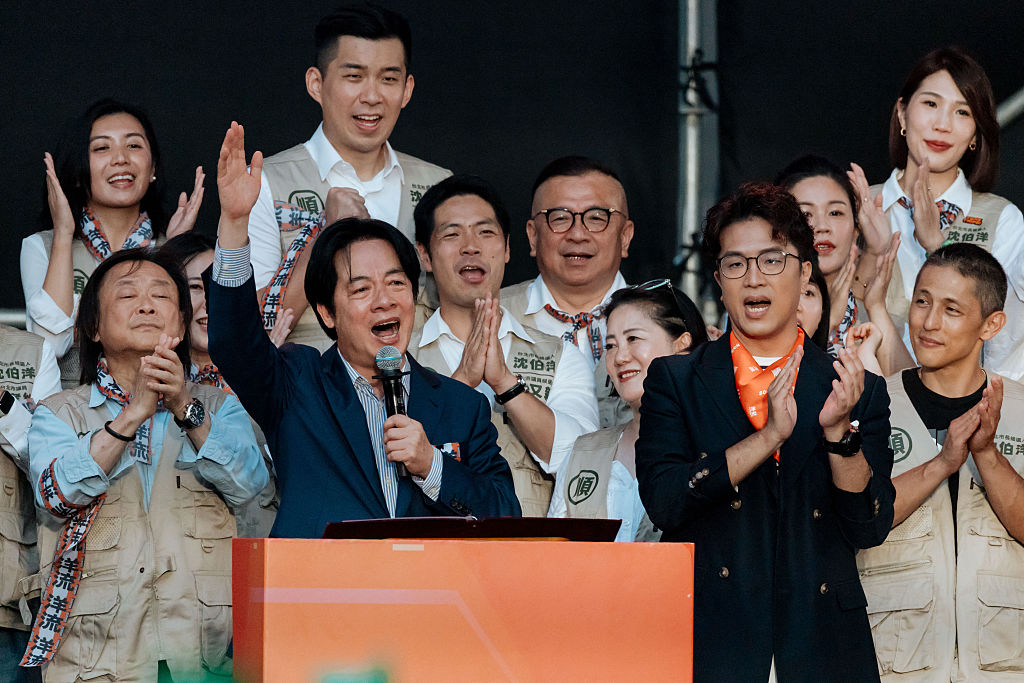 Taiwan President Lai Ching-te (2nd L) delivers a speech in support of Democratic Progressive Party (DPP) Taipei mayoral candidate Puma Shen (2nd R) during the opening of Shen’s campaign headquarters in Taipei on Oct. 4, 2026. (Cheng Yu-chen/AFP via Getty Images)
Chiang, 47, was a member of the Legislative Yuan before being elected mayor. He holds a law degree from the University of Pennsylvania and previously practiced law in California. He is also the great-grandson of General Chiang Kai-shek, who led the Republic of China’s retreat to Taiwan after the communist takeover of mainland China in 1949.
Chiang Kai-shek ruled the island under martial law in the period known as the “White Terror” until 1975. Martial law was lifted in 1987, beginning Taiwan’s transition to a liberal democracy.
Chiang Wan-an enters the race with incumbency and a solid Kuomintang base in Taipei, built by the many veterans and Republic of China civil servants who settled there after fleeing with the party.
However, Shen has gained momentum through social media, criticisms of Chiang’s leadership in city government, and strong support from DPP leadership. President Lai, Vice President Hsiao Bi-khim, Premier Cho Jung-tai, and former DPP President Tsai Ing-wen joined Shen at a rally at his campaign headquarters in Taipei on Oct. 4 to show their support.
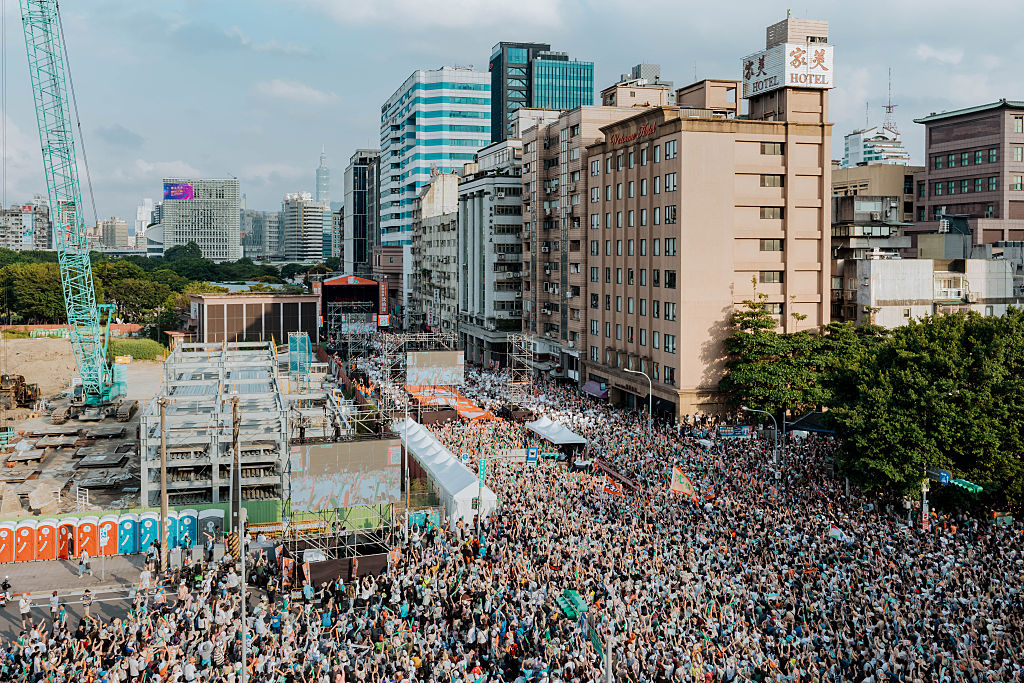 Supporters attend the opening of Democratic Progressive Party (DPP) Taipei mayoral candidate Puma Shen’s campaign headquarters in Taipei on Oct. 4, 2026. (Cheng Yu-chen/AFP via Getty Images)
KMT Campaign Directs Attention to Drug Policy
Commentary around the competitive race has been directed to a dispute on drug policy, with the KMT accusing Shen of supporting drug use and its decriminalization.
Criticism was focused on an article Shen wrote in 2014, in which he suggested treating drug addiction as a public-health issue and using harm-reduction measures. Shen’s supporters say his views had been misrepresented by the KMT.
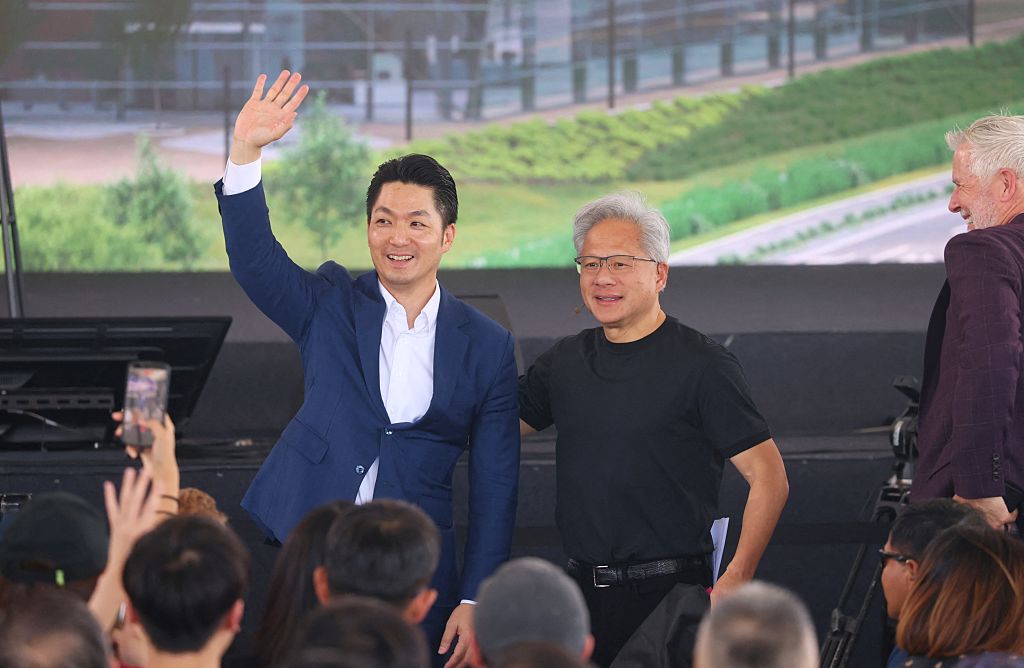 Nvidia CEO Jensen Huang (R) and Taipei mayor Chiang Wan-an attend the company wide convention at their T17 and T18 plots in Shilin-Beitou Technology Park in Taipei on May 27, 2026 (I-Hwa Cheng/AFP via Getty Images)
“The danger lies in blurring the line between illicit drugs and medicines,” he said.
He urged voters to support his position in the election and called on Shen to abandon what he called policies of drug decriminalization.
Local governance and everyday issues are expected to remain central to the outcome on election day, with the CCP’s hostility toward the self-governed, de facto independent state also on the minds of Taiwanese voters.
 Friends Read Free
Copy
Facebook
Tweet
Friends Read Free
Copy
Facebook
Tweet