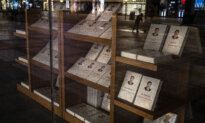

Nepalese authorities have launched a formal investigation into the burning of Chinese leader Xi Jinping’s book at a campus in Nepal’s western region of Morang, an act that angered the communist regime in Beijing.
The Nepalese Ministry of Home Affairs announced on March 17 that it had instructed local security agencies and the district administration office in Morang to probe the incident, citing concerns about potential implications for Nepali–Chinese relations, according to the Rising Nepal, an English-language newspaper owned by the Nepali government.
The incident took place on March 15 at Nepal’s Manmohan Technical University, where faculty members linked the burning to the lack of a storage room, according to a statement from Live News Raftaar, a local news website that first reported on it.
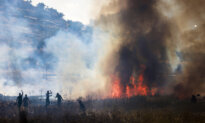
The news portal stated that its reporter witnessed thousands of copies of Xi’s book being tossed into the fire. The related video footage—which went viral on social media after being posted on its Facebook page—had been taken down at the request of local authorities, according to the statement.
The university described it as an accident during routine maintenance, with termite-affected books being cleared in order to make better use of the space. Vice Chancellor Subash Shree Pokhrel told Reuters that several copies of Xi’s book were “inadvertently” destroyed during the cleanup and that they had “no intention” of destroying books or harming the relationship with Beijing.
That explanation appears to have failed to satisfy the Chinese regime. The Nepali Ministry of Foreign Affairs later received a diplomatic note from the Chinese Embassy in Kathmandu, which demanded swift action against those responsible.
In response, Nepali Home Minister Om Prakash Aryal told the local newspaper, The Kathmandu Post, “We have instructed local officials in Morang to investigate the matter and take action against those involved.”
The book at the center of the controversy, titled “Governance of China,” compiles the speeches, directives, and pronouncements that Xi has delivered since rising to power in late 2012.
In China, studying Xi’s thoughts is mandatory from primary school through university, as part of the regime’s efforts to control ideology and foster loyalty. Globally, Beijing has used these volumes to spread communist ideology and to extend Xi’s influence. In July 2020, for example, senior military officials from countries including Iran, Bangladesh, South Sudan, and Fiji attended a roundtable discussion to share insights on studying Xi’s book, according to China International Publishing Group.
The Chinese Embassy donated copies of the book to the university via the Pushpalal Memorial Foundation during Bharat Mohan Adhikari’s term as deputy prime minister, according to Nepal News. Adhikari was a prominent figure in the Nepali Communist Party. The university still holds nearly 13,000 copies of Xi’s book, it stated.
Manmohan Technical University was established by the Nepali provincial government of Koshi in 2017, according to its official website. Its predecessor was Manmohan Memorial Polytechnic, where Adhikari had served as the college’s president until 2019, according to its website.
The Epoch Times has reached out to the Manmohan Technical University for comments.
China has bolstered its diplomatic and economic ties with Nepal, investing heavily in key infrastructure, such as airports, railways, and telecommunication networks. An international airport in Pokhara, Nepal’s second-biggest city, was funded by a nearly $216 million loan from China’s Export-Import Bank, for example. China’s state media outlets touted the airport as a flagship project of Xi’s Belt and Road Initiative, a multibillion-dollar program aimed at bolstering Beijing’s geopolitical sway by building infrastructure worldwide.
However, after coming into operation in 2023, the airport grappled with corruption scandals and challenges such as a lack of international flights due to India’s refusal to allow planes to use its airspace.
 Friends Read Free
Copy
Facebook
Tweet
Friends Read Free
Copy
Facebook
Tweet