
The recent ouster of Ma Xingrui, former Party secretary of the Xinjiang region and a confidant of Chinese leader Xi Jinping, marks the third member of the ruling Chinese Communist Party’s current Politburo to be purged in six months, which reflects major weaknesses in Xi’s leadership, according to analysts.
The Chinese regime announced on April 3 that Ma is under investigation for suspected “serious violation of law and discipline.” The announcement followed his disappearance from public view in late October 2025.
The announcement of Ma’s removal came after the purge of Gen. He Weidong and Gen. Zhang Youxia in October 2025 and January 2026, respectively. The two were vice chairmen of the Party’s Central Military Commission and members of the Politburo. The Politburo is a top-tier decision-making body of the Chinese Communist Party (CCP).
Ma, who had risen rapidly through the ranks after working as a rocket scientist, has ties to Xi’s wife, Peng Liyuan. The two share childhood roots in Shandong Province.
Regarding the allegations surrounding Ma, the primary focus of public scrutiny centers on corruption—including familial corruption—that allegedly occurred during Ma’s tenure within the aerospace sector, as well as during his time in Guangdong Province and the Xinjiang region.
However, Yuan Hongbing, a Chinese legal scholar living in exile in Australia who has informants in the CCP’s upper echelons, told The Epoch Times that the primary reason for Ma’s downfall is his “disloyalty to Xi.”
Plotting a Coup Against Xi
“The Ma Xingrui case is a major case involving political disloyalty toward Xi Jinping,” Yuan said. “Ma’s troubles, in fact, emerged as a result of being implicated in [the] Miao Hua and He Weidong’s cases.”
In October 2025, China expelled senior generals He and Miao Hua from the CCP and its military for “serious violations of discipline,” “duty-related crimes,” “losing loyalty,” severely undermining the Party’s control over the military, and forming improper cliques, charges that may reflect political disloyalty to Xi.
Both He and Miao were widely regarded as key confidants of Xi, belonging to a group described as his “Fujian Faction.”
Ma was one of the individuals that He and Miao’s anti-Xi clique liaisoned with, Yuan said.
“Miao and He engaged in cross-system networking among CCP officials—reaching beyond the confines of the military establishment—a practice that Xi views with extreme aversion,” Yuan said. Ma is one of the people they networked with.
“Together they consistently and vehemently expressed their criticism of Xi Jinping,” Yuan said.
Furthermore, Yuan said, they were preparing to replace Xi and take control of China in the event that a CCP invasion of Taiwan fails.
Yuan told Vision Times in December that details of the planned coup were revealed by insiders whom Yuan described as conscientious individuals within the CCP’s “Red Second Generation”—descendants of high-ranking officials and founding members of the CCP. Yuan said that according to these individuals, He confessed during his interrogation that, should a major crisis ever threaten Xi’s regime, he and Ma would form a political alliance to oust Xi and seize control of China.
Under this arrangement, He would provide the necessary military power, while Ma would contribute the political and economic leverage for their alliance, Yuan said.
This is the reason why Xi resolved to completely eliminate Miao, He, and Ma, according to Yuan.
“Notably, all three men are close confidants of Xi,” Yuan said. “Xi has reportedly grown despondent over the successive eruption of these major cases involving ‘political disloyalty’ against him.”
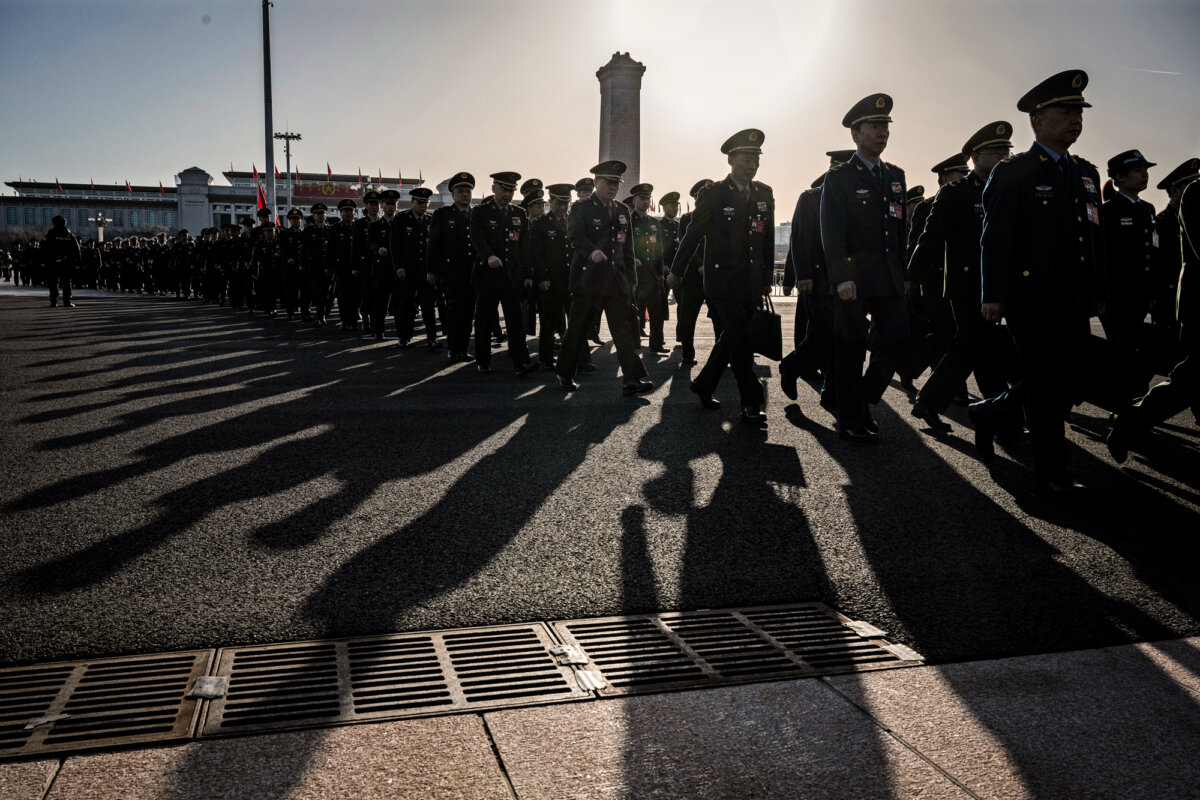
Following the CCP’s 20th National Congress in 2022, major scandals involving political disloyalty and corruption erupted in succession across the CCP leadership—spanning the Party and government apparatus, the military, and the related defense industry sector.
“These officials transferred the astronomical wealth they had amassed through corrupt means to overseas destinations, aiming to secure an escape route for themselves should the Xi regime face a destabilizing crisis,” Yuan said.
The Ma case has instilled in Xi a sense of despair regarding which people he can trust, Yuan said, noting, “Xi is facing a crisis of collective betrayal by CCP officials.”
U.S.-based China analyst Wang He noted that the delayed announcement of Ma’s purge was unusual.
“The official announcement of Ma’s downfall came out several months after his disappearance—a fact that strongly suggests the underlying circumstances are deeply complex,” Wang told The Epoch Times.
Although the allegations that Ma and He conspired to plot a coup against Xi may sound astonishing, he said, “the fact that the official announcement regarding Ma’s removal did not refer to him as ‘comrade’ suggests that the gravity of his offenses may be quite severe.”
Furthermore, the announcements regarding the removal of He and Zhang also omitted the title “comrade”—a departure from established CCP protocol—leaving it unclear whether there is some connection linking these events, Wang said.
“The current political landscape within the CCP is extremely bizarre; infighting among Xi’s loyalists is fierce, and the struggle between anti-Xi forces and Xi Jinping himself has become unprecedentedly prominent,” Wang said. “Anything could happen, so we will just have to wait and see.”
Ma’s Downfall Is Xi’s Failure
Ma started his political career as a rocket expert in the aerospace sector of the CCP’s military industry. He rapidly rose through the ranks starting in 2013, when he joined the Ministry of Industry and Information Technology. He served concurrently as vice minister, administrator of the China National Space Administration, and administrator of the State Administration of Science, Technology, and Industry for National Defense. His rise coincided with Xi’s rise to become CCP leader.
At the end of 2013, Ma became a provincial-level official, making a high-profile move to Guangdong Province—where he successively held the positions of deputy secretary of the Guangdong Provincial Party Committee, secretary of the Shenzhen Municipal Party Committee, and governor of the province. At the end of 2021, he was appointed secretary of the Xinjiang Regional Party Committee, and in 2022, he was elected to the Politburo.
Ma’s final position in charge of the Xinjiang region made him a powerful regional governor, upon whom Xi bestowed significant responsibilities, China analyst and Epoch Times columnist Heng He wrote in an article for the Chinese language edition.
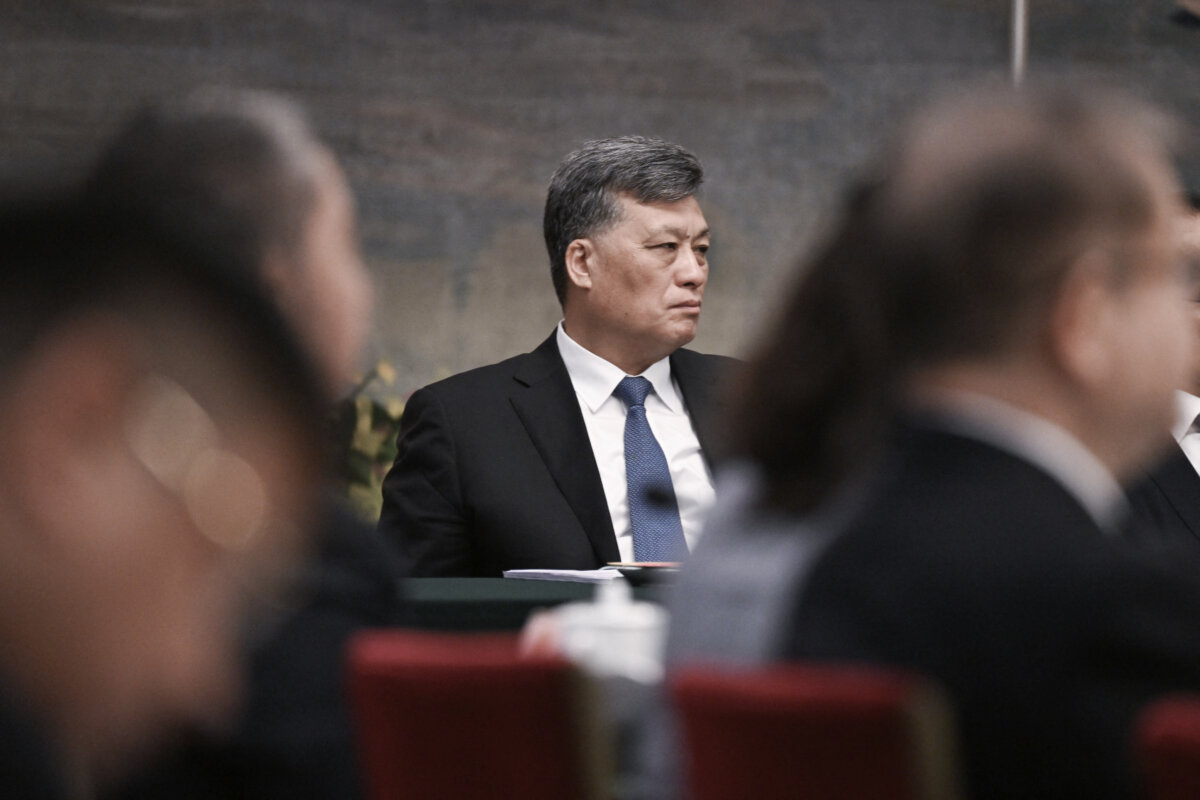
“Frontier regions and the military share a similar nature of insularity and secrecy; moreover, they receive substantial state financial subsidies, the ultimate destination of which is notoriously difficult to trace,” Heng wrote.
However, the fact that subordinates who served under Ma during his tenure in the Xinjiang region have successively come under investigation is an ominous sign for his own impending downfall, Heng noted in his article.
“It is true that Ma Xingrui hails from the same hometown—Yuncheng, Shandong—as Peng Liyuan; it is also a fact that he is a key figure within Peng’s ‘Shandong Faction,’” Heng wrote, noting that “the ultimate source of this faction’s power and interests lies with Xi Jinping.”
He wrote that “Ma Xingrui’s political career since 2013 clearly bears the imprint of Xi Jinping’s personal arrangements, as he enjoyed Xi’s powerful backing.”
“Therefore, his betrayal of Xi’s trust in such a major incident and being taken down is his failure, and in essence, is Xi Jinping’s failure,” Heng wrote.
“At the very least, this demonstrates that Xi Jinping lacks the ability to judge character, is inept at selecting and managing personnel, and fails in his overall strategic alliances.”
Tang Bing and Luo Ya contributed to this report.
 Friends Read Free
Copy
Facebook
Tweet
Friends Read Free
Copy
Facebook
Tweet