
Beijing has placed a senior Chinese Communist Party (CCP) official under investigation and accused him of serious violations of discipline and law, Chinese state media reported on April 3, signaling that the purges within China’s upper echelon of power are far from over.
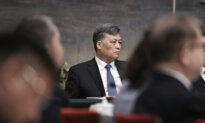
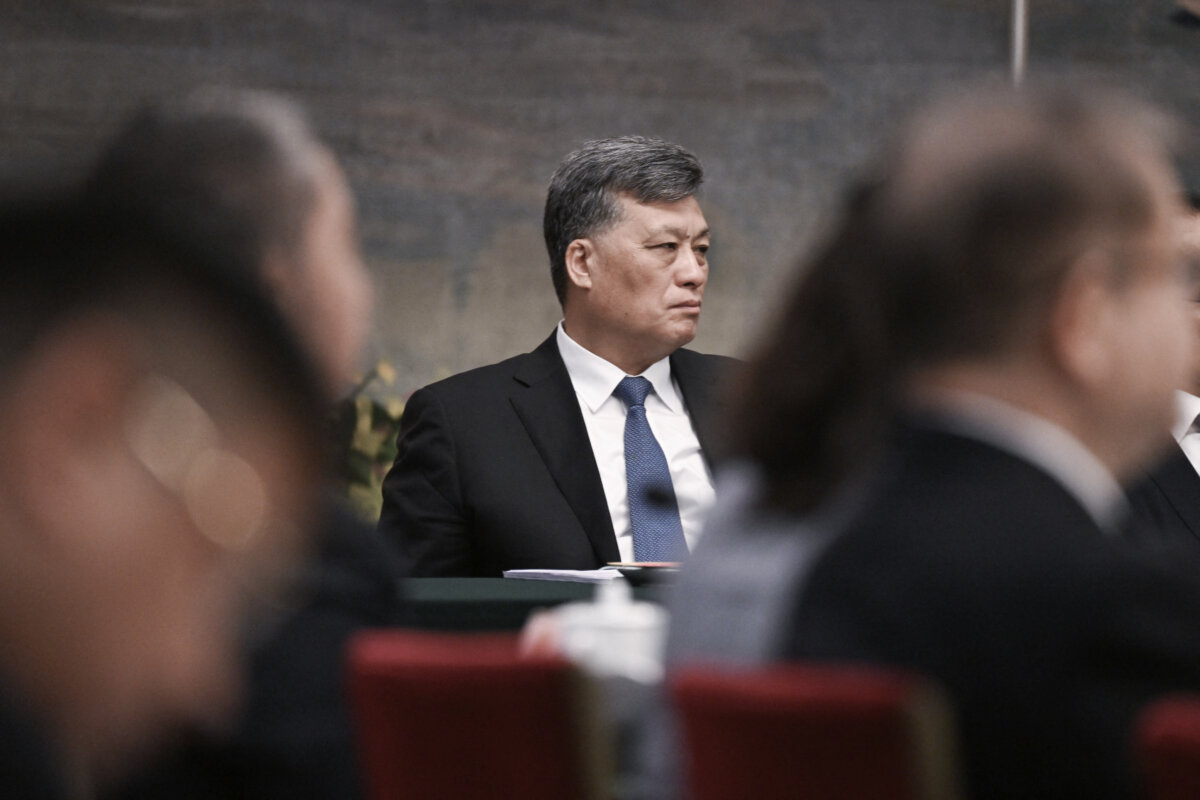
Ma Xingrui, a member of the Politburo—the CCP’s second-highest decision-making body—is currently under investigation by the Central Commission for Discipline Inspection, according to a brief report by state media outlet Xinhua.
Ma’s downfall has effectively reduced the Politburo to 21 members, including CCP leader Xi Jinping, amid ongoing political cleansing.
The scale of the current purge has not been seen in China for decades. It surpasses the purge following the 1989 Tiananmen Square massacre, when Beijing ousted Zhao Ziyang, then-general secretary, along with another Politburo member who showed sympathy for pro-democracy student protesters.
“This official announcement [of Ma’s investigation] is a significant event in China’s political arena,” said Shen Ming-shih, a research fellow at the Institute for National Defense and Security Research, a think tank funded by the Taiwanese government.
Despite rumors about Ma’s ouster circulating for months, no official statement had been made until now, Shen, an expert on China’s military and politics, told The Epoch Times.
Ma, the former CCP chief in the far-western Xinjiang region, had skipped several high-profile public events at which his presence was expected, including the country’s biggest political gathering, the Two Sessions, in early March. His name was also removed from the list of presidium members of the rubber-stamp National People’s Congress last month without explanation.
“The timing [of the announcement] is likely linked to the current situation within the Chinese Communist Party and its ongoing power struggles,” Shen said.
Ma’s departure came just two months after Beijing announced an investigation into Zhang Youxia, a Politburo member and China’s most senior general. Authorities have not offered any explanation for the sudden probe into the 75-year-old war veteran beyond the accusation of serious violation of discipline and law.
There is already a vacancy in the current Politburo following the removal of He Weidong, a close ally of Xi and the second-most senior general, who was expelled from the Party and the military in October 2025.
Over the past three years, at least one-fifth of the generals promoted by Xi during his nearly 14 years in power has been purged, according to The Epoch Times’ account of official announcements. More senior commanders and defense leaders have vanished from public view without any official explanation.
‘Political Instability’
The investigation into Ma, 66, is likely related to an expanded purge originating from the Rocket Force, a secret unit of the People’s Liberation Army overseeing the country’s conventional and nuclear missiles, according to Su Tzu-yun, a research fellow at the Institute for National Defense and Security Research.
Established by Xi in late 2015, the Rocket Force is among the People’s Liberation Army services hit hardest by the sweeping purge. All four commanders who had headed the unit—Wei Fenghe, Zhou Yaning, Li Yuchao, and Wang Houbin—have been ensnared in the anti-corruption drive over the past three years.
Before being transferred to provincial posts in the 2010s, Ma, an aerospace engineer, spent more than a decade working in China’s defense industry. From 2007 to 2013, he led China Aerospace Science and Technology Corp., a state-run conglomerate and a major military supplier.
Given the Rocket Force’s “deep ties” with the country’s aerospace sector, the purge within the unit could “ripple upward,” affecting engineers, defense industry executives, and potentially the top leadership of space-related companies, the Taiwanese expert told The Epoch Times.
No matter what the real reasons are that led to Ma’s departure, Su said, “the latest development reflects the political instability within China.”
Rising Star
Ma was once viewed by observers as a rising star on the Chinese political stage. In just four years, he advanced from leading a state-owned enterprise to becoming a provincial governor—an accelerated rise that China’s state media once described as unusual.
In 2013, Ma briefly served as vice minister of the Ministry of Industry and Information Technology and headed China’s National Space Administration before being assigned to Guangdong Province, a major export hub. By late 2016, he was appointed governor of Guangdong.
Ma was transferred to the Xinjiang region in 2021 when he took over the Party chief’s post from Chen Quanguo, the architect of the massive detention and surveillance systems used against Uyghur Muslims in the region. Chen was sanctioned by the United States in 2020 for his role in assisting the CCP’s human rights abuses in the region.
During his tenure in the Xinjiang region, Ma was known for enforcing the regime’s draconian COVID-19 policies, which delayed emergency personnel and contributed to the death toll of a fire at a high-rise apartment building in the region’s capital, Urumqi, in late 2022, according to residents. The incident triggered protests across more than a dozen Chinese cities, including Beijing and Shanghai, where people demonstrated to honor the dead and express their discontent, ultimately forcing the regime to abandon its strict “zero-COVID” policy.
In October 2022, Xi appointed Ma to the Politburo during the twice-per-decade National Congress.
Ma stepped down as Party secretary of the Xinjiang region in July 2025. The brief statement issued by state media outlet Xinhua at the time stated that Ma would be assigned to a new position, but gave no further details.
In the April 3 report, Xinhua referred to Ma as deputy head of the Central Rural Work Leading Group, the first time Beijing revealed that title.
Luo Ya contributed to this report.
 Friends Read Free
Copy
Facebook
Tweet
Friends Read Free
Copy
Facebook
Tweet