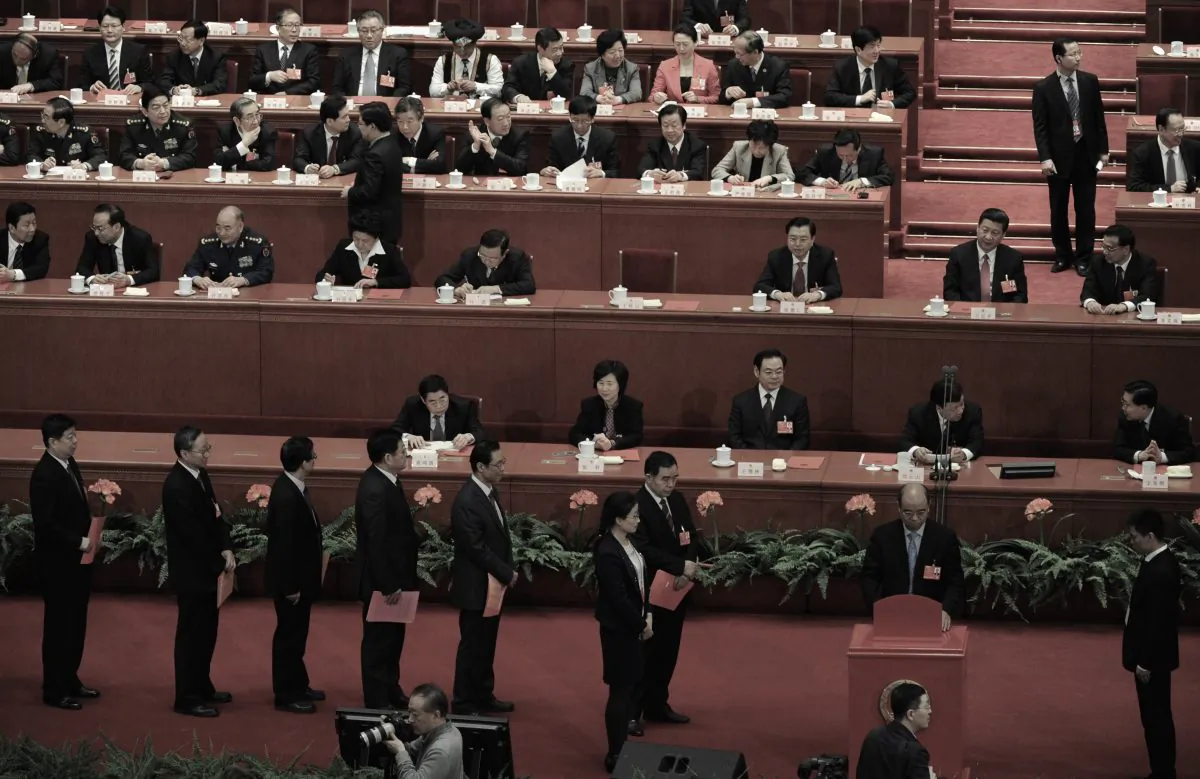

The recent purge of top Chinese nuclear and missile experts exposes severe flaws in the regime’s military hardware, suggesting that high-ranking generals have no confidence in their own weapons, experts say.
The Chinese Academy of Engineering has removed three of its top academics from its website, including two former vice presidents of the organization, Wu Manqing and Zhao Xiaogeng. Wei Yiyin was a former deputy general manager of the China Aerospace Science and Industry Corp.
Wei focuses on missile guidance and control, Wu is an expert in radar and network information systems, and Zhao specializes in nuclear weapons engineering.
The Chinese Academy of Engineering provided no explanation for the removals, but the Hong Kong newspaper Ming Pao reported on March 16 that the three are likely under investigation for corruption.
Including these latest cases, at least nine academics have lost their titles over the past three years.
Flaws Lead to Removals
Prior to the dismissals, Chinese-made defense systems reportedly failed in combat, with the JY-27 anti-stealth radar allegedly proving ineffective in Venezuela, and the HQ-9B surface-to-air missile batteries, deployed by Iran, appearing to be neutralized within the first hour of strikes by the United States and Israel.
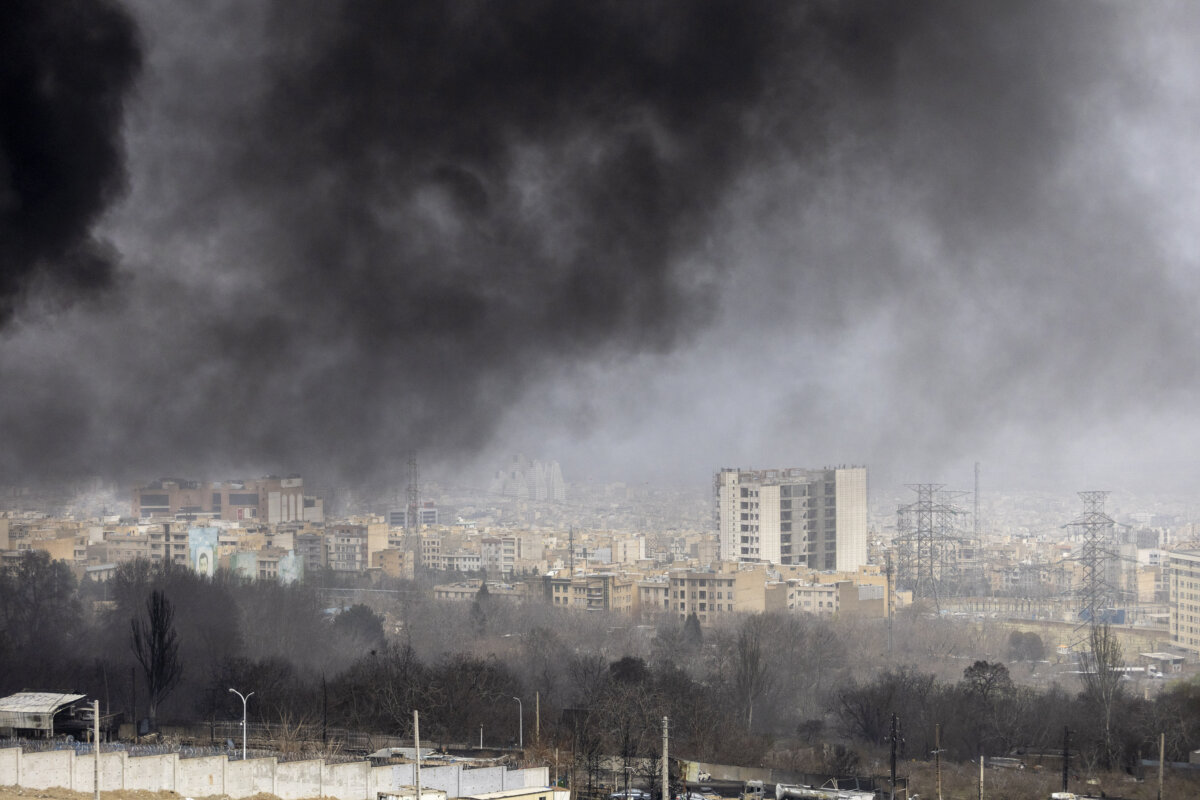
Shen Ming-shih, an adjunct associate professor at the Graduate Institute of International Affairs and Strategic Studies at Tamkang University in Taiwan, said the purges are likely connected to the real-world underperformance of the Chinese regime’s military equipment abroad in recent U.S. attacks.
“These Chinese weapons failed in combat for various reasons, with U.S. electronic warfare likely playing a major role,” Shen told The Epoch Times.
“But the removal of these senior academicians indicates there were underlying problems in the research and development process, which then led to the uncovering of corruption.”
Shen said Beijing relies heavily on civil-military fusion, corporate espionage, and reverse engineering because it cannot independently develop advanced weapons, and this opaque process allows corrupt military officials to inflate funding requests and embezzle massive state budgets.
“Whether it is China’s J-20 stealth fighter, aircraft carriers, or other major weapons systems, corruption is a widespread problem in the development of the military arsenal of the Chinese Communist Party,” Shen said.
Su Tzu-yun, a senior analyst from Taiwan’s Institute for National Defense and Security Research in Taipei, said the latest move from CAE is likely a spillover from the unprecedented wave of political crackdowns sweeping the People’s Liberation Army (PLA) under the banner of anti-corruption.
“Arrested generals who were implicated in earlier corruption cases confessed and named others, expanding the investigation,” Su told The Epoch Times.
“After inspecting the relevant military equipment, authorities may have found these experts involved in approving substandard equipment during inspections.”
Consolidating Power
The removals echo a military scandal that was revealed in 2024, when a Bloomberg report, citing U.S. intelligence, revealed staggering graft within the PLA, including missiles being filled with water instead of fuel.
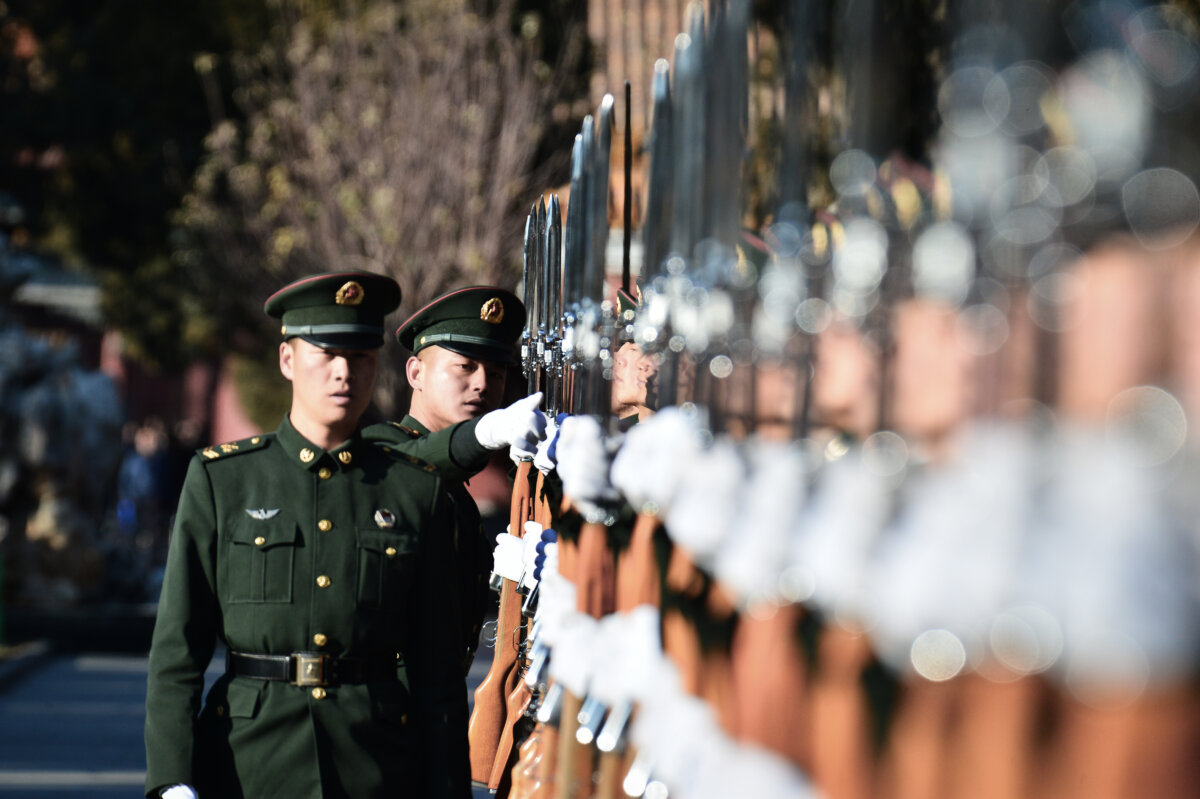
Shen said the current purge, when viewed alongside that prior incident, reveals a pattern of systemic failures in the regime’s weapons development.
“The dismissal of these academicians may stem from a power struggle, but the process has exposed new evidence of weapon defects,” Shen said.
“Together with the water-filled missiles case, both incidents further confirm that China’s defense technology is fundamentally compromised.”
Richard Y. Chou, a member of the Evaluation Center Committee at Taiwan’s National Defense Industrial Development Foundation, said these developments expose “long-term and systemic distortion and falsification” throughout the Chinese military’s procurement, production, and inspection pipelines.
“Once such problems become severe enough to affect the reliability of strategic weapons, they shake the top leadership’s fundamental trust in ‘actual combat capability,'” Chou told The Epoch Times.
“Under these circumstances, the investigation will not stop at the grassroots level but will trace upward to the key decision-makers, including the high-level military experts responsible for verifying these systems.”
Within the CCP’s system of accountability, Chou said these senior experts are the ultimate guarantors of weapon performance, meaning that their removal is a standard consequence when weapons fail or verification data is falsified.
However, Chou said the move goes beyond simply punishing those responsible for the technical defects.
“Targeting these senior experts points to a major power restructuring rather than just a simple crackdown on graft,” Chou said.
He said the selection of these individuals reflects Beijing’s ongoing efforts to consolidate political control and weed out disloyal factions.
“This is driven by two overlapping factors: the deep distrust sparked by the water-filled missiles and the push to recentralize political power. The former explains why Beijing took action, while the latter dictates who gets purged,” Chou said
‘Zero Confidence’
Shen said that as the crackdown expands and military research failures mount, the fundamental unreliability of the PLA’s weaponry will become increasingly obvious.
“The CCP claims its J-16 fighter jet rivals the U.S. F-16, but its actual combat endurance falls far short of that benchmark, a shortcoming that has fueled corruption scandals that are likely to implicate more officials,” Shen said.
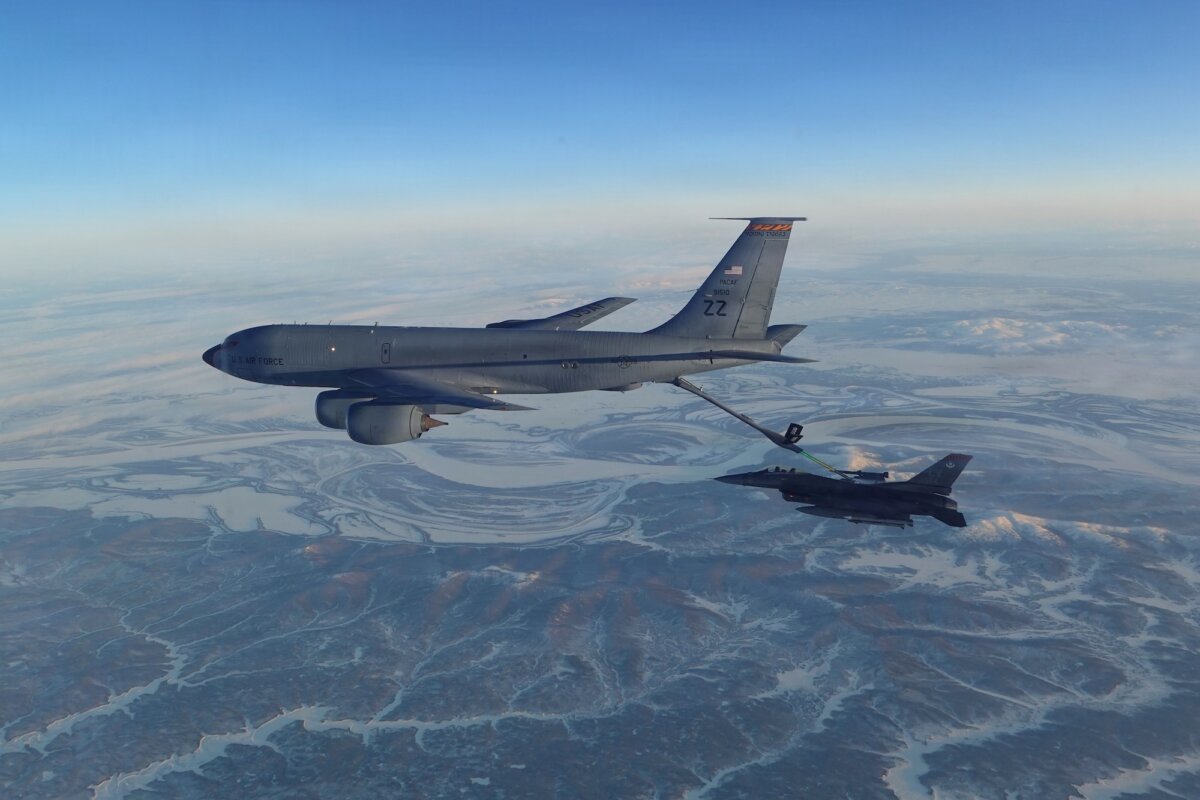
Shen said China’s frontline troops who are operating these defective systems understand their exact vulnerabilities, making their pilots hesitant to fly aggressively and raising questions about the PLA’s ability to sustain combat operations against the United States or Taiwan.
The CCP claims the self-ruled democracy of Taiwan as its own territory and has threatened to annex it by force, despite having never ruled the island.
“High-ranking generals already have zero confidence in the regime’s domestically developed systems, and once these weapons enter actual combat, their fatal flaws will be fully exposed,” Shen said.
Chou said that while Beijing has established a comprehensive defense industrial base, systemic defects fundamentally compromise the reliability of its military hardware, fueling growing doubts about its real combat capability.
“Political interference in the technological sector is severe, forcing professional expertise to yield to demands for political security and loyalty, further reducing the stability and continuity of the technological system,” Chou said.
“The core issue is not whether it can build advanced weapons but how many of these weapons can actually function according to design standards at critical moments.”
 Friends Read Free
Copy
Facebook
Tweet
Friends Read Free
Copy
Facebook
Tweet