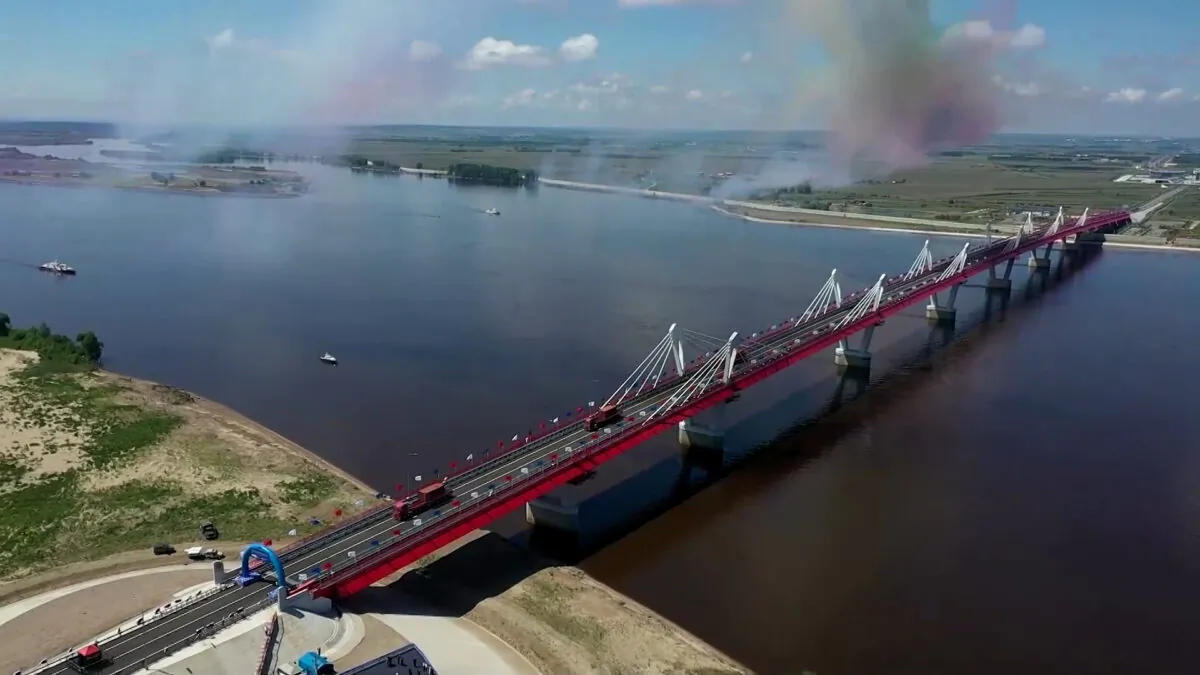

Russia has said that it is ready to resume electricity sales to China and that talks between the two countries are taking place after it suspended power supplies to China on Jan. 1.
Analysts said that the halt not only involves economic factors but also reflects the complexities of current international relations, indicating potential changes in China’s energy supply sources.
Russia’s energy ministry said that its priority was to meet rising demand for power in Russia’s Far East but that it could resume supplies to China depending on the terms to which the countries agree.
“Russia could resume electricity exports to China if it receives a corresponding request from Beijing and if mutually beneficial cooperation terms are reached,” it said.
It did not clarify whether the decision to halt supply was led by China or Russia.
The price could be one of the reasons, according to the analysts. In Russia’s far east, the electricity price has increased to 4,300 rubles ($55) per megawatt-hour, while the price in China is about 350 yuan ($50) per megawatt-hour.
The price of electricity exported from Russia has exceeded China’s domestic electricity price for the first time, making imported electricity no longer economically viable.
The contract for supplying electricity to China was signed in 2012 and is valid until 2037.
Russia’s supplier of electric power to China, Inter RAO, said that talks were taking place but that neither side planned to terminate their contract.
The Chinese regime did not respond to a request for comment.
It’s quite unusual that Russia cut off electricity supply to China, according to Shen Ming-shih, research fellow at the Division of National Security Research at Taiwan’s Institute for National Defense and Security Research.
China’s low electricity prices mean that the budgets of China’s central and local governments are indeed tight, or perhaps they’re short of funds, so they might be negotiating how to lower prices, Shen said of the possible reasons for the halt of power supply from Russia.
“While negotiations are possible, Russia’s direct cut-off of electricity is a rather extreme approach,” he told The Epoch Times. “It’s possible Russia is trying to put pressure on China so that they can make more money off China.”
China’s weak domestic demand and overcapacity in some sectors make it harder to justify big price hikes, “so economic softness amplifies the pressure to keep prices low,” Sun Kuo-hsiang, a professor of international affairs and business at Nanhua University in Taiwan, told The Epoch Times.
However, Russia’s power halt to China is not only about price; it also reflects hard bargaining over margins in a relationship in which Beijing has leverage as a buyer and Moscow wants to lock in higher long‑term returns under sanctions pressure, Sun said.
Impact of International Politics Shift on China’s Energy Supply
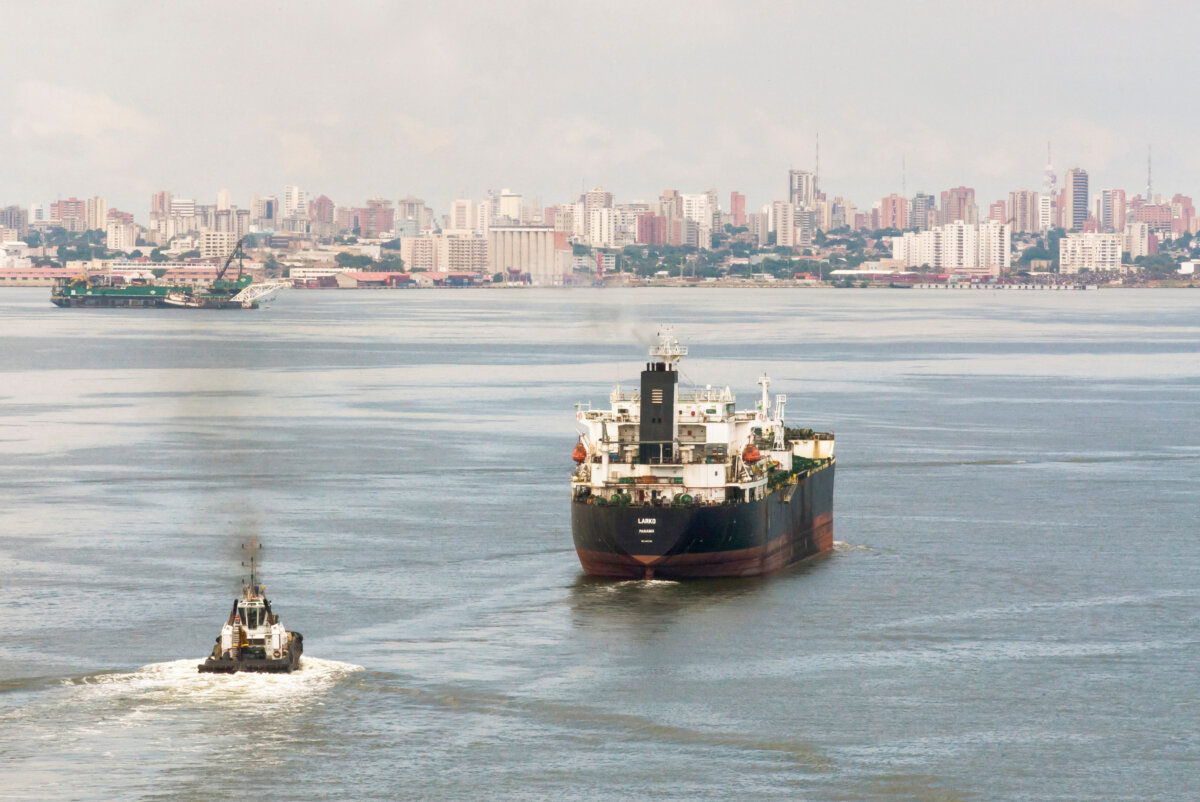
China’s main energy suppliers—Venezuela and Iran—have been undergoing drastic political changes entering 2026.
The timing is sensitive because it comes amid broader energy and geopolitical recalibration after Western sanctions and disruptions in Venezuela and Iran, so any sign of friction in the “no‑limits” partnership between the Chinese Communist Party (CCP) and Russia draws attention, Sun said.
Venezuela accounts for about 5 percent of China’s total energy supply, and Iran accounts for about 10 percent to 20 percent, Shen noted.
“China’s energy supply is mainly from Russia and their own domestic production,” he said. “Overall, if the 20 percent energy supply is now in trouble, and China’s own energy reserves are insufficient, the first thing it will have to do is increase its supply from other places, which currently seems to be Russia.”
China is bound to increase its demand for and dependence on Russian energy, Shen said.
“Since Russia controls this source, it naturally has more leverage to cut off power supply,” he said. “Russia would certainly be happy to sell more energy to China, allowing it to earn more money.”
Sun had a similar assessment.
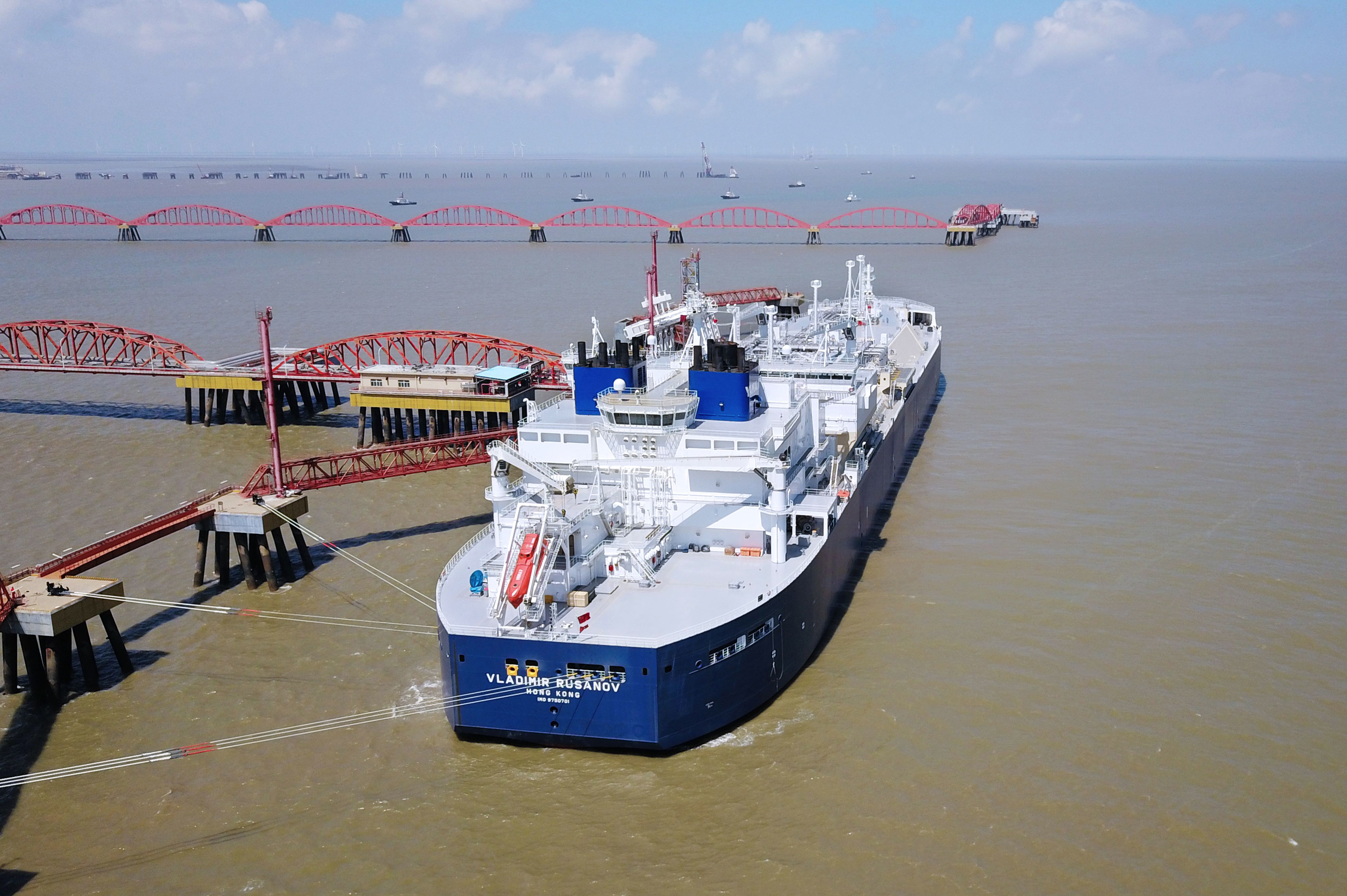
The changes in Venezuela and the turmoil in Iran push Beijing toward even greater reliance on Russian oil, gas, and electricity over the medium term, “especially via pipelines and dedicated infrastructure that are hard to reroute,” he said.
US, Russia, China Relations
Russia is being sanctioned for its invasion of Ukraine by the international community, led by the United States. Amid the geopolitical changes, “Russia is very opportunistic,” Shen said.
“It’s possible that Russia, in order to alleviate the pressure from the United States, might betray the CCP or cooperate with the United States to create difficulties or trouble for the CCP,” he said. “Because communist China’s decline or a blow to its economy actually serves not only the interests of the United States but also those of Russia.”
China’s increased dependence strengthens Russia’s energy leverage, Sun said, “but Moscow is also increasingly dependent on Chinese demand and financing, so the interdependence is asymmetric yet mutual rather than one‑way.”
He said that under current sanctions and strategic confrontation with the West, Putin has very limited incentive or room to “switch sides” toward the United States, but incremental tactical hedging is possible amid China–U.S. competition.
Shen also said, “If the United States continues to impose high tariffs on China, and Russia frequently cuts off electricity or reduces its energy supply, the impact on China will be enormous.”
Luo Ya and Reuters contributed to this report.
 Friends Read Free
Copy
Facebook
Tweet
Friends Read Free
Copy
Facebook
Tweet