
Taiwan plans to buy 6 million metric tons of liquefied natural gas (LNG) annually from Alaska and invest up to $4.4 billion in a major pipeline and export project, the nation’s Ministry of Economic Affairs said on Oct. 14.
The announcement came a day after President Donald Trump said Taiwan had agreed to purchase 30 percent of the project’s natural gas production over the next 20 years.
“That guarantees a success,” Trump said during an Oct. 13 rally in Wasilla, Alaska, describing the agreement as one of the largest commitments of its kind.
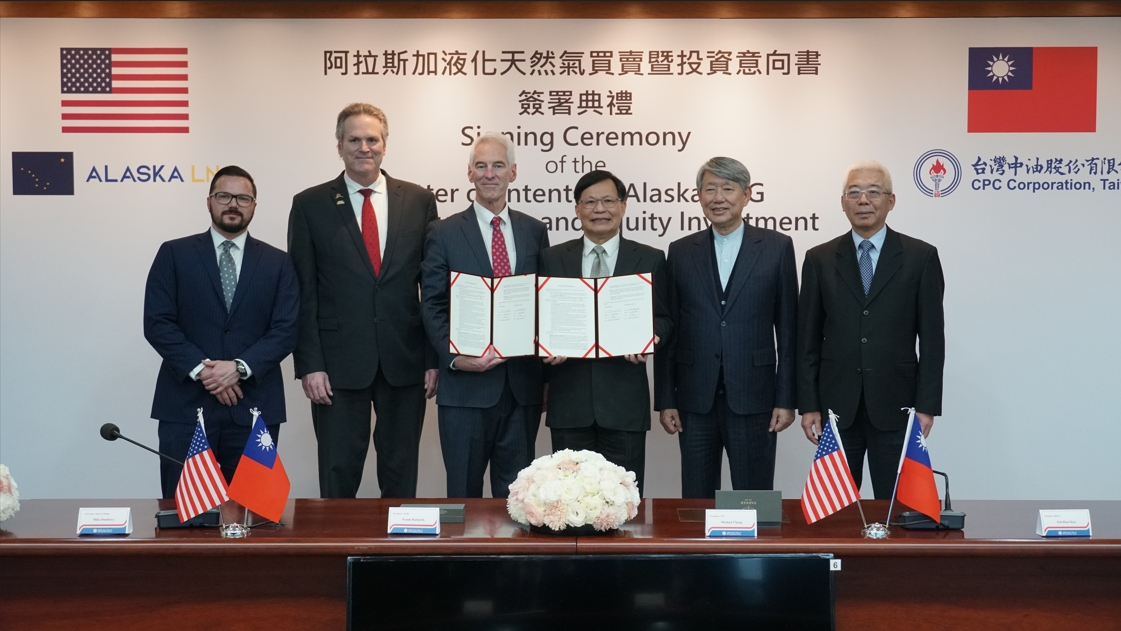
Taiwan’s state-owned CPC Corporation signed a nonbinding letter of intent in March 2025 to purchase 6 million metric tons of LNG annually for 20 years and potentially invest in the project.
Taiwan’s Ministry of Economic Affairs said CPC had made significant progress in negotiations with the U.S. developer after nearly a year and a half of talks, although the final purchasing and investment terms remain unsettled.
Taiwan Seeks More Secure Energy Supplies
The Alaska project would give Taiwan another source of natural gas as the island seeks to diversify energy imports and reduce its exposure to overseas supply disruptions.
Taiwan imported 95.4 percent of its energy in 2025, according to official statistics, making reliable fuel shipments essential to its electricity generation and industries.
LNG accounted for 23.6 percent of the island’s total energy supply.
Taiwan’s dependence on imported fuel leaves its energy supplies vulnerable to disruptions in maritime shipping.
Beijing, which claims Taiwan as its territory despite never having governed the island, has repeatedly conducted military exercises around Taiwan, including drills simulating a blockade.
Natural gas from Alaska could reach Taiwan directly across the North Pacific, offering a shorter shipping route than supplies from the U.S. Gulf Coast and reducing reliance on other shipping routes.
Taiwan has already been expanding its energy purchases from the United States.
In February, CPC signed a long-term agreement with Houston-based Cheniere Energy to purchase up to 1.2 million metric tons of LNG annually from 2026 through 2050.
The agreement adds to an existing contract for approximately 2 million metric tons annually.
Taiwan has also announced plans to increase the U.S. share of its LNG imports to 25 percent by 2029.
Alaska Project Could Expand US Energy Exports
The Alaska LNG project is designed to transport natural gas from Alaska’s North Slope through an approximately 800-mile pipeline to an export terminal in Nikiski, where the gas would be cooled into liquid form and shipped overseas.
The project is being developed by Glenfarne Alaska LNG in partnership with the state-owned Alaska Gasline Development Corporation.
The developers plan to build the project in two phases.
The first would supply natural gas to Alaskan communities and businesses, while the second would add an export terminal capable of producing 20 million metric tons of LNG annually.
The project has faced years of delays and concerns over its high construction costs.
Its developers have sought long-term purchase commitments from Asian buyers to help secure financing.
Glenfarne said on Sept. 30 that its commercial agreements covered 13 million metric tons of annual LNG sales, including preliminary commitments from buyers in Taiwan, Japan, South Korea, and Thailand.
Taiwan’s Ministry of Economic Affairs said LNG deliveries from Alaska could begin as early as 2032 if development proceeds on schedule.
 Friends Read Free
Copy
Facebook
Tweet
Friends Read Free
Copy
Facebook
Tweet