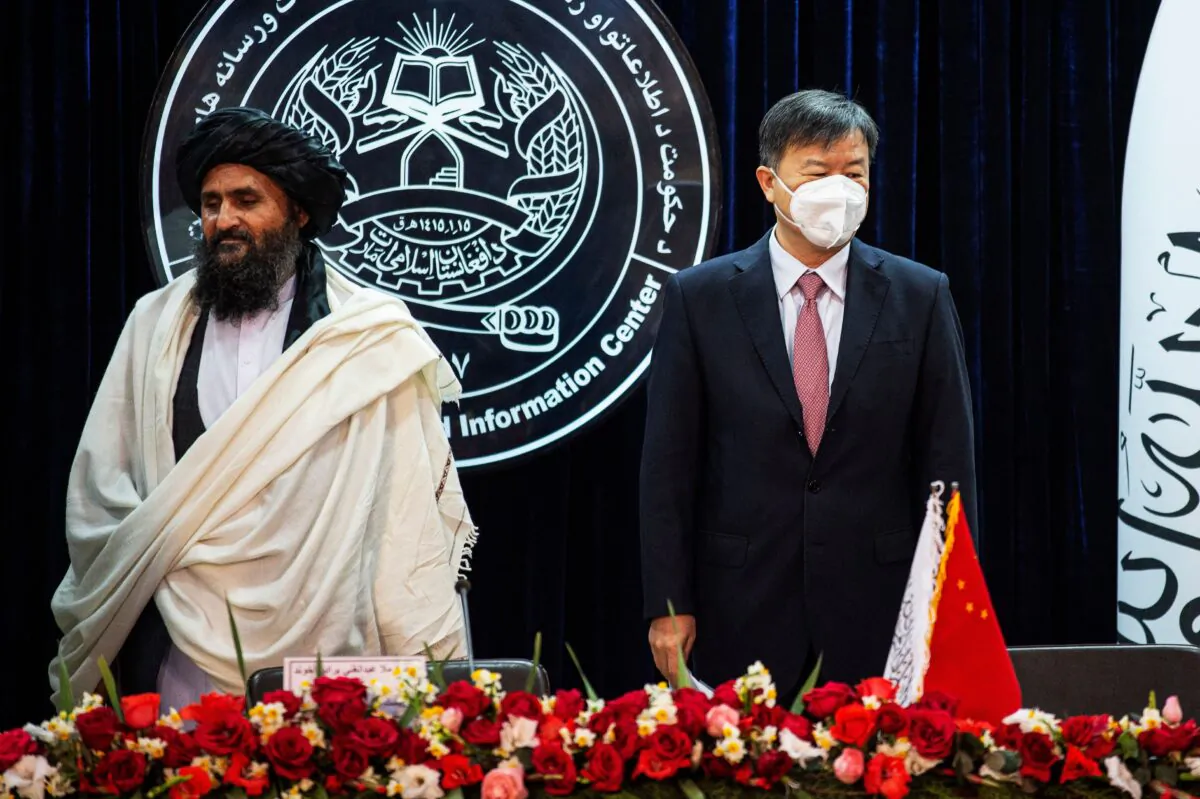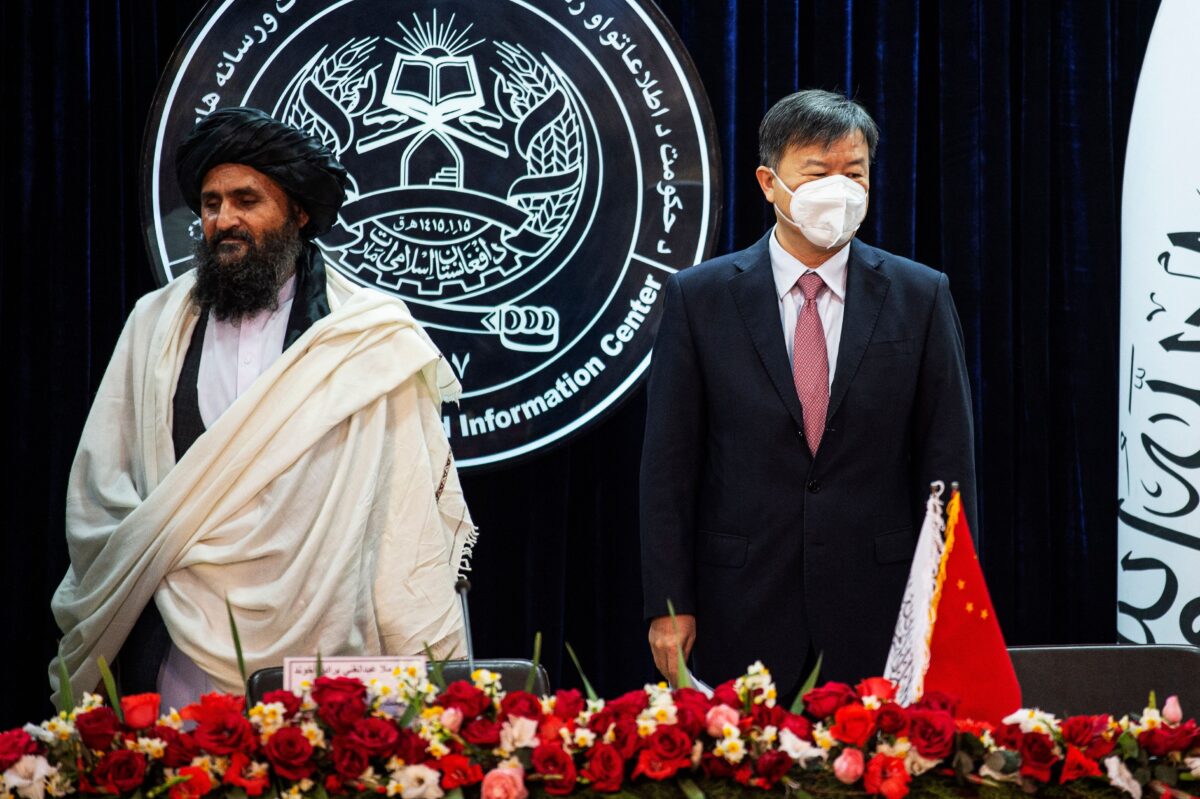

The Taliban plans to send a team to China to formally seek membership for Afghanistan in Beijing’s Belt and Road Initiative (BRI, also known as One Belt, One Road).
The announcement follows the Taliban’s attendance this week at the third BRI forum in Beijing, which drew officials from Afghanistan and 34 other countries.
“We requested China to allow us to be a part of the China-Pakistan Economic Corridor and Belt and Road Initiative … [and] are discussing technical issues today,” acting Commerce Minister Haji Nooruddin Azizi said.
“We have everything they need, such as lithium, copper, and iron. Afghanistan is now, more than ever, ready for investment.”
Mr. Azizi said the regime would also send a technical team to China to enable it to “better understand” issues that might prevent it from formally joining the initiative.
Among those issues may be that China is the only nation that has named an ambassador to the Taliban, and also that no nation yet formally recognizes the Taliban as Afghanistan’s legitimate government.
China Seeks to Stabilize BRI
The BRI has been a central part of the Chinese communist regime’s strategy to position itself as an alternative economic partner to the United States throughout the world.
The program has suffered numerous setbacks, however, and has been widely criticized for its associated corruption, “debt trap” diplomacy, forced labor, and creating economic dependencies on China.
While last week’s gathering marked the 10th anniversary of the BRI’s founding, the scale of the summit has significantly shrunk as European powers have shunned the program and the regime’s own investments in its partners have dwindled in size.
While one-third of the world’s leaders who attended the first summit in 2017 were from Europe, only three European national leaders—the heads of state for Hungary, Russia, and Serbia—attended this year.
Now, nations such as Italy are exiting the program, claiming the Chinese regime didn’t follow through on its promises and that non-BRI nations were outperforming it economically.
China Eyes Afghanistan’s Natural Resources
Despite its fading role on the world stage, the BRI could provide a significant advantage to China should the Taliban regime be allowed to join.
The Taliban, which seized control of Afghanistan during the United States’ chaotic and deadly withdrawal from the country in 2021, control vast mineral resources that would allow China to better manipulate the global economy and prop up its own domestic supply chains.
Several Chinese companies already operate there, including the Metallurgical Corp. of China, which has held talks with the Taliban about the potential construction of a huge copper mining project.
Discussions were delayed because the mine is near a historical site, but Mr. Azizi said they are continuing.
“The Chinese company has made a huge investment, and we support them,” he said.
Chinese investors have suggested that security remains a key concern in Afghanistan. The ISIC terror group has targeted foreign embassies as well as a hotel in Kabul that’s popular with Chinese investors.
Reuters contributed to this report.
 Friends Read Free
Copy
Facebook
Tweet
Friends Read Free
Copy
Facebook
Tweet