The Chinese Communist Party’s (CCP’s) sweeping purge of senior military officials is raising questions about Chinese leader Xi Jinping’s ability to maintain control over the armed forces and secure a stable political succession, analysts say.
The CCP’s Fifth Plenum of its 20th Central Committee is scheduled for Oct. 26–29, ahead of the Party’s 21st National Congress in 2027.
The plenum’s official focus is Party discipline, but the broader leadership transition expected at the next congress will test Xi’s ability to shape the party’s future leadership.
U.S.-based China current affairs commentator Wang He told The Epoch Times that Xi is unlikely to share power and will seek to control personnel decisions at the 2027 congress. However, it remains uncertain whether Xi can exercise the same degree of control over the leadership lineup as he did at the 2022 congress.
Wang said political developments in 2026 had become increasingly unusual, particularly following the removal of senior military officials Zhang Youxia and Liu Zhenli.
Zhang, former vice chairman of the Central Military Commission (CMC), was stripped of his CCP membership and removed from the army on Sept. 21. Liu, a member of the CMC and the military’s former chief of staff, was also expelled from the Party and the military.
“This means that Xi Jinping’s sense of insecurity has become more pronounced and more serious than before,” Wang said.
Military Loyalty and Security Apparatus
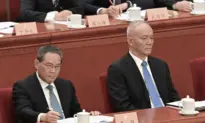
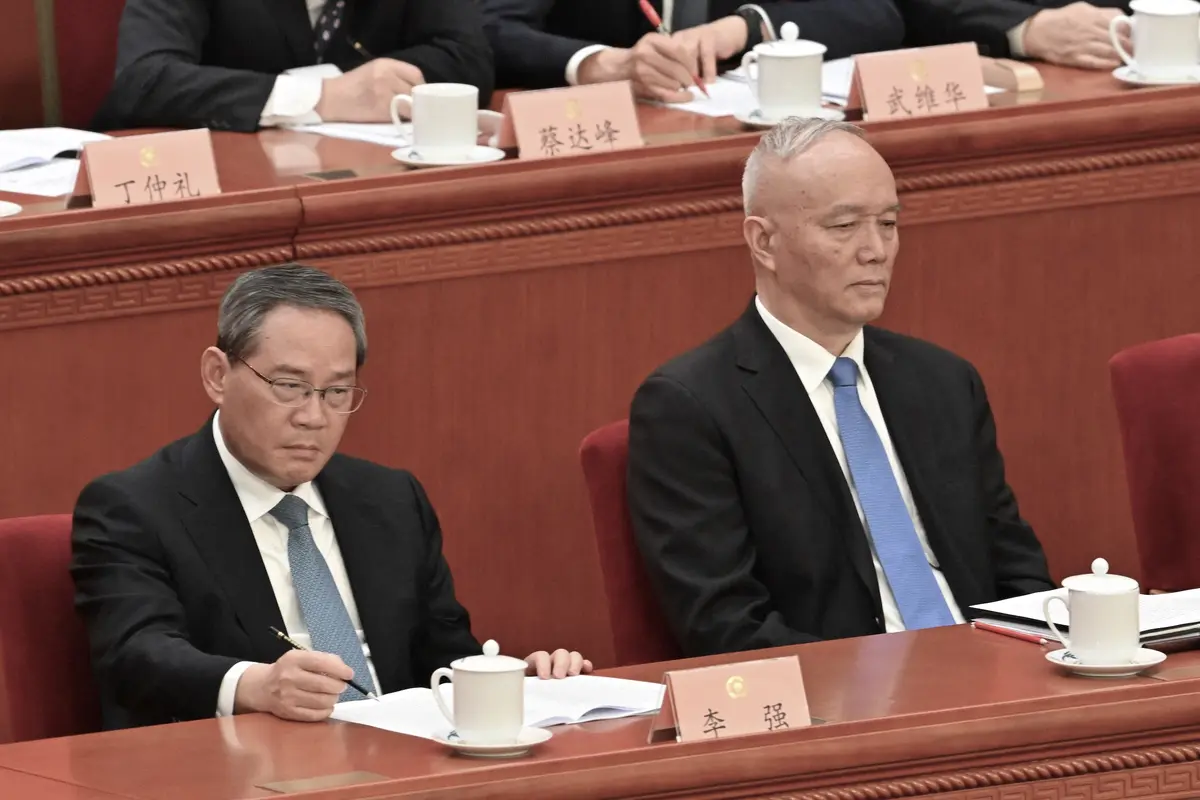
Wang identified Cai Qi, director of the CCP’s General Office, and Wang Xiaohong, China’s minister of public security, as two figures crucial to Xi’s ability to retain power.
Cai oversees the Central Guard Bureau, which protects senior Party leaders, while Wang Xiaohong heads the national police apparatus. Both have longstanding ties to Xi dating back to his years working in Fujian Province in the late 1990s. Wang Xiaohong was involved in Xi’s security arrangements during that period.
“If these two people remain in place, Xi Jinping will still hold power firmly,” Wang He said. “If there are changes involving these two people, Xi Jinping’s power could be shaken.”
U.S.-based China affairs analyst Li Linyi told The Epoch Times that the two officials’ positions could become less secure as they approach or pass the age of 70 by the next Party congress.
However, maintaining control over the military may be an even greater challenge than controlling the national police and the Central Guard Bureau, according to Li.
Li said the loyalty of Zhang Shengmin, the vice chairman of the CMC, remained difficult to assess, especially given that every other CMC member had been purged except Xi himself.
Many serving officers remain connected to these figures, Li said. Even if Xi appoints new military leaders at the upcoming plenum or the 2027 congress, he may not be able to guarantee their loyalty, Li said.
The uncertainty comes as Xi continues to emphasize the need for political discipline. The CCP’s official theoretical journal, Qiushi, recently published a speech Xi delivered on Jan. 12 at a meeting of the Central Commission for Discipline Inspection.
Xi warned that the anti-corruption campaign remained a difficult and complex struggle and urged vigilance against officials who were disloyal in their thinking or inconsistent in their words and actions.
Prospects for Stable Succession
Xi’s purge of senior Party officials is also raising questions about how he plans to fill the vacant posts. It is unclear whether a younger generation of leaders will enter the Party’s inner circle.
Independent Chinese writer and commentator Du Zheng wrote in Taiwanese outlet Up Media that Xi’s reliance on familiar associates had been undermined by years of purges. Xi may therefore have to promote officials with whom he has fewer established personal ties when arranging the next leadership lineup, Du said.
Du argued that younger officials, shaped by China’s economic reform era beginning in the late 1970s, may have different political outlooks from those of Xi’s generation. He also pointed to what he described as a growing willingness among officials to question central Party decisions.
These developments, Du argued, could undermine the Party’s ability to maintain its existing political hierarchy after Xi.
Li offered an even more uncertain outlook, saying China’s economic and social pressures could accelerate internal power struggles.
China’s political situation can change rapidly, Li said, and the CCP could collapse before its 22nd National Congress in 2032. Predictions about a future generation of leaders, he argued, therefore remain highly speculative.
Tang Bing and Luo Ya contributed to this report.
 Friends Read Free
Copy
Facebook
Tweet