

When people talk about strong bones, calcium gets most of the attention. Vitamin D usually comes next, because it helps the body absorb that calcium.
But absorption is only part of the story.
Once calcium enters the bloodstream, your body still has to decide where it goes. Ideally, it’s delivered to the bones and teeth, where it builds strength and structure.
The problem is that calcium doesn’t always end up where it should. It can also accumulate in places it doesn’t belong, including soft tissues and the walls of blood vessels.
That’s where vitamin K2 comes in.
K2 helps your body use calcium more intelligently, directing it toward the places that benefit from it and away from the places that don’t. And yet, despite playing such a pivotal role, it’s one of the easiest nutrients in the body to overlook.
The reason comes down partly to diet. Vitamin K2 is concentrated in a relatively narrow group of foods: natto, aged cheeses, egg yolks, organ meats, and certain animal-based foods. Some people may eat these regularly, but the richest sources, especially natto and fermented cheeses, are not daily staples for many Americans.
Research suggests that many older adults may not have enough vitamin K activity to fully activate the calcium-regulating proteins that depend on it.¹
That gap is one reason K2 has become a natural partner to vitamin D3. Many people already take vitamin D to support bone health, but D3 works best as part of a broader calcium-support system, not as a standalone nutrient.
For anyone already taking vitamin D, this raises an important question: are you supporting the full picture of calcium health, or only one piece of it?
It’s a question more people are starting to ask. And it’s why vitamin K2, especially when paired with vitamin D3, has quietly become one of the most important nutrient combinations for anyone thinking long-term about bone, heart, and healthy aging support.
What Vitamin K2 Actually Does in the Body

Think of K2 as your body’s calcium traffic controller. Calcium is essential, but it’s only beneficial when it ends up in the right place. Bones and teeth need it. Arteries, kidneys, and certain soft tissues do not.
Vitamin K2 manages this traffic by activating two specialized proteins. The first, osteocalcin, helps bind calcium into the bone matrix to support skeletal strength and structure. The second, matrix Gla protein, helps inhibit calcium from depositing in arterial walls, where it can contribute to stiffness and plaque formation. Without enough K2, these proteins may not be fully activated, leaving the body less equipped to manage calcium properly.²·³
One of the best-known studies on vitamin K2 and heart health found that higher dietary intake of K2 was associated with better cardiovascular and arterial health outcomes. Interestingly, the same association was not seen with vitamin K1, the form found mostly in leafy greens.⁴
The same pattern shows up in bone research. When K2 is plentiful, osteocalcin is more fully activated and ready to do its job. When K2 is low, a portion of that osteocalcin can remain inactive: present, but not functional. This may help explain why calcium and vitamin D are only part of the bone-health picture.The raw materials are there, but the system that puts them to work may not be fully engaged.²·³
This is the quiet value of K2: it doesn’t add a new function to the body. It helps the systems you already rely on work the way they’re supposed to.
But once people start looking at K2 supplements, they quickly run into another question: which form of K2 matters most?
Not All Vitamin K2 Is the Same
Vitamin K2 is not a single molecule. It is a family of related compounds called menaquinones, and the two forms you will most often see on supplement labels are MK-4 and MK-7.
Both are biologically active forms of K2, but they behave differently in the body. MK-4 is the shorter-chain form found in animal foods like eggs, butter, and certain meats. It is active in the body, but it clears from the bloodstream relatively quickly, which means it may need to be replenished more often to maintain steady levels.
MK-7 is the longer-chain form found primarily in natto. Its key advantage is a much longer half-life, often described as lasting around 72 hours, which helps it maintain more consistent levels in the blood with once-daily supplementation.
For this reason, much of the supplement research on K2 for bone and cardiovascular support has focused on MK-7. When choosing a K2 supplement, the form of K2 is one of the most important details to check on the label.
Why Vitamin D3 Works Better With K2

Vitamin D3 is already a daily staple for many people, especially those thinking about bone health, immune support, and healthy aging. But as important as D3 is, it works within a larger nutrient system.
That is where K2 becomes especially relevant. It complements D3 by supporting the vitamin K-dependent proteins involved in calcium balance, making the two nutrients a natural pairing rather than two unrelated supplements.
This matters most for people who are already taking vitamin D on a regular basis. If that’s you, the question worth asking is whether your current routine accounts for the full calcium-support system, or just one part of it.
That is the simple reason D3 + K2 has become such a popular combination: it is not about adding more supplements for the sake of it. It is about making your calcium-support routine more complete.
What to Look for in a Quality Supplement?
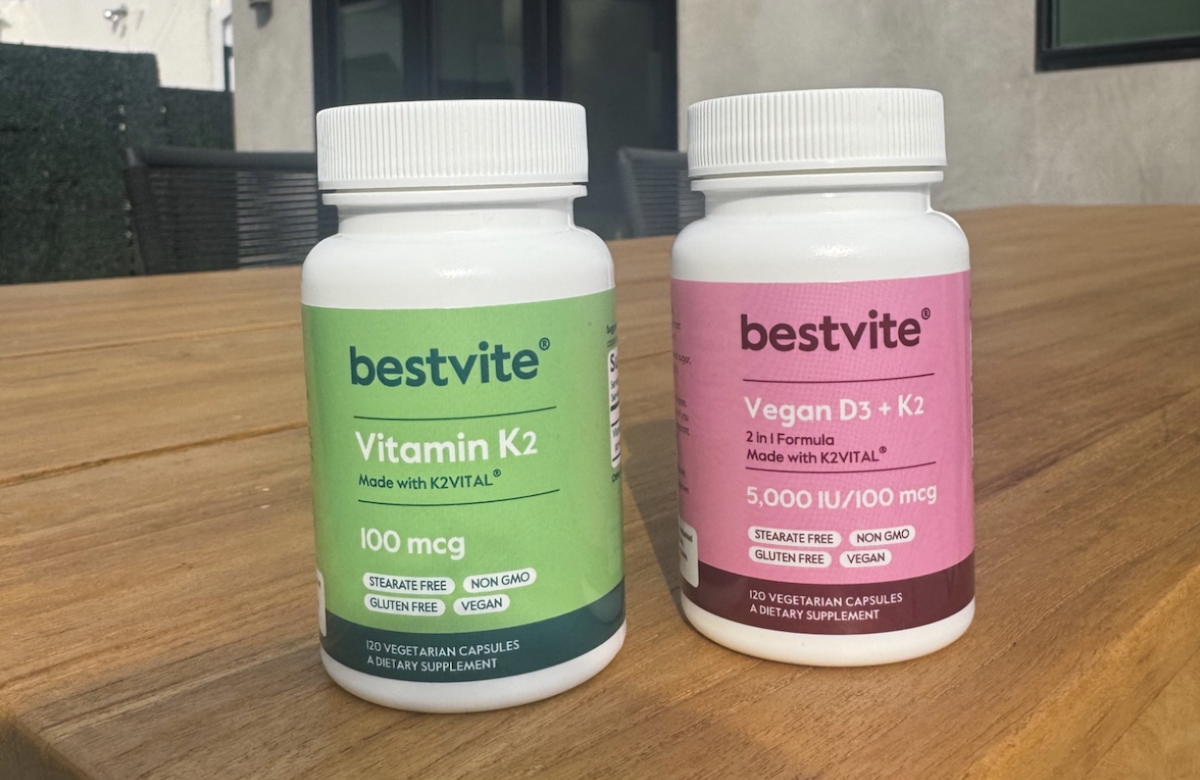
Two bottles can both say “Vitamin K2” on the front, but the form and quality of the ingredient can be very different.
For daily supplementation, MK-7 is often preferred because it stays active in the body longer than MK-4, making it a practical choice for consistent support. Just as important, look for all-trans MK-7, the naturally occurring, biologically active form of vitamin K2.
Bestvite uses K2VITAL™, a patented vitamin K2 MK-7 ingredient made with all-trans MK-7. This helps ensure you are getting the form of K2 your body is meant to use.
Bestvite products undergo rigorous third-party testing to ensure quality, purity, and consistency. They are encapsulated in an NSF GMP-certified facility in the United States, independently verified to follow FDA-compliant Good Manufacturing Practices for safety, cleanliness, and quality control.
Bestvite offers K2VITAL™ in both our standalone Vitamin K2 supplement and our Vitamin D3 + K2 formula. The standalone K2 is a simple option for anyone who already takes vitamin D separately, while D3 + K2 offers both nutrients together in one convenient daily capsule.
Either way, the goal is the same: to support a more complete approach to calcium, bone, and heart health with a high-quality form of vitamin K2.
Save 20% on Bestvite Vitamin K2 and Vitamin K2+ D3 with this code: Epoch20
Claim your exclusive offer here.
References
- Shea MK, O’Donnell CJ, Hoffmann U, et al. Circulating uncarboxylated matrix Gla protein is associated with vitamin K nutritional status, but not coronary artery calcium, in older adults. Journal of Nutrition. 2011;141(8):1529–1534.
- Vermeer C, Shearer MJ, Zittermann A, et al. Beyond deficiency: potential benefits of increased intakes of vitamin K for bone and vascular health. European Journal of Nutrition. 2004;43(6):325–335.
- Schurgers LJ, Cranenburg ECM, Vermeer C. Matrix Gla-protein: the calcification inhibitor in need of vitamin K. Thrombosis and Haemostasis. 2008;100(4):593–603.
- Geleijnse JM, Vermeer C, Grobbee DE, et al. Dietary intake of menaquinone is associated with a reduced risk of coronary heart disease: the Rotterdam Study. Journal of Nutrition. 2004;134(11):3100–3105.
- Sato T, Schurgers LJ, Uenishi K. Comparison of menaquinone-4 and menaquinone-7 bioavailability in healthy women. Nutrition Journal. 2012;11:93.
 Friends Read Free
Copy
Facebook
Tweet
Friends Read Free
Copy
Facebook
Tweet