Live chat
April 4, 2024
American Thought Leaders
Live chat
 Expand
Expand
 Expand
[FULL TRANSCRIPT BELOW] “Most of the time when a doctor says there’s nothing wrong with you, what they’re really saying is: That doctor doesn’t know what’s wrong with you … And I think doctors need to be more honest about that.”
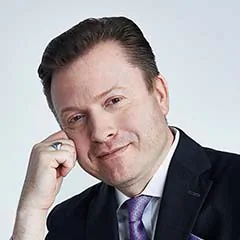
Dr. Jordan Vaughn is a physician of internal medicine and the CEO of MedHelp Clinics. During the pandemic, he noticed a pattern of abnormal clotting among his COVID patients, and saw other symptoms that few were discussing.
“The spike protein has unique properties that allow clotting and clotting pathologies to happen that we’d never seen,” says Dr. Vaughn. “Vax injury, to me at least, can be more complicated, because it starts to involve a lot more neurological and immunological phenomena, as opposed to what I would call long COVID—[which,] in a lot of people, is a lot more just vascular.”
Dr. Vaughn and an increasing number of doctors around the globe believe that COVID-19 is primarily a vascular disease, i.e., one that affects the blood vessels.
“The worst thing you can do if you have a vascular disease of the lungs is increase the intrathoracic pressure with something like a ventilator,” says Dr. Vaughn.
Today, he develops—and applies—treatment methods for those suffering from long COVID and COVID vaccine injury.
“I think long COVID is almost becoming a pejorative … but in reality, it’s that these people were not able to clear the consequences of their exposure to the spike protein,” says Dr. Vaughn.
Views expressed in this video are opinions of the host and the guest, and do not necessarily reflect the views of The Epoch Times.
FULL TRANSCRIPT
Jan Jekielek:
Dr. Jordan Vaughn, such a pleasure to have you on American Thought Leaders.
Dr. Jordan Vaughn:
Thank you for having me. I’m really happy to be here.
Mr. Jekielek:
You’ve been doing some remarkable treatments around microclotting which is one of the ways in which Covid manifests as a disease. Originally, this wasn’t your thing.
Dr. Vaughn:
No, not at all.
Mr. Jekielek:
It’s very rare these days for people to be working in private practice and this has facilitated your discoveries. Let’s start with your journey through Covid from the perspective of a doctor with a private practice.
Dr. Vaughn:
I’m the CEO of a health organization employing about 20 doctors and 200 health care workers. There were many patients at that time that we had to figure out how to help. The mainstream narrative about doing nothing really didn’t come into play for us. I thought that was kind of ridiculous. We had never done something like that.
It was more like, “How are we going to deliver care, not only for our chronic diseases, but also the people who are sick?” That led me to a lot of learning, a lot of suffering, a lot of patience, and then finding ways to alleviate it, which is the best thing about being a physician.
We started to see the clotting abnormalities. It made sense to me that’s why a lot of these patients were getting hypoxic. Their O2 sets would drop, even though their lungs wouldn’t sound full of fluid. They were getting hypoxic, which led me to Jaco Laubscher in South Africa. That’s probably one of the best things about the Internet age.
Mr. Jekielek:
Hypoxic means low oxygen.
Dr. Vaughn:
Yes. Jaco Laubscher is a cardiac intensivist in South Africa. He’s also a very free thinker and was trying to figure things out. He had some expertise in clotting, clotting issues, and chronic diseases. He put up a YouTube video in June of 2020 that said, “We’re barking up the wrong tree.
This is a clotting disorder and a vascular issue, not a respiratory issue.” From there, he started to publish with Resia Pretorius of South Africa and Doug Kell of England.
Being a free-minded person, I said, “I have to find answers beyond what CNN or these congressional testimonies or these daily updates are telling me, because this is not what I’m seeing in the clinic. I’ve got to find out what’s going on.”
In this internet age, you can find out what a lab in South Africa is doing. You can find out what people in Liverpool are doing and you can communicate with them. You can email them. You can have Zoom calls with them and then all of a sudden you can learn a whole lot. In the end, you can help a bunch of people. That’s really what led me to the clotting pathologies of Covid.
We would call it Covid-associated coagulopathy, which is a fancy term. It was different from anything we had ever seen before. It was great to be able to intervene with things that we already had, and it would keep these people out of the hospital and reverse their hypoxia.
But you had to evaluate the patient, be with them, and take care of them. Obviously, you didn’t want them to go to the hospital, because the worst thing you can do if you have a vascular disease of the lungs is increase the intrathoracic pressure with something like a ventilator. In the respiratory physiology journals in Europe, it’s pretty obvious that the ventilator just made the respiratory issues worse, but they couldn’t figure out why.
It wasn’t necessarily the airways, it was the vascular system.
This led to taking care of a bunch of people with Covid. My clinics probably treated 17 to 20,000 people. We probably put about 500 people on HOMO-2. I had a lady where we pulled her husband out of the hospital and got him better. But it was an interesting thing to get home oxygen for him. She said, “What can I do?”
I said, “Yes, it is hard to obtain,” so I bought a bunch of oxygen concentrators and put them in the back of my car. When I needed to send somebody home, I sent them home on oxygen. Sometimes I would just run it over there, so there are ways to solve problems.
Mr. Jekielek:
This is the community getting together and saying, “We’ve got a problem. Let’s solve this.” It’s like a parallel system. The system that we’re supposed to rely on is broken and is doing nothing.
Dr. Vaughn:
Innovative people will say, “We still have to care for people and we need to do these things.” Then people step up and get it done.
Mr. Jekielek:
The recommended protocol was to do nothing until you are in deep with Covid. We know it’s a two-stage disease. The first stage is relatively easy to treat. The second stage is very difficult to treat. But somehow the protocol was to let people get to the second stage. That’s what was happening back then.
Dr. Vaughn:
That’s where my healthcare delivery history came in. It was about, “How do I test my patients?” Then after they were tested, I treated them immediately. I also asked, “How do I determine who’s going to head down that pathway negatively, like with the clotting issue?” That also led me to checking clotting markers, and having them come back at day five. I wanted to see if their clotting markers were abnormal. What did their chest x-ray look like? If they were going down the Covid-associated coagulopathy pathway, I said, “Let’s intervene, instead of waiting until day 14. I would get a lot of day 14 or day 20 people.
With those people, you can only salvage it, instead of getting ahead of it. You could still salvage it and that would help, without a doubt. But instead of saying, “I hope there’s no more 14-dayers that show up to the clinic,” it was, “How do I get the day-five people and figure out which one is going that way?” I had to use my brain as a physician and say, “This is what we’re going to do.” With the organization that my father and I own, we were able to do what we thought was right. No one told us anything different.
Mr. Jekielek:
There are these large clots that people started to find in cadavers. In some situations people would have a giant clot in the arm and they were getting numbness. They figured out that they have to pull the clot out. How does this microclotting connect with this larger clotting?
Dr. Vaughn:
Definitely, most larger clots start out as smaller clots, and it does matter where they are. In the case of somebody who has passed away and been embalmed, I’m not sure about the mechanism that actually makes those very rubbery clots. The fibrin is assembling itself in a protein-protein interaction. In medicine we typically think of it as prion-like.
When you’re alive you have the feedback loop to stop it from happening. But when you’ve passed away it just propagates to its end. Again, that’s just my theory. But yes, it is unique clotting. It is affecting people that probably may have had some genetic issues with coagulation, which is a fancy word for saying making clots, but also with fibrinolysis.
Many people, especially in medicine, have never really had a lot of interest in fibrinolysis. It’s all about clotting. But just as important is the purpose of clotting. Hemophilia is not a great thing. Bleeding disorders aren’t a great thing if someone is going to randomly bleed very easily.
We have this mechanism for tissue injury that should stop you from bleeding out, because if you bleed out, you can’t really do much. You’re going to have this mechanism at work. But when that tissue injury is healed, you’ve got to get rid of that fibrin as well, and that’s the process we call fibrinolysis. The fibrinolysis is also just as important.
The unique thing about Covid was that it’s pro-coagulable, or what we call Covid-associated coagulopathy. There was an article published by the National Academy of Science yesterday about the fact that even the viral proteins can recombine into something that’s even harder to break down. That’s really what we’re seeing.
The fibrin itself is different, and it’s amyloid. We can look at the microscope, and it has a beta sheet to it, so it’s not the normal formation and it’s also resistant to fibrinolysis. Since the early 2000s, when Resia and Doug would apply trypsin to fibrin aggregates, they go away. If you apply trypsin to these blood clots, they stay.
Mr. Jekielek:
The bottom line is there’s this promotion in some people with these markers of coagulation where you don’t want it. On the other end, when that coagulation exists, there’s prevention of the breakdown.
Dr. Vaughn:
Exactly.
Mr. Jekielek:
That’s a double whammy.
Dr. Vaughn:
Yes, it is a double whammy. That’s one of the reasons that even now we’re seeing a lot of patients that you would have typically treated as having a history of stroke or a transient ischemic attack, with what we call secondary prevention, which could be aspirin or some other antiplatelet agent. But a lot of the patients, by the time they get to me, they’ve had their third stroke while they were still on secondary prevention.
Maybe there was something else happening. Maybe this secondary prevention was a different clotting. But the things that we’re dealing with now are stickier, harder to break down, and very different from the studies of strokes that we were looking at previous to 2019.
Mr. Jekielek:
What did you discover?
Dr. Vaughn:
I stood on the shoulders of Resia and Doug as the clinical scientists, the PhDs that were seeing this in the lab. We were able to find ways to break these things down with repurposed medicines. I had the flexibility to buy a big immunofluorescent microscope that is motorized, automated, and laser focused. But if you buy a product like that, you better know how to run it. These things have cameras in them, and Zoom was able to connect me with the world experts on coagulation.
Even though I had to wake up very early, because South Africa is ahead of us, I was able to be trained by somebody and then really impact my patients. Over that time, we also discovered that there were genetic things in certain people that definitely predates their ability to do that.
We were looking at why that person was more affected by Covid, but also why they might be vaccine injured, or just as easily have persistent issues with Covid—what we would call long Covid.
Mr. Jekielek:
Looking at this microclotting, you’re not talking about treating in the first stage with the FLCCC [Front Line Covid-19 Critical Care Alliance] protocol. You’re basically looking at people who now have serious disease.
Dr. Vaughn:
Yes. I actually started to bring in the microscope for the long Covid issues. I was using anticoagulation early, based on what Jaco and others were seeing. Then I started to see some of my first long Covid patients, patients that may have been hospitalized. They were young and healthy, but they hadn’t been able to walk up the stairs again without feeling shortness of breath. Most of the time when a doctor says that there’s nothing wrong with you, what they’re really saying is that you’re not going to get any better. What they’re really saying is that the doctor doesn’t know what’s wrong with you.
Doctors need to be more honest about that. With a lot of these things, I said, “I have to figure this out. This is different. I haven’t ever seen this. This is concurrent with your vaccine or when you got Covid, but why is it persisting?” That led me to get in touch with Resia and Doug and have them teach me to look at it clinically and then start to put the dots together.
Mr. Jekielek:
Even today, some people don’t accept the idea of long Covid. Then there is what some of the doctors would call long vax. They’re not necessarily the same thing. Please explain to us the reality of long Covid and how that relates to long vax.
Dr. Vaughn:
One of the discoveries Resia and Doug made was that it’s not just the spike protein that uniquely causes Covid to be so dangerous, but it is also the content of the vaccine. The spike protein has unique properties that allow clotting and clotting pathologies to happen. At its core, the spike protein is engaging with the ACE2 receptor all over your vasculature, your heart, and your lungs.
Jaco said, “We’re dealing with a vaccine that’s going to cause a spike protein to be so dangerous that it will cause vascular disease from the brain to your muscles, to your heart, to everything. If your system is not well vascularized and able to deliver oxygen, it’s not going to work well.”
What is so confusing to most physicians is that the current system is very siloed. You may understand heart disease. With a multi-systems disorder that is inflammatory, when tissues as well as systems don’t get oxygen and don’t work well, then you do get a lot of secondary dysfunction as well. Historically in medicine, we like to silo things into pulmonology and into cardiology. But when you are dealing with something that is affecting small vessels everywhere, there will be many symptoms.
Mr. Jekielek:
It took a while to figure out what connects all these problems.
Dr. Vaughn:
Interestingly enough, as Jaco was treating those patients in the summer of 2020, he and Resia were looking at people’s blood and using triple therapy for acute Covid. The people who would show up didn’t necessarily end up in the CCU [Cardiac Care Unit]. They had been really healthy, active people, but once they had Covid they couldn’t walk up the stairs. He started to look at their blood and found the same amyloid fibrin or micro clots or fibrin aggregates in their blood, which shouldn’t have been there.
That’s where the leap was taken to call it post-acute symptoms of Covid, which I like better than long Covid. Long Covid has almost become a pejorative because people say, “Oh, it’s just long Covid.” But in reality, these people were not able to clear the consequences of their exposure to the spike protein. When he started using a similar therapy to what he was using in the ICU, these people started to get better.
That made a lot of sense. With the drugs we have, we understand their risk, and the patient can understand their risk. I’m not really worried about these people having brain bleeds. They’re fairly young, and many of them are athletic. I did initially follow them quite closely because it took a little while to be comfortable with it, as it is with any therapy.
Then I started to see results, especially the first couple of people who were college athletes. Their trainer would say, “The harder we work him since he got Covid, the worse his performance is.” When you have a college athlete, these are pretty well-oiled machines that have been evaluated. For that to happen all of a sudden means there is something off.
If you are a 50-year-old or a 60-year-old, it’s much easier to rationalize that you’re just getting older and you haven’t exercised recently and you’re out of shape. During the pandemic you stayed inside and ate too much. From college athletes to seeing it in the whole spectrum as well, we said, “This could work for everyone,” and that’s where we went.
Mr. Jekielek:
What makes this spikeopathy, for lack of a better term, different from the Covid vaccine spike?
Dr. Vaughn:
The spike is in the vaccine because you want the body to engage with something that is immunologically strong. These spikes exist in a three-dimensional form, from open, to conformational, to closed.
If the spike’s engaging area is closed, it’s not going to really produce an immunological response. Instead, if you replace some of these prolines at the edge of where the turning mechanism is, you can keep it open longer.
People who design vaccines want you to create an immunological response. They design them in a way that your body engages with them.
The problem is that it makes them harder to break down. But more likely it makes fibrin engage on its own without thrombin.
Historically, most vaccines have the passive mechanisms of vaccines, meaning inactivated viral vaccines. It is very important that a vaccine is inactivated, meaning you usually get rid of the thing that causes pathology. You expose the body to the parts of the virus that aren’t necessarily as pathologically producing, but allow you to mount an immune response for you to actually fight the real thing when it gets there.
It is interesting that we’re using something that is the pathogen. We’re making some shifts in it to make it more immunogenic. Then we’re using a vector that is what we call an active vector. A passive vector would mean having this amount of that inactivated virus.
We’re going to put just that amount, and it’s going to stay in your arm. It might go other places, but your body’s going to passively interface with it. That’s what’s going to produce the immunological response. The mRNA was more the instructions to make the pathogen for an unknown amount of time.
Mr. Jekielek:
For whatever cell it can get into, basically.
Dr. Vaughn:
Then you add in the lipid nanoparticles that are designed to let things go everywhere. In some of the lectures from the guy that is the inventor and patent holder, he says that they can go anywhere.
Mr. Jekielek:
Even pass through the blood brain barrier.
Dr. Vaughn:
Vax injury can be more complicated because it starts to involve a lot more neurological phenomenon and immunological phenomenon, as opposed to
long Covid in a lot of people being a lot more vascular.
Mr. Jekielek:
You’re telling me that the vax is the disease, but it can go more places in the body.
Dr. Vaughn:
Yes. The spike is the pathogen.
Mr. Jekielek:
Yes, that causes the disease. You’re basically telling me that the pathogen may be somewhat augmented.
Dr. Vaughn:
Yes, it is augmented by an immunologist who wants to get an immunological response. Who knows if they knew that this thing can do the things that we’re seeing in the coagulation cascade.
Mr. Jekielek:
It just seems foolhardy. Because it becomes a pathogen in the end, as opposed to the more typical way you would make a vaccine.
Dr. Vaughn:
The word vaccine has become a sacrosanct word in medicine, but I don’t know that it deserves that. Every intervention should always be evaluated for its uses and its harms. For some reason, this one area where we really haven’t been allowed to do that. In the nineties, the way we treated cancer was a lot more cut, kill, and burn. Now, we treat cancer with the immune system in a very effective way. What if we weren’t allowed to question how we treated cancer?
What I’ve learned about the immune system, and even what I’ve learned about the coagulation system, is much more complex. It’s almost like we’re continuing to say, “Oh, we got this now. “ But with every door we open, the room for discovery is now bigger. It is this never ending complexity. With the thrombotic system and the inflammatory system, the word for the next 10 years will probably be thromboinflammation.
They are interconnected in a way that you can’t disentangle. If you’re going to have inflammatory issues, you’re going to have changes in the coagulation cascade that will result in some type of thrombotic process.
Because things that make coagulation possible involve the small vessels. The small vessels are where everything is delivered.
But also, the small vessels have immunological responses to their damage, destruction, and repair. We can actually find out how many different receptors there are on platelets, and how many different receptors there are in the endothelial cell, and how they can attach. It almost looks like a New York City subway map. It’s just immense how many there are.
In medical school, we say, “There’s hematology and there’s thrombosis.” It’s basically a mixture of hematological and inflammatory diseases. But instead, they intimately interact. Going back to the original metaphor on cancer, who would have thought that cancer involves the disruption of immunological processes in the body? Who would have known that treating certain things like that with immunological processes would be more successful than doing the crazy stuff we used to do—cut, kill, and burn?
Mr. Jekielek:
What would be a good way to describe thrombosis colloquially?
Dr. Vaughn:
It’s what thrombin does to activate clotting. We do describe thrombosis as a clot in something.
Mr. Jekielek:
I always thought of thrombosis as clotting, but it’s not the same.
Dr. Vaughn:
Thrombosis comes from the word from thrombin. In clinical medicine, thrombosis would be a fixed occlusion of a vessel. Prothrombotic is a better term, with things that are tilting toward it, because it’s always a balance. Even as you sit there, your body has the ability for your entire vascular system to clot off. It’s a balance between when it needs to do that and when it doesn’t.
Mr. Jekielek:
Thrombotic inflammation isn’t something that a lot of people are familiar with. It has to do with the occlusion of vessels through inflammation. Please explain the term for us.
Dr. Vaughn:
Typically, we would think of an inflammatory process and a thrombotic process. A thrombotic process is something that’s going to produce thrombosis, something that clots off or stops a vessel. Inflammatory processes are things that are revved up and we classically think of as things that are associated with lupus or rheumatoid arthritis or just really banging our knee.
Instead of separating them in our siloed education, the reality is we can’t disentangle them. They actually exist and activate together. You don’t activate a thrombotic process without your immune or inflammatory process being part of it. You cannot have an inflammatory process without there being some type of thrombotic process occurring at the same time.
Mr. Jekielek:
It’s particularly relevant here because this is exactly what we’re dealing with. It’s coagulation, which is a thrombotic process, correct?
Dr. Vaughn:
Yes, exactly.
Mr. Jekielek:
Where are we at right now in terms of being able to treat long Covid or long vax? How often is it demonstrable that it is a vascular issue, as you described?
Dr. Vaughn:
In my practice where I have now treated about 1600 patients, probably 60 percent of them are primarily vascular, meaning that vascular creates an inflammatory process. That’s why I like that word, thromboinflammation. The things that we have done with anticoagulants, antiplatelets, and natural things that are fibrinolytic have been really successful at getting these people better.
Going back to the difference between long vax and long Covid, long vax has a lot more strange neurological phenomena that are harder to treat.
There is still a thromboinflammatory coagulation going on and a lot of that helps. The neurological stuff is an immunological phenomenon where we haven’t really figured out what’s going on. It presents things like multiple sclerosis and Guillain-Barre syndrome that are also immunological or autoimmune. That’s where we are.
The interesting thing is, the more we treat, the more we learn. Not everybody is created equal. Some people have the coagulation issue they need. Some people may have a propensity of not being good at breaking things down and have an issue with fibrinolysis. You have this whole spectrum, it’s vascular and you have this clotting issue. But all of a sudden it’s not the clotting, it’s the fact that they can’t get rid of it. Then you have to address it in a different frame.
The other portion that we’re seeing is about venous disease and that’s the other thing that I’m exploring. In medicine, I’ve never really thought about the veins much. We can tie them off or they’re ugly in your legs. But I never really thought about the venous system and its importance. Many people have leg heaviness, tachycardia with exertion, heart rate racing, and shortness of breath.
These are very athletic people that used to run almost four-minute miles, those types of people. It starts to make some sense when you assess that your heart does need blood to get back. If you need increased cardiac output, you’ve got to have cardiac return, and 70 percent of your blood is in your venous system.
Now, it’s not good blood. It is deoxygenated and also more inflammatory. Imagine a pond up in the mountains that doesn’t have an entry and exit. It’s going to get that green look, to give you a metaphor for it. But that’s what happens with some of these issues of venous return, not only to the liver, but also to the heart.
Mr. Jekielek:
We often think about veins in terms of varicose veins or something cosmetic. We think more about arteries, because if you puncture an artery and you bleed out, then it’s all over. But actually, both systems are critical.
Dr. Vaughn:
I would add to that, if you block an artery, you’re going to the ER. If you block a vein, you’re not going to the ER, but your life might drag over the next couple months. It’s a much slower process. Your tissue is going to adjust to this new environment, but it’s not going to die like it would if it doesn’t get any oxygen.
Mr. Jekielek:
Because you’re delivering back the blood into the system to get it fresh again.
Dr. Vaughn:
Even in med school, not much time is spent talking about veins. They are very different from arteries. I could go on for a while about that, but it is
interesting. The medical system itself is an acute care system. You really want to take care of the artery that’s not getting blood to your hand. We don’t want your hand to rot off. But you might not be able to walk up the stairs due to lack of venous return because your veins are damaged.
Mr. Jekielek:
Again, just to remind us, there is basically inflammation or clotting and that’s what is causing these problems.
Dr. Vaughn:
Yes. We have a couple of different theories. Vascular damage is happening both on the central lining called the endothelium, the first little layer of vessels. There is also pretty good evidence that the intima, the area right behind, is also getting impacted. Your veins relax and contract, but
we don’t ever measure them like we would blood pressure. No one will ever ask, “How high is your venous pressure?”
Your venous pressure is a very low pressure and very dynamic. When you’re lying flat, your venous pressure is 8, 9, or 10 millimeters of mercury. When you’re standing up, it’s 21 or 22. If the arterial system doubled every time we went from sitting to standing, we would have a lot of people showing up at the ER.
It’s like this passive sewage system we’d rather not think about. You’re going to find out pretty quickly if there’s no water coming into your house, but it might take a couple of days to realize your sewage system is not working, because the smell will start coming up.
Mr. Jekielek:
We were talking about the differences between long vax and long Covid. There is also the actual lipid nanoparticle, which is toxic.
Dr. Vaughn:
The mRNA itself is also thrombotic.
Mr. Jekielek:
That’s one of the things I haven’t been mentioning to people when they ask me what’s wrong with these products. But then there’s also the cell walls, the endotoxin, and the DNA contamination in there. There is a toxic shock from the endotoxin. There are strange proteins resulting from this mRNA skippage, which was in this Nature paper a couple of months ago. There is more going on than just the spike from the virus being the pathogen.
Dr. Vaughn:
Yes, exactly. A paper published by the National Academy of Science that came out yesterday actually shows that the virus particles, or peptides, can reassemble into something that’s even harder to break down and that is actually more pro-inflammatory. They’re calling it a pro-inflammatory macromolecule.
That’s one of the reasons that in some of these inflammatory places, they don’t seem to find the virus. Instead, it’s just particles of the virus. To me, that goes against my understanding of thermodynamics, that something would recombine in a harder-to-breakdown form. But based on this paper coming out of Cambridge, it is happening.
Mr. Jekielek:
This is the virus spike?
Dr. Vaughn:
Yes.
Mr. Jekielek:
In this area, we need more research. You’re saying this is atypical?
Dr. Vaughn:
Yes, it doesn’t happen. They tested the same kind of theory against common cold viruses, and it doesn’t happen in those. I would argue that it’s man’s gift to man, not nature’s gift to man. It seems to have a purpose and was designed for something.
Mr. Jekielek:
Yes, this is all happening at the same time. As you know, we’re pretty sure now that this is from a lab leak virus and not a not a naturally occurring virus. This is not was not rocket science, even in 2020. The Epoch Times did a whole documentary on it back in April of 2020, asking if it had a lab origin. It’s about as unequivocal as you can get without having the original samples, which were actually destroyed.
Dr. Vaughn:
Yes. Then there are the unique fingerprints on it. Anybody who’s had Covid says this is unlike anything they have ever had. Back to the clotting, we haven’t really ever seen a protein like that does this to the blood.
Mr. Jekielek:
We will be reading that paper and putting it up here. There is much more research that needs to be done here. You have a unique situation where you’ve been in private practice with your dad. You two have been able to do something that most doctors simply weren’t in a position to do—figure out what was happening, and what was driving all this.
Mr. Vaughn:
My father started our company the year I was born. His goal was to have the freedom to care for patients both medically and spiritually. He was always an independent thinker. What gives you that flexibility and the ability to do that is not having someone else dictate what you do. When Obamacare came along in 2008, it added a lot of additional restrictions and regulations. Basically, that adds up to extra costs for the private practitioner, and we had to expand to cover those costs.
Many physicians did just the opposite, which was to have the private hospital system or the private equity company buy them out. Obama said, “You can keep your doctor.” I said, “That doctor may be the same person, but now his boss is different. His boss is not the patient anymore.” It’s not until the last three or four years that it has been exposed that the doctors really aren’t in charge anymore. At the end of the day, the dictates come at the end of a gun, the gun meaning your paycheck.
But if you’re self-employed and you own your own practice, your boss is really your patient. When your patients are sick, and when a community is suffering from a disease that’s causing hospitalization and there are ways to intervene early, you’re able to do that for your patients and the community.
Medicine has got to get back to that, because the structures of medicine are now vertically integrated in many ways.
Mr. Jekielek:
Is corporate healthcare even compatible with the Hippocratic oath?
Last week we actually published this email that was withheld about the myocarditis signal in the Covid vaccine, because they were afraid it would cause panic. That would be important information for a prospective patient to know.
Mr. Vaughn:
Exactly. That is so fundamentally important. With the complexity of medicine as well as the ever-growing demands on a regular physician taking care of people every day, they don’t necessarily have the time and resources to read the case reports about what’s going on. Instead, they have outsourced that to bodies like the CDC or FDA that historically we would have thought are reliable and forthright.
You have exposed an email that says, “We’re not going to tell the truth,” because that might impact some other ulterior motive they have. Many people now see they’re biased and they want self-preservation. You’ve got to understand this and do your own research. That’s why the FLCCC is so great. It’s a group of doctors that agrees we need good information to help our patients.
Mr. Jekielek:
What’s next for you?
Mr. Vaughn:
Covid has sped what we call thromboinflammation, but a lot of disease processes have thromboinflammatory issues at their core. As we discover ways to help long Covid or vax injury, there’s no reason that can’t help other chronic diseases that have to do with the microvasculature. That is the silver lining in all this. It has forced us to go deeper and figure things out. What we figure out might help a lot of people, even beyond spike protein or spikeopathy.
Mr. Jekielek:
Dr. Jordan Vaughn, it’s such a pleasure to have you on the show.
Mr. Vaughn:
I enjoyed it. Thank you.
Mr. Jekielek:
Thank you all for joining Dr. Jordan Vaughn and me on this episode of American Thought Leaders. I’m your host, Jan Jekielek.
This interview was edited for clarity and brevity.