Live chat
April 24, 2025
American Thought Leaders
Live chat
 Expand
Expand
 Expand
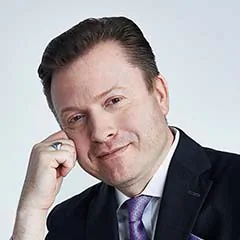
[FULL TRANSCRIPT BELOW] David Zweig is a journalist and author of “An Abundance of Caution: American Schools, the Virus, and a Story of Bad Decisions.” His book is a searing criticism of the policy to close schools across America during the COVID-19 pandemic. The result: Major lags in education achievement, a mental health disaster, and so much more that simply cannot be easily quantified.
“How do we track what happened to that kid who could have gotten into college and instead is doing something else now? We don’t know exactly the kids who were lost, who just stopped going to school entirely.”
And what was it all for?
“They were sacrificed for nothing,” Zweig says.
Views expressed in this video are opinions of the host and the guest, and do not necessarily reflect the views of The Epoch Times.
FULL TRANSCRIPT
Jan Jekielek:
David Zweig, such a pleasure to have you on American Thought Leaders.
David Zweig:
Thanks for having me.
Mr. Jekielek:
I’m going to read you a quote from the head of NIH during the Covid pandemic, Dr. Francis Collins. He said, “We wanted to be sure people motivated themselves by what we said, because we wanted change to happen in case it was right. But we did not admit our ignorance. That was a profound mistake.” Your book, An Abundance of Caution, is a charting of that mistake. What do we know today about the costs and the impact of what happened?
Mr. Zweig:
How much time do you have? We know a lot. One of the important things, probably the most important thing that I tried to achieve with this book was to show what we knew at the moment during that time. Initially, there were many people within public health and otherwise who said that school closures were a good idea, that this was necessary, we needed to do this.
Over time, it became so manifest. It was so obvious that this was not beneficial and that it was harmful and the narrative shifted. As the pandemic wound down, this establishment narrative then became, “We kept schools closed too long. We admit this now. But this was a regrettable but reasonable decision at the time. This was a fog of war, a chaotic moment.”
The most important thing I aim to do with my book is to show that this is untrue. The state of evidence was very clear for a lot of these interventions, and the state was very poor. But the way that this evidence was conveyed to the American people was quite different, with an extraordinary amount of arrogance and confidence that was unearned. I walk people through what actually was known at any given time and how that information was ignored or waved away in one manner or another.
Mr. Jekielek:
Let’s look at the impact of these school closures, which you go through in intricate detail. Dr. Scott Atlas told me very early on in the pandemic there was a dramatic increase in suicidal ideations among children. What is the impact that we know of right now? There will probably be people measuring this impact for years to come.
Mr. Zweig:
We’ve known for quite some time, and there are a number of studies and data on this, that the thing that gets talked about most is the harm toward education and the falling behind with learning. We can see there is a lot of data that shows that the amount of time a child was out of school is directly correlated with lower educational achievement and lower scores from the pandemic. Some data came out at the state level where a few journalists and others incorrectly interpreted that as saying, “Look, there’s not really a big difference between California and other states.”
A scholar named Vladimir Kogan along with others went down to the county and district level. Once you do that, you can see the difference is stark and obvious. Emily Oster also has some good data on this as well. There’s no ambiguity. The children who were kept out of school longer, whether through full closures or through the so-called hybrid schedules, are directly related to lower achievement in scores and tests and other measures. I would say, rightfully so, a lot of attention is being paid to the learning and education harms that occurred.
But there are many other things that happened that can’t quite be quantified in the same way, but they’re no less important. There are a number of high school kids who rely on athletics, both for their own well-being and to help keep some kids out of trouble. There are also kids in the New York City metro area for whom athletics was their ticket out of a really bad situation, and their senior year football season was terminated.
There are things with less drastic consequences, like canceled proms, no more field trips, and no more arm around a friend. None of those things can be quantified. How do we track what happened to that kid who could have gotten into college and instead is doing something else now? We don’t exactly know about the kids who were lost, who just stopped going to school entirely.
Here is one last point on this. We are now looking back, and presumably many scholars will continue to look back and try to track various reverberations over the years. One of the things that was really important and mattered a lot to me at the time was that human beings can experience harm in the moment, even if they don’t have a scar from that later. Tens of millions of children in America experienced harm unnecessarily, to varying degrees, but some of them were fine. Just because we can’t quantify it later doesn’t mean it wasn’t real at that moment.
Mr. Jekielek:
What do you mean by the phrase, without benefit?
Mr. Zweig:
We knew that as early as May, we had guinea pigs actually testing the waters for us. In America, we were a little too nervous in the spring, and we had guinea pigs. There were millions of these guinea pigs, and those were the children in Europe. Inadvertently, they acted as our testers, and they went back to school. Millions of kids in 22 countries began reopening their schools toward the end of April and beginning of May.
In May, and then again a second time in June, the ministers of education in the European Union [EU] got together and met. During this meeting at the end of May, they said, “Schools have been open now for a month.” The 22 different countries said, “We have observed no negative consequence to community rates by having the schools open.” They met again in June, and it was the same announcement and reaction.
At that time, their spokesperson said, “What we’ve learned from the ministers is that there haven’t been any significant increases or negative impacts from reopening schools in the countries that reopened schools in the last month.” This was completely ignored in America in the media. I wrote about it once in June, and I mentioned that meeting. But as far as I’m aware, no one else has covered this in the American media.
To me, this is something that really requires a pause for people to think about. This was not one country. This was not a random comment somewhere on a blog. This is a meeting of the education ministers of the EU in an official meeting, and they made this announcement about schools being open in nearly two dozen countries, and that they observed no negative consequences from this. From the very beginning, the evidence was there that schools were not driving transmission in the pandemic. I remember thinking at the time, how can this be?
How can it be that millions of children have gone back to school in countries that are different from America in many regards, but also very much the same in many regards? There were a list of excuses or reasons that were given, including by many public health experts, about why we were to ignore Europe. I walked them through one by one as to why these were very specious, these types of arguments that were being made.
Mr. Jekielek:
There were even examples of journalists promoting school closures while they themselves were sending their children to school.
Mr. Zweig:
That tracks with politicians as well. You might remember that Governor Newsom’s children were in school in Sacramento County where the governor is based, while millions of kids in California were not allowed to go to school. It’s almost impossible to recount these events, at least for anyone who has any kind of grounding, and not recognize how crazy this was. I recognize many people are probably rightfully so sick of thinking about or hearing about the pandemic.
But we can talk about events in history, whether it’s 9/11, or different wars and famines. This was a world-altering event. This was something in America where our society favored older people and other groups to the detriment of children, and there was no benefit for this. Now, one can make a different argument whether that’s even worth it, even if there was a benefit. Someone could say, even if there is a benefit, I still don’t think it is appropriate to do this to kids.
But that’s not even an argument one needs to make because there was no benefit, and we knew this very early on. Then the evidence just continued to accrue over time that there was no benefit. Yet, throughout America, schools continued to remain closed month after month after month.
Mr. Jekielek:
Dr. Scott Atlas said that we sacrificed our children for the adults. What do you make of that?
Mr. Zweig:
With all due respect, we didn’t sacrifice them for the benefit of the adults. They were sacrificed for nothing, and that’s it. Because that frames it as if we did this to benefit others. I’m sure Scott Atlas would agree with my assessment here that there wasn’t any benefit. But it’s important for people to recognize that this wasn’t a trade-off. There were no trade-offs.There were only negatives.
Very early on, it was reasonable for a couple of weeks, particularly aligned with some of the directives within some of the CDC playbooks. We can get into how those were constructed and whether those were reasonable either. But at least we can say government officials were following some of the directives early on for a week or a couple of weeks. But after that, we went off track. We no longer were following the guidebooks that were laid out over the years prior to the pandemic. The way this was put together was just flying by the seat of their pants, and there was no benefit for elderly people.
There are a number of studies that have come out. It’s irrefutable at this point, particularly if we look not only at Covid deaths or Covid illness, but if we look at the broader health, when you look at what are known as excess death rates, and you look at other metrics, there was no benefit to areas that were more restrictive than areas that were less restrictive.
Mr. Jekielek:
What Scott Atlas means by that is the perceived benefit.
Mr. Zweig:
That’s the key word; perceived. It was okay for potential super spreader locations. But it was somewhat acknowledged that children were at incredibly low risk of harm—not zero, because life doesn’t have zero risk. I’ll just plant a flag in that for a moment and just say that more children die drowning in a given year than they did from Covid in multiple years combined. More children die in car accidents.
More children died of the flu in a number of seasons in the decade leading up to the pandemic than they did of Covid in a given year. It’s not to say that there’s zero risk to children from Covid. That’s a red herring. I don’t think any serious person would make the case that it’s a zero-risk illness, but I’m trying to position the risk from Covid relative to these other risks.
Mr. Jekielek:
Risks that we allow for all the time.
Mr. Zweig:
That’s right. This is just part of being alive. When you step out the door of your home, there’s some degree of risk, but that’s just part of living. But positioning the risk of Covid relative to these other things, it’s actually quite low. Again, we don’t prevent kids from swimming, even though far more children die from drowning in a given year. We’re talking about multiples more—it’s not even close.
When we think about the various harms that happen to children, and when we think about the various risks that were put upon them from these interventions, we saw pretty early on that there wasn’t going to be a real benefit from doing this stuff. We saw pretty early on that the community rates weren’t any different. In Europe, they had already announced this. So there became this bizarre divergence between theoretical ideas and empirical reality. It’s a strange epistemological type of question, how do we know what is true?
What I talk about in my book is this idea that we in America had a scientific culture during the pandemic that favored theory over evidence. It’s quite an extraordinary moment if you think about that. They would say, “We think this might be happening. We believe this is happening.” They had this Swiss cheese model that they talked about, where you had the different slices of cheese with different holes. Let’s try a whole bunch of different things, each thing being a different slice of cheese, and hopefully the virus won’t get through.
The baseline of this whole concept is that they didn’t know what worked. This was admitted right from the beginning. We don’t know what works. Let’s do everything, and hopefully the holes won’t line up. But at the same time, while they’re dealing with theory and hope, we actually had empirical evidence from millions of children who went back to school in Europe, and then later millions of kids in America who were in school.
And yet, there was an insistence month after month after month, on and on for more than a year, that we were supposed to ignore the actual things that we could see with our own eyes, the actual evidence that was occurring in real life. Instead, we were told to value ideas and theory over what we could actually see. This is something we really need to reckon with when we think about what science is, and how to connect science to policy. In the United States, the policy followed theory and ignored empirical evidence.
Mr. Jekielek:
Is it theory or is it ideology?
Mr. Zweig:
That’s another question. A lot of these people genuinely believed what they were saying. But when you talk about ideology, there was a tremendous amount of tribalism within the United States. Most of the public health community tends to be on the Left politically. Most of the medical establishment does as well, along with most of the education community, most of the K-12 teachers, most of the elite media, and most of the influencers in our popular culture.
Think about Hollywood and Big Tech. All these elite institutions within our country tend to be on the Left. The idea that any of them could possibly be aligned with Trump was an anathema. This was not acceptable for most of these people. I remember when Trump tweeted in all capital letters, “Open the schools now!” with about 20 exclamation points. In effect, by doing that, Trump guaranteed that schools in blue state America were going to remain closed.
Mr. Jekielek:
Kash Patel once told me that they would do the opposite of what Trump wants. I said that was an insane way to create policy.
Mr. Zweig:
You’re right. It’s very clear that happened, and this isn’t conjecture or opinion. We saw this happen. One example is when the American Academy of Pediatrics [AAP] put out its school guidance. They were very clear that children should be in school. This is the most important thing. They said, “Don’t worry about the six feet of distancing. If you can’t do it, fine, do three feet. Just get the kids in school.” This was the basic message of their guidance.
Trump did that tweet about opening the schools. Within a few days, the AAP put out revised guidance. Gone is the mention of ignoring distancing. Instead, what do they focus on? Schools need money. This is the most important thing to make them safe. We need a lot of resources and money. The other important thing about this revision of the guidance is who authored the guidance. Now, the new guidance was co-authored with the Superintendents Association and with the two largest teachers’ unions in the country.
This is one example of this reactive policy, reactive positioning to Trump. It couldn’t have been more stark, that once Trump said this, it was radioactive, so much so that the AAP reversed its guidance. This was so obvious that even NPR wrote about this. They put a piece out talking about this after they changed the guidance. Once I became a fairly prominent journalist who tended to write pieces that challenged some of the orthodoxy, once that happened, people started reaching out to me from all over the country.
This included a lot of regular Americans and regular moms and dads, but also a lot of people within the medical field. It even included former CDC officials, saying, “Look, I can’t talk about this stuff. I’m so thankful for you for writing this article that schools should open.” It could have been a piece about challenging the science behind mask mandates on kids or a variety of other things.
They would say, “I can’t talk about this publicly because I can’t be seen being aligned with Trump.” I have scores of emails like this from people point-blank saying, “I can’t say this publicly because of the political nature of this.” So no one can dispute that a large part of American public health policy was done as a reaction against Trump, rather than being aligned with some sort of evidentiary basis that the policies were put together on.
Mr. Jekielek:
Here at The Epoch Times, we first encountered the legacy media coverage around Russiagate. For several years they were saying that Trump was actually a Russian asset. This was rehashed and repeated, and it didn’t matter what evidence came out debunking that. That’s when we got in trouble. But we also gained a lot more readers, because people were finding this to be as ridiculous as we did. But it does seem like the media can brainwash people into hating someone.
Mr. Zweig:
To a large degree, there is an element of human nature where people tend to be in tribes. Most people don’t very much want to feel like they’re in an out group amongst their peers. For whatever reason, personality flaw or something else, I have a high tolerance for being an outcast, because this was my tribe.
I’m from a medical family. I work in the media. I’ve written for a lot of these legacy media outlets. For me, I just was following the evidence. It didn’t matter what anyone else was saying. I’d prefer for people to like me. I’d prefer to be in the in-group. That’s fun. But that certainly wasn’t my motivation.
But you have to understand how most people become part of that establishment? How do you get there? How do you get to the New York Times? How do you get to be an anchor on a network newscast? Not all of them, but by and large, most of these people went to Brown or Yale or the Columbia Journalism School. How did they get in there?
Well, they got straight A’s growing up in high school. Then they got straight A’s in college, perhaps. The way they got there was by knowing how to succeed within a system. That is their recipe for becoming successful, for achievement, and for navigating their way through the world.
You have institutions that are composed of people who see the world through a lens of being an insider, and that’s how things make sense for them. When there’s inconvenient evidence or a politician who they don’t like, but was correct on something else, it is not acceptable to then veer outside of the group, because that’s their whole worldview. You’re not going to be an iconoclast and get into one of these institutions. Of course, there are exceptions.
By the way, it’s the same thing within medicine. By and large, these fields self-select for a certain type of person, and many of them are very bright people. They work really hard. These are good traits for a doctor; being smart, working hard, and following the rules. Oftentimes, it can be an advantage, but the downside to self-selecting for those types of people is that you often don’t have someone who has the courage or the vision to go outside of the lane.
That’s how we ended up in a circumstance where you had this sort of blob of the medical establishment and the legacy media moving together in a certain way where there was almost no public dissent, at least not public dissent from those within the ranks. I recount a ton of examples of this in the book about these prominent people. There were former CDC officials and pediatric immunologists at top university hospitals. These are people who were serious scholars and clinicians who were reaching out to me saying, “I know what you’re writing is correct and it’s true, but I can’t talk about it.”
Mr. Jekielek:
Therefore, they actually would be willing to go along with destroying the future of society, which is our children. Would that be the outcome?
Mr. Zweig:
It’s a very powerful motivator for people to stay within their group. There’s only a small segment of people who are willing to tolerate that. By the way, I still think it’s a minority. I’m not saying the majority of people who are against this didn’t want to talk about it. It’s a minority, but it’s larger than what we observed. It could be 10, 15, or 20 percent, but we could only observe 1 percent. But there were so many of them who reached out to me.
Most people within that in-group were like the straight-A student who goes to Brown University and then goes to the New York Times. Most of them weren’t even capable of seeing this other evidence. It could have been in front of them, but it didn’t matter because they were so within their group, so entrenched in this kind of power structure, that they lacked the ability to even see information that may be embarrassing to them or their group. When you identify so deeply with being on the Left or identify so deeply with being part of a prestigious institution, it’s very hard to then accept something that may make you or the group that you identify with look bad.
Mr. Jekielek:
There’s a huge power in consensus. It’s a perception that everyone agrees on something and it’s common knowledge. But some claim this Covid consensus was due to propaganda. Then there was industrial-grade censorship of any pushback on their narrative. This is to be fair to the people who were misled.
Mr. Zweig:
Propaganda, to many people, probably has a connotation of a very purposeful manipulation.
Mr. Jekielek:
You don’t think it was propaganda?
Mr. Zweig:
I think it was, from some people. I know plenty of journalists within these institutions, and I know plenty of physicians. What we observed were people who had motivated reasoning that was very powerful. A lot of them for a long time simply had the motivation to believe certain things.
I’ll give you one example. This was shortly after the vaccines were coming out. I don’t think they had fully rolled out with kids yet, but maybe they had just begun. There was some evidence coming out of Israel with myocarditis as a signal, which I had written about. I was the first mainstream journalist to interview the physician in Israel who first saw the signal for myocarditis, particularly in young men and adolescent boys.
I talked with a pediatrician who I knew at home in my town. I said, “You’re not going to believe what I found out. I spoke with this scientist in Israel.” She said, “Stop telling me this. Come on, I don’t want to hear about this.” I’m like, “What do you mean? This is really important.” She said, “This is just going to give ammunition to the anti-vaxxers. It’s going to give ammunition to the Trumpers. We can’t do this.” I said, “But it’s true.”
This is a person who is a trusted member of the community who could not tolerate hearing something that put a little bit of a crack in the armor that she had created around her worldview, at least in regards to the pandemic. There are other examples of people not wanting to believe something. This is a big part of human nature. I give all kinds of examples of this through time where we tend to believe things that are convenient. And it’s challenging to accept information that’s inconvenient.
Ultimately, this is what happened during the pandemic. Perhaps you might think I’m being overly charitable, that there was a lot more purposeful manipulation of information. Certainly, that did happen. But a lot of this is because of this belief system. You keep your horse blinders on, and you don’t want to see what’s just off to the side.
Mr. Jekielek:
Everything you’re describing makes a lot of sense. The one example you do cite in your book is about Dr. Deborah Birx. She wrote in her own book about manipulating the public. It’s a strange, unexpected admission.
Mr. Zweig:
It was remarkable candor on her part. She knew from the beginning this was not going to be only 15 days. That was never the intention. The American public was told, “15 days to slow the spread, then we’ll reevaluate.” That was never the intention, and she admits this. That’s when things began to go off the rails.
Mr. Jekielek:
Dr. Birx believed she was doing the right thing. I imagine the legacy media believed that they were doing the right thing as well.
Mr. Zweig:
We need to lie or frame things in such a manner that excludes information. It’s like taking a photograph and there’s the person with the knife, but you just crop it and keep them just out of frame. That because there was some other larger purpose, some other larger reason that they believed was correct. The expression is the noble lie. This is a noble lie that we’re going to write this story in this way.
Much of my book is really a work of media criticism. It’s a case study. I walk the reader through many New York Times articles. It’s not that there were errors all the time. Look, I’m sure my book has errors in it. Everyone makes mistakes. It’s not interesting to me to have a gotcha moment on someone who had a wrong statistic.
What is interesting to me is how things are framed. That’s far more powerful when the facts may be correct, but you’re leaving out other facts or you’re positioning things in a certain way. That’s really how the media tends to operate. Plenty of times there are errors and mistakes as well, but it’s much more about how things are framed. I talk in the book about what some others at the time and I used to call the missing denominator.
Time and again, there were stories about an outbreak at a school in Georgia, or a summer camp, or in Israel. They would talk about these outbreaks. But if you think about it, you’re talking about one school in a state with millions of kids or in a country like Israel with millions of children. But yet this is what made the news. This is the nature of news. If it bleeds, it leads. The anomaly, that’s what’s interesting. That’s what news is. There’s not a front-page news article about it’s 72 degrees today with a few clouds. That’s not news. That’s not interesting.
You have these articles coming out with screaming headlines with people in them who are just apoplectic in their quotes in the article. It’s about an outbreak at a Georgia school. They weren’t wearing masks. But what they left out was the case rates within the district were no different than the case rates in other parts of the county where schools were closed. They left out the denominator, which is millions, and they focused on the numerator, which was a few hundred. That is media manipulation. I don’t know if it was on purpose.
Then you have regular people who I’m very sympathetic toward. People have jobs, they have their lives, but they see an article in the media. It’s generally not just one article; they function as a pack. They’re all talking about this Georgia school. You think, oh my God, there was an outbreak at a school, and you’re not thinking clearly. But what about the 50 or hundreds of other schools in Georgia where nothing happened at all?
Well, of course there could be an outbreak at a school. There’s a highly contagious respiratory virus circulating in the culture. That doesn’t mean that schools are driving transmission. It doesn’t mean that there are not going to be outbreaks regardless. All of the evidence indicates that the virus was not spreading with any greater speed with schools open than it was with schools closed.
This is how I try to make it so that when you’re done reading through these case studies in the book, that you come away with a different understanding of how media operates. Then you’re going to see this in any number of topics. It’s not about the pandemic; that’s merely the backdrop for having a lens upon how our culture presents information and how we, as individuals, make decisions based on that information.
Mr. Jekielek:
Activist journalism was normalized during the first Trump administration, and it became the accepted way to do journalism. What you described is activist journalism. You don’t really lie, but it’s all about the framing. It’s all about what you leave out. Indeed, that’s actually how they teach the new crop of journalists. In activist journalism, you have your prescribed conclusion already, and you make sure you fit the pieces together to get there.
Mr. Zweig:
There was almost a sense that they were excited, like salivating, waiting for something bad to happen. It was anything they could find. Here’s something else to confirm the narrative that I believe and the narrative that I’ve already been projecting to the public. It’s not just the media; it’s regular citizens who are largely on the Left, who are part of this group mindset that this is part of a confirmation bias. Any piece of information that helps confirm your narrative, you’re going to absorb that; you’re going to believe it and you will project it to others. Any information that disagrees or refutes that narrative, you will ignore.
It’s really hard not to do that. It’s just a big part of human nature. In a way, it takes a certain type of training about how you think about information and how you think about a media ecosystem. It takes some amount of training yourself to try to go against that confirmation bias. That’s true for scientists as well. I’m still always pushing myself on that too. I’m sure I’m guilty of it as well. But I try to actually follow my nose and see what is actually happening out there.
This missing denominator idea is so incredibly important. Why do so many people go into journalism? Some of them, like me, are trying to get to the truth. I’m trying to find things out. What’s actually happening? What’s real? But I think a lot of people go into it because it’s exciting to write about something that’s sensational.
When you think of sensation, you might think of the National Enquirer or something like that. But make no mistake, the prestigious media outlets are completely hooked on sensation as well. That is news. When you think about what makes something newsworthy, it’s something that’s causing a sensation in the viewers or the readers.
There was a study done by some people out of Dartmouth University where they reviewed American media coverage of the pandemic vs. English-language media outlets outside the United States. The coverage in the U.S., and in particular on schools and on children, was dramatically more negative than coverage outside the U.S. There’s something particular about the United States, at least on this topic, where there was this tremendous obsession with fear and negativity, and I give examples of it in my book.
There’s this kind of A/B example. Even on the same day, there was a New York Times article with basically hair on fire about what happens if schools open. Then there was an article the very same day in the BMJ, formerly known as the British Medical Journal. The title was, “Kids Are Not Super Spreaders, Open the Schools.” So you had these two things at the same time. It was emblematic of the broader divide in how American citizens were positioned within our media environment vs. those outside the U.S.
Mr. Jekielek:
The combination of activist journalism and the noble lie can create a terrible reality, which is perhaps what we lived through.
Mr. Zweig:
Ultimately, we can see this over and over again. You were discussing things related to RussiaGate. With any topic under the sun, you’re going to see a type of movement. How often do you see the New York Times, the Washington Post, ABC, NBC, CBS, or NPR—how often do you see them diverge from each other on any given topic? Basically never.
But it’s not because they’re all correct. Because we know we could list a hundred different times where the media has been wrong about something. Then there’s a slow kind of reconciliation, or it gets memory-holed, or maybe they still refute it. But there are innumerable examples of this.
The reason they’re all doing the same thing is not because that’s the truth. No, the reason they’re doing it is because they’re part of a tribe. I still push back and think that a lot of this is not so premeditated. It is not so intentional. It is just baked into the type of psyche of the people in these institutions.
Mr. Jekielek:
Having a free and independent media is essential to democratic functioning. Today, various media outlets are frequently taking similar positions, very often inaccurate, which is destructive to the functioning of a free society. Andrey Mir at the Manhattan Institute has said that the business of media today is to validate people’s preconceived notions, which augments the tribalism that you’ve been describing. This is a very big problem that we have to deal with in order to preserve free society.
Mr. Zweig:
Yes. One of the bright spots is there has been a bit of a blossoming of alternative media sources for citizens, whereas obviously a generation ago that wasn’t the case. But from Substacks to podcasts, to your publication, to a whole variety of social media itself, there are other ways for people to gain access to information. Is some of this information wrong? Absolutely.
But so is information in the legacy media, which is also wrong sometimes. The argument that you will hear is, “Well, that’s tons of misinformation and garbage.” Sure, but what degree of arrogance does it require to think that citizens shouldn’t be given access to information that they need to make up their minds on their own. Instead, they believe in the noble lie, this idea that they don’t need to know about that. That’s something they shouldn’t hear about.
Again, 22 countries in Europe reopened their schools. To my knowledge, not one American media outlet wrote about that until I wrote about it. That’s quite remarkable. It’s important, and it matters. It’s not just about the pandemic. This is about something larger that we need to think about as a society, regardless of the next time we’re in some other crisis. It doesn’t have to be a pandemic, it can be something else.
Mr. Jekielek:
This was a real failure by the experts on deciding what we should do. What does that mean more broadly for our society?
Mr. Zweig:
My book is a case study of the failure of the expert class. The public health experts failed, and they failed because there was a conflation of science and policy and science and values, and they’re not the same. Andrew Cuomo, who was the governor of New York at the time during the first part of the pandemic, repeatedly mentioned that you have to follow the science. You follow the data. It’s very simple. You just follow the data, follow the science. I’m not the best impersonator, but that’s how his voice sounds in my head.
There’s no such thing as following the science. That literally means nothing. Science doesn’t tell you what to do. Science is a process. Science can bring about information, but it does not tell you when to open or close schools. A prominent governor of a very prominent state repeatedly talked about following the science, and to my knowledge, was never really called out by the legacy media or by health officials. They did not say “Hey, wait a minute, what you’re saying doesn’t actually mean anything.”
Instead, he was championed. This is a man of reason. This is a man who cares about people and the virus. We’re going to follow the science. The data will tell us. No, that’s not how this works at all. Every area had its own metrics and its own criteria for what was safe or not safe.
New York City was 3 percent for a while for when schools could open. If you passed this threshold of positivity rates, you had 5 percent elsewhere, you had 12 percent in other places. It was all over the map. Why? Because there is no such thing as safe. There’s no such thing as a specific benchmark that means something is or isn’t appropriate. These are decisions based on values. But the way it was framed to the American people by politicians and by health officials was, “This is the line. This is the metric.”
I want to be clear, it’s not wrong to have some sort of benchmark. People need parameters to operate within. It’s not that they should say, “Do your best and leave it at that.” I don’t think they should be faulted for that necessarily. The problem was the degree of certainty within which these pronouncements were made. If you disagreed with them, you were a piece of garbage. You were an idiot, or worse, you were dangerous.
It’s like the idea of six feet of distancing. There’s nothing magical about being between five and seven. This was an arbitrary number, and we knew it at the time, but we pretended otherwise by saying, this is the royal we, that this was made up. It’s okay to have a metric to aim for, but be honest and say, “We’re not exactly sure what’s going on here. For these reasons, we think six feet might be effective. We’re not sure, but this is what we’d like you to aim for.”
Remember back to this first American Academy of Pediatrics guidance. They said, “You can try for six feet, but if you can’t reach it, don’t worry. It’s better to be in school. The benefits of that far outweigh any theoretical advantage of six feet vs. three feet.” That’s reasonable to my mind. Now, we can discuss why. I have a whole section on six feet distancing, and I drill down into the insanity of how six feet came about.
But setting that aside, the idea that this is a thing that came down, you know, on stone tablets to Moses and he was saying, “We shall follow with the six feet of distancing,” was completely insane. You had teachers and, you know, janitorial staff walking around with rulers, spacing each desk with the precision of a master carpenter. This was complete madness. Complete madness.
Human beings like being told what to do. They want that eternal state, let big mommy and daddy tell me what I should do so I don’t have to worry and I don’t have to think. Six feet of distancing, okay, we’re going to take out the rulers and just do that. It’s much harder when you’re given information that says, “We’re not exactly sure what to do. We don’t know what evidence exactly points in what direction.”
Here’s a more general idea. Do the best you can, but we think it’s important for kids to be in school. That’s a lot of responsibility for people to take on emotionally and cognitively. That’s a lot. It’s much easier when you’re told, “Follow these metrics.” Then you relinquish your own sense of responsibility and you’re just following rules. Human beings often seem to prefer that. Wasn’t it Kierkegaard who said, “Anxiety is the dizziness of freedom?” It’s hard work when you’re not just told what to do.
Mr. Jekielek:
There are two sides. There are people looking to be told what to do. There are also people who believe it’s perfectly fine to manipulate people. Don’t we live in a society where we try to manipulate people into buying certain breakfast cereal? We try to manipulate people into doing all sorts of things. Is this a moral society?
Mr. Zweig:
One could argue that humans have always had some degree of manipulation of each other, because everyone’s trying to achieve something, even if that thing is good and positive. I worry about words like manipulation, although I don’t think you’re incorrect for using it. But to me, it feels something more in the ether and more in the way of these larger systems within which we operate.
I’m very interested in how the gears are turning behind the door of the box that’s closed. What are the different gears spinning back there that are creating the music that’s playing? What are the inner workings of your fancy watch you’re wearing? What is happening in there? The people who are doing a lot of this manipulation are just simply riding along the gears in some ways. I don’t even think there’s a conscious push toward this all the time.
That’s what I try to illuminate in the book—what the gears are within society. I talk about the media, the medical establishment, and science. I talk about philosophy, empiricism, and epistemology. I go back to John Locke and David Hume, along with all sorts of examples of what evidence is, including randomized evidence.
You can look way back to sailors and scurvy and how that was the first randomized trial. There was a guy, James Lind, who tested it out. He had a dozen different sailors. He gave two of them lemons and limes and two of them some other concoction. This, in a way, was an early randomized trial.
You have all these large systems within which we operate. That, to me, is what’s interesting—to understand these larger gears that are spinning within society and how you look back through the past to today to understand these different gears that move.
Mr. Jekielek:
You say that if people aren’t using their own agency, they could give that away to someone else who will take care of everything, which creates a scenario ripe for manipulation. You wrote a fascinating book, and I really enjoyed reading it. It made me reflect over the last few years, but with a fresh, philosophical perspective. A final thought as we finish up?
Mr. Zweig:
It’s really important to think about history. Everyone knows that history is written by the winners. One of the things that I feel is important about the book is that it offers a refutation. It offers a counter-narrative to a lot of what we were told and are still being told now about what happened. Again, this is not just about the pandemic. It’s about a lens through which to see how our society works and to see how politicians and individuals make decisions and think about information. Ultimately, that’s what this really is about. That is what interests me—information. How do we know what is true?
Mr. Jekielek:
David Zweig, it’s such a pleasure to have you on the show.
Mr. Zweig:
This is fantastic. Thanks for talking with me.
This interview was edited for clarity and brevity.