Commentary
The Christian Church is proud of its saints. It assigns days of the year to their remembrance, adorns its buildings with their statues and paintings, and bids its followers name their children after them. Saints often become patrons of particular locations, sometimes because those were their places of origin or where they had carried out their mission. Sometimes they are chosen by a country or a city to manifest a set of virtues valued by that locale.
Take Canada for example. Our patrons saints, quite logically, include the eight Jesuit martyrs tortured to death by indigenous tribes during the 17th century, Jean de Brébeuf and Isaac Jogues being the two most famous. Other patron saints of Canada include Joseph, the earthly father of Jesus, chosen as a figure of strength, faith, and quiet perseverance—qualities valued by early settlers and missionaries—and Anne, the mother of the Virgin Mary, especially venerated by Quebecois and Canadian aboriginals as a symbol of the importance of family love.
Some saints come to be patrons because they understand the nature of human suffering. The church recommends that those afflicted by disorders pray for the intercession of a saint whose suffering was similar—thus Job, who sat on a dunghill scraping his lesions with a shard of broken pottery, is petitioned by those with skin diseases, just as those who are blind turn to Lucia whose eyes were plucked from her after her arrest. St. Maria Goretti, raped and stabbed to death as a young girl, is the patron of victims of sexual assault, while political prisoners turn to Maximilian Kolbe who was murdered in Auschwitz.
The church also makes saints patrons of professions, and in doing the latter often manifests a grim sense of humour. The saint for Aug. 10 is St. Lawrence who is, among other things, the patron of short-order cooks and comedians. Why? Thereby hangs a tale.
Lawrence was an arch-deacon in Rome in the middle of the third century when Christianity was still illegal. In 257, the emperor Valerian launched a wide-ranging attack on Christians backed by government agents across the Roman world. Members of the new religion were suspected of undermining the stability of the Roman state at a time when it faced the menace of the Persians on their eastern borders, so everyone was ordered to sacrifice to the old gods who had always brought Rome victory. Christian bishops, priests, and deacons were put to death. So perished Pope Sixtus II, the theologian Cyprian in North Africa, and Denis, the bishop of Paris. Any high-ranking officials of the empire who followed Christ lost their positions and property and were killed if they refused to recant.
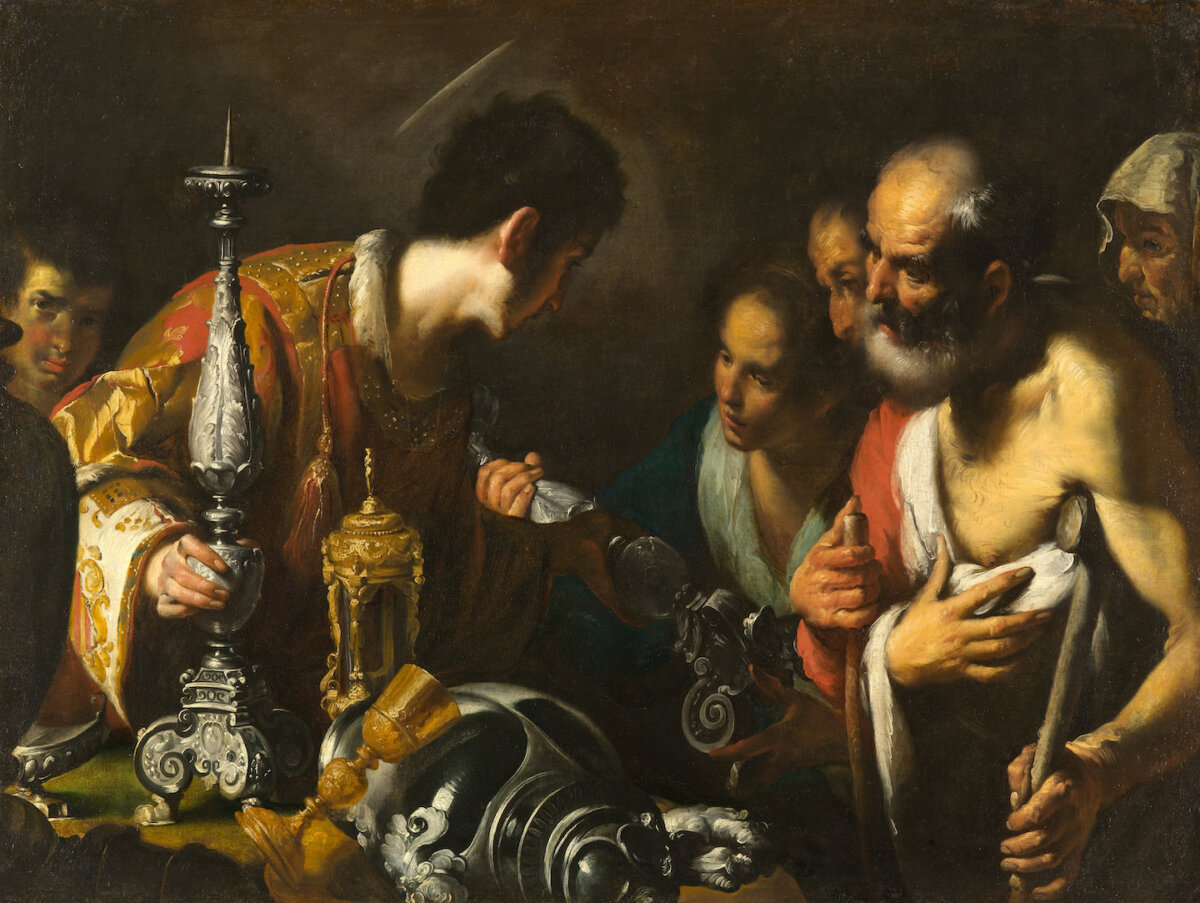
After the execution of Sixtus II, Lawrence was left as the highest-ranking churchman in the capital. Knowing that it would not be long before he too would be arrested, he charitably gave away the church’s funds lest they be seized by the pagan government. On Aug. 10, 258, Lawrence was summoned to trial and ordered to bring the treasury of the church with him. He appeared before the authorities accompanied by a train of orphans, beggars, and the sick, saying that these were the “true treasures of the church.” He was then executed by being placed on a red-hot grid-iron, which led to him being the patron saint of cooks and kitchen workers. He can also be appealed to by those who have been burnt or suffering from lumbago. His patronage of comedians comes from the remark he made while undergoing torture on the grid-iron. “Turn me over,” he is supposed to have said, “I’m done on this side.”
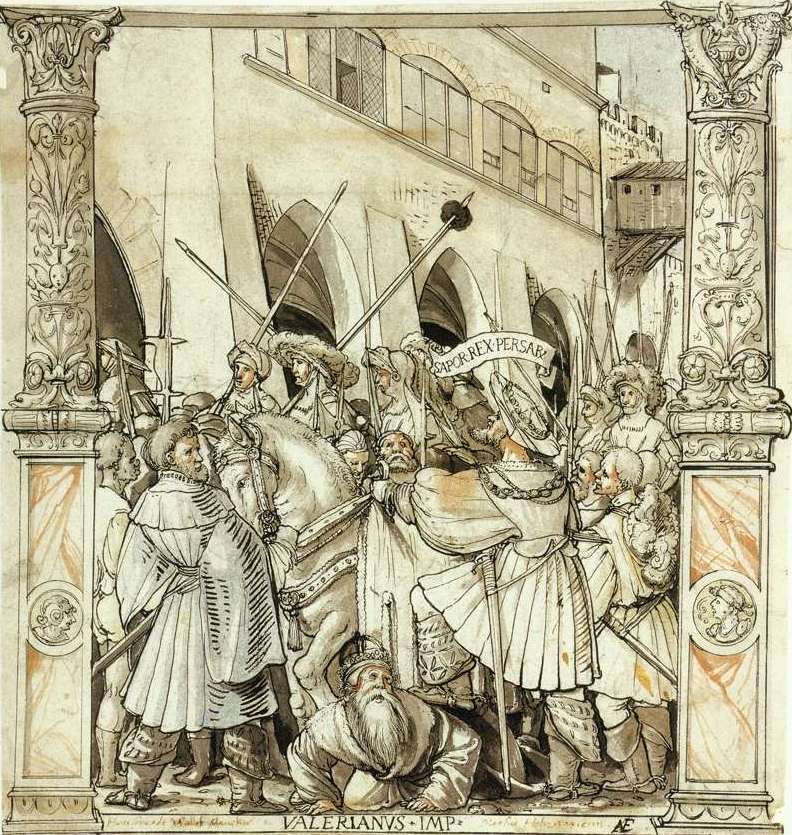
The fate of Emperor Valerian may be said to be even worse than that of the martyred St. Lawrence. He led an army against Shapur I, ruler of Persia in an attempt to regain lost territory in the Middle East. At the Battle of Edessa in 260, Valerian was taken prisoner, the first Roman emperor to fall captive to an enemy force. As a prisoner he was humiliated, being used as a human footstool to help Shapur mount his horse. After his death he was flayed and his skin was used as a covering for the Persian throne.
Valerian’s successor, his son Gallienus, ordered a halt to the restrictions on Christianity and ended its persecution.
Views expressed in this article are the opinions of the author and do not necessarily reflect the views of The Epoch Times.