Commentary
During the 16th century’s long series of struggles between Roman Catholicism and Protestantism, one of the most vexed questions was how much obedience a religious minority owed to a government that was persecuting it. After decades of debate, most denominations came to accept that it was not only right to disobey commands that seemed to go against core religious beliefs, but that it was also legitimate to kill the oppressive, ungodly rulers.
When Mary Tudor (a.k.a. Bloody Mary) was burning English Protestants in the 1550s, Protestant theorists pointed out that the Old Testament was full of tyrant killers who had murdered idolatrous rulers like Jezebel, Ahab, and Athaliah. Moreover, Greek and Roman history told of the honours heaped on tyrannicides who killed those who had threatened the liberties of the people.
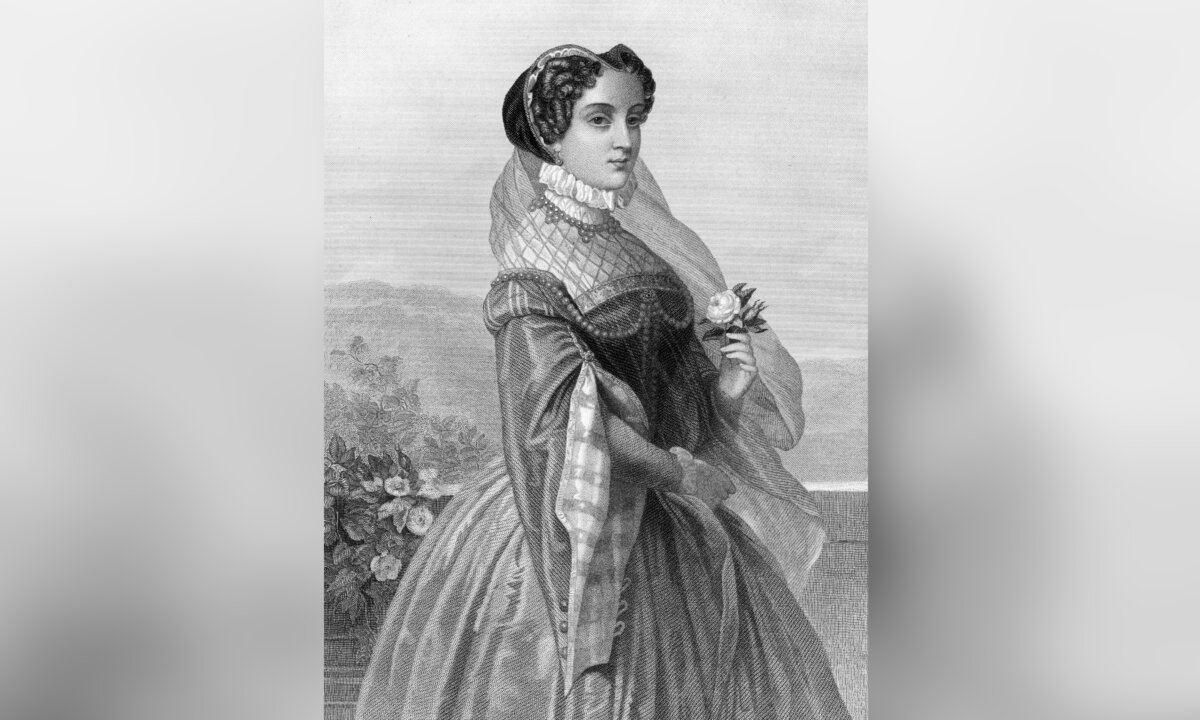
While Mary was alive, Catholic theologians stressed the duty of obedience, but when she was replaced by her Protestant half-sister Elizabeth after her death in 1558, some English Catholics began to have second thoughts and turned to conspiracy and rebellion. In 1569, nobles in the north of England took up arms against Elizabeth in the Rising of the Northern Earls in the hope that they could place Mary Queen of Scots on the throne. The rebel armies were crushed and the leaders fled abroad, but their example moved Pope Pius V to make a dreadful political miscalculation.
In 1570, the Pope issued the papal decree known as Regnans in Excelsis which excommunicated Queen Elizabeth, declared her a heretic, and ordered all English people to disobey her commands. Since the Church held that no heretic could be a legitimate ruler of a Christian state, that threw the English crown up for grabs with Mary Queen of Scots as the favoured Catholic candidate. Alas, the decree arrived too late to help the rebels but it did inspire Elizabeth’s government to treat Catholics more harshly.
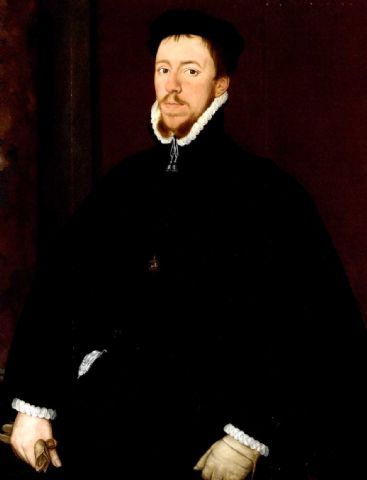
A year later, a conspiracy was exposed that would result in the execution of England’s top-ranking aristocrat. This was the Ridolfi Plot, hatched by a Florentine banker with connections to powerful figures in Catholic Europe. It was Roberto Ridolfi’s plan to enlist the support of Philip II of Spain, the Pope, and the Duke of Alba (who commanded a Spanish army in the Netherlands) in a scheme whereby Alba would invade England and force the deposition of Queen Elizabeth. Then, Thomas Howard, the Catholic-leaning Duke of Norfolk, would marry Mary Queen of Scots and, as King and Queen of England, return that country to obedience to the Catholic faith.
At this time, Mary, who had been driven out of Scotland by Protestant rebels, was in captivity, put there by Elizabeth who knew the danger that her first-cousin-once-removed posed to her rule. Ridolfi negotiated with Mary’s representatives and gained her consent to the plot. The Duke of Norfolk was a second cousin of Elizabeth; his royal blood made him ambitious and reckless, and an easy target for Ridolfi’s machinations. Ridolfi had travelled to Brussels, Rome, and Madrid and gained support for the manoeuvres.
Unfortunately for the plotters, Elizabeth’s government had an effective counter-espionage service that had picked up rumours of the conspiracy. One of Ridolfi’s messengers was arrested at an English port with encrypted letters, and under torture revealed the code that enabled Elizabeth’s agents to uncover the secret pans. At the same time, the interception of a shipment of gold to Norfolk’s men and more enciphered letters focused attention on the scheming duke. He was tossed in the Tower of London in September 1571, his staff tortured to obtain incriminating evidence, and his guilt clearly laid bare. His trial for treason lasted a single day, resulting in a conviction and a death sentence.
Elizabeth, however, was reluctant to sign Norfolk’s death warrant. She was extremely conscious of Thomas Howard’s high rank—he was the only English duke and a member of the Queen’s Privy Council—and she was aware that Norfolk’s execution would lead to pressure on her to also put Mary Queen of Scots to death. Elizabeth was afraid that killing a queen might result in popularizing the notion that any monarch, including herself, might be done away with.
What persuaded Elizabeth to finally agree to Norfolk’s death was the fury of her 1572 Parliament in which members had not only urged the execution of the duke and Mary, but also voiced the idea that Elizabeth was putting her country in peril by delaying these necessary executions. The unvoiced advice that Elizabeth took from Parliament was that if she did not act, her ruling class might find someone who would.
In the Tower of London on June 2, 1572, a single stroke of the headsman’s axe ended the life of Thomas Howard, Duke of Norfolk. Mary was spared at that time, but she was beheaded in 1587 after she was found guilty of being involved in another plot to assassinate Elizabeth.
Views expressed in this article are the opinions of the author and do not necessarily reflect the views of The Epoch Times.