Commentary
Fewer than one in ten Canadians own a second house or cottage, according to Statistics Canada. Most who do are well off, or have inherited a place they share with siblings. When it comes to our prime ministers, we hardly begrudge them access to an escape from the stress and strain of leadership, like every other political leader in the world. America’s president has Camp David in Maryland—and often his own place to go to, like Mar-a-Lago (Trump) or Rancho del Cielo (Reagan). The British prime minister has Chequers in the Chiltern Hills.
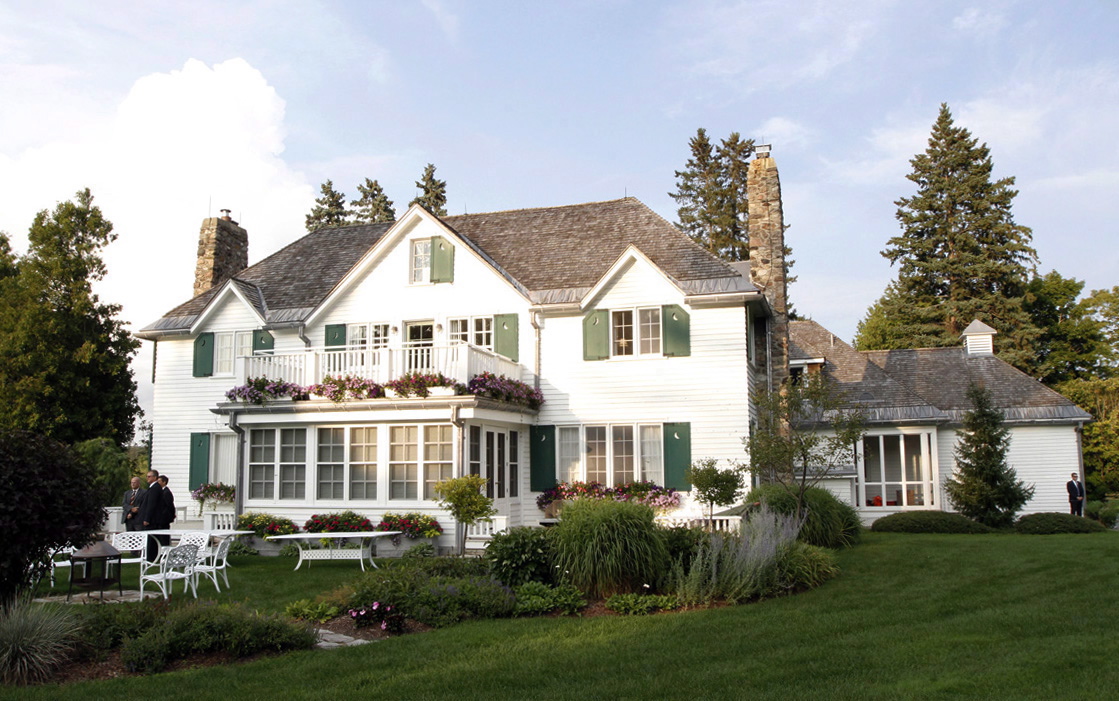
Canada’s equivalent is called Harrington Lake, 35 kilometres north of Ottawa. It is a large Colonial Revival farmhouse with a splendid veranda, old stone fireplaces, gardens, a guest house, and land all around the lake, called in French, “La résidence du lac Mousseau,” all formerly belonging to Margaret and John Harrington. It gets into the news whenever anyone mentions the high cost of renovating it.
Many of our prime ministers have owned their own second house, starting with Sir John A. Macdonald. He bought one in 1882 when he was 67 years old, called Les Rochers, a house in St. Patrick, near Rivière du Loup, Que., overlooking the St. Lawrence River, with north- and west-facing verandas. Saint-Patrice, as the area is now usually called, was a popular late Victorian vacation spot for powerful men like Lord Shaughnessy of the Canadian Pacific. At least two governors general, Monck and Dufferin, holidayed there. When the Old Chieftain died in 1891, Shaughnessy bought Les Rochers from Lady Macdonald. It changed hands a few times and was taken over in 1981 by a private foundation, Canadian Heritage of Quebec, preserved and kept up, and remains today a seasonal bed and breakfast.
One of the more spectacular prime ministerial second homes was built by Macdonald’s first successor, Sir John Abbott, a man who never wanted to be prime minister. In the 1860s, he built a Gothic Revival manor on an old 1679 seigniory called Senneville Grange, a 300-acre country estate at Senneville in Montreal’s West Island which he renamed Boisbriand. Boisbriand was part of a larger countrifying project, led by Abbott, in which politicians, bankers, and businessmen from Montreal hired famous architects and landscapers to turn old farmlands into luxurious country houses against the scenic backdrop of the Lake of Two Mountains.
Abbott established a fine library, greenhouses, farms, orchards, and gardens (he especially loved orchids). He imported a herd of Guernsey cattle, possibly the first in Canada. It’s all now part of the 1,400-acre Senneville Historic District National Historic Site, which has 82 buildings dating from 1860 to 1930, including Abbott’s massive manor.
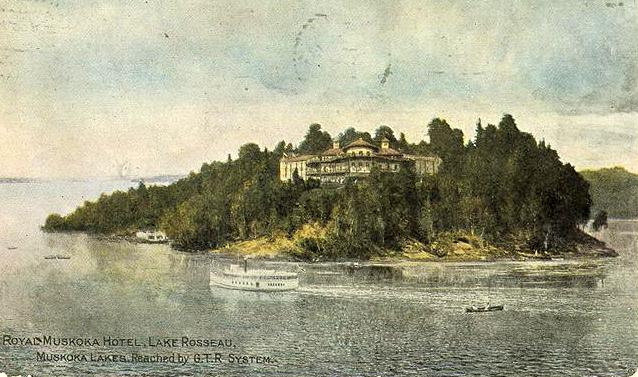
Most prime ministers did not own a country escape of their own. When World War I broke out, Sir Robert Borden was staying at the magnificent Royal Muskoka Hotel on Lake Rosseau. He and Lady Borden had reached Muskoka Wharf, at Gravenhurst, by train on July 23, 1914, and were taken to the hotel, which sits on an island, by a private motorboat belonging to Maj. Hugh McLean, president of the Muskoka Lakes Navigation Co. In faraway Sarajevo, the Habsburg Archduke and his wife were murdered on July 28. Two days later, “Premier Borden left Muskoka rather hurriedly for Ottawa, on account of the looming war clouds,” the Gazette reported.
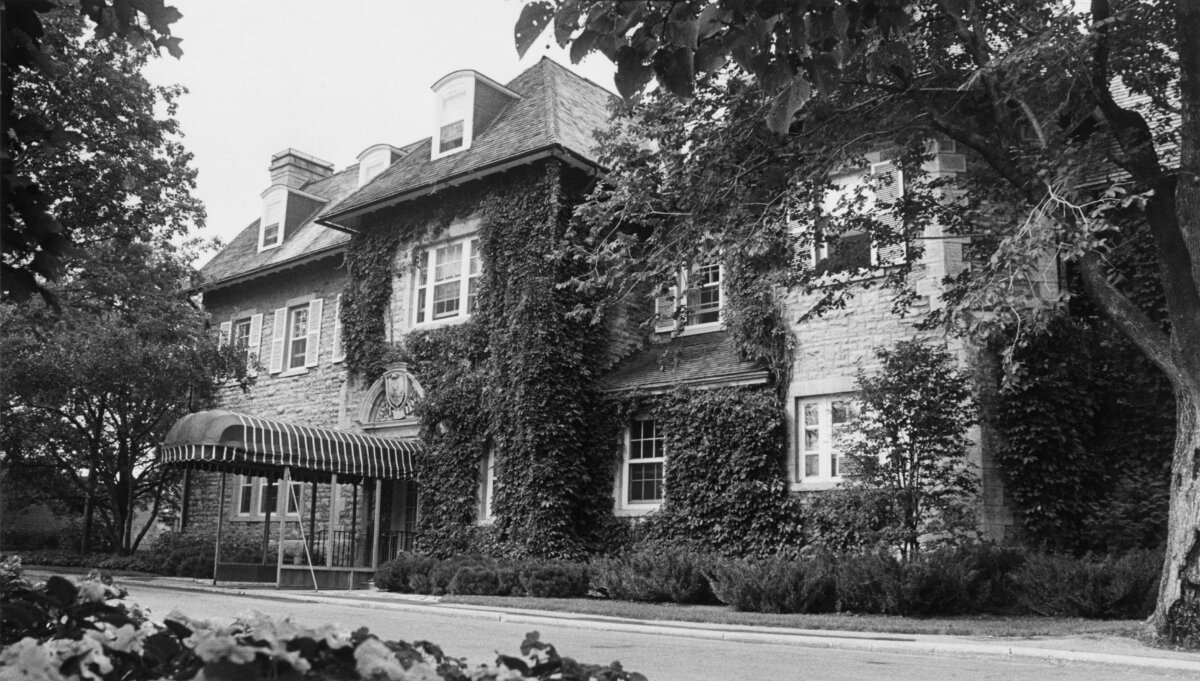
In fact, the Bordens already had a spacious waterfront property, having moved into their house called Glensmere on Wurtemburg Street in Ottawa in 1906, with a great lawn reaching down to the Rideau River. Regrettably, after being rejected apparently as a historic site, the house was demolished in 1971 to make way for a big apartment complex. Such is often the Canadian way, it seems. Had Glensmere survived, it could today serve as a superb conference centre or think tank for federal Conservatives, just as Sir Wilfrid Laurier’s house did for several years under Professor Frank Underhill, until it became a museum.
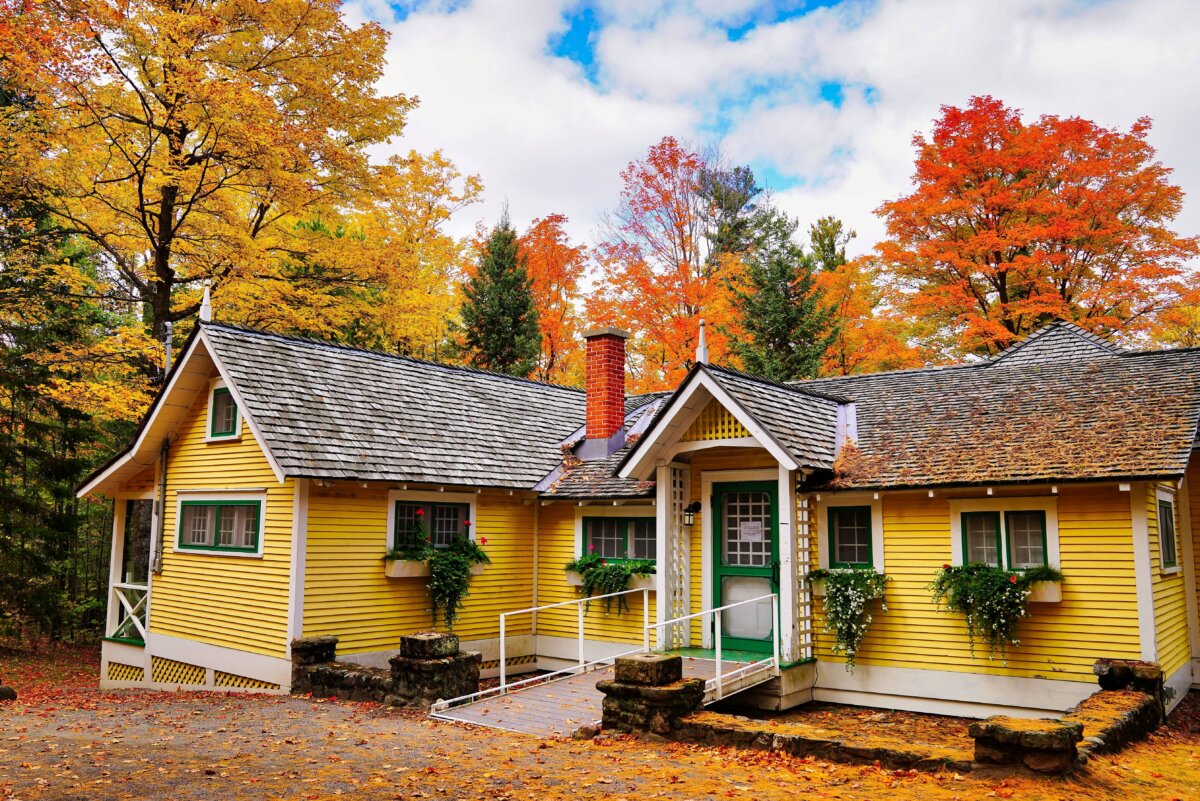
The most famous second home of any prime minister is of course Kingsmere, in the Gatineau Hills north of the Ottawa River near Chelsea, Que. William Lyon Mackenzie King bought the land in 1927 to add to the large woodland lakeside country estate he was amassing, with cottages and a farmhouse called “The Farm” that he renovated during the Great Depression. The latter served as a year-round country retreat, and in the 1940s he called it his “real home.” Near another cottage he called Moorside, King built the famous “ruins” popular with tourists. The Farm now serves as the official residence of the Speaker of the House of Commons.
R.B. Bennett did not have a country house but paid court to a lady friend, Hazel Beatrice Colville, the daughter of a colleague and already twice widowed, at a restored 18th-century seigniory house at Mascouche in Montreal. She was a smart and well-preserved 43-year-old, and Bennett pursued her there every summer. He would seem like a good catch—a rich, eligible bachelor—but somehow it never worked out. Bennett seems to have had some sort of medical condition that made him less eligible as a mate. (But the medical troubles of prime ministers is a subject for another article.)
It was part of Mackenzie King’s vanity that he hoped The Farm, sometimes called the Prime Minister’s Cottage, would become the official country residence of the prime minister. But for various reasons that didn’t happen, and now it’s a National Capital Commission site called the Mackenzie King Estate.
King’s successor, Louis St. Laurent, was a successful Quebec City lawyer who in his younger years would holiday with his parents in Compton, Que. Around 1916, a doctor diagnosed his glandular inflammation as possible tuberculosis, ordering a long period of rest that could have been career-ending. He pondered quitting the law and moving back to Compton as a farmer. Instead, a holiday at Metis in the Gaspé, where he could swim in the salt water of the Gulf of St. Lawrence, provided the cure.
St. Laurent took up fishing and hunting with lawyer colleagues and joined three fishing clubs. But he gave up deer hunting after shooting a doe by mistake and seeing its fawns bereft by his hand. The family also bought a farm on the Ile d’Orleans across the water from Quebec City where golf and rented motor boats occupied their time and he could commute by ferry. The cottage burned down in 1928. Later, as prime minister, the family holidayed at Kent Lodge in Bathurst, New Brunswick, with their 29 children and grandchildren—the last generation of Quebecers who had big families.
St. Laurent was much like Sir John A. Macdonald in acquiring a country house as prime minister in his late 60s. It was even in the same town as Macdonald’s, Saint-Patrice. He had bought the property in 1895 but did not build the house until 1950, when he was 68.
John Diefenbaker, though elected in 1940 and an MP for 17 years before he became prime minister, had no cottage to escape to in the Ottawa area. One day, the caretaker of a big lakeside house north of Ottawa, Stanley Healey, invited him to go fishing there. That was Harrington Lake. Diefenbaker liked it and by 1959, the place was purchased by the government and designated as the country residence of the prime minister; it has been an official retreat ever since. Kim Campbell chose to live there during her summer-autumn premiership from June to November in 1993.
Harrington Lake has suffered the same neglect as all of Canada’s official residences and has been treated as a political prop. It seems to be part of our national malaise that we neglect public buildings and let them crumble and decay until the price for repair is much higher than it needs to be. The contracts for advice and repairs seem to go to someone’s political friends at high cost to the taxpayer. The advice seems to be bad, as when a consultancy firm told the government that Harrington Lake’s $6 million renovations, completed in 2021, were enough and that the roof was sound. But as any rookie contractor knows, you fix the roof first. By the time the renos were complete, the roof was already leaking badly.
In total, Canada’s six federal official residences—Government House (Rideau Hall), the Citadelle in Quebec, 24 Sussex Drive and Stornoway, Harrington Lake and the Meech Lake retreat house—face $175 million in repairs.
Brian Mulroney used Harrington Lake, but after leaving office he bought a place in Palm Beach, Florida, where he died in February 2024. Jean Chrétien, an avid golfer, has a modest summer home in Lac des Piles, outside of Shawinigan, Que., and a short drive from the famous Grand-Mère Golf Club. The latter is adjacent to the hotel he was once a part-owner of and which led to the “Shawinigate scandal” of the 1990s, in which Chrétien was accused of conflict of interest and investigated by the federal ethics commissioner—and officially cleared.
Views expressed in this article are the opinions of the author and do not necessarily reflect the views of The Epoch Times.