Commentary
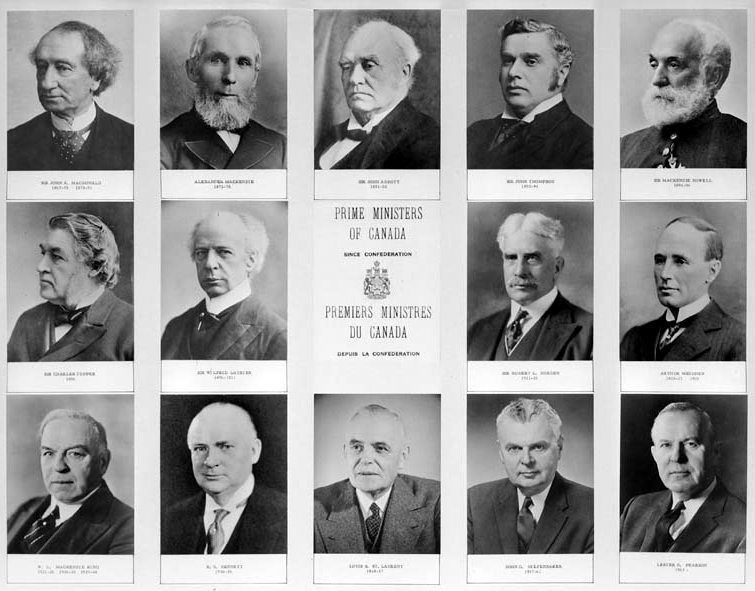
Almost all the monarchs who have ruled over Canada since 1867 died while reigning and were succeeded by their heir apparent: “Le roi est mort. Vive le roi.” But it’s unusual for elected office-holders to die in office—only two prime ministers have done so, one very long-serving and one very short: Sir John A. Macdonald died at home in 1891, and Sir John Thompson died at lunch with Queen Victoria in Windsor Castle in 1894. A few PMs almost died in office but managed to resign first, while others had illnesses of various kinds but lived long.
Sir John A. Macdonald, Canada’s first prime minister, conquered alcoholism around 1875 with his conversion to Anglicanism, limiting himself to a glass of wine with dinner thereafter. He had come a long way since the Charlottetown conference in 1864, when he stood one night, drunk, “in front of a mirror, dressed in his nightshirt, a train rug thrown over his shoulder, practising lines from “Hamlet.” Years later, his last victory in March 1891 wore him out. He suffered a mild stroke on May 12, and was bedridden with a cold when he had “a severe stroke” on May 29. He lived another week, unable to speak, and died on June 6 at age 76.
Sir John Abbott almost died in office. He became prime minister reluctantly after Macdonald’s death and began immediately to feel ill. In the summer of 1892, doctors diagnosed what they called “cerebral conjestion” (probably arterial hypertension or stroke) “and consequent exhaustion of the brain and nervous system.” He was 71 and took the opportunity to resign, sailing to England to seek the best medical help, and travelling in France and Italy in hopes of recovery. He returned to Montreal and died there in 1893.
Sir Mackenzie Bowell was prime minister from 1894 to 1896 when he was overthrown in a coup. But he lived on to the age of 93 and died in 1916. Likewise, Sir Charles Tupper lived a long time after his 1896 premiership, living with his daughter Emma and family in England for 15 years. Long life brings sorrows, and he lost his wife in 1912 and his eldest son, James, aged 64, in April 1915. Tupper died on Oct. 30 that year, the last surviving Father of Confederation.
Sir Wilfrid Laurier suffered from chronic bronchitis all his life. He called it the “germ of death.” In the 1860s he was often confined to bed with serious bleeding. He never expected to be prime minister: “I am not a wealthy man, and my health is poor.” In 1902, he discovered winter in Florida and stayed two months! Still, the 1907 election left him “exhausted and ill.” He lost office to the Tories in 1911 but stayed on as leader of the opposition. On Feb. 16, 1919, he was “suddenly struck down by a cerebral haemorrhage and paralysis.” He told Lady Laurier, “This is the end,” and died the next day.
Sir Robert Borden was much haler and heartier, and he steered the country through the Great War. Even so, the strain of 10 years in office made him ill and he stepped down in 1921. He then enjoyed a long retirement surrounded by “books, … my wild garden, the birds and the flowers, a little golf, and a great deal of life in the open – these together make up the fullness of my days.” One highlight was golf at the Greenbrier, then known as the Old White Hotel at White Sulphur Springs in the Alleghenys in West Virginia. He died on June 10, 1937.
Arthur Meighen was briefly prime minister twice (1921 and 1925–26) and served in the Senate for 10 years. He had a long life after politics, playing golf and bridge and going to the Albany Club in Toronto until his 80s, dying in 1960.
By contrast, William Lyon Mackenzie King, the longest-serving prime minister, clung to power. He was certainly vain enough to have died in office. Always rather chubby, by May 1948 he was feeling his age, 75, and the prospect of an election campaign in 1949 was too daunting. He resigned the Liberal leadership in August 1948 to allow the party to elect his preferred successor, Louis St-Laurent—who, after King gave up the premiership in November, could thus campaign as prime minister. Enjoying only 16 months’ retirement, King died in 1950 at Kingsmere, his country estate in Gatineau Park.
R.B. Bennett, who served as prime minister from 1930 to 1935, was under considerable strain dealing with the Great Depression. He had a heart attack in March 1935, lost the October election, and retired to England. There, ennobled as Viscount Bennett, he often attended the House of Lords, and lived long enough to lose two nephews in Normandy in 1944. He died of a heart attack in 1947 while his nemesis, King, was still prime minister.
John Diefenbaker was prime minister for six years and emanated prodigious energy. Overthrown in a 1967 party coup that helped keep the Tories out of office for 12 years, he stayed on as a backbench MP long enough to see Joe Clark sworn in as prime minister on June 4, 1979, and died in Ottawa while still an MP on Aug. 16.
Lester Pearson was less robust. During World War II he was diagnosed with “neurasthenia,” severely frayed nerves giving rise to tiredness and anxiety after a pair of accidents in England (he was hit by a bus during blackout and also crashed a plane during training). Diefenbaker probably suffered from bad nerves, too, during the war, though he always claimed that he left France due to a training accident.
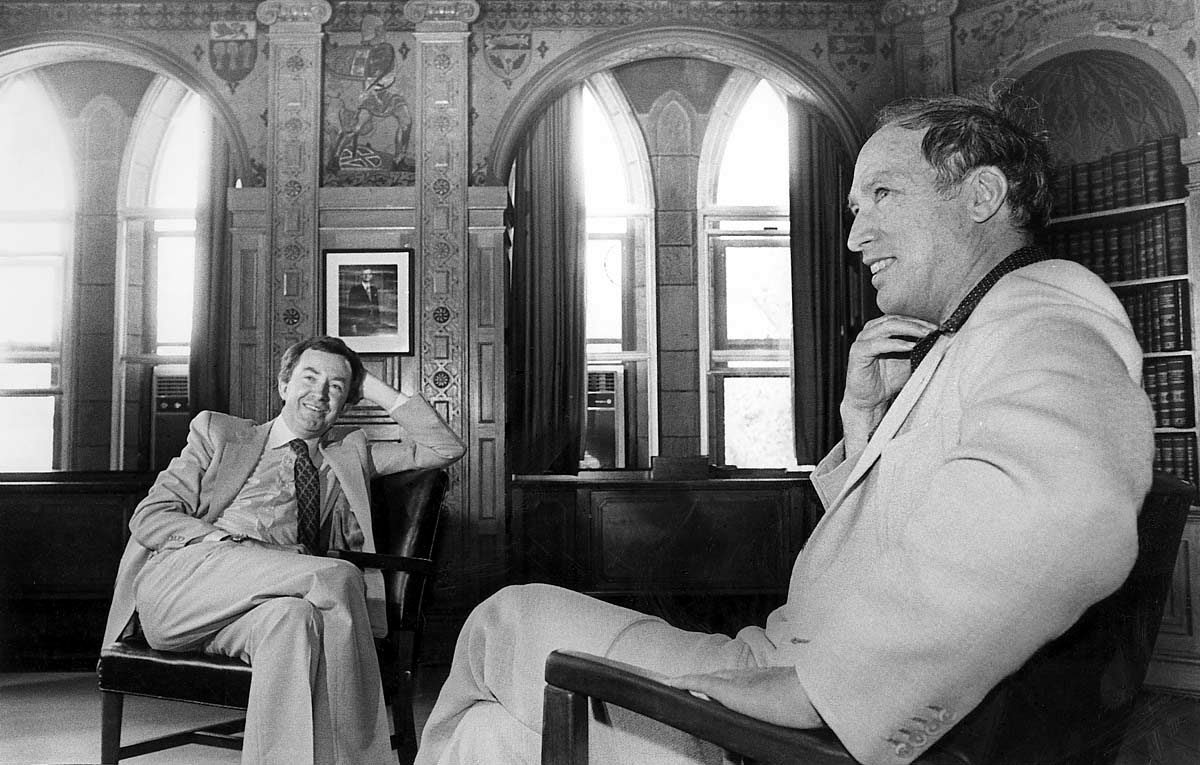
Pierre Trudeau (Justin’s father) presented an image of strong health and served 15 years (1968–79 and 1980–84). But while living in Paris in 1947, age 27, he frequently saw a Freudian psychoanalyst. Trudeau’s mother worried about his hair loss and told him to use gentle shampoo and keep taking pills. His famous psychotherapist, Dr. Georges Parcheminey, told him: “To end the sense of inferiority and to achieve his desired virility, he must become ‘a man with a wife.’” A few years of “intercourse within marriage” would see him right. Nice cure! Yet Trudeau did not marry until 1971, when he had been prime minister for three years. Leaving office finally in 1983, he enjoyed a long retirement. In 2000 he reportedly refused treatment for prostate cancer, dying in Montreal in September.
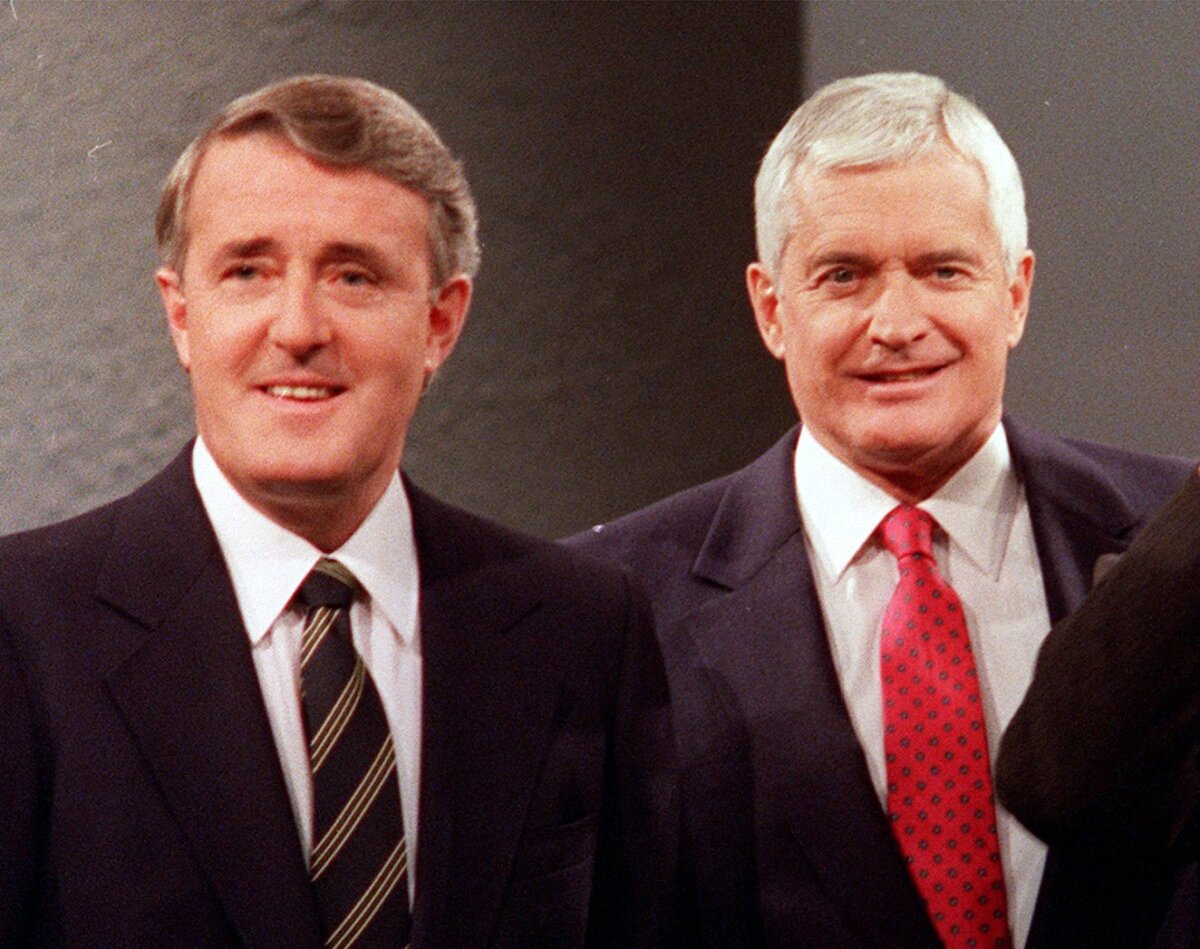
John Turner was our most physically, and perhaps intellectually, robust prime minister. At age 17, while attending the University of British Columbia, he was the fastest man in Canada. He held the record for 100 yards and qualified for the 1948 Olympics. (A knee injury prevented him from competing.) He then got his “blue” (top athlete) on the Oxford University track team. In 1959 he was such an impressive specimen that Princess Margaret, Queen Elizabeth II’s sister, came close to marrying him. He was prime minister for 11 weeks in 1984.
Towards the end even Turner needed a walker, and he died at 91 in 2020. He lived a post-prime ministerial life of 36 years, two years longer than Arthur Meighen.
Brian Mulroney was a much more successful prime minister and enjoyed 30 years of life after leaving office in 1993. He too had deteriorating health in his final years, including at least two operations, and died in Florida, after a fall, in February 2024.
Views expressed in this article are the opinions of the author and do not necessarily reflect the views of The Epoch Times.