Commentary
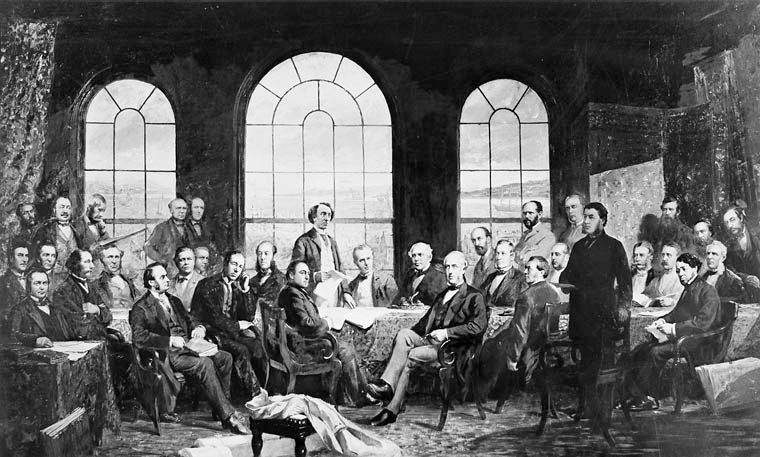
In the saga of Canadian Confederation there were winners and losers. Winners like Cartier and Macdonald are rightly seen as heroes: They put together a country, sponsored by Great Britain, with enormous potential for prosperity and liberty.
But it’s a good thought experiment to assume it was a big mistake—that there could have been another way. The men who opposed Confederation had a strong case. They were not villains—just losers. Looking back, who was right about British North American defence? Was the vast territory from coast to coast too big to be defended by a little country? Could Canada ever afford the massive army and navy its geography required? Would Confederation actually make the colonies more secure—or less?
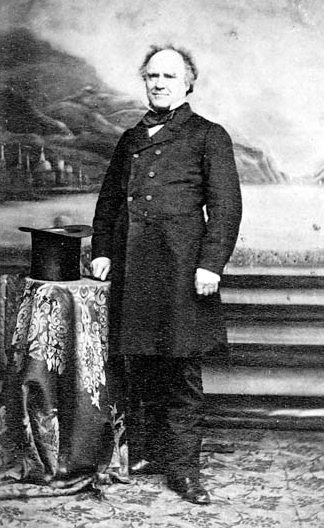
When Charles Tupper, the premier of Nova Scotia, proposed to lead his province into the union, he was opposed by the likes of Joseph Howe, Archibald McLelan, and William Annand. McLelan, an avowed anti-Confederate, was a shipbuilder, ship owner, and member of the Assembly for Colchester County, sitting in Howe’s reform wing. McLelan’s great-grandfather had come from Ireland in 1770. His father, Gloud McLelan, was a reform assemblyman and once signed a petition “against the mail coach blowing its horn on Sunday” because it disturbed people at their prayers.
Annand, the son of a Scots Presbyterian immigrant, joined Howe’s reformers and published “The Speeches and Public Letters of the Hon. Joseph Howe” in 1858.
Howe was the greatest of all Nova Scotia patriots. He called the Canadian movement of the 1860s “botheration,” declaring that “only traitors and fools” would support it. He thought Nova Scotia and the Maritimes should have nothing to do with Canada. For one thing, Howe said that a vast Canada from shore to shore would be indefensible.
In “Confederation Considered in Relation to the Interests of the Empire,” published in 1866, Howe pointed out Canada’s “long defenceless frontier,” with “no natural defences for 800 miles above Quebec. Along the whole of this frontier line she is menaced or overlapped by the great Republic,” and “at the mercy of a powerful neighbour.” He thought Canada was pathetic, divided by racial politics, “shut in by frost from the outer world for five months of the year,” and an “unpromising nucleus of a new nation.” He blamed an “inordinate ambition or lust of territory on the part of the public men of Canada,” whose “pretensions” made European strongmen like “Bismarck and Louis Napoleon … pigmies in comparison.”
McLelan knew Nova Scotia’s Atlantic world well. He and business partners built famous ships ranging from the 257-ton brigantine Cleo to the 1,200-ton Monarch. Nova Scotia’s trade was Caribbean and Atlantic. They had “more ships in the Port of Calcutta, in any day of the year” than “in all the ports of Canada.” McLelan believed Confederation would make British America more vulnerable. Instead, as Howe said, “these Provinces can help Great Britain to preserve her ascendancy on the ocean,” by serving as a “great nursery for seamen.”
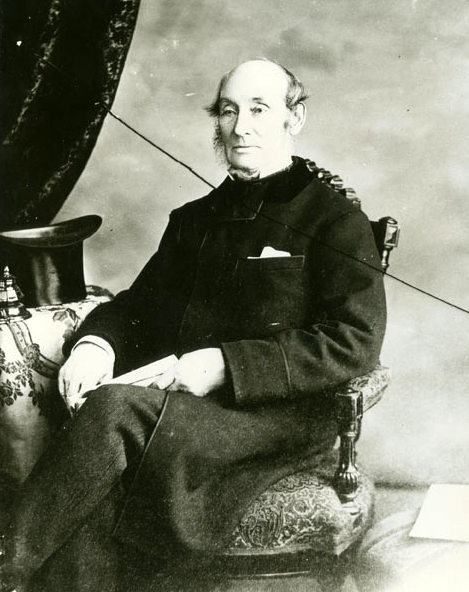
On April 10, 1865, Tupper assured the Assembly that Canadian union would translate into strength. It was all over the newspapers that day that Robert E. Lee had surrendered his army to Ulysses S. Grant on April 9. President Lincoln was forcibly reunifying the states. He was on everyone’s mind as the hero of unity. Hadn’t he said in 1858, “A house divided against itself cannot stand”?
Tupper deplored the scattered state of the British colonies. “Isolated and separated as we are now, I ask the House whether all the protection we have is not that which the crawling worm enjoys—and that is, its insignificance is such as to prevent the foot being placed upon it?” he said. “Does it comport with the position and dignity of freemen, that we should have our only guarantee of security and protection in our insignificance?”
More terrible news intervened. As the Confederacy collapsed, Lincoln was shot on April 14 and died the next day.
McLelan replied to Tupper on April 17. “The Provincial Secretary says we are as unprotected and as helpless as the crawling worm. I was amazed beyond measure to hear such an expression. Rather than declaring that a portion of the British Empire ‘are as unprotected as the crawling worm’ I’d have crawled under the table,” he said. “A crawling worm are we? Well, what does he make of us under Confederation?”
McLelan said union with Canada “only made the worm longer … only lengthened it out until it became a tape-worm. Our main protection lies in the power of Britain,” chiefly the Royal Navy.
Perhaps worse, Confederation would lure Maritimers away from Great Britain. As Howe put it, it was insane for Britain to encourage “60,000 hardy seafaring people to turn their backs upon England and fix their thoughts upon Ottawa.” McLelan said that “The evident tendency of this Ottawa arrangement is separation from England.” He foresaw a future time when, with Ottawa as the capital, “our thoughts and affections will cling round that government and shall be withdrawn from the Crown of England.” Absent the British counterweight, McLelan said Confederation “would only increase our danger, and render us an easy prey to an invader. Suppose we should become an independent nationality, we would then, indeed, be helpless as the crawling worms” for the “American eagle” to gobble up.
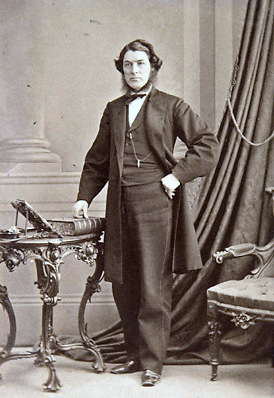
In defeat, the anti-Confederates, for a time, kept up the fight from within Canada. Annand was named to Nova Scotia’s upper house, the Legislative Council. McLelan was elected as the first member of Parliament for Colchester. They continued the battle, vowing to lead Nova Scotia out of the union, much as today the Bloc Québécois supports Quebec sovereignty from within the House of Commons. Howe accepted a cabinet post from Prime Minister Sir John A. Macdonald as president of the Queen’s Privy Council, and in 1873 took the job of third Lieutenant Governor of Nova Scotia. For his part, McLelan accepted a paid commissionership with the new Intercolonial Railway and a seat in the Senate, where the Maritimes had been given one-third of the 72 seats to defend their regional rights against the Canadian leviathan.
When George Brown, then a special negotiator for the Alexander Mackenzie government, drafted a proposed treaty with Washington to let Canadian ships register in American ports, McLelan fought against it. He did not want Maritime shipyards (including his own) to become shipbuilders for American commerce or the U.S. Navy. As he told the Senate, “Our true policy is to build for ourselves, to build and sail our own ships.” What maritime power does not have the capacity to build its own ships?
Howe said in 1866 that Canada had never contributed anything to the Maritimes. “It is doubtful whether a Canadian can be found who has invested a pound in Nova Scotia, cleared a farm, built a ship, opened a mine, or expended sixpence in the defence of the country.” He said Canada had no public men capable of “maintaining a standing army—building and keeping a navy afloat, and managing foreign affairs,” and “there is not one man in five hundred” in Canada “who has the slightest idea of assuming any such responsibilities, or of committing himself to any such expenditure.”
Today, we see again that Canadian neglect of national defence is an old problem, and the country still struggles—even with the 2010 National Shipbuilding Strategy, which came only at the nadir of our capability—to recreate the shipbuilding capacity we once had. The anti-Confederates seem to have won that argument.
Views expressed in this article are the opinions of the author and do not necessarily reflect the views of The Epoch Times.