Commentary
The best historical film set in Canada—about the only good movie about our history ever made—is called “Black Robe” (1991). Based on the Brian Moore novel and filmed in the Saguenay–Lac St-Jean region of Quebec, it tells of a fictional Jesuit priest, Fr. Paul Laforgue, arriving in New France in 1634 and paddling upriver with a lay assistant and Algonquin guides toward the Huron mission. The mission was later the scene of the real-life torture-murders of its founder Jean de Brebeuf and his companions during the Haudenosaunee-Iroquois genocide of the Huron-Wendat (1647–1649).
Though in human terms their mission catastrophically failed, the martyrs are revered as the founders of the Canadian church. It is telling that it took an Australian director, Bruce Beresford of “Driving Miss Daisy” (1989) and “Tender Mercies” (1983) fame, to make a decent film in English about our country.
“Black Robe” is what native people called the missionaries, as recorded in the Jesuit Relations. True to history, in the movie the fictional Fr. Laforgue and his friends are seized, brutalized, tortured, and maimed. But unlike the martyrs of history, who died firm in their faith, the imaginary Laforgue survives, traumatized and disillusioned, doubting his mission and questioning his faith.
That is the great howler at the heart of the Moore-Beresford fiction. Fr. Laforgue is completely unconvincing as a 17th-century man. For a Jesuit of 1634, well-educated and equipped to change the world by love and learning, religion was not merely an idea inside his head. Faith was not a “personal belief” or bundle of options, but an immersive way of life. It is true that their men of power, wealth, and government were wayward. But still, Frenchmen lived in a public Catholic culture, surrounded by the music of eternity, living out their duty and vocation, offering to mankind, as they believed, the true salvific grace of the gentle saviour, the Son of God.
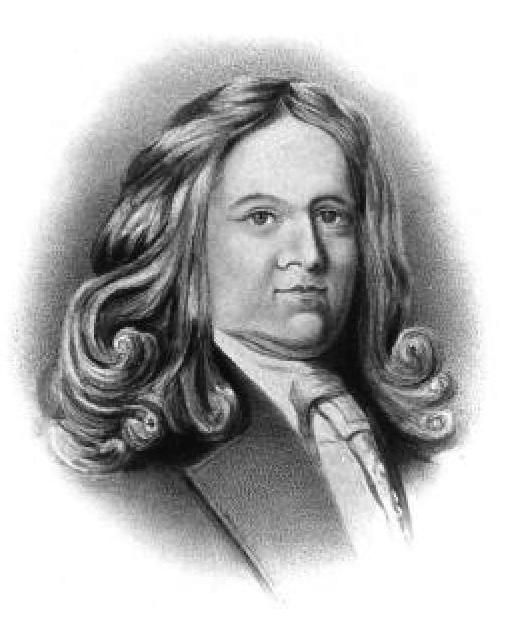
Take, for example, Pierre Boucher (1622–1717), born in France and one of the greatest larger-than-life laymen of all Canadian history. Religion was for him a way of virtue, a habit of life—not a private thought—and everything he did took place in the context of all-embracing human and supernatural membership in the Church, a relationship with God, and the daily prayers that kept all in order. Educated in Jesuit schools, he lived among the natives and learned their languages. Serving in the Canadian Militia, he became a soldier, interpreter, farmer, governor, diplomat (petitioning King Louis XIV in person to improve the colony), and founder. He left a spiritual testament of the faith in which his accomplishments were embedded.
That’s far from what Moore and Beresford imagine in “Black Robe.” For example, the fictional Fr. Laforgue is easily perturbed by some fur traders’ sexual libertinism (a ridiculous idea; priests know all about such foibles). He seems overwhelmed, psychically frail, and conflicted. He is more like a harrowed, uncertain 20th- or 21st-century man than a man of 1634. It is probably a case of projection—a novelist and director of the present day imposing contemporary liberal wavering and ambivalence onto the past. As Laforgue comes up against native resistance and malice, he is racked by doubts about Catholicism, the sacraments, and the missionary enterprise. For Moore, Catholic and indigenous were irreconcilable, the encounter doomed to tragic misunderstanding.
That is completely out of whack with history, in which almost all indigenous in a relatively short time saw the light of the Gospel and embraced Christianity. And in spite of everything we have been told and in spite of a hostile media culture (and when most indigenous people live off-reserve subject to the same culture as anyone else in the city) still, in the 2021 census, 27 percent of indigenous were Roman Catholics, 12 percent Protestants, and 6 percent non-aligned Christians. A large chunk claimed “no belief” and only about 4 percent professed “traditional” beliefs (compared to a total of 47 percent Christian).
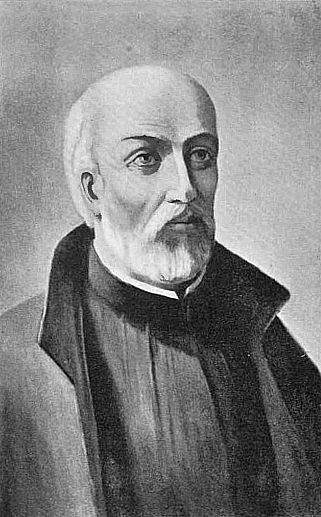
In reality, it would not be so easy for a 17th-century man to fall into doubt. Real-life Jesuits testified in superhuman fashion that the divine presence was immanent and real. For the Black Robes, faith was not subject even to the brutal antics of Haudenosaunee torturers. In the end, as Brebeuf’s beautiful “Huron Carol” describes them, his captors were “children of the forest free” even when they were bad—like those who poured boiling water on his head to mock the rite of baptism, cut off his tongue and lips to stop him praying, sliced and peeled his skin, and cut out and roasted his muscles and ate them while he remained alive. Yet as he died, Brebeuf still loved and forgave them, as escaped Huron witnesses related.
That heroism inspired generations of converts and faithful. And two centuries later, the man known as “the last of the Black Robes” was a Canadian, Fr. William Francis Gagnieur. Born in 1857 in Guelph, his father was a French Army officer, his mother a Presbyterian from Edinburgh who converted to Catholicism. It was a musical household. Educated by local Jesuits, William joined the order in Montreal in 1873. He studied in Europe, then taught in Montreal, St. Catharines, and after ordination to the priesthood, in Trois-Rivières.
In the summer of 1889 he was sent to the Holy Cross mission at Wikwemikong on Manitoulin Island in northern Ontario. The Anglican mission there was trying to implement the government’s well-intentioned plan to teach the natives to be farmers. But defying the government, the Catholic mission based its work on the traditional life of hunting and fishing, with limited farming.
Like the original Black Robes, and, to be fair, like the priest in the movie, Gagnieur found the natives susceptible to corruption by the worst aspects of civilization. “Their contact,” he lamented to a colleague, “is too often with the least desirable specimens of the white race.” Not only was Gagnieur on the side of the native people against corrupting white men, he was a devoted student of their languages.
Contrary to the accepted narrative, the Roman Catholic mission on Manitoulin was known as “the centre in Ontario for the study of Ojibwa.” A brother Jesuit, Fr. Martin Férard, had recently created a French-Ojibwa dictionary, and Gagnieur was tasked with creating an English version. He found the language beautiful, and within a year he could write and deliver a homily in Ojibwa.
Four years later, he was put in charge of five other priests at the Fort William (Thunder Bay) mission and adjacent Indian reserve. In 1895, a fire destroyed the convent, orphanage, and church, but Gagnieur supervised their rebuilding.
In 1895, he was sent to a satellite mission of Sault Ste. Marie on the Upper Michigan peninsula. From there, “he travelled to 40 missions and performed 153 baptisms in his first year around lakes Michigan, Huron, and Superior,” according to the Dictionary of Canadian Biography. He was in high demand among the native people, whom he visited in many small towns thanks to the railway.
Fr. Gagnieur was adopted by the Chippewa/Ojibwe, who called him “Pekinawgay,” meaning “winner.” He celebrated an outdoor mass in 1934 that attracted thousands, marking the tercentenary of French explorer Jean Nicolet’s arrival in the area in 1634.
It was the Detroit Free Press that dubbed Gagnieur the “last of the Black Robes.” He is buried in the Riverside Cemetery in Sault Ste. Marie, Michigan. A brother priest, Fr. Philip Gordon, who was Chippewa/Ojibwe and the second Indian ordained a priest in the United States, said of Gagnieur: “To you, Pekinawgay, I shall always turn when the going is toughest. I shall always remember what you did for my people.”
Views expressed in this article are the opinions of the author and do not necessarily reflect the views of The Epoch Times.