
Commentary
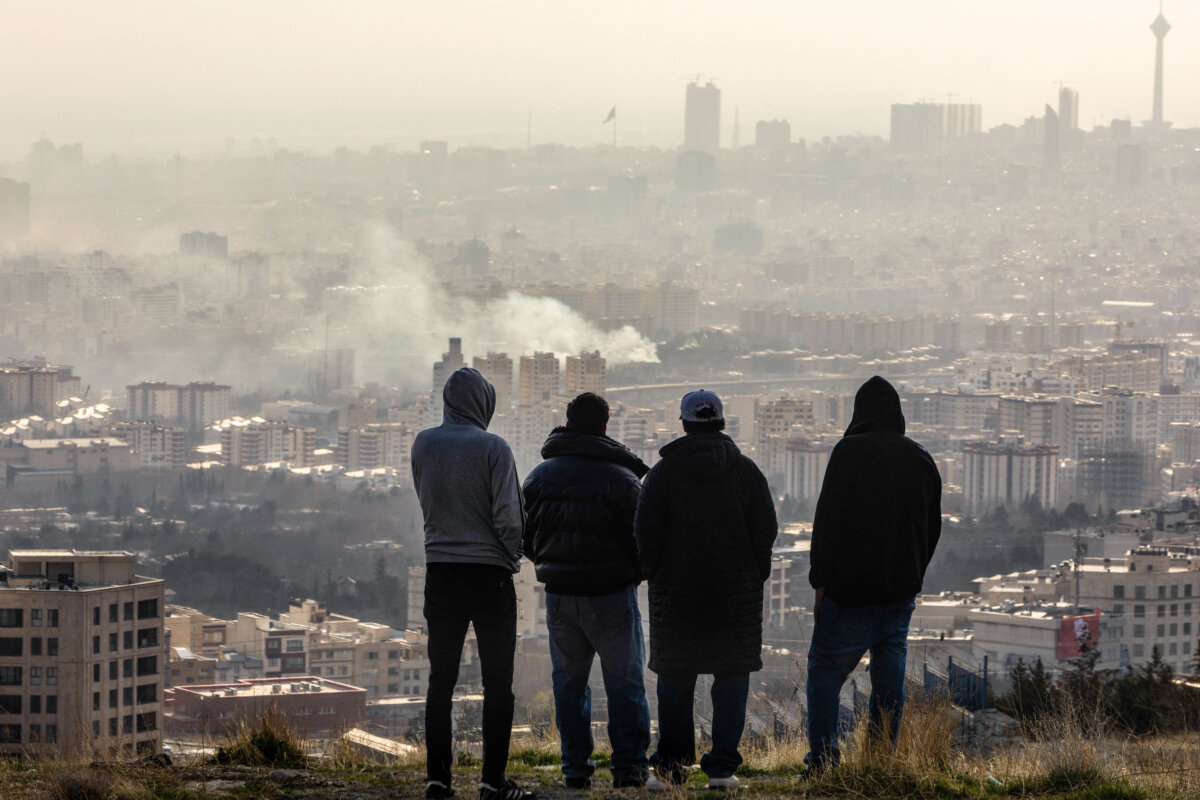
War clarifies intentions. It also strips away illusion. The joint American and Israeli campaign against Iran has moved beyond episodic retaliation. This is no longer a contest of shadows fought through proxies and covert disruption. It is direct confrontation with the governing architecture of the Islamic Republic. The central question is not whether nuclear facilities and missile stockpiles can be degraded. They can. The question is what political order follows. There are three plausible outcomes. Only one is likely in the near term.
The first and most probable scenario is regime continuity under intensified securitization. The Islamic Republic has survived sanctions, internal unrest, targeted killings, economic isolation and regional conflict for more than four decades. Its resilience does not rest solely on clerical authority. It rests on the Islamic Revolutionary Guard Corps, an institution that is military force, intelligence service, and economic conglomerate combined.
External attack often consolidates such systems rather than fractures them. National identity fuses with regime preservation. Emergency powers expand. Dissent becomes indistinguishable from disloyalty. If the security apparatus remains cohesive, Tehran will likely emerge damaged but intact, and more entrenched in its hostility toward the United States and Israel.
In that scenario, retaliation continues in calibrated form. Missiles and drones are used to impose cost without inviting annihilation. Proxy forces remain active. Maritime disruption in the Strait of Hormuz becomes a lever of economic coercion. The objective would not be conventional victory. It would be survival with leverage. This is the baseline outcome over the next 12 months.
The second possibility is internal fragmentation leading to prolonged instability. Authoritarian regimes rarely collapse because of protest alone. They collapse when elite cohesion breaks. If succession disputes fracture the ruling structure, if elements of the Revolutionary Guard diverge, or if economic breakdown overwhelms patronage networks, Iran could descend into sustained disorder.
Such instability would not initially resemble clean territorial partition. It would likely manifest as armed unrest in urban centres, regional assertiveness among minority populations, and competing security commands claiming legitimacy. A fractured Iran would not automatically be a peaceful Iran. It could be more volatile, more unpredictable, and more dangerous in the short term. The humanitarian and geopolitical consequences would be severe. Refugee flows would pressure neighbouring states. Extremist groups would seek opportunity in ungoverned spaces. Energy markets would remain unsettled. External actors would manoeuvre for influence in the vacuum.
The third outcome, frequently discussed but least probable, is the emergence of a strongman aligned with Western interests. Crisis often produces concentrated authority. It does not easily produce ideological realignment. A security leader could consolidate control in the aftermath of conflict, but alignment requires more than power. It requires domestic legitimacy and credible incentives from abroad. Hostility toward the United States is not confined to clerical hardliners. It is embedded in decades of narrative and political identity. Even a pragmatic successor would likely pursue tactical de-escalation and sanctions relief, not strategic submission. It is therefore naive to assume that pressure automatically yields alignment.
None of this negates the strategic logic of acting now. A regime advancing toward nuclear threshold capability while projecting force through layered proxies presents an accumulating risk. Delay carries cost. Over time, infrastructure hardens, air defenses improve, and the price of reversal increases. Acting before deterrence erodes completely is not recklessness. It is recognition of strategic trajectory. But clarity requires acknowledging risk. The decisive variable is cohesion inside Iran’s security structure. If it holds, expect continuity and resistance. If it fractures, expect turbulence and spillover. If it consolidates under new leadership, expect pragmatism perhaps, but not ideological conversion.
For Canada, the implications are not abstract. Canada’s interests align squarely with preventing a hostile regime from crossing the nuclear threshold. We should stand firmly with our allies while preparing soberly for the economic and security spillovers that will follow, because instability in the Gulf does not remain in the Gulf. War changes balances of power. It does not quickly transform political culture. The coming months will determine whether this conflict constrains long term instability or merely reshapes it. History will not reward sentiment. It will reward seriousness, discipline, and strategic patience.
The test ahead is resolve without recklessness.
Views expressed in this article are the opinions of the author and do not necessarily reflect the views of The Epoch Times.
 Friends Read Free
Copy
Facebook
Tweet
Friends Read Free
Copy
Facebook
Tweet