
Commentary
On March 26, the International Olympic Committee (IOC) announced a controversial decision, ruling that males who identify as women will no longer compete against biological females in Olympic sports.
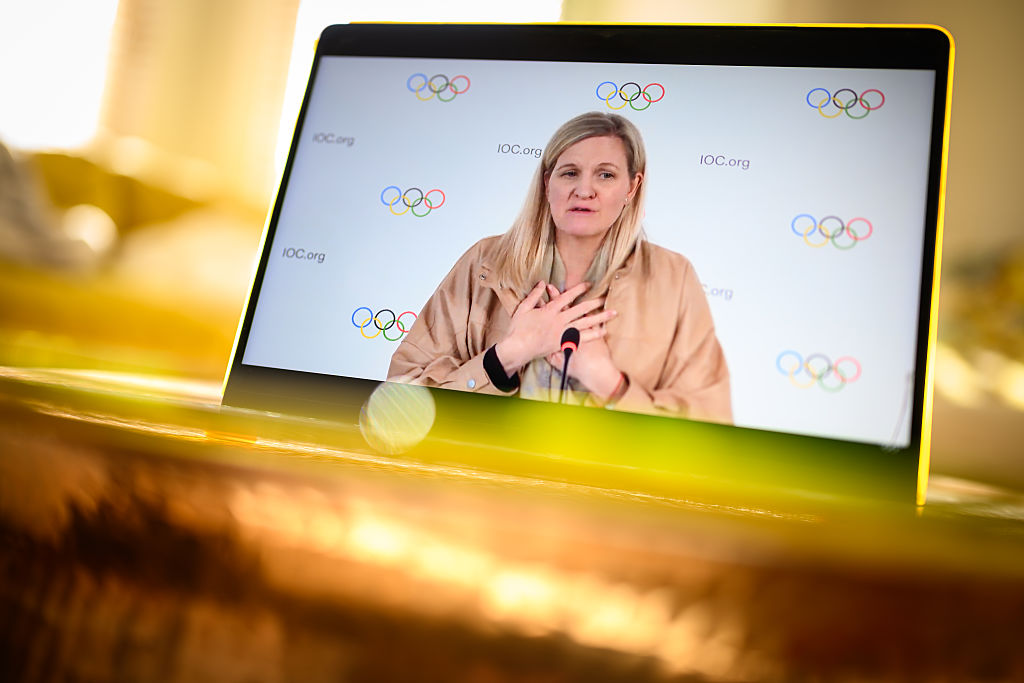
Committee President Kirsty Coventry, a former Olympic athlete, explained the new policy, stating:
“It’s absolutely clear that it would not be fair for biological males to compete in the female category. In some sports, it simply would not be safe. Every athlete must be treated with dignity and respect.”
Coventry said that the decision was based on the results of scientific research that “male chromosomes give performance advantages in sports that rely on strength, power, and endurance.” She further emphasized that, at the highest levels of competition—where margins between winning and losing are razor-thin—the committee aims to eliminate any potential unfair advantages.
Riley Gaines, a 12-time NCAA All-American swimmer and Southeastern Conference champion, supported the policy, saying: “Trans women haven’t been banned from women’s sports. Men have.”
Author J.K. Rowling, a vocal critic of men who identify as transgender competing in women’s sports, welcomed the ruling, saying, “I’ll never forget the scandal of Paris 2024, when people who consider themselves supremely virtuous and progressive publicly cheered on men punching women.”
These vocal advocates view the IOC’s shift in policy as a positive advancement for women’s sports. While the new policy marks a major shift for the Olympics, the global conversation surrounding transgender athletes is far from over.
The ruling, set to take effect in 2028, applies solely to committee-sanctioned events such as the Olympics, Youth Olympics, and qualifying events. It does not apply to national, state, or local laws that allow transgender women to compete in female sport categories. This places the IOC’s policy at odds with laws already in place in the United States and other countries.
Opponents of the decision, such as the nonprofit Transgender Equality Network Ireland, quickly expressed their concern over the committee’s position.
In the United States, state laws still affect transgender women participating in female sports. For instance, California allows transgender women to compete in all non-NCAA Olympic sports in schools and in club sports under state policies.
Twenty-one other states have similar protections for transgender and non-binary participation in sports. New York’s recent constitutional amendment prohibits gender identity discrimination, including sport participation.
While attempts to pass nationwide laws protecting transgender athletes have failed, a 2025 executive order under the Trump administration pushed for sex-based categories, sparking several ongoing Supreme Court cases supporting restrictions, rather than protections.
On the international stage, very few countries have passed laws specifically allowing transgender females to compete in women’s sports. However, countries such as Canada, parts of the EU, Australia, and Argentina have broad gender-identity recognition policies, which support inclusion in sports. Meanwhile other countries and sport federations align with sex-based rules similar to the IOC’s, supporting the need for fairness and safety.
Athletes from countries such as the United States, where protective laws allow participation at lower levels of competition, will now face challenges when pursuing upper-level Olympic competition. They must meet the IOC’s new biological female criteria, which will include an SRY gene screening via a cheek swab, saliva, or blood draw. A negative test qualifies the athlete for the female category, while a positive test permanently disqualifies the athlete from it. Unless the athlete competes in the men’s or open category, the athlete’s Olympic path would essentially be over.
While advocates see this ruling as a step in the right direction, the debate and challenges to this policy are far from over. The IOC ruling doesn’t eliminate the possibility of biological women competing against transgender women outside the Olympics, nor does it silence advocates fighting for inclusion.
As the conversation continues to evolve, one thing is clear: The battle over fairness, safety, and inclusion in sports is far from over—for some, it’s hopeful; for others, it’s still heating up.
Views expressed in this article are the opinions of the author and do not necessarily reflect the views of The Epoch Times.
 Friends Read Free
Copy
Facebook
Tweet
Friends Read Free
Copy
Facebook
Tweet