Commentary
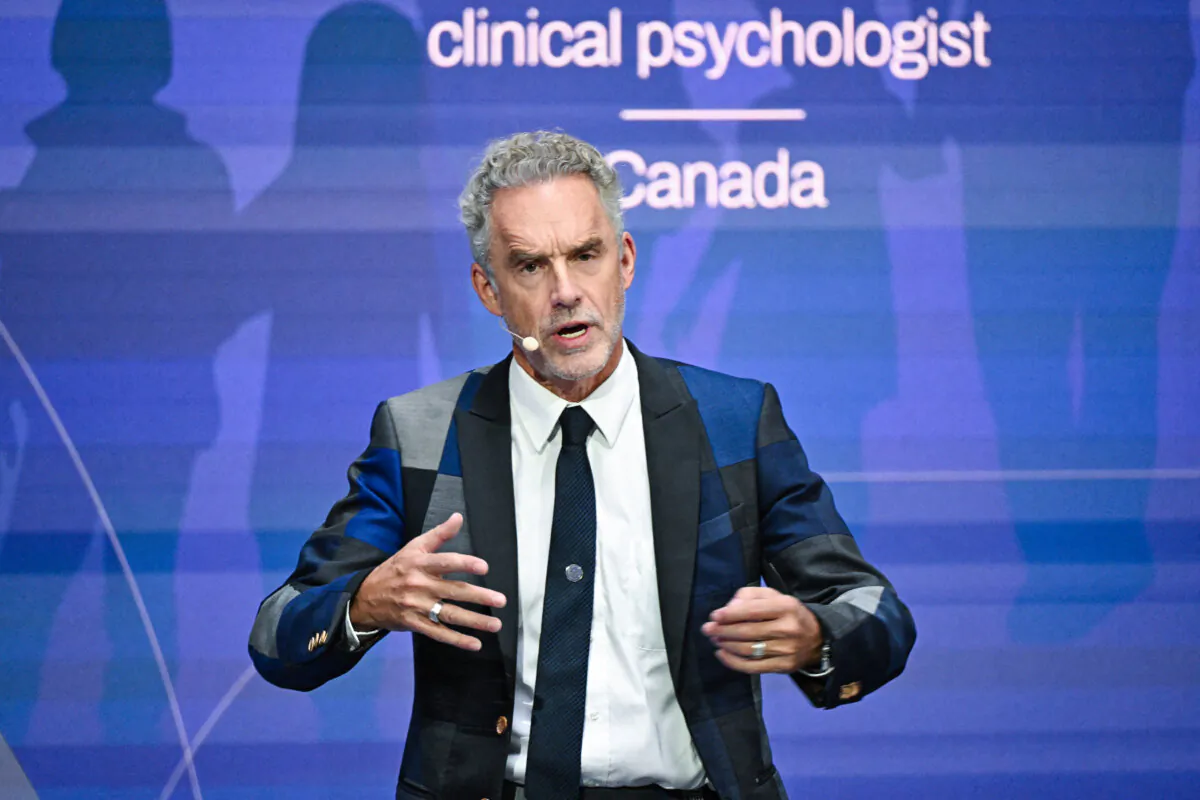
Alberta Premier Danielle Smith has introduced a bill to protect lawyers, doctors, and other professionals from censorship by their regulators. Bill 13 is being called the “Peterson Law” after psychologist Jordan Peterson, prosecuted by his regulator for speaking his mind, as Smith says, “on his own time.”
Great news, at least until you read the bill. On close inspection, it seems more likely to make an already bad situation far worse.
The obvious root of the problem in professional regulation is politics. Regulators have been advancing political agendas including, most controversially, by mandatory political education and by censorship.
And yet, Bill 13 purports to solve these problems by authorizing the use of regulatory power for political reasons (the root of the problem) and by giving regulators new powers to mandate education, including in politics, economics, society, and culture.
Bill 13 seems not just “more fuel on the fire” but “a flame to gasoline.”
While it hardly matters (compared to Bill 13’s downsides), the bill does not even seem to cure the Jordan Peterson problem. There remain plenty of ways for regulators to prosecute professionals for speaking their minds “on their own time.”
My warning here will be a bitter pill to swallow for government and for people thirsty for a freedom win. Most will reasonably assume I am wrong, so let me briefly try to convince you I might be right: that Bill 13 will actually accelerate professional collapse.
But first, who am I that you might heed my warning? I am a lawyer and, admittedly, a practical nobody in Canadian legal circles. But when it comes to Bill 13, I know more than most.
I have been researching, writing, and litigating in this exact area: the political corruption of the professions (medical and legal). I currently represent Roger Song in his lawsuit against Alberta’s legal regulator, the Law Society of Alberta (LSA). I have combed through, studied, retained expert Joanne Williams, and written reams of legal and constitutional argument looking, specifically, at the LSA’s political misadventures.
I have also written columns on the topic here, here, here, here, here, and here.
Trusting I have your attention for a few more paragraphs, let me explain the good things Bill 13 does—or, more correctly, how little good it does.
To address the Peterson problem, Bill 13 seems to limit regulators’ ability to censor speech. It actually limits very little. For example, Bill 13 only bans certain punishments (section 5(2)). Regulators remain free to prosecute professionals and to impose any other punishments at the end of those prosecutions (section 5(1)(c)). This leaves open the proverbial “barn door.”
While the bill is supposed to ban censorship of professionals “on their own time” (i.e. while off duty), it actually permits lots of off-duty censorship. For example, regulators can still censor political expression on social media if the professional speaks “in their capacity” as a professional and if their speech is “related to” the profession (section 4(1)(b)). Another barn door.
I could go on. Suffice it to say, I am not confident that Bill 13 would even have protected Jordan Peterson from his professional regulator, the College of Psychologists of Ontario.
Nor does the bill protect professionals while on duty. It is obviously good to limit censorship of a doctor while off duty. But, as far as patients are concerned, censoring a doctor on duty may be far worse. It is while doctors are on duty that we rely on them to tell us what, in their professional judgment, is true. If they believe puberty blockers pose health risks to our children, we need them free to tell us. If they believe vaccines have limited benefits or material risks, we need them free to tell us that too. In fact, we have no reason to trust any doctor who is censored from telling us what they believe to be true.
Things get murky here, though, because a regulator should censor some on-duty speech, like bad medical advice. Vaccine and gender-related censorship may be good if it advances evidence-based medicine and informed consent, but it is always bad if it advances political objectives like public health policy or gender theory.
I think this is one of Bill 13’s tragic flaws. It leans into this murkiness by banning the wrong thing. It should have banned political censorship (content). Instead, it bans censorship in certain situations (context) described by a confusing jumble of rules.
Bill 13’s censorship protections are weak, narrow, and confusing.
The next apparent achievement is to prohibit mandatory training in “cultural competence, unconscious bias, and diversity, equity, and inclusion” (section 8).
While, again, it hardly matters, the bill may not accomplish that either. “Cultural competence” has two possible meanings: 1) knowledge of a racial minority’s purported culture; or 2) a political mission to “decolonize,” etc. But Bill 13 does not define cultural competence, so it is not clear what is banned.
I trust you are now primed for the only bad news that matters.
As I said, the bill prohibits mandatory education in “cultural competence, unconscious bias” and DEI, but—and this is a very important “but”—the bill does not ban these things in any other way.
What this means, in a roundabout way, is that DEI (etc.), the very politics plaguing the professions, is legislatively authorized—just not in mandatory education. That seems counterintuitive, so consider this. If I say “no snacks after 11,” do I not imply that snacks are allowed until 11?
The way a court might say this is: “If the legislature intended to ban DEI in professional regulation, it could easily have done so.”
If the professions are a ship in distress, Bill 13 is a political torpedo below the waterline.
I should add, Bill 13 does seem to ban one kind of politics, “wokeness,” at section 6. But section 6 does not work. It bans things which sound woke, but are not, and even bans traditional Canadian values, like morality and merit. There is a little “tell” in the bill which helps prove this point. If section 6 does ban wokeness, the bill would not ban wokeness again at section 8.
Bill 13 can be salvaged with three amendments:
- Ban wokeness clearly and directly by “naming names”: critical race theory, critical legal studies, postcolonialism, and “all related and other postmodern theories and objectives;”
- Ban every other political objective: “an objective to change, directly or indirectly: the law, including the Constitution, statutes, subordinate legislation, the common law or the principles of equity; the state or government; the legal system; the economy; or society;” and
- Ban all forms of “continuing professional development” introduced by regulators post-2000.
There will be one simple test of whether or not Bill 13 rids professional regulation of politics. Once passed, does the LSA remove the political “competencies” from its new guidelines (i.e. “Cultural Competence, Equity, Diversity and Inclusion” and “Truth and Reconciliation”)? If it does not, you’ll have my dreadfully unsatisfying “I told you so” and you’ll know that Bill 13 has sent us hurtling down an already dark path.
Glenn Blackett is a civil rights and constitutional lawyer based in Calgary.
Views expressed in this article are the opinions of the author and do not necessarily reflect the views of The Epoch Times.
 Friends Read Free
Copy
Facebook
Tweet
Friends Read Free
Copy
Facebook
Tweet