Commentary
In issuing the executive order to defund the Corporation for Public Broadcasting, President Donald Trump said that neither National Public Radio nor the Public Broadcasting Service “presents a fair, accurate, or unbiased portrayal of current events to taxpaying citizens.” He never questioned whether government-owned public broadcasting was a proper role for taxpayer-funded agencies. Instead, he chose to attack its prejudice.
Judge Randolph Moss of the U.S. District Court for the District of Columbia picked this up in his injunction: “The First Amendment draws a line, which the government may not cross, at efforts to use government power—including the power of the purse—‘to punish or suppress disfavored expression’ by others.”
If Trump had said, “I don’t believe the U.S. Constitution mandates or even allows a federal government-owned broadcasting entity, so I’m revoking all funding to let individual free markets determine who dips into taxpayers’ pockets,” imagine what a different debate could have ensued. By framing the debate around presentation and content, the greater discussion of whether this is a role for government never occurred.
At this juncture of our history, America needs substantive discussions in the public square about the role of government. The question of whether or not the government is responsible for my health, my retirement, my education, and my product safety appears to be taboo. The only question is how much we’re going to spend for all these interventionist procedures and who is eligible to enjoy largesse from the taxpayers’ pockets.
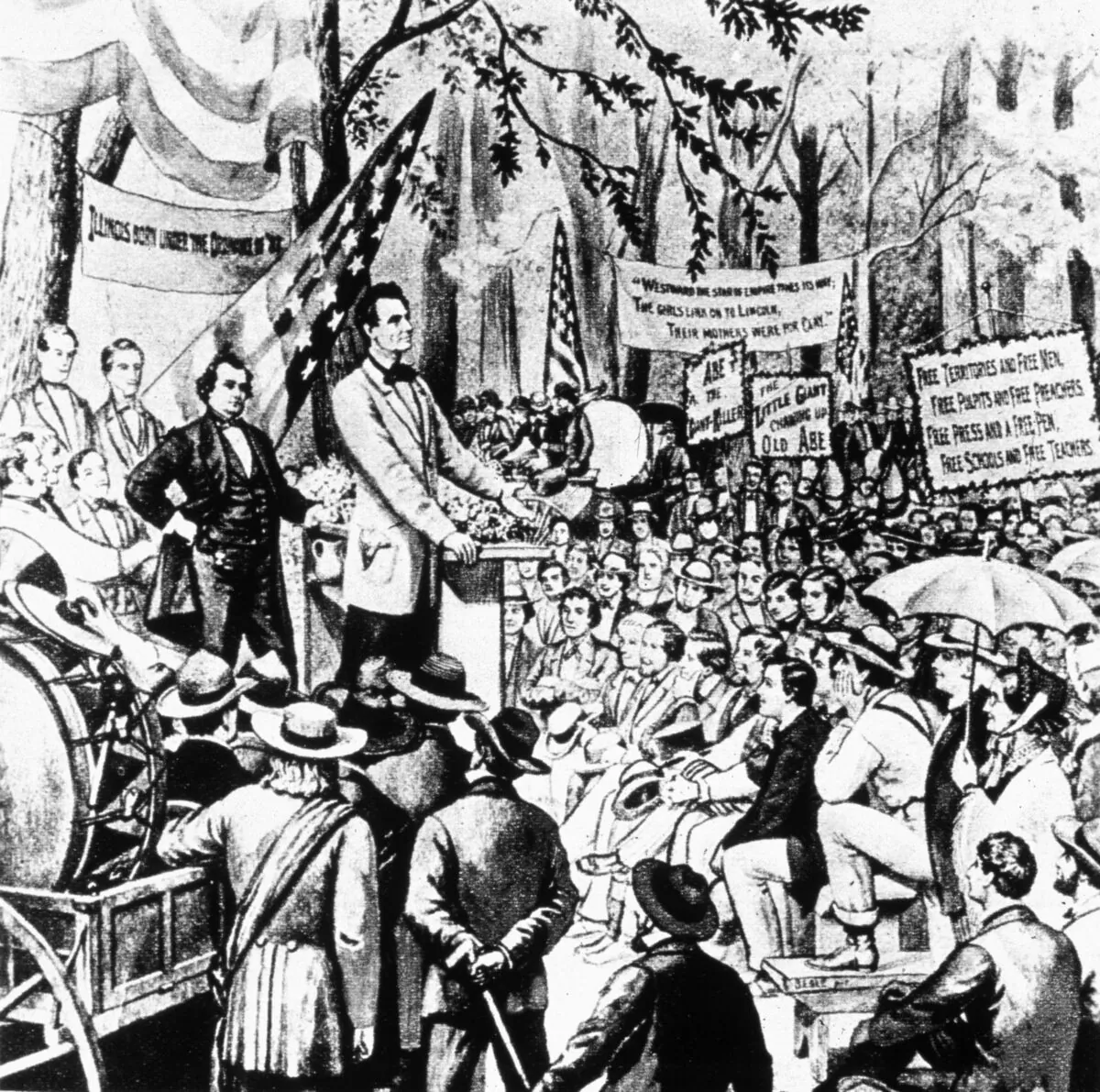
Why do people fear deep discussions? Is it our attention span? Could our society abide Lincoln–Douglas debates today? Is it TikTok or is it political leaders who refuse to engage in big picture, convictional interchange? Our nation desperately needs to discuss core philosophies. American exceptionalism occurred because of deep-seated convictions about small government, individual responsibility, and an abiding belief in privatization—even philanthropic obligations to the poor and disabled.
The same dynamic plays out across the policy arena. Foreign aid is used as a cudgel to beat foreign entities into American agreement. President George Washington admonished our nation to abhor “foreign entanglements.” Rather than arguing about what nation deserves how much for doing this or that, shouldn’t we actually debate the merits of foreign aid (entanglements) at all? Why should any foreign entity receive American taxpayer money? Why don’t we keep it all at home and hoe our own garden?
Whenever one of our beneficiaries falls out of favor, our American troops end up confronting American-made weapons given or purchased by us. Does that make sense? Nobody likes meddlesome people. As a nation, we’ve irritated more people than we’ve befriended through our foreign aid; but questioning the bedrock assumption of foreign aid remains taboo.
The same thing happens with agricultural subsidies. The harder question goes unasked: “Where does our Constitution authorize agriculture subsidies as a legitimate role of government?” Instead, we wrangle over which bucket gets money and how much. Transitional organic asks for its share. Soybean farmers ask for their share. Bayer asks for national security status for glyphosate. Corn growers want mandates for more ethanol in gasoline.
None of this public largesse is demanded or authorized by constitutional decree. Instead of convictional and bedrock-oriented discussions, we only argue over how much and to whom. What could bring clarity and precision to the necessary or justifiable role of government in society cheapens into a playground tussle over who gets the ball today.
As a result, American citizens are deprived of substantive debate about government intervention in our lives, how to let people who earn money keep more of it, and how to enjoy the freedom to pursue our own ambitions rather than the agendas of an elite few. Do we want a nanny state? Do we want a society in which our biggest fear is a bureaucrat telling us that we can’t launch an entrepreneurial endeavor because K Street has our freedom locked in regulatory agencies that decide whether or not we can pick lint out of our bellybuttons?
Political debate has narrowed, leaving constitutional questions untouched. Blame rests equally on K Street legislators and a frustrated, disengaged citizenry. Both bear responsibility for allowing the debate to stay shallow.
We’re now reaping a century of explosively expanding government intrusion into every affair of our life. Energy, medicine, retirement, food, farming, education, and building—it’s all contingent on government permission. Life in America, the land of the free, should not be like that. Every waking minute should not be subject to bureaucratic intrusion.
We have some big issues to question. We’ve tried guaranteeing a retirement program through Social Security. It should be renamed Social Insecurity. And it’s been raided by politicians to fund all sorts of trinkets to folks who connive new ways to feed at the public trough. We’ve now tried nearly universal health care. In the lingo of Dr. Phil, “How’s that workin’ for ya?” We’ve tried mandatory public education. The result? High school graduates who can’t read or do math.
The hard truth is that you can’t categorically take decision-making responsibility away from people, arrogate it to the federal government, and expect a vibrantly positive outcome. You get fraud, collusion, and dysfunction. Our nation started with a distinctly different brand, went off the rails, and now faces wreckage on many fronts.
Rather than adjusting the train off the rails, how about we rediscover the original rails and put the train back on them? That will take some serious discussions. Slogans, TikTok influencers, and eight hours of screen time per day aren’t going to set things right. As a society, we must hold our leaders accountable to engage in convictional discussions regarding what government must do because we can’t do it for ourselves. Limiting government to that constitutional role will set us back on the rails.
Views expressed in this article are the opinions of the author and do not necessarily reflect the views of The Epoch Times.
 Friends Read Free
Copy
Facebook
Tweet
Friends Read Free
Copy
Facebook
Tweet