
Commentary
Pity China’s recent university graduates. At Beijing’s behest, these young people worked hard at school and perhaps even harder with tutors and prep centers to score high on the rigorous National College Entrance Examination. They then studied hard to score high in their courses.
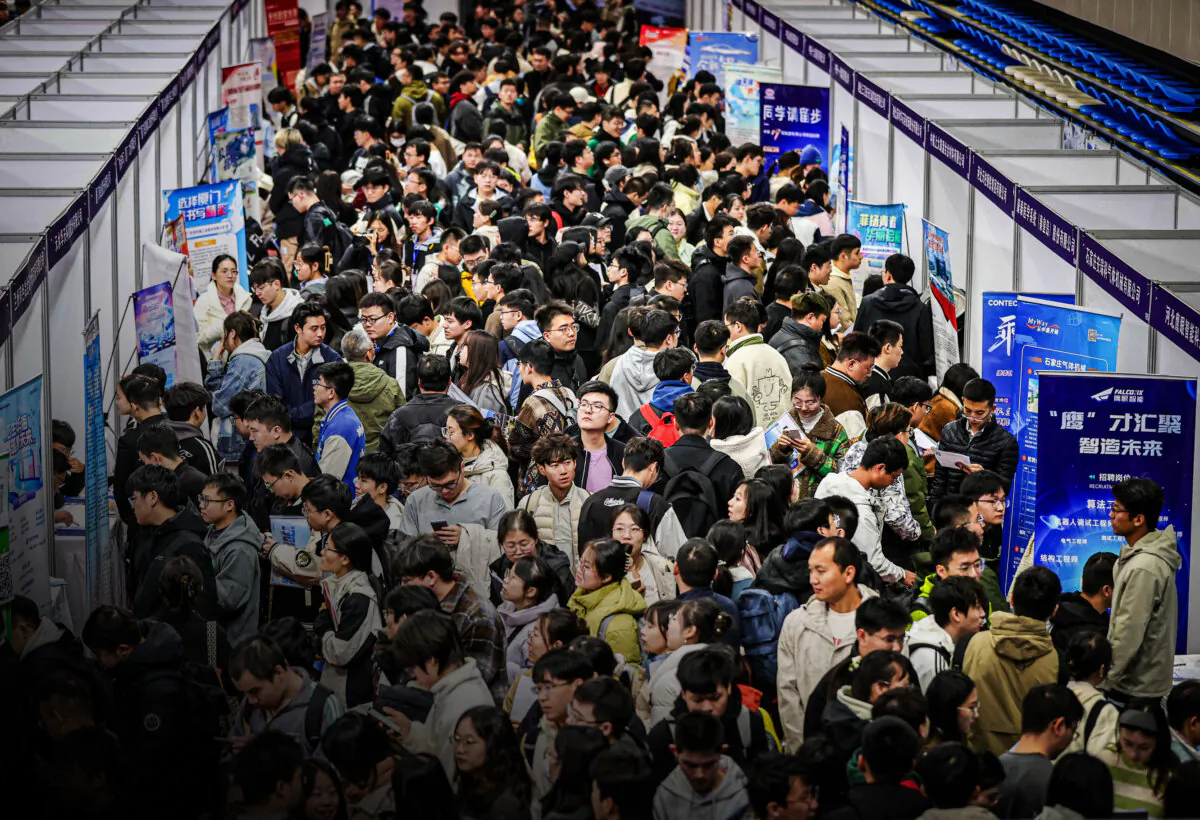
But upon graduation, these newly credentialed people—many with degrees in engineering and science—found little of the social mobility they were promised. Many, in fact, failed even to find suitable jobs.
Now, Beijing is telling these new graduates to go back to school and enroll in vocational courses. It is a picture of policy failure and a source of despair and resentment to an entire generation.
Since China opened and began its drive for growth in the 1970s, Beijing has pushed more and more young Chinese to get university degrees. To marshal the best talent in the country, the authorities, shortly after the horrors of the Cultural Revolution, reinstituted the National College Entrance Examination, the so-called Gaokao.
Screening students through this exam was seen as a way to leverage universities to yield the best talent for the country and to secure the returns on the investment. And because Beijing was focused on economic and military goals, the exam and the university emphasized science and engineering.
The outpouring of graduates in these fields terrified Western journalists and politicians. They feared that China was outpacing the West in science and engineering. For example, look here. Those fears led to an American emphasis on what are called STEM subjects—science, technology, engineering, and mathematics—starting especially during the Obama administration.
But Beijing’s planners had miscalculated. Even as the regime invested billions of dollars in high technology—including electric vehicles, advanced microchips, quantum computing, space exploration, and biomedical efforts—China’s economy failed to absorb the flood of recent science and engineering graduates, as well as those from other disciplines.
Beginning in 2018, the unemployment rate among young Chinese aged 15 to 25 began to rise. Not all those failing to find work were science and engineering graduates or had a university degree, but this group had a growing presence among the unemployed. In March, the most recent period for which data are available, the unemployment rate for this group equaled 16.7 percent, up from 15.3 percent in February.
While misdirecting millions of young people, the planners in Beijing seem to have entirely missed another developing labor problem. Because China has had such low fertility rates for years, the country has developed a shortage of young workers to replace the huge generation of skilled and line workers entering retirement.
Since so many young people were siphoned off for the universities, the worker shortage became that much more acute. In effect, Beijing’s planners and policymakers emphasized one area while ignoring another, and (no doubt inadvertently) so engineered a paradox in which youth unemployment remains very high, while jobs for skilled and line workers go unfilled.
Beijing has begun efforts to correct this terrible planning error. It has begun to push unemployed university graduates into vocational training. The Ministry of Human Resources and Social Security has vowed to what it calls “upskill” a million of these young people.
For this year, the ministry has announced six full-time programs at technical schools for college graduates, each combining one year of classroom study with a year-long internship. With almost 13 million new graduates expected this summer, this effort seems far short of the need.
Meanwhile, this new policy has drawn a mixed reaction from a generation that needs paid work but now wonders whether its hard work for the Gaokao and in university was worth it, not least because many large Chinese companies do not recognize vocational credentials.
China’s problems have a parallel in the United States. Not too long ago, Washington, especially under the Obama administration, pushed American youth toward college. Expressions such as “college for all” were common. As in Beijing, the American authorities stressed STEM subjects.
Because American youth were less responsive to government pressure than were Chinese youth, Washington’s push was less effective. Many Americans opted out of university, and those who went often chose disciplines other than STEM. As a consequence, America faces a less distorted employment situation than does China. This country’s comparatively happy result is due less to official efforts, which were very much like Beijing’s, than to a welcome lack of effectiveness.
China will face increasing pressure to enlarge its emphasis on vocational training over college. In the meantime, it will continue to struggle with a strange combination of high rates of youth unemployment and worker shortages. What is hard to assess is the longer-term effects on a generation that feels betrayed and doubts the value of the Gaokao and all that comes with it. The matter will create an indeterminate socioeconomic test for the country’s leadership in Beijing.
Views expressed in this article are the opinions of the author and do not necessarily reflect the views of The Epoch Times.
 Friends Read Free
Copy
Facebook
Tweet
Friends Read Free
Copy
Facebook
Tweet