
Commentary
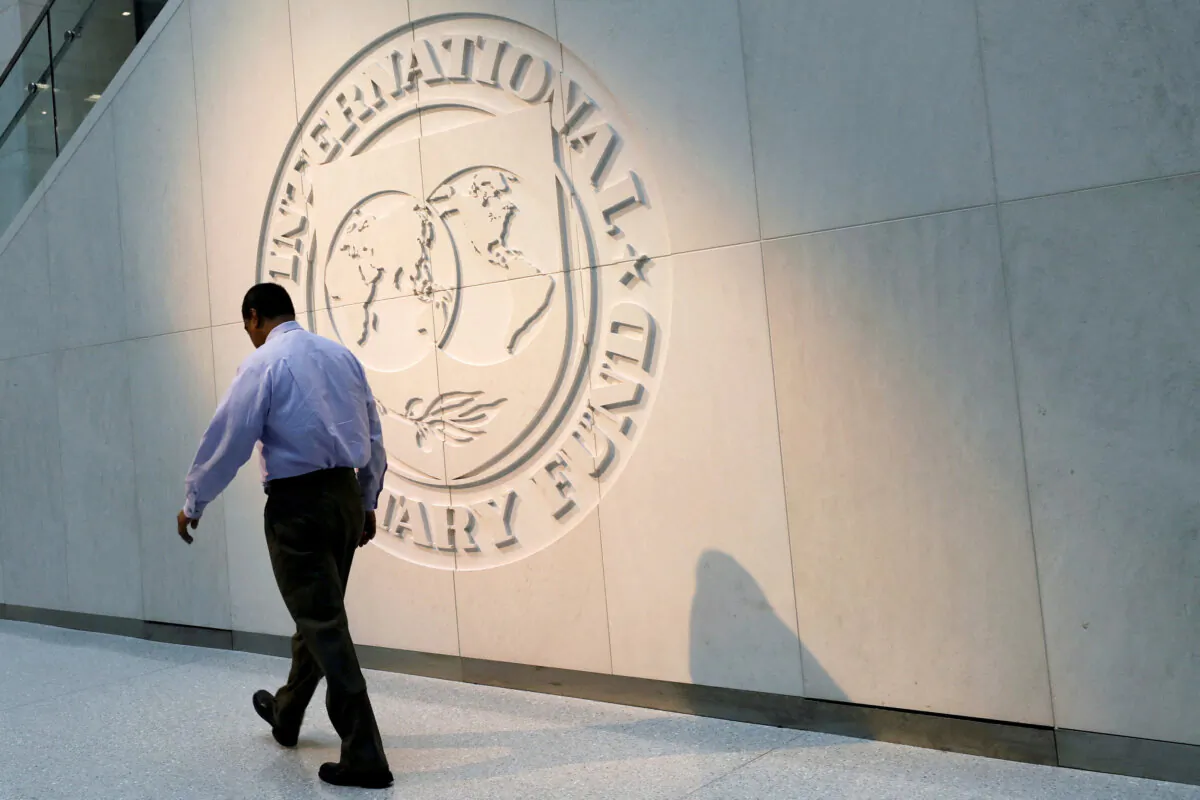
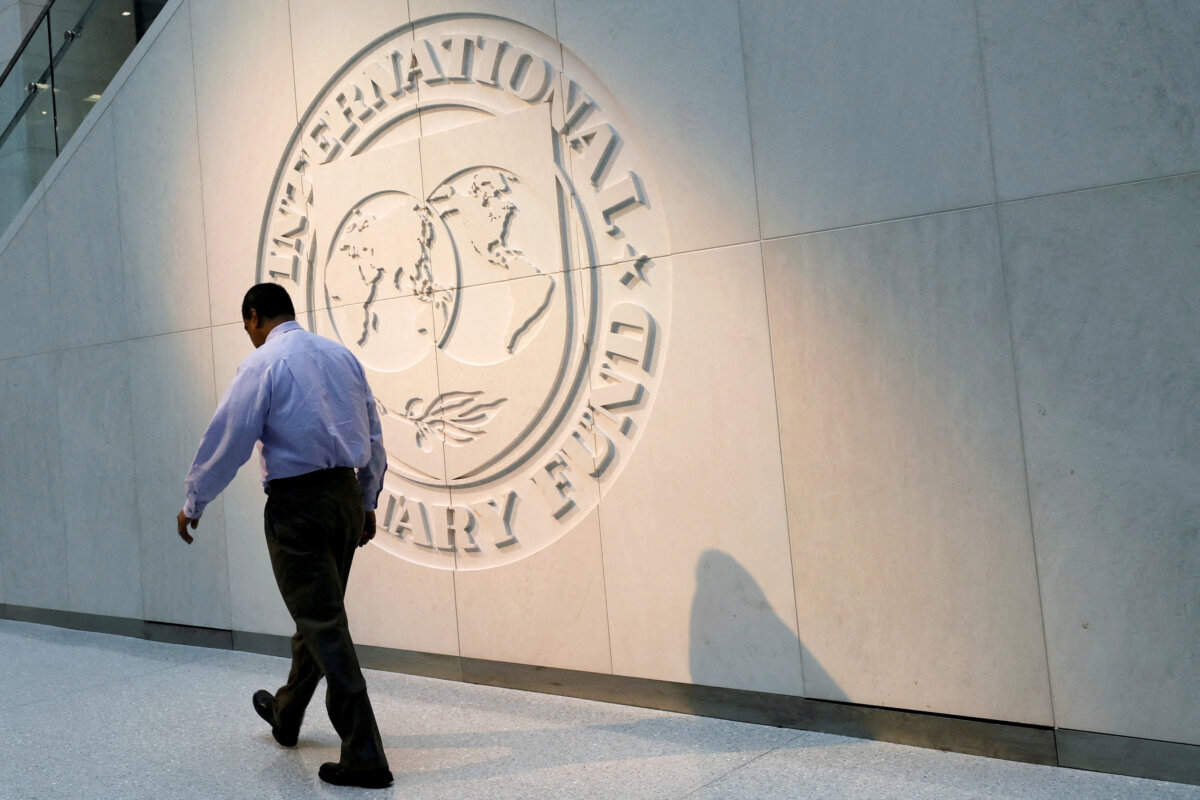
The International Monetary Fund (IMF) often provides economic policy advice to both developed and developing nations. Almost always, the economic analysis behind that advice is thoughtful and worth considering. Politics often muddies the matter, however. In Beijing’s case, the problem goes deeper than politics. Communist ideology stands in the way of the advantages China could gain from the IMF’s useful recommendations.
In their latest “Country Focus” report, analysts at the IMF pointed to three areas where China needs to change. One, China needs to pare back on public investment and industrial policies and allow market forces to play a greater role in directing economic resources and effort. Two, Beijing needs to reduce the economy’s extreme dependence on exports, a dependence that has only grown during the past few years and is, to use the IMF’s words, “unsustainable.” Three, Beijing needs to adopt policies to encourage consumer spending and make it, not exports, the main engine of economic expansion.
On the first of these, a response is obvious. Beijing has, for years, used politics more than economics to direct investment and economic emphasis. For a long while, those political goals meshed well with the economy’s needs—the construction of roads, power plants, housing, port facilities, and the like.
As the economy developed, however, a gap developed between what Beijing wanted and what would advance development most effectively. Allowing more market direction in place of Beijing’s penchant for highly centralized planning and direction could, as the IMF suggests, remedy this problem, but it is highly unlikely that Beijing will follow such a policy path.
The problem is communism. Whenever it gains control, it has always demanded more or less full control over the economy. This is especially true of today’s Chinese Communist Party (CCP). The authorities in Beijing would have to repudiate their ideological beliefs to follow the IMF’s advice. No doubt the people at the IMF know this, although they made their recommendation anyway.
Beijing’s current economic emphasis is a case in point. For the past three years or so, government planners have funneled investment and economic effort into the development of high technology, including artificial intelligence (AI), advanced semiconductor production, electric vehicles, and the like. But this investment and development drive has already brought production facilities far beyond what the domestic Chinese economy can use, to the point that producer prices have, with minimal interruptions, declined for about four years. Yet Beijing persists. The recent five-year plan reaffirms this emphasis.
The need to bolster the Chinese consumer has long been discussed at the IMF, in Beijing, and in these columns. The latest five-year plan has continued to emphasize the need. The IMF’s latest “Country Focus” recommends a raft of ways in which Beijing could begin to remedy matters—easier monetary policies, for one; more flexibility in the yuan’s foreign exchange rate, for another; more forceful fiscal stimulus, for a third; and an expansion of the nation’s social safety net.
The need is certainly apparent in the figures brought forth by the IMF. China’s households, because of culture and worries about income as well as the falling value of their homes brought on by the property crisis, save at a pace many times that of households elsewhere in the developed world. The IMF puts China’s household savings rate at about 35 percent of after-tax income, compared with about 5 percent on average across the Organization for Economic Cooperation and Development (OECD). Consumer spending as a share of China’s gross domestic product (GDP) is only about 37 percent, compared with an OECD average of 55 percent.
Beijing has acknowledged the shortfall in China’s consumer sector and, in its five-year plan, has emphasized the need to bolster it. Even so, it is unlikely that Beijing will take the steps recommended by the IMF, or, indeed, the regime’s own stated goals in this regard. All the five-year plan can muster is rhetoric and a few targeted subsidies, small beer indeed compared with the array of shifts recommended by the IMF.
What is especially telling is that Beijing’s plans hardly mention the need for China to bolster its social safety net. The insecurities implicit in the net’s inadequacies are a primary reason, according to the IMF, why Chinese households remain so unwilling to spend, and it is indeed a huge weakness. China, for instance, dedicates less than 10 percent of the nation’s GDP to social protections—pensions, health care, unemployment insurance, and social assistance—compared with more than 15 percent on average for the members of the OECD.
Beijing’s reluctance on this score may reflect debt concerns. More likely, however, the subpar safety net reflects the CCP’s passion for control, for a consumer-led economy would take the emphasis away from those preferred by the authorities. Whatever the reason, this matter will likely remain unaddressed.
China’s extreme dependence on exports is an outgrowth of these other failings. The overproduction in the technology sector, which has received so much government emphasis, has forced Chinese producers to seek foreign buyers. Had Beijing backed off on this technology push and allowed the market to direct investment and development, this surplus production might never have developed, and so neither would the need for Chinese producers to look abroad for buyers. Alternatively, a reconstruction of China’s social safety net might have raised consumer spending and allowed the domestic economy to absorb a larger proportion of the nation’s tech production.
But none of this is possible, because it would force the CCP to relinquish more control than it is willing to give up. And as history shows, that step is one too far for either Beijing or Chinese leader Xi Jinping to make. In other words, the communist ideology that demands such complete control is today China’s biggest problem.
Views expressed in this article are the opinions of the author and do not necessarily reflect the views of The Epoch Times.
 Friends Read Free
Copy
Facebook
Tweet
Friends Read Free
Copy
Facebook
Tweet